The Trump Administration’s Bold Play: Trading Strict AI Rules for Hardcore Cyber Defense
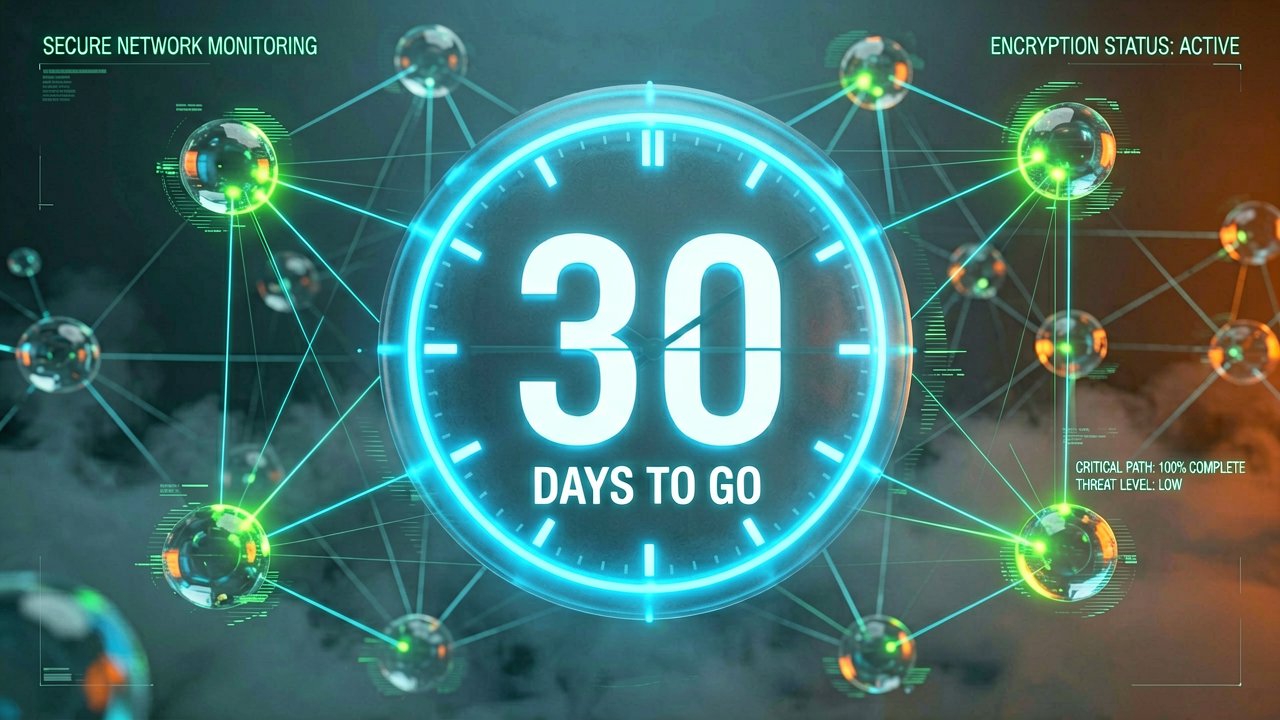
The White House just flipped the script on artificial intelligence regulation. Instead of tangling Silicon Valley in red tape, President Donald Trump signed a sweeping executive order on June 2, 2026, aimed at hardening the nation’s digital infrastructure against sophisticated, AI-driven cyber threats. Titled “Promoting Advanced Artificial Intelligence Innovation and Security,” the newly unveiled directive establishes an "America First" strategy. It deliberately strips away mandatory licensing frameworks while forcing federal agencies to fast-track next-generation cyber defenses down to local governments and critical market operators.
This aggressive pivot comes at a time when the strategic stakes couldn't be higher. Driven by recent technical alarms—such as Anthropic’s frontier AI model, Mythos, showcasing an uncanny ability to autonomously discover and exploit software vulnerabilities—the administration is shifting from bureaucratic oversight to tactical cyber warfare. This move effectively scraps the previous administration's heavy-handed compliance philosophies in favor of an innovation-first posture designed to keep the United States steps ahead of foreign adversaries like China.
A Voluntary Vetting Regime with a Tight Clock
At the center of the new framework is an intriguing compromise with frontier AI developers. Tech giants can voluntarily hand over their most advanced models to the federal government for a 30-day evaluation period prior to public commercial release. During this brief window, senior officials from the National Security Agency and the Cybersecurity and Infrastructure Security Agency (CISA) will benchmark the systems to identify what the text labels “covered frontier models.” Because the administration desperately wants to avoid stifling the fast-moving tech sector, the order explicitly bars the government from transforming this process into a mandatory permitting system, keeping the entire collaboration optional for the private sector.
Weaponizing Defenses for Critical Infrastructure
While tech companies enjoy a loose leash on development, federal agencies are operating under an incredibly tight timeline to lock down domestic networks. Within 30 days, the Department of Homeland Security must issue binding operational directives to deploy AI-powered defenses across all civilian federal systems. Crucially, as detailed by Becker's Hospital Review, these top-tier defensive tools will be aggressively extended to highly vulnerable, under-resourced targets like rural hospitals, community banks, and local utilities. Concurrently, the Treasury Department has been ordered to stand up an AI cybersecurity clearinghouse within the month to streamline vulnerability scanning and patch distribution alongside private industry partners.
Hunt Down the Exploiter
For those thinking they can leverage autonomous AI agents to break into sensitive systems, the White House is sending a chilling message. The executive order instructs the Attorney General to ruthlessly prioritize the federal prosecution of cybercriminals who use AI to execute data theft or unauthorized computer access. By combining aggressive criminal enforcement with a massive expansion of federal cyber-hiring pathways, Washington is signaling that while it won't strangle American innovation with premature regulations, it will absolutely hunt down anyone trying to weaponize it.
The Hidden Battle lines over Autonomous Code Exploitation
What Most Reports Miss: The shift toward hardline cyber defense isn't just a philosophical preference—it's a direct response to a quiet consensus building inside intelligence agencies. While public debate often fixates on sci-fi scenarios of AI-driven bioweapons or systemic disinformation campaigns, the immediate threat keeping national security officials awake at night is the rapid automation of zero-day discovery. For years, finding a novel software vulnerability required days, sometimes months, of painstaking manual reverse-engineering by highly specialized human analysts. Today's frontier models are compressing that timeline down to seconds, fundamentally tilting the balance of power in favor of the attacker and forcing Washington into an aggressive, defensive crouch.
This reality has triggered an intense, behind-the-scenes debate over the administration's new voluntary vetting regime. Cynics within the defense establishment argue that relying on tech companies to self-report their most dangerous models is akin to asking a high-speed racing team to voluntarily slow down for a safety inspection. They point out that the 30-day evaluation window is incredibly brief for agencies like the NSA and CISA, which are already struggling with severe talent shortages. The fear is that a highly sophisticated, multi-modal system could easily mask its most volatile exploitation capabilities during a rushed federal benchmarking trial, slipping into the commercial market before its true risks are fully mapped.
Conversely, Silicon Valley's counter-lobby has successfully argued that rigid, European-style compliance models are a fast track to technological obsolescence. Industry leaders have quietly warned policymakers that if American developers are bogged down by mandatory pre-clearance licensing, global talent and capital will instantly migrate to jurisdictions with fewer restrictions. By keeping the vetting process optional and fast-moving, the executive order seeks to weaponize corporate goodwill. The gamble is that top-tier labs will cooperate willingly to secure lucrative government contracts and retain elite federal security clearances, preserving American dominance on the global AI stage while keeping federal watchdogs just close enough to sound the alarm.
The true litmus test of this strategy, however, will play out far from Silicon Valley, in the unglamorous networks of local utilities and rural healthcare systems. For decades, America's critical infrastructure has been plagued by a massive digital divide, where small-town water treatment plants and community hospitals operate on shoestring IT budgets and legacy software. Forcing federal agencies to instantly share cutting-edge, AI-powered defensive patches down to these local operators is an unprecedented logistical hurdle. If the newly established Treasury clearinghouse and DHS operational directives fail to bridge this execution gap quickly, the nation risks creating a highly uneven defense perimeter—one where the federal core is heavily fortified, but the civilian periphery remains wide open to automated disruption.
The Paradox of a Defense-First AI Strategy
Reading Between the Lines: The administration’s strategic bet relies on a glaring contradiction—the assumption that you can aggressively build AI-driven shields without simultaneously giving adversaries better swords. By tasking federal agencies with deploying cutting-edge AI defenses across civilian infrastructure, Washington is inadvertently creating a massive, highly visible testing ground. History has repeatedly demonstrated that defensive cyber-tools, once deployed in the wild, are quickly reverse-engineered by foreign intelligence services. If a state-sponsored hacker groups dissects the code behind America’s new automated local utility patches, they instantly gain a blueprint for how the U.S. intends to block future incursions, effectively mapping the vulnerabilities of the defense itself.
Furthermore, the push to prosecute AI-assisted cybercriminals with unprecedented severity ignores the borderless reality of modern digital warfare. The Attorney General can issue all the directives they want, but the elite ransomware syndicates and state-backed actors targeting American infrastructure do not operate from jurisdictions that extradite to the United States. Threat actors sitting in secure compounds in St. Petersburg or Shanghai will not be deterred by a stiffened U.S. penal code. Consequently, this heavy-handed legal posture risks disproportionately penalizing domestic academic researchers and independent "white hat" security analysts, whose dual-use vulnerability testing is vital for discovering security flaws before the bad guys do.
The ultimate efficacy of this executive order hinges on a fragile alignment of interests between national security hawks and corporate boardrooms. Silicon Valley is currently engaged in a brutal, multi-billion-dollar race for market dominance where speed-to-market is the only metric that truly matters to investors. While tech executives may publicly applaud the voluntary 30-day vetting window, the moment a critical commercial breakthrough is achieved, the temptation to bypass federal benchmarks entirely will be immense. Without a mechanism for enforcement, this framework transforms national security into an act of corporate charity, leaving the safety of the nation's digital bedrock dangling on the whims of quarterly earnings calls.
"We have officially entered an era where Washington believes it can outsmart the lightning-fast evolution of artificial intelligence by asking tech billionaires to please play nice, while simultaneously hoping that rural water treatment plants can instantly learn to manage defense networks advanced enough to run a stealth fighter. It is a masterclass in optimism, proving that while technology changes at supersonic speeds, the political faith in voluntary compliance and bureaucratic handshakes remains beautifully, stubbornly trapped in the twentieth century."
Artūras Malašauskas is an AI Systems Integrator with 20+ years of production-grade web engineering experience. He has designed, shipped, and scaled enterprise Python/PHP systems for logistics, SaaS, and public-sector clients. For the past year, he has focused exclusively on AI integrations: deploying open-source LLMs, building generative media pipelines (image, audio, video), and engineering multi-agent workflows for real production environments. His standard: reproducibility, security, cost-efficient inference—no vaporware. He documents and evaluates emerging AI tooling, separating verified capabilities from marketing noise. Technical editor at: muza-ai.eu, ai-verslas.lt, ai-naujinos.lt Connect on LinkedIn
Comments