The Art of the Pivot: How PlayStation Weaponized Creative Risk to Reverse a Half-Decide Slump
For five years, the narrative surrounding PlayStation’s internal studios felt like a beautifully rendered, ultra-cinematic slow-motion car crash. The math compiled by data analysts at Game File was brutal and unambiguous, tracing a steep downhill trajectory from the dizzying, pandemic-fueled peak of 58.4 million first-party copies sold in 2020 to a historic floor of just 28.9 million units in fiscal year 2024. The industry had begun to whisper that Sony’s signature formula—the over-budget, over-serious, third-person cinematic epic—was finally crushing itself under the weight of its own multi-year development timelines.
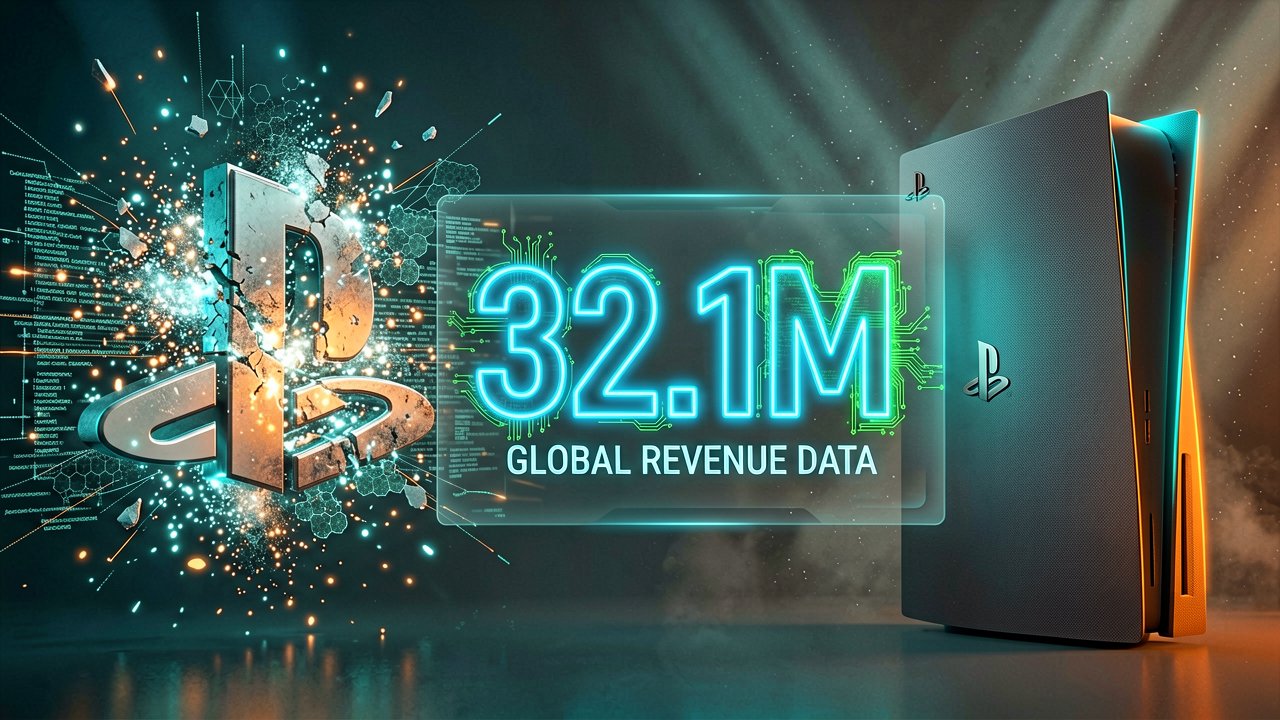
Then came the sudden, much-needed plot twist. According to Sony's latest fiscal reports, first-party software sales clawed their way back up to 32.1 million units, representing a modest but seismically important rebound after half a decade of steady bleeding. It is a classic narrative of market adjustment and sheer creative stubbornness, proving that while corporate suits love predictable metrics, the gaming audience only responds to genuine artistic swings.
Breaking the Monolith
The turn of the tide did not happen by playing it safe, nor did it happen by duplicating old formulas. The modern gaming landscape is littered with the corpses of studios that tried to turn every beloved intellectual property into an endless live-service treadmill—a lesson Sony learned the hard way through high-profile stumbles. Instead, the recovery was anchored by a deliberate dual strategy: doubling down on focused, tightly engineered premium experiences like Team Asobi's critically adored Astro Bot, and taking massive cultural and structural gambles with marquee releases.
Nothing exemplifies this calculated recklessness better than Sucker Punch Productions' deployment of Ghost of Yōtei. Rather than delivering a safe, predictable sequel following the exact same protagonist, the studio shifted focus entirely to a new era, a new hero, and a completely fresh tonal perspective. Reports published via VGC confirm that this specific creative leap acted as the primary engine for the recent volume uptick, shattering the internal fatigue that had plagued PlayStation's release schedule for years.

The Ecosystem Guardrails
Beyond the creative direction of the software, Sony’s executive suite quietly executed a vital tactical retreat regarding where and when those games could actually be played. The initial panic of the five-year decline had prompted a frantic, almost uncoordinated rush to port premium PlayStation exclusives to PC as quickly as possible. However, as noted in executive breakdowns on GamesIndustry.biz, that strategy carried an unacceptably high risk of diluting the core console brand and cannibalizing hardware momentum.
By pulling back on simultaneous PC launch windows and realigning their focus around portfolio stability and hardware exclusivity, PlayStation re-established its ecosystem as a premium destination. With global hardware components facing massive premium price pressures due to the artificial intelligence boom, preserving the allure of the console itself became paramount. This subtle macroeconomic pivot ensured that when a first-party title dropped, it felt like an undeniable cultural event rather than just another icon on a digital PC launcher storefront.
A Fragmented Future
This sales rebound is not a signal to return to the status quo. The multi-year production cycles required to build photorealistic worlds mean that the days of a single platform holder launching three or four massive blockbusters a year are entirely over. Volume alone will no longer save a balance sheet; instead, long-term survival demands a highly agile mix of nostalgic charm, regional setting variety, and uncompromising design philosophy.
PlayStation’s slight financial u-turn is a testament to an industry truth that tech giants frequently forget: audiences will happily pay a premium, but only when they are treated to something that feels distinct, deliberate, and fiercely original.

The corporate spreadsheet will always crave uniformity, but the beating heart of the gaming industry has always been beautifully, unpredictably chaotic. It is easy for boardroom executives to fall into the trap of viewing software development as a mechanical equation where massive budgets plus recognized intellectual properties automatically equal record-breaking engagement numbers. Yet, the recent stabilization of PlayStation's internal ecosystem demonstrates that a platform holder cannot simply buy its way into cultural relevance. The modest uptick to 32.1 million first-party games sold represents a victory of tailored creative risk over the sanitizing, risk-averse pressures of modern blockbusters.
This reality is forcing a fundamental rethink of what an "exclusive" actually means in an era where game development costs regularly rival Hollywood blockbusters. When Sony began rapidly deploying its premium catalog to the PC market, the corporate logic seemed airtight: expand the addressable audience to offset the skyrocketing costs of five-year production cycles. However, as noted in recent industry analyses compiled by GameDev.net, the unintended side effect was a steady erosion of console ecosystem gravity, proving that a premium brand loses its luster when its most compelling reasons for ownership are decentralized.
The CADENCE CRISIS
The true battleground for the remainder of this console generation is not raw processing power, but the agonizing rhythm of studio output. The five-year decline that preceded this turnaround was largely an existential crisis of scheduling, where top-tier studios vanished into development voids for nearly a decade just to push the boundaries of photorealism. According to insights shared on Game File, this inconsistent release cadence fundamentally starved the hardware platform of consistent software momentum. The recent recovery highlights that a healthy platform needs a diverse portfolio—juxtaposing massive historical epics against tighter, highly innovative projects that can be delivered without exhausting an entire studio for a generation.
This structural recalibration means embracing a future where first-party output cannot rely solely on the safety of established sequels. The willingness to pivot to entirely new thematic periods or character arcs, rather than retreading familiar ground, shows an awareness that player fatigue is real. Moving forward, the platform holders who thrive will be those who recognize that sustainable growth is driven by creative bravery, structural discipline, and the willingness to let developers occasionally break their own rules.
The ultimate metric of long-term survival in the interactive entertainment business is not the height of a single sales peak, but the structural integrity of the foundation left behind when the tide recedes. PlayStation’s hard-fought stabilization after half a decade of steady volume decline proves that the corporate instinct to homogenize output is a fast track to cultural irrelevance. By pulling back from the precipice of over-saturating the market with live-service experiments and refocussing on deliberate, creatively distinct premium software, the platform holder re-established a vital truth. The gaming audience will willingly pay a premium, but only for experiences that feel like cultural events rather than transactional obligations.
This subtle course correction also highlights the limits of hyper-growth strategies in a mature market. The industry-wide rush to port ecosystem-defining titles to every available screen simultaneously looked spectacular on short-term quarterly balance sheets but ultimately diluted the prestige of the underlying hardware. By adjusting the timing and exclusivity parameters of its first-party catalog, Sony effectively restored the gravity of its console ecosystem, ensuring that its hardware remains an indispensable destination rather than an optional piece of living room plastic.
The Premium Imperative
Looking ahead, the modern platform holder must navigate a landscape where development timelines are structurally rigid and production budgets remain uncomfortably high. The solution to this economic bottleneck is not to play it safe with endless, predictable sequels, but to cultivate a balanced portfolio where smaller, agile projects coexist alongside massive flagship releases. This strategic diversity creates a steady cadence of software releases, preventing the catastrophic momentum droughts that characterized the early years of the current decade.
Ultimately, the slight recovery in software volume is less about raw numbers and more about a renewed philosophy of portfolio management. The companies that survive the shifting macroeconomic pressures of the tech sector are those that treat creative risk not as an expensive liability, but as the primary engine of consumer demand. True brand loyalty cannot be engineered through corporate synergy alone; it must be continually earned through uncompromising, author-driven design.
In a tech landscape obsessed with algorithmic predictability and infinite live-service monetization, the ultimate commercial hedge turns out to be shockingly old-fashioned: giving brilliant developers the freedom to take a massive swing, and giving players a genuine reason to care.
Artūras Malašauskas is an AI Systems Integrator with 20+ years of production-grade web engineering experience. He has designed, shipped, and scaled enterprise Python/PHP systems for logistics, SaaS, and public-sector clients. For the past year, he has focused exclusively on AI integrations: deploying open-source LLMs, building generative media pipelines (image, audio, video), and engineering multi-agent workflows for real production environments. His standard: reproducibility, security, cost-efficient inference—no vaporware. He documents and evaluates emerging AI tooling, separating verified capabilities from marketing noise. Technical editor at: muza-ai.eu, ai-verslas.lt, ai-naujinos.lt Connect on LinkedIn
Comments