The Algorithmic Loosening of the Atomic Screw: Strategic Markets and the AI-Nuclear Nexus
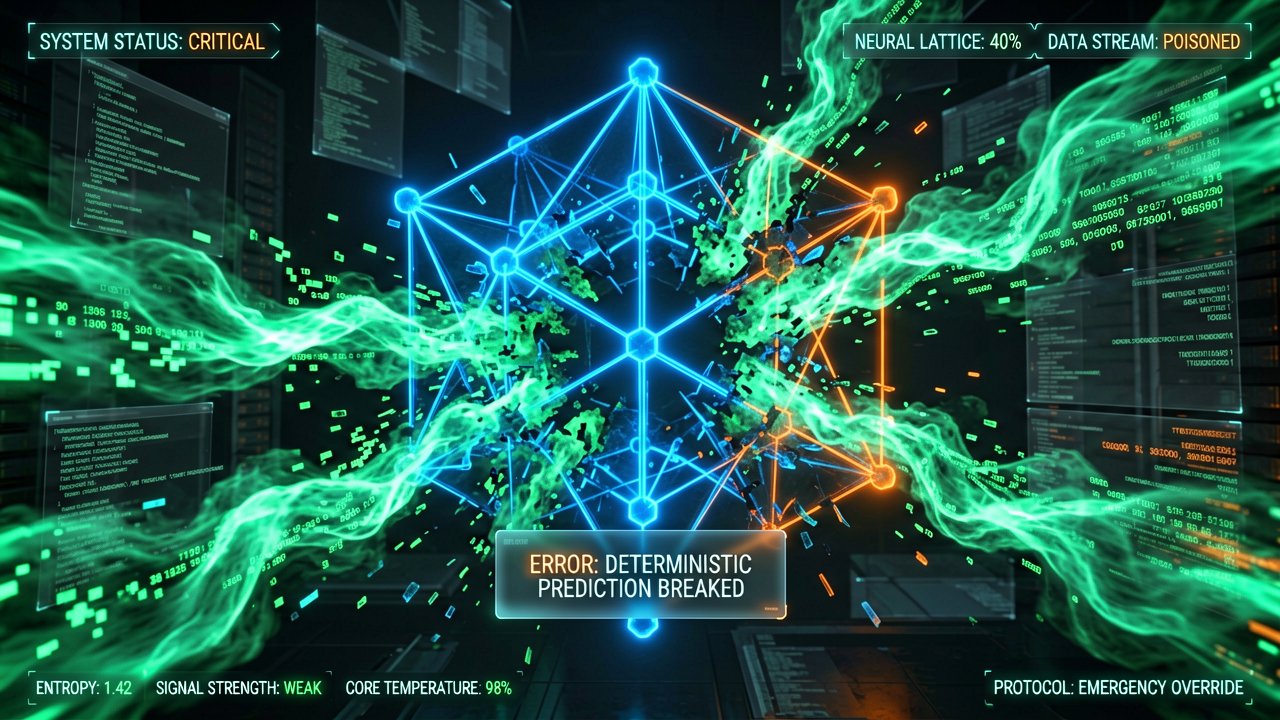
The integration of machine learning into critical infrastructure has transcended civilian commercial software, sparking a multi-billion dollar strategic realignment across the defense and aerospace sectors. As global military powers race to automate their intelligence, surveillance, and reconnaissance (ISR) frameworks, artificial intelligence is directly interfacing with nuclear command, control, and communications (NC3) architectures. This rapid technological absorption has fundamentally altered the defense market, driving unprecedented capital inflows toward defense technology contractors capable of developing sovereign, deterministic AI models that can withstand adversarial digital manipulation.
This market shift has introduced deep structural vulnerabilities into international relations, changing the foundational economics of defense deterrence. Traditional military platforms are increasingly evaluated by their algorithmic agility rather than sheer kinetic capacity, creating an environment where computational speed dictates strategic superiority. However, the introduction of non-deterministic software into nuclear warning systems risks compressing decision-making timelines to an unmanageable degree. According to an extensive analysis published by the Global Security Review, this entanglement creates an environment where states may over-interpret adversarial indicators, shifting alert postures to worst-case scenarios and shortening the path to unintended escalation.
The resulting technological architecture creates a dangerous paradox for global security. While automated systems streamline data parsing and accelerate threat detection, they also introduce complex, novel attack surfaces including data poisoning, algorithmic spoofing, and deep-fake injection during active crises. The defense sector must balance rapid tactical innovation against the existential requirement for absolute system reliability, illustrating that the true risk of the current era lies not in the technology itself, but in how organizational behavior and systemic overconfidence manage these automated frameworks.
Disrupting Non-Proliferation via Algorithmic ISR
The commercial market for hyper-spectral satellite imagery and automated data analysis tools has significantly enhanced technical verification capabilities globally. Artificial intelligence can parse massive datasets to identify structural anomalies, unregistered facilities, or illicit procurement streams, providing international watchdogs with powerful mechanisms to monitor compliance. However, this same high-fidelity tracking capability undermines traditional deterrence by rendering hidden retaliatory assets vulnerable. When deep-learning algorithms can accurately isolate and predict the positioning of an adversary’s mobile launchers or submarines, the perceived utility of a second-strike option decreases, inadvertently incentivizing preemptive strike doctrines during geopolitical stalemates.
Automated Crisis Management and Decision Compression
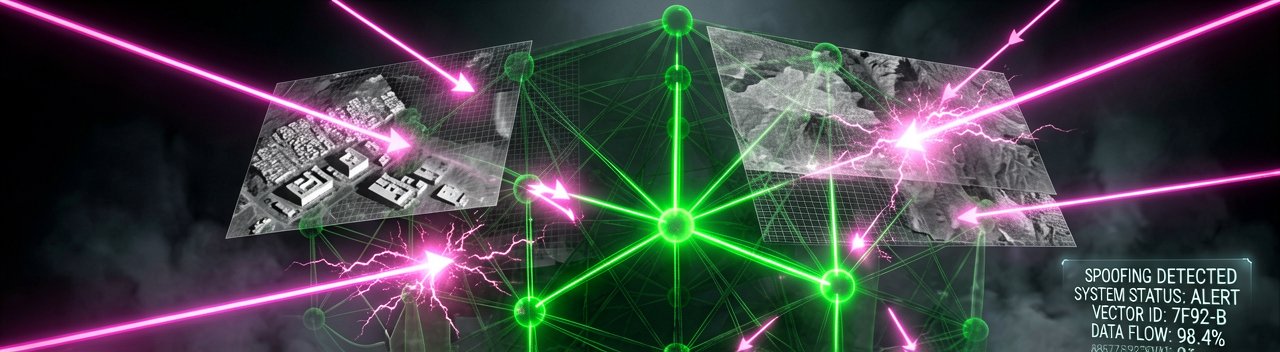
In response to the collapse of formal arms control treaties, global defense procurement has prioritized machine learning models capable of executing rapid command-loop optimizations. This market push addresses the vulnerabilities highlighted by the Vienna Center for Disarmament and Non‑Proliferation , which notes that highly digitalized critical infrastructure faces a growing threat from AI-enabled cyber operations and data manipulation campaigns. When autonomous software controls early-warning pipelines, the risk of data spoofing by non-state actors or rogue states increases. A failure to build robust, verifiable boundaries between predictive software and execution frameworks leaves global security vulnerable to cascading automated reactions that remove human diplomatic intervention from crisis management protocols.
Civil Nuclear Symbiosis and the Infrastructure Market
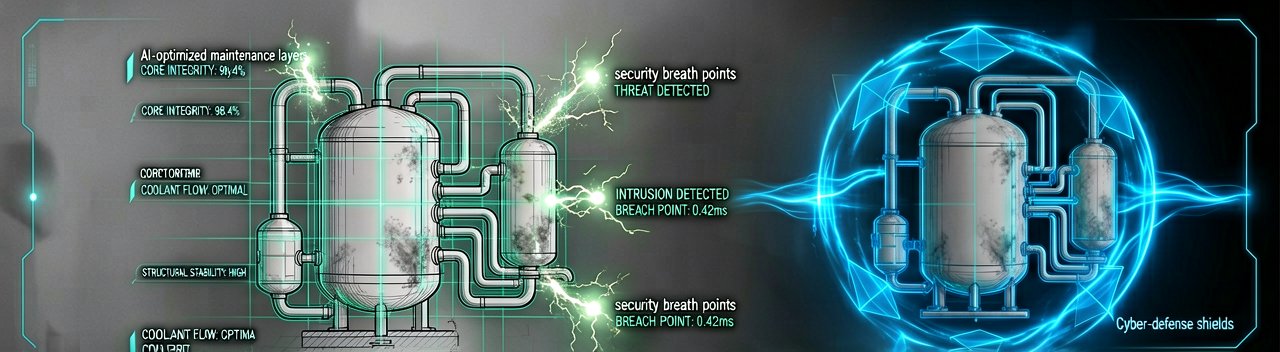
Beyond defensive weapon systems, a significant commercial convergence is occurring within the energy infrastructure sector. The exponential computing demands of training massive frontier AI models have forced hyperscale technology companies to secure highly reliable, zero-carbon baseload power. This commercial reality has catalyzed a massive funding pipeline into the nuclear energy market, specifically targeting the commercialization of Small Modular Reactors (SMRs) to power next-generation data centers. Consequently, a dual-use software ecosystem is emerging where commercial AI optimizes civilian reactor modeling and predictive maintenance, while simultaneously requiring advanced computer security frameworks to defend these critical energy nodes against targeted cyber-attacks.
What Most Market Reports Miss: The Ghost in the Automated Machine
The institutional panic driving the adoption of artificial intelligence within nuclear command structures stems from a profound misreading of commercial software reliability. Silicon Valley operates on an architectural philosophy of iterative deployment, where algorithms are routinely fielded with known software anomalies to be patched post-launch. When the defense procurement sector attempts to graft these commercial DevOps pipelines onto legacy nuclear hardware, the systemic risk multiplies exponentially. A seasoned systems engineer understands that a multi-tiered neural network does not fail predictably; instead, it exhibits emergent behaviors under stress that can mimic genuine operational intent, potentially leading to catastrophic misinterpretations during high-tension standoffs.
Historically, human intervention has served as the ultimate circuit breaker against flawed sensor data. During the 1983 Soviet nuclear false alarm incident, Stanislav Petrov relied on tactical intuition to correctly identify a satellite system malfunction, overriding automated protocols that signaled an incoming American strike. Modern AI integration threatens to eliminate this human buffer by compressing decision windows from thirty minutes to mere seconds. If an early warning system utilizes predictive analytics to forecast a missile launch based on satellite imagery of an adversary's base movements, the human operator is no longer validating a past event. Instead, they are forced to judge an algorithmic projection, transforming a defensive posture into a reactive trap.
This dynamic has created a deep schism between traditional defense contractors and the new vanguard of national security software startups. Legacy aerospace firms favor deterministic, rules-based software where every computational outcome can be audibly traced through rigid logic trees. Conversely, venture-backed intelligence platforms pitch deep learning models that function as black boxes, offering unprecedented speed at the cost of explainability. This tension paralyzes middle management within procurement agencies, as bureaucrats are torn between the strategic necessity of matching foreign algorithmic speeds and the absolute safety imperative of maintaining explicit human-in-the-loop oversight.
The geopolitical reality is further complicated by the asymmetric nature of open-source artificial intelligence. While western alliances face intense regulatory scrutiny, academic debates, and public oversight regarding the ethical weaponization of code, adversarial states operate with significantly fewer public accountability constraints. This discrepancy creates a dangerous incentive structure where transparent democracies may over-index on safety constraints, while revisionist states field deeply unverified, automated command tools to project structural strength. This strategic imbalance increases the probability of an international crisis triggered by an unchecked algorithmic hallucination interacting with a hyper-vigilant, automated defensive network.
Ultimately, the true vulnerability within the AI-nuclear nexus is not a rogue superintelligence seizing control of a missile silo, but the mundane reality of human over-reliance on technology. Automation bias consistently convinces operators that computational data is inherently superior to human observation. As machine learning models become deeply woven into daily intelligence parsing, the global defense establishment risks delegating its strategic judgment to lines of code. This silent transfer of agency leaves the international community vulnerable to an escalation spiral driven not by political intent, but by a series of cascading software errors that no human has the time, or the authority, to correct.
Reading Between the Lines: The Fallacy of the Flawless Deterrent
The prevailing defense orthodoxy insists that integrating machine learning into nuclear systems will yield a more stabilized deterrent by eliminating human hesitation and emotional error. This assumption collapses under rigorous technical scrutiny, as it conflates data processing efficiency with strategic wisdom. By treating artificial intelligence as a neutral, infallible arbiter of geopolitical reality, defense establishments overlook the fundamental reality that algorithms are inherently trained on historical data. When applied to nuclear crisis management—a domain defined by rare, highly volatile events with zero margin for error—an AI model relies on speculative simulations rather than empirical precedent, making its predictive outputs fundamentally unreliable during an unprecedented diplomatic breakdown.
A glaring contradiction lies at the heart of modern defense procurement strategies, which simultaneously champion AI-driven transparency and advanced cyberwarfare capabilities. Military planners celebrate the ability of deep-learning tools to map adversary assets with pinpoint accuracy, yet they aggressively develop algorithmic spoofing mechanisms designed to corrupt those exact same networks. This creates a highly unstable feedback loop where both sides rely on automated systems while knowing that the underlying data feeds are actively being poisoned by the opponent. The Result is an environment of profound digital paranoia, where commanders must decide whether to trust an automated alert or assume their software has been subtly compromised by an invisible cyber offensive.
Furthermore, the commercial race to achieve artificial general intelligence introduces an unpredictable variable into international safety protocols. Tech conglomerates project a future of benign, self-correcting software networks, yet the underlying reality remains market-driven, chaotic, and heavily reliant on opaque supply chains. When critical national security software is built upon commercial, open-source foundations, the risk of structural subversion rises dramatically. The defense sector’s dependence on commercial tech giants for computational infrastructure effectively shifts the responsibility of strategic stability from accountable state diplomats to private boardrooms focused primarily on quarterly market valuations.
Projecting these trends forward reveals a fragmented global landscape dominated by incompatible, hyper-automated defense spheres. As major powers reject shared safety standards in favor of unilateral algorithmic dominance, the concept of cooperative risk reduction becomes virtually impossible to implement. The absence of a shared, transparent baseline for how military AI interprets a threat means that actions intended as purely defensive maneuvers could easily be classified as aggressive provocations by an adversary's automated monitoring system. This systemic mismatch transforms the traditional, calculated chess match of international diplomacy into an unpredictable sequence of algorithmic collisions.
Ultimately, the institutional rush to automate the nuclear command structure may go down in history as a supreme exercise in strategic hubris. In a desperate bid to buy back milliseconds of decision time, the world's military apparatus is systematically dismantling the very human friction that has prevented atomic conflict for nearly a century. By replacing the cautious, deliberative hesitation of human command with the unblinking, instantaneous execution of software, global superpowers are building an automated framework where a single corrupt line of code could inadvertently dictate the fate of civilization.
"In our desperate rush to ensure the nuclear button is pushed with sub-millisecond precision, we have successfully designed a system where humanity can be thoroughly vaporized by a software glitch, leaving behind a perfectly optimized post-action report that absolutely no one will be alive to read."
Artūras Malašauskas is an AI Systems Integrator with 20+ years of production-grade web engineering experience. He has designed, shipped, and scaled enterprise Python/PHP systems for logistics, SaaS, and public-sector clients. For the past year, he has focused exclusively on AI integrations: deploying open-source LLMs, building generative media pipelines (image, audio, video), and engineering multi-agent workflows for real production environments. His standard: reproducibility, security, cost-efficient inference—no vaporware. He documents and evaluates emerging AI tooling, separating verified capabilities from marketing noise. Technical editor at: muza-ai.eu, ai-verslas.lt, ai-naujinos.lt Connect on LinkedIn
Comments