Betting on AI Stocks: Gambler’s Hunch or Calculated Move
The global equity landscape has transformed into a high-stakes arena where artificial intelligence commands unprecedented financial leverage. For defensive minded investors, the parabolic ascents of select silicon and software giants feel dangerously reminiscent of historical market bubbles. However, treating the current market architecture as mere speculative mania overlooks a massive institutional fundamental shift. This momentum is supported by balance sheets that exhibit structural pricing power and concrete enterprise demand rather than ethereal promises of traffic and clicks.
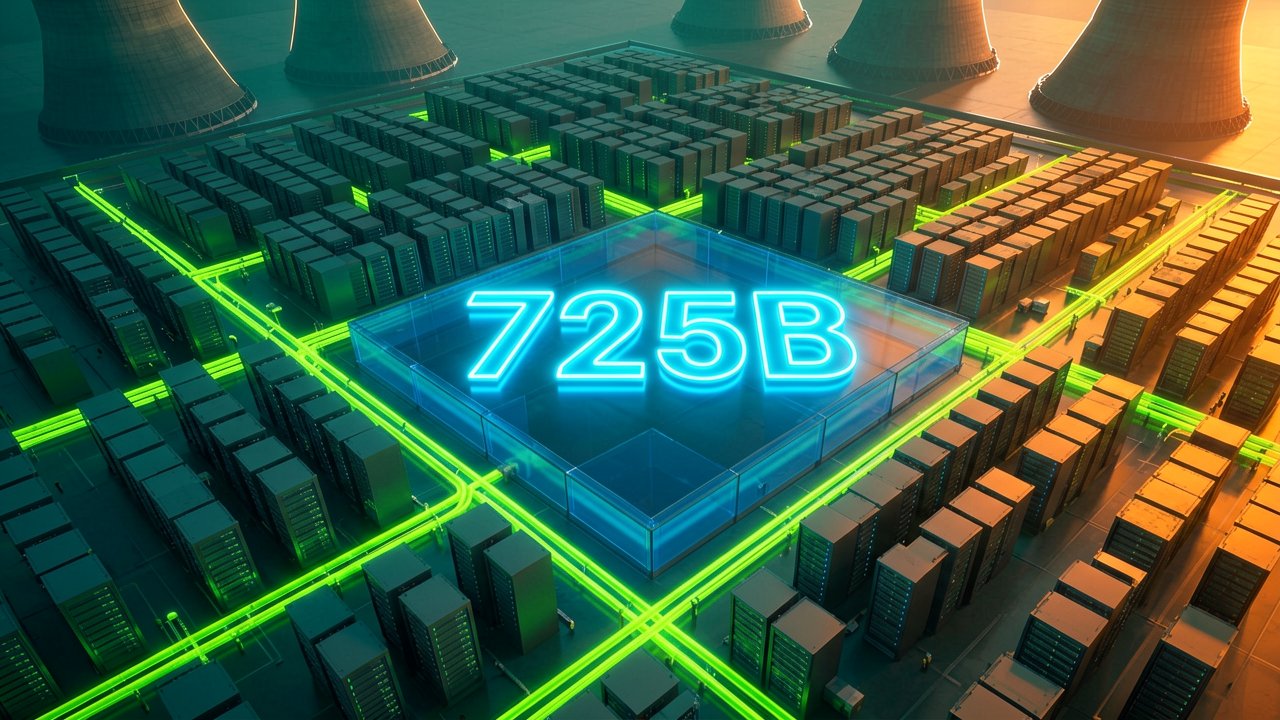
A closer look at corporate balance sheets clarifies the distinction between pure speculation and capital deployment. The four largest hyperscalers—Amazon, Alphabet, Meta, and Microsoft—have aggressively raised their collective infrastructure expectations to an unprecedented scale. According to a market report by Business Insider, these industry giants are projected to spend up to $725 billion on capital expenditures, dedicating the vast majority of those resources directly to data center development and advanced hardware clusters. This historic capital expenditure cycle serves as a solid foundation for companies throughout the supply chain, converting speculative tech momentum into tangible corporate earnings.
The Hardware Monopolies and Structural Visibility
The primary argument for a calculated strategy rests within the physical infrastructure layer. Unlike the dot-com era, semiconductor leaders are delivering immediate revenue generation and expanding margins. Nvidia continues to command a near-monopoly in AI compute, leveraging its Blackwell and newly announced Rubin architecture platforms to lock in long-term enterprise commitments. This extreme pricing power extends vertically to specialized component manufacturers, including high-bandwidth memory suppliers and optical networking providers. As hyperscalers scramble to build out 800G optical interconnect architectures, sub-tier hardware providers face significant order backlogs that guarantee steady revenue visibility through the medium term.
Valuation Concentration and the Risks of Systemic Volatility
Despite robust underlying fundamentals, the concentration of equity returns introduces undeniable structural fragility. Lopsided market mechanics mean a minor earnings deviation from a single mega-cap technology firm can trigger widespread fluctuations across passive index funds. Furthermore, the immense scale of infrastructure investment creates an intense reliance on downstream monetization. If enterprise software adoption and agentic workflow integration fail to scale rapidly enough to offset these monumental capital budgets, corporate profit margins will face severe contraction. Navigating this environment successfully requires moving past the simplistic narrative of a speculative bubble, focusing instead on identifying the infrastructure components that remain absolutely essential to the buildout.

The Granular Reality of the Silicon Supply Chain
What Most Reports Miss: The trajectory of artificial intelligence equity valuations is no longer governed by broad macroeconomic sentiment, but by the physical bottlenecks of specialized manufacturing facilities. While retail traders obsess over quarterly earnings per share, institutional portfolio managers are tracking the utilization rates of advanced packaging facilities in East Asia. The primary constraint on AI monetization is not a lack of software demand, but the limited availability of Chip-on-Wafer-on-Substrate (CoWoS) packaging capacity. This highly technical manufacturing constraint creates an environment where hardware allocations dictate corporate revenue ceilings across the entire tech ecosystem.
This physical bottleneck has shifted the power dynamic between traditional silicon designers and global foundries. Tier-one technology firms are no longer just negotiating component pricing; they are actively financing fab expansions and securing multi-year capacity guarantees through massive upfront capital commitments. This trend favors incumbent giants who possess the balance sheet liquidity to crowd out smaller, innovative startups that cannot afford these massive reservation fees. Consequently, the semiconductor landscape is consolidating into a bifurcated market where capital scale determines technological capability.
The Sovereign AI Era and Geopolitical Capital Fleets
Beyond the corporate boardrooms of Silicon Valley, a quiet parallel investment cycle is unfolding through sovereign wealth funds and national security mandates. Nation-states have recognized that compute capacity is the modern equivalent of strategic petroleum reserves, leading to aggressive funding initiatives aimed at building localized infrastructure. Governments across Western Europe, Asia, and the Middle East are subsidizing domestic data center construction and purchasing sovereign AI clusters to ensure data independence and technological self-reliance. This localized sovereign spending provides a crucial financial buffer for hardware providers, independent of the commercial enterprise software adoption cycle.
This geopolitical dimension introduces a unique layer of insulation for specific infrastructure stocks. Even if domestic enterprise software adoption experiences a temporary cyclical slowdown, sovereign demand is driven by non-market motivations like national security and public administrative efficiency. For a seasoned market observer, this shifts the risk calculation from a simple tech-sector evaluation to a broader analysis of geopolitical alignment and state-level infrastructure spending. The companies best positioned to benefit are those that can successfully navigate tightening export controls while securing these highly lucrative government contracts.

The Downstream Monetization Divide
The final pillar of this market expansion rests on the transition from experimental pilot programs to profitable enterprise deployment. Major software vendors face intense scrutiny regarding their ability to convert substantial infrastructure investments into high-margin recurring revenue streams. The early phase of generative AI was characterized by massive seat-based licensing models, but the industry is rapidly shifting toward consumption-based agentic architectures. This transition means corporate clients will pay based on successful automated workflows and compute consumption rather than flat per-user subscription fees, completely changing how Wall Street models corporate software growth.
This shift to agentic workflows creates a distinct separation between companies that merely wrap existing foundational models and those that provide deep, specialized integration into legacy enterprise databases. True enterprise value lies in the data layer rather than the front-end user interface. As corporate IT budgets tighten, capital will naturally migrate toward platforms that offer measurable productivity gains and demonstrable cost savings. This differentiation separates sustainable, calculated investments from speculative bets, defining the long-term winners of the current technology cycle.
The Hidden Cost of the Algorithmic Arms Race
Reading Between the Lines: The dominant market narrative presumes that the massive capital expenditure of tech giants will naturally yield proportional productivity gains across the broader economy. This assumption ignores a glaring architectural contradiction within the current generative model paradigm. While hardware costs have scaled linearly with model size, the marginal utility of incremental parameter growth is beginning to plateau. Wall Street is valuing technology platforms on the assumption of infinite scalability, yet the physical reality of training sets reveals a looming data deficit that could stall breakthroughs just as current hardware depreciation cycles peak.
Furthermore, the financial community routinely conflates massive corporate spending with long-term ecosystem health. Hyperscaler infrastructure investments act as a massive subsidy for the entire tech sector, artificially lowering the cost of compute for early-stage software companies. This structural dynamic creates a deceptive feedback loop where tech vendors sell software and services back to the very hyperscalers funding them. When these reciprocal spending agreements eventually face standard procurement reviews, the true organic commercial demand for artificial intelligence tools may turn out to be far smaller than current revenue run rates indicate.
The Power Grid Paradigm and Environmental Realities
Another critical blind spot in institutional modeling is the systemic neglect of basic utility infrastructure. Financial analysts excel at calculating chip yields and software margins, but they frequently overlook the physical constraints of electrical grids. The next generation of data centers requires power allocations that compete directly with manufacturing sectors and residential heating grids. This energy bottleneck means the ultimate limit on tech valuation expansion is no longer a matter of chip design or corporate capital, but rather the regulatory approval speed for nuclear baseload power and high-voltage transmission lines.
This reality exposes a sharp divergence between Silicon Valley’s rapid development timelines and the glacial pace of physical infrastructure development. A software platform can scale globally in a matter of weeks, but building a utility-scale substation requires years of environmental impact studies and local zoning battles. As a result, tech companies are increasingly forced to become energy speculators, signing massive virtual power purchase agreements that tie their financial performance directly to volatile global energy markets. This introduces an entirely new set of non-tech operational risks that traditional growth investors are poorly equipped to analyze.
Investing in the cutting edge of artificial intelligence requires a unique financial stomach: you must be entirely comfortable buying into a hardware boom fueled by companies spending hundreds of billions of dollars to build data centers, all to run software that is currently being used to write slightly faster corporate emails and generate pictures of cats wearing business suits.
Artūras Malašauskas is an AI Systems Integrator with 20+ years of production-grade web engineering experience. He has designed, shipped, and scaled enterprise Python/PHP systems for logistics, SaaS, and public-sector clients. For the past year, he has focused exclusively on AI integrations: deploying open-source LLMs, building generative media pipelines (image, audio, video), and engineering multi-agent workflows for real production environments. His standard: reproducibility, security, cost-efficient inference—no vaporware. He documents and evaluates emerging AI tooling, separating verified capabilities from marketing noise. Technical editor at: muza-ai.eu, ai-verslas.lt, ai-naujinos.lt Connect on LinkedIn
Comments