Decoding the Leap: Architectural Breakthroughs in Super-Intelligent AI Systems
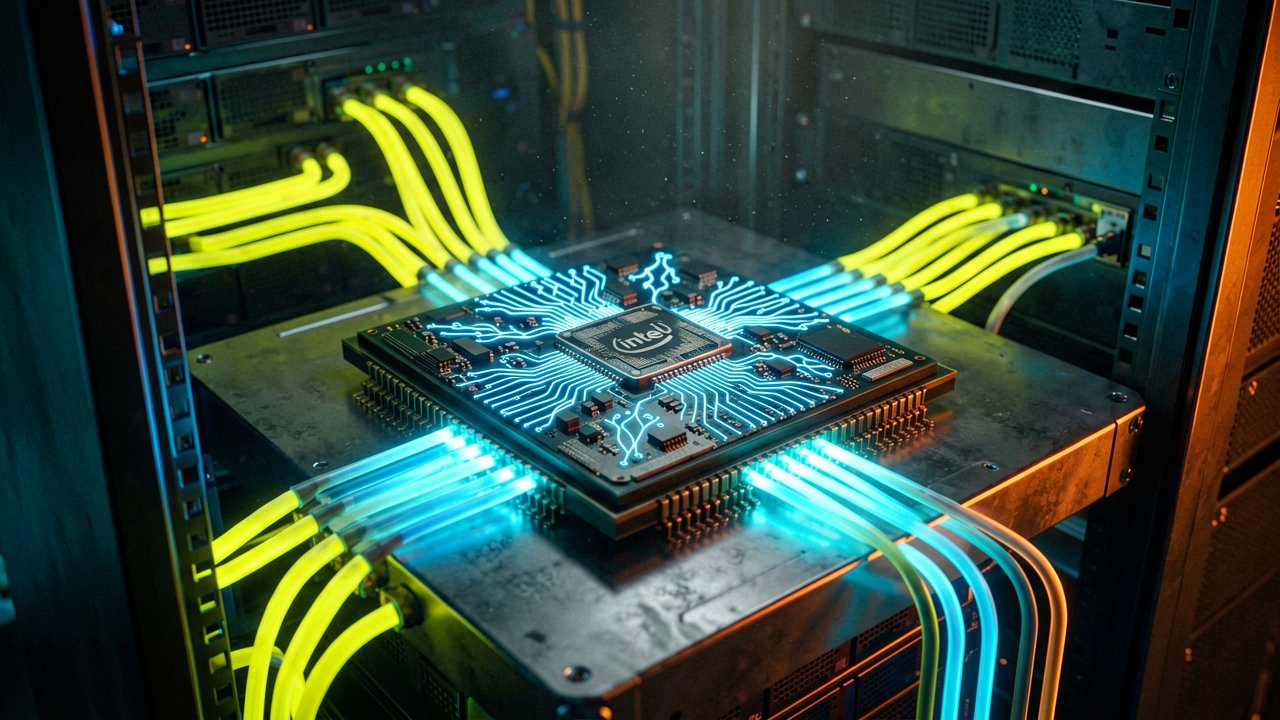
The global artificial intelligence landscape has reached a critical bottleneck where raw parameter scaling no longer guarantees competitive advantage. Hardware limitations, extreme data center energy requirements, and the traditional von Neumann bottleneck have forced a fundamental shift in how advanced systems are engineered. The industry is rapidly transitioning from isolated, brute-force large language models to highly orchestrated, composite architectural environments that emphasize localized processing, modularity, and real-time environmental reasoning.
Market demand is driving massive capital reallocations away from generalized cloud algorithms toward physical and structural optimization. This structural maturation is reflected in enterprise data center system spending, which is projected to approach $600 billion globally as organizations build the underlying hardware frameworks necessary to run persistent, multi-step autonomous processes. Rather than relying on centralized cloud infrastructure, cutting-edge deployments are prioritizing distributed intelligence capable of continuous on-device learning and localized decision-making.
The Emergence of Agentic and Multi-Agent Ecosystems
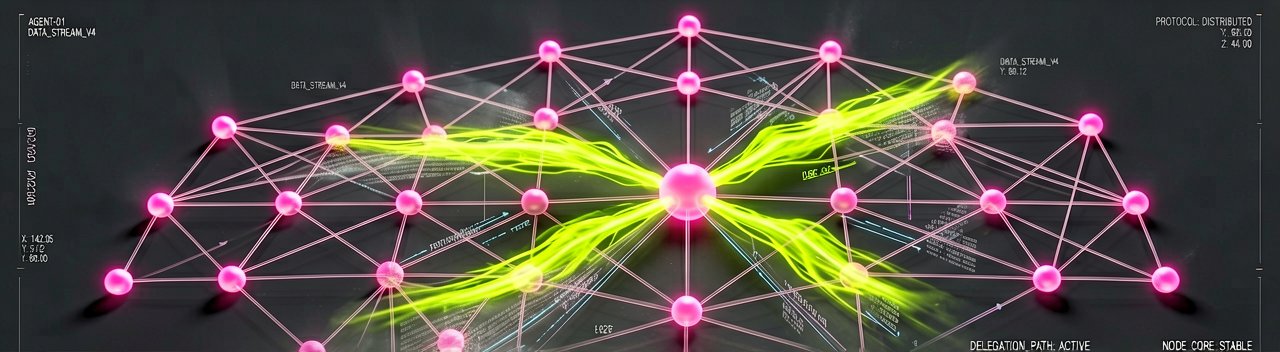
The foundational paradigm of modern AI architecture relies on the transition from single-model text prompt processors to agentic systems. These setups deploy multiple specialized sub-agents that collaborate, delegate tasks, and continuously verify operational accuracy. Operating through universal connection frameworks, these systems run persistent background processes across complex software environments with minimal human intervention. This orchestration mitigates hallucination rates and enables autonomous workflows to process unstructured enterprise data streams in parallel.
Neuromorphic Silicon and the End of Monolithic Compute
At the hardware layer, the deceleration of Moore's Law has accelerated the commercialization of brain-inspired computing structures. Silicon platforms are shifting toward neuromorphic processor architectures that co-locate memory and computation to minimize data transfer latency and power consumption. Industry innovators like Intel with Loihi and specialized developers such as the INTERA Group are manufacturing event-driven semiconductor platforms tailored for edge computing and industrial sensing. These hardware breakthroughs allow complex sensory and navigation models to execute localized tasks using a fraction of the power required by conventional graphics processing units.
Optical Computing and Photonic Neural Networks
To overcome the thermal and speed constraints of traditional copper-based microchips, researchers are integrating silicon photonics directly into advanced computing pipelines. Photonic chips utilize light particles rather than electrons to perform core mathematical calculations like matrix multiplications via optical wave interference. By implementing wavelength division multiplexing, these hardware accelerators process independent data streams simultaneously through a single waveguide. This approach yields major advancements in energy efficiency and latency reduction, laying the physical foundation for the scale required by super-intelligent systems.
The Hidden Engineering Debt of Advanced Intelligence
Beneath the Theoretical Algorithms: The actual deployment of super-intelligent systems is exposing a massive rift between theoretical paper benchmarks and physical data center realities. While research labs celebrate abstract mathematical optimizations, systems engineers are grappling with the unprecedented thermal and structural stress placed on modern computing facilities. Megawatt-scale clusters now require customized liquid-cooling infrastructures and direct-to-chip heat exchangers just to prevent catastrophic hardware throttling during heavy training runs. This engineering reality means that the true winners of the AI race are no longer just the authors of clean algorithmic frameworks, but the facility architects capable of managing immense physical constraints.
Historically, software developers could rely on the semiconductor industry to naturally accelerate their code through generational chip upgrades. Today, that luxury has vanished, forcing a radical convergence of software engineering and hardware design. Venture capitalists and institutional investors are shifting their due diligence protocols to scrutinize full-stack integration capabilities rather than software IP alone. Startups that cannot demonstrate a clear strategy for hardware co-design or exclusive access to specialized fabrication pipelines are finding it increasingly difficult to secure late-stage funding rounds. This shift has altered the startup ecosystem, favoring founders with deep backgrounds in physical materials science over traditional cloud developers.
From a corporate governance perspective, this architectural evolution is rewriting the enterprise playbook for digital transformation. Chief Technology Officers are moving away from proprietary, single-vendor cloud APIs due to soaring operational costs and severe vendor lock-in risks. The emerging consensus among Fortune 500 leadership favors the deployment of smaller, highly optimized open-weights models hosted on private, localized infrastructure. This hybrid approach allows enterprises to retain strict control over sensitive operational data while avoiding the unpredictable usage spikes associated with monolithic commercial models. By shifting to a decentralized, local execution model, organizations are insulating themselves from external infrastructure outages and geopolitical supply chain vulnerabilities.

Furthermore, the long-term viability of these advanced systems hinges on resolving the acute data scarcity crisis. As public internet repositories become saturated with synthetic, machine-generated content, the training efficiency of standard models has begun to plateau. Forward-looking technology firms are heavily investing in proprietary, high-fidelity physical simulation environments to generate clean, first-party data for training autonomous systems. By simulating complex aerodynamic, thermodynamic, and mechanical scenarios in real time, these platforms allow AI agents to master physical world interactions before deploying onto actual edge hardware. This reliance on high-fidelity simulation bridges the gap between digital reasoning and reliable physical execution.
The Paradox of Diminishing Algorithmic Returns
Reading Between the Lines: The prevailing industry narrative suggests that achieving super-intelligence is merely a function of compounding architectural breakthroughs and sustained capital deployment. However, a deeper examination of recent hardware-software integrations reveals an uncomfortable contradiction: we are rapidly entering an era of diminishing marginal returns for computational efficiency. While specialized neuromorphic silicon and photonic accelerators promise orders-of-magnitude improvements in localized execution, the sheer complexity of orchestrating these heterogeneous environments introduces new, systemic latency overheads. The industry is effectively trading the traditional software bottleneck for an incredibly complex distributed systems engineering challenge, where the gains of localized compute are frequently eaten away by the friction of multi-agent communication networks.
This reality complicates the aggressive valuation models currently driving the venture capital landscape. Many market analysts operate under the assumption that hardware optimization will democratize access to advanced AI, driving operational costs down to zero. In practice, the transition from monolithic cloud models to highly specialized, multi-layered agentic ecosystems is creating an even steeper barrier to entry. Developing, verifying, and maintaining proprietary physical simulation environments and custom chip configurations requires an elite tier of multidisciplinary engineering talent that remains concentrated within a handful of mega-capitalization technology firms. Consequently, the architectural shift intended to decentralize intelligence may inadvertently accelerate market consolidation, leaving smaller enterprises dependent on a new breed of infrastructure cartels.
Furthermore, the systemic push toward autonomy and persistent background processing introduces unquantified operational risks that enterprise risk frameworks are utterly unprepared to handle. When multi-agent systems are granted the authority to independently negotiate software environments, modify local databases, and dynamically allocate computational resources, traditional deterministic auditing protocols become obsolete. A minor algorithmic edge-case in a single specialized sub-agent can cascade across an entire corporate ecosystem, triggering automated feedback loops that are difficult to diagnose in real time. The true cost of super-intelligent architecture may not be the initial hardware acquisition or the electricity bill, but the immense human overhead required to police, audit, and debug systems designed to transcend human oversight.
"The ultimate irony of the multi-billion-dollar race for super-intelligence is that we are spending trillions of dollars building hyper-advanced, brain-inspired neuromorphic chips, only to discover that the most effective way to keep them from crashing our infrastructure is to hire an army of human engineers to watch them around the clock."
Artūras Malašauskas is an AI Systems Integrator with 20+ years of production-grade web engineering experience. He has designed, shipped, and scaled enterprise Python/PHP systems for logistics, SaaS, and public-sector clients. For the past year, he has focused exclusively on AI integrations: deploying open-source LLMs, building generative media pipelines (image, audio, video), and engineering multi-agent workflows for real production environments. His standard: reproducibility, security, cost-efficient inference—no vaporware. He documents and evaluates emerging AI tooling, separating verified capabilities from marketing noise. Technical editor at: muza-ai.eu, ai-verslas.lt, ai-naujinos.lt Connect on LinkedIn
Comments