The Algorithmic Shield: How Real-Time AI Threat Detection Is Reshaping Cybersecurity Architecture
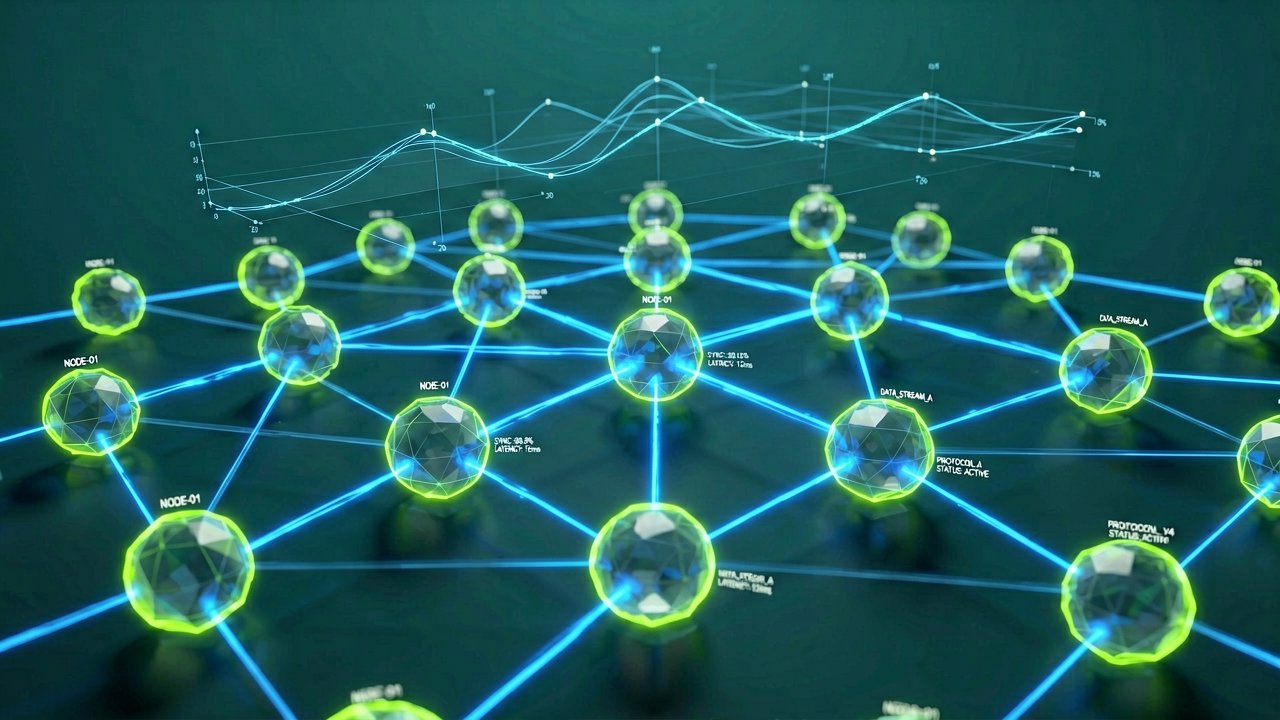
The global paradigm of enterprise security is undergoing an unprecedented architectural shift as legacy, signature-based defense mechanisms fail to keep pace with dynamic multi-layered attacks. Modern threat actors leverage sophisticated automation to orchestrate zero-day exploits and algorithmic breaches, rendering manual security operations centers (SOCs) structurally obsolete. In response, advanced artificial intelligence algorithms have emerged as the foundational layer of contemporary cybersecurity, shifting the industry standard from reactive post-incident mitigation to autonomous, real-time threat neutralization.
This urgent transition is driving explosive growth across the technology sector. Financial indicators compiled by Fortune Business Insights project that the global artificial intelligence in cybersecurity market will scale from $44.24 billion in 2026 to an astonishing $213.17 billion by 2034, registering a compound annual growth rate (CAGR) of 21.8%. This influx of capital reflects a fundamental strategic prioritization among enterprise chief information security officers (CISOs), who now view intelligent automation not as an optional capability upgrade, but as a mandatory prerequisite for operational survival.
The Structural Demise of Rule-Based Defenses
Traditional security infrastructures rely heavily on static correlation rules and known threat signatures. While effective against historical malware variants, these rigid parameters cannot decipher mutating code, behavioral anomalies, or credential-based intrusions. Human analysts are simultaneously overwhelmed by alert fatigue, processing millions of network logs daily, which often results in critical signals being missed. Advanced AI algorithms resolve this bottleneck by establishing continuous behavioral baseline modeling across endpoints, cloud systems, and operational technology (OT) layers.
Machine Learning at the SOC Helm
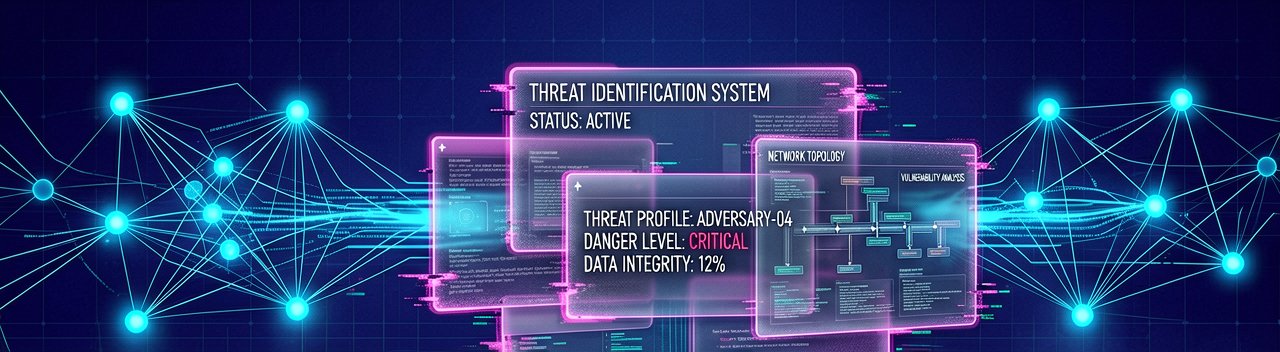
By analyzing massive datasets in real time, machine learning and deep learning models identify deviations in user behavior, unusual protocol commands, and unexpected data polling intervals instantly. These autonomous systems parse network telemetry to link seemingly unrelated, low-confidence signals into unified threat profiles, enabling automated isolation of compromised assets before lateral movement occurs. Furthermore, the integration of generative AI within modern SOCs streamlines automated incident triage and forensic summarization, drastically reducing the mean time to detect (MTTD) and mean time to respond (MTTR) from days to milliseconds.
Enterprise Demands and Strategic Shifting
The acceleration of cloud-native SaaS deployment, strict data privacy regulations, and cyber insurance mandates are forcing companies to adopt autonomous security controls. High-risk verticals—specifically banking, financial services, healthcare, and critical energy infrastructure—represent the largest share of global AI adoption due to the high compliance penalties and valuable data repositories they manage. This has initiated an intense AI cyber arms race, forcing defense vendors to consolidate their portfolios into unified, platform-centric architectures capable of self-healing network operations.
Anatomy of the Algorithmic Frontier
Behind the Silicon Veil: The rapid virtualization of corporate infrastructure has permanently disrupted the traditional network perimeter, turning identity and cloud microservices into the primary battlegrounds for enterprise defense. For decades, security teams relied on a castle-and-moat strategy, assuming that internal traffic was inherently trustworthy once a user passed external firewalls. Advanced AI threat detection shatters this outdated complacency by operating on a philosophy of perpetual skepticism, treating every continuous data packet, system call, and API request as a potential vector of compromise.
At the engineering level, the true breakthrough lies in the deployment of unsupervised machine learning models that do not rely on historical attack blueprints. Instead, these algorithms map the highly complex, invisible behavioral rhythms of an entire enterprise ecosystem. By observing the daily routines of human users, automated software agents, and server-to-server communications, the AI creates an evolving baseline of normalcy. When an employee suddenly accesses a sensitive database at an atypical hour from an unfamiliar virtual private network, the algorithm does not just log an alert; it cross-references the user's keystroke dynamics, data transfer sizes, and subsequent commands to evaluate risk in milliseconds.
This computational speed has fundamentally transformed the economics of the Security Operations Center. Historically, junior analysts spent their entire shifts sifting through an endless deluge of false positives generated by hyper-sensitive, rigid rules, leading to severe operational burnout and delayed responses to actual breaches. Modern AI layers act as an automated first responder, instantly triaging millions of daily telemetry points down to a handful of high-fidelity, actionable incidents. This automation liberates human cyber investigators to focus their specialized expertise on proactive threat hunting, deep forensic analysis, and long-term strategic resilience.

However, this paradigm shift has triggered a highly sophisticated, algorithmic arms race between corporate defense systems and adversarial nation-states. Sophisticated hacking collectives are now actively utilizing generative AI tools to craft hyper-personalized phishing campaigns and design polymorphic malware capable of subtly altering its digital footprint to evade detection. Consequently, enterprise security platforms are being forced to evolve from passive monitoring tools into predictive engines that simulate adversarial behavior, anticipating infrastructure vulnerabilities before attackers can even scan for them.
Ultimately, the successful integration of autonomous cybersecurity systems hinges on a delicate balance of trust between executive leadership and machine intelligence. Chief Information Security Officers frequently face the daunting challenge of configuring automated response protocols—such as instantly isolating a critical production server or cutting off executive network access—without inflicting self-induced operational downtime. As these AI models achieve higher precision and lower error rates, the corporate world is steadily moving toward fully autonomous self-healing architectures, where the role of the human defender is no longer to fight the fire, but to constantly refine the intelligence of the system that prevents it.
The Hidden Fault Lines of Autonomous Defense
Reading Between the Lines: The tech industry’s current infatuation with fully autonomous cybersecurity systems conveniently glosses over a fundamental structural vulnerability: the inherent fragility of the training data itself. Vendor marketing pitches routinely paint a picture of flawless, self-correcting algorithms that eliminate human error from the defensive equation. Yet, this narrative ignores the reality of data poisoning, where sophisticated adversaries deliberately feed subtle, anomalous telemetry into enterprise networks over long periods. By gradually skewing the machine's perception of "normal" behavior, attackers can essentially blindfold the AI, creating systemic blind spots designed to exploit the exact models meant to protect the infrastructure.
Furthermore, the industry's aggressive push to minimize the Mean Time to Respond (MTTR) has introduced an ironic new category of operational risk. When AI algorithms are granted the absolute authority to autonomously isolate assets, revoke credentials, and shut down network segments in milliseconds, the defense mechanism itself can become a highly effective denial-of-service tool. A clever adversary can trigger false flags intentionally calibrated to trick a hyper-reactive AI into taking critical business operations, public-facing applications, or supply chain APIs offline. In the frantic rush to eliminate human latency, organizations are inadvertently building brittle systems where a single algorithmic miscalculation can inflict as much financial damage as an actual data breach.
This reality exposes a profound contradiction in the corporate push for artificial intelligence: the technology designed to alleviate analyst burnout is creating a deeper crisis of transparency. Many deep learning architectures operate as complete black boxes, offering highly accurate threat verdicts without providing a clear, auditable trail of logic. When an autonomous system blocks a critical patch or paralyzes a core corporate service, human engineers are left to reverse-engineer a complex mathematical decision-making process under extreme duress. This lack of explainability compromises regulatory compliance and dampens executive confidence, proving that until AI can explain its reasoning to a board of directors, the human analyst remains an irreplaceable component of structural resilience.
"We are rapidly approaching a cyber-security utopia where brilliant, hyper-automated AI systems will instantly neutralize sophisticated, hyper-automated AI attacks—leaving human executives perfectly free to wonder why the entire corporate network just autonomously decided to fire itself."
Artūras Malašauskas is an AI Systems Integrator with 20+ years of production-grade web engineering experience. He has designed, shipped, and scaled enterprise Python/PHP systems for logistics, SaaS, and public-sector clients. For the past year, he has focused exclusively on AI integrations: deploying open-source LLMs, building generative media pipelines (image, audio, video), and engineering multi-agent workflows for real production environments. His standard: reproducibility, security, cost-efficient inference—no vaporware. He documents and evaluates emerging AI tooling, separating verified capabilities from marketing noise. Technical editor at: muza-ai.eu, ai-verslas.lt, ai-naujinos.lt Connect on LinkedIn
Comments