The Machine-Speed Defense: How AI Is Eliminating the Cybersecurity Alert Fatigue Crisis Across Enterprise Sectors
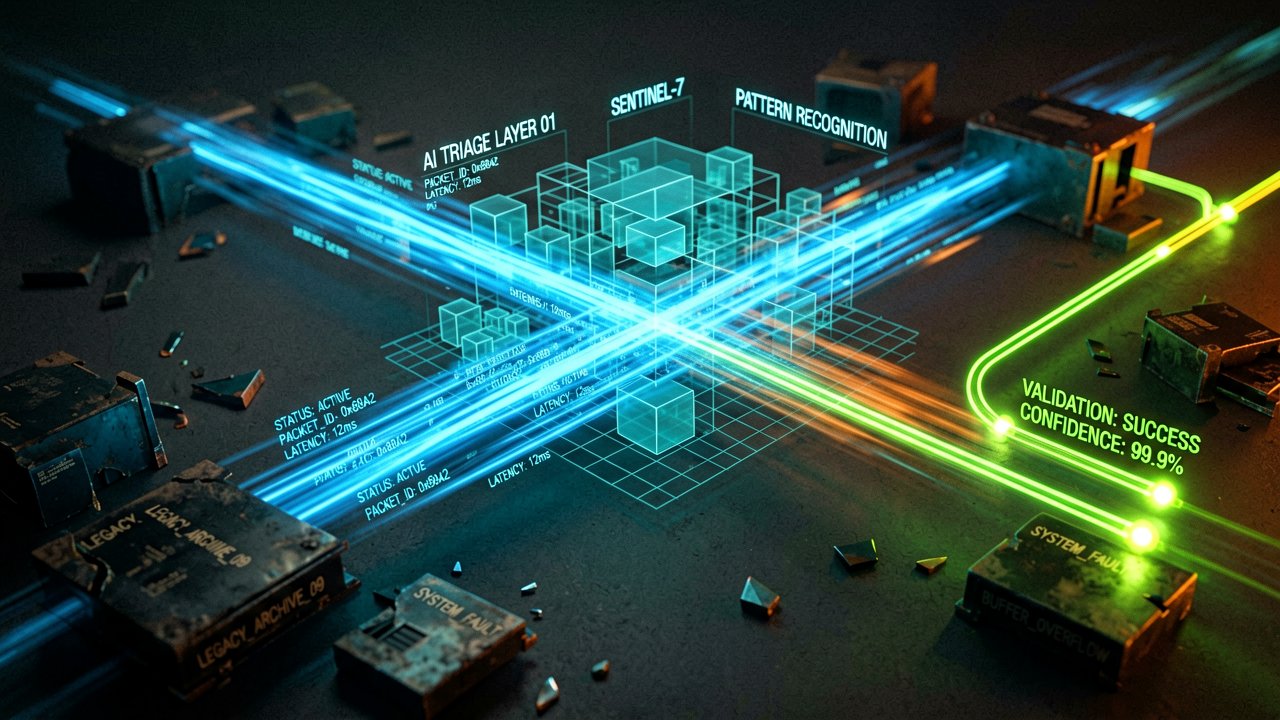
The modern enterprise Security Operations Center (SOC) has long been defined by a brutal, asymmetric math. As corporate digital footprints expand across multi-cloud environments, operational technology systems, and SaaS platforms, the volume of telemetry data has breached human management capacity. Enterprise security teams now face thousands of security notifications every single day, turning what should be a rigorous threat-hunting process into an exhausting exercise in continuous context-switching. This overwhelming deluge of technical warnings degrades response times, leads to systemic staff attrition, and creates exactly the operational blind spots that malicious actors count on when executing stealthy corporate intrusions.
Faced with this mounting operational bottleneck, the global security apparatus is rapidly shifting from rigid, rule-based filtering toward autonomous machine intelligence. Instead of trying to scale human labor against machine-speed attacks, enterprise technology architectures are being fundamentally redesigned around agentic AI and advanced machine learning models. This market pivot is driving unprecedented economic momentum, with specialized software spending surging as organization leaders prioritize platform consolidation over disjointed legacy tools. According to enterprise infrastructure tracking by Fortune Business Insights , the global artificial intelligence in cybersecurity market size reached $34.09 billion in 2025 and is projected to expand dramatically from $44.24 billion in 2026 to over $213 billion by 2034.
This massive influx of capital reflects a critical strategic realization across sectors ranging from healthcare to critical infrastructure: traditional security information and event management systems are economically and operationally broken. Legacy setups favor over-collection, generating immense false-positive rates that regularly exceed 50 percent of all logged incidents. By implementing adaptive AI-driven triage engines, enterprises are successfully filtering out up to 90 percent of this baseline background noise, transforming chaotic data lakes into concise pipelines of actionable, high-confidence threat alerts.
The Industrial Shift toward Autonomous Triaging and Contextual Enrichment
The core mechanism of AI-driven alert mitigation lies in its ability to execute multi-domain data correlation at scale. Unlike legacy Security Orchestration, Automation, and Response playbooks that break down whenever an incident diverges from static, pre-configured conditions, modern AI agents analyze live events against a shifting behavioral baseline. The system learns the unique, day-to-day operational fingerprint of an organization's specific network, identity relationships, and cloud assets, allowing it to instantly recognize subtle contextual anomalies that point to true malicious activity.
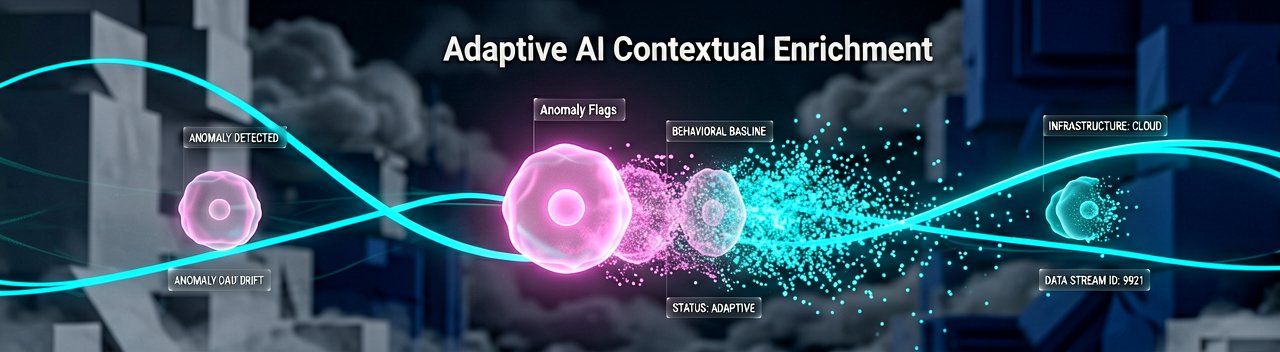
When an alert triggers, an autonomous AI analyst does not simply pass the notification to a human queue; it actively initiates a preliminary, machine-speed investigation. The AI cross-references the alert metadata with external threat intelligence, interrogates relevant endpoint logs, and compiles a comprehensive historical narrative of the event. By executing this intensive initial triage process in under two minutes, the machine strips away repetitive level-one data entry tasks, giving human analysts the pre-computed forensic visibility required to make precise, high-level containment decisions without losing critical minutes to manual research.
Balancing Cognitive Relief with the Realities of Agentic Risks
While the reduction in analyst cognitive load represents a massive win for corporate risk management, the deployment of agentic AI introduces distinct architectural vulnerabilities that security leaders must actively monitor. As automated systems move from passive analytical advisors to active participants in incident response pipelines, the alert content itself becomes an input for AI reasoning. Malformed or deliberately poisoned telemetry data fields can manipulate automated summaries, potentially tricking downstream AI engines into misclassifying a severe lateral network attack as a low-risk configuration error.
Consequently, the enterprise market is moving away from unvalidated full automation toward a highly structured human-in-the-loop paradigm. Organizations are applying strict AI governance frameworks to ensure that autonomous models handle the heavy lifting of data normalization, noise suppression, and context enrichment, while keeping definitive operational authority in human hands. This balanced approach eliminates the exhausting visual and mental friction of the alert storm, shifting the enterprise cyber defense posture from a reactive, overwhelmed scramble into an elite, machine-supported triage environment capable of containing threats before they can execute their final payloads.
Behind the Scenes: The Invisible Engineering Battles Inside the Modern SOC
While industry analysts frequently celebrate the statistical drop in false positives, the engineering reality on the ground reveals a complex, multi-year friction between legacy infrastructure and algorithmic governance. Seasoned security architecture teams are discovering that dropping an advanced machine learning model into a fragmented corporate network does not instantly cure operational fatigue. Instead, it often shifts the bottleneck from the security operations center analyst queue to the security engineering backlog. The initial deployment phase frequently triggers a secondary form of noise: algorithmic drift and false alerts caused by the AI misinterpreting legitimate, poorly documented legacy scripts as malicious behavioral anomalies.
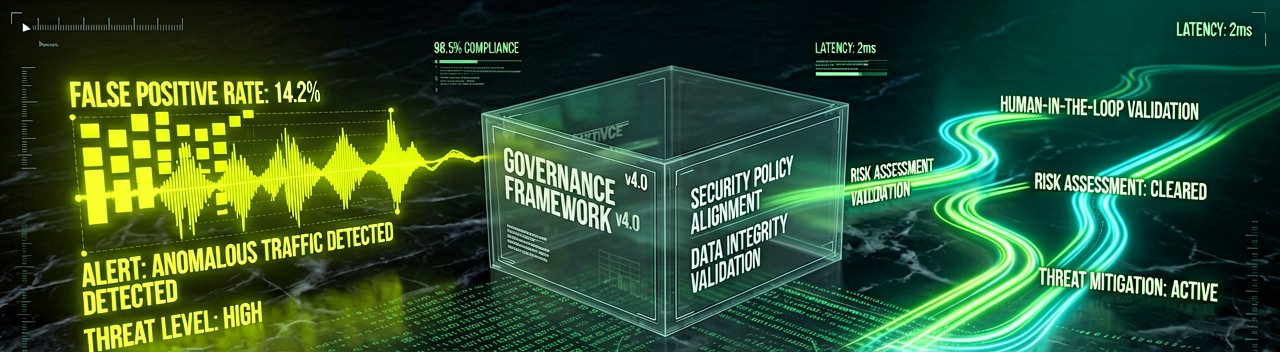
Chief Information Security Officers are consequently forced to navigate a difficult delicate balance between vendor promises of immediate automation and the realities of institutional technical debt. In high-stakes environments like financial services and defense manufacturing, security leaders cannot risk allowing an autonomous agent to accidentally isolate a critical production database based on an unverified behavioral correlation. This caution has given rise to rigorous internal staging pipelines where new models are run in a non-blocking, passive observation mode for months. During this validation period, human engineers meticulously audit the AI's reasoning paths against controlled simulation attacks to establish trust before granting the software write-access to network firewall configurations.
The human cost of this transition also extends deeply into the organizational hierarchy and career trajectories of cybersecurity personnel. Historically, entry-level triage roles served as the primary training ground where junior analysts learned the mechanics of threat hunting by manually investigating thousands of low-level alerts. As machine intelligence successfully absorbs this baseline workload, enterprises face a widening talent development gap. Organizations must now reinvent their onboarding methodologies, using simulated incident sandboxes to cultivate the advanced forensic intuition that junior staff used to build organically during the daily grind of manual triage.
Ultimately, the long-term success of AI-driven alert mitigation hinges on establishing unified data standards across the entire corporate technology footprint. Many enterprises operate with disjointed data structures across their cloud security tools, endpoint detection software, and network monitoring applications, forcing AI layers to waste valuable computation cycles on complex protocol translation. Forward-looking enterprise architectures are resolving this friction by adopting open-source security data frameworks, ensuring that autonomous threat intelligence engines can ingest normalized telemetry natively and execute mitigation playbooks at the machine-speed required to neutralize modern, automated exploits.
Reading Between the Lines: The Marketing Paradox of Autonomous Security
The prevailing industry narrative positions AI as the definitive antidote to operational exhaustion, yet this assumption ignores a fundamental law of enterprise technology: efficiency gains inevitably invite greater consumption. By suppressing the overwhelming baseline of false positives, automated triage systems do not simply grant security teams idle time to rest. Instead, enterprise stakeholders immediately reallocate that newly recovered cognitive capacity toward broader, previously neglected risk areas. Security teams are quickly tasked with hunting for deep architectural vulnerabilities, auditing supply chain code, and reviewing complex compliance frameworks, effectively shifting the nature of employee burnout from sensory overload to systemic intellectual fatigue.
Furthermore, an uncomfortable contradiction sits at the heart of the modern automated security market. The very same machine learning architectures deployed to filter out defensive noise are being weaponized by adversaries to generate highly targeted, polymorphic malware that bypasses traditional detection engines entirely. This creates a continuous, high-cost algorithmic arms race where enterprises must perpetually upgrade their defensive models just to maintain a baseline level of visibility. The promise of a permanent reduction in security spending via automation ignores the reality that defensive AI models require constant, expensive compute resources and highly paid data engineers to remain effective against evolving, AI-fueled adversarial tactics.
This dynamic introduces a hidden systemic risk where organizations may over-rely on algorithmic consensus, creating an environment ripe for confirmation bias. When an autonomous system performs flawlessly for months, human operators naturally experience a form of automation complacency, lowering their vigilance and accepting the machine's summaries without scrutiny. If an advanced persistent threat group manages to slip an exploit past the AI's behavioral baseline, the subsequent breach could go unnoticed for far longer than it would in a traditional environment, simply because human defenders have been conditioned to trust that the machine-cleared dashboard represents absolute reality.
"We spent a decade drowning in a million alerts generated by dumb software, only to realize success means drowning in ten highly complex alerts generated by brilliant software—proving that in cybersecurity, progress isn't about escaping the flood, it's just about upgrading to a more sophisticated snorkel."
Artūras Malašauskas is an AI Systems Integrator with 20+ years of production-grade web engineering experience. He has designed, shipped, and scaled enterprise Python/PHP systems for logistics, SaaS, and public-sector clients. For the past year, he has focused exclusively on AI integrations: deploying open-source LLMs, building generative media pipelines (image, audio, video), and engineering multi-agent workflows for real production environments. His standard: reproducibility, security, cost-efficient inference—no vaporware. He documents and evaluates emerging AI tooling, separating verified capabilities from marketing noise. Technical editor at: muza-ai.eu, ai-verslas.lt, ai-naujinos.lt Connect on LinkedIn
Comments