When War Meets Code: The High Stakes of Unleashing AI on the Battlefield
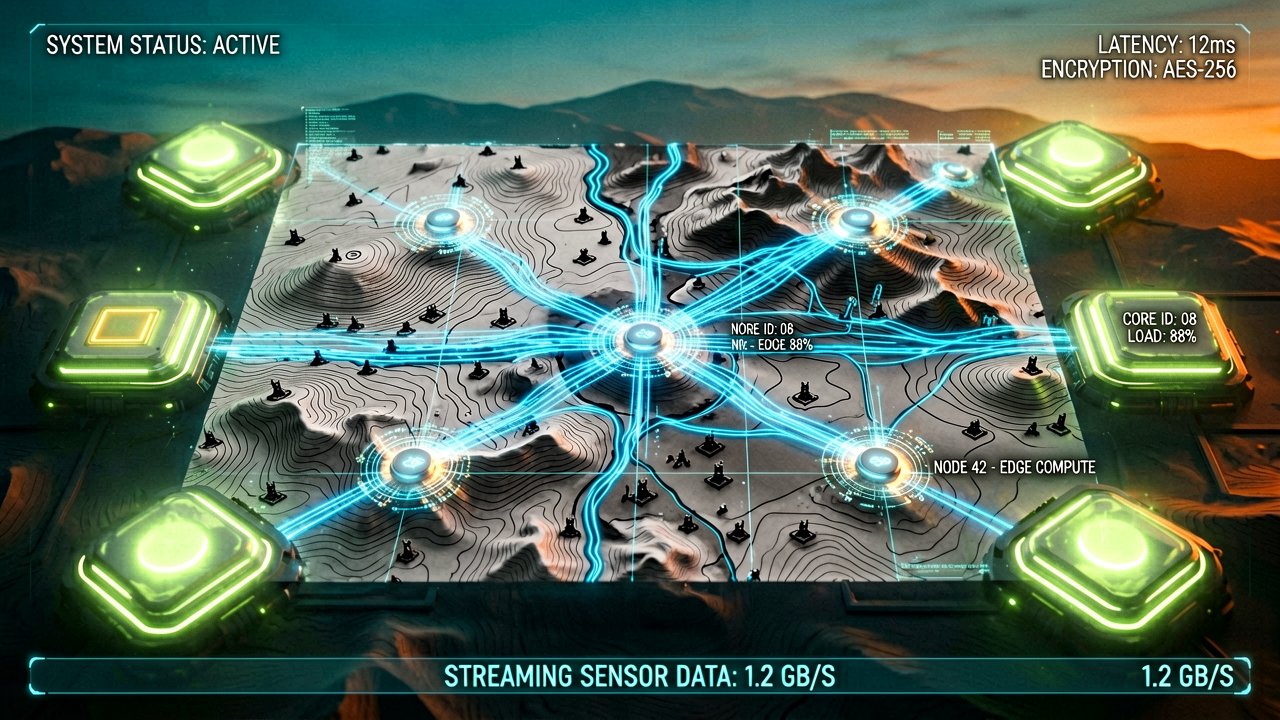
The digitization of the modern theater of war is shifting from a theoretical evolution to an industrialized reality. The global artificial intelligence in military market is projected to expand significantly, rising from $11.53 billion in 2025 to $13.78 billion in 2026 at a compound annual growth rate of 19.5 percent, according to data from Yahoo Finance . This rapid capital influx reflects a profound strategic realignment within global defense ministries, where traditional hardware-centric procurement is giving way to software-defined operational systems. Silicon Valley venture networks and specialized defense tech firms are transforming modern command structures by supplying scalable, algorithmic solutions directly to front-line infrastructure.
This market acceleration is deeply intertwined with changing geopolitical dynamics and the immediate demand for lightning-fast decision-making tools. As conventional military friction escalates in contested corridors, the sheer volume of data generated by modern sensor arrays has completely overwhelmed human analytical capacity. Autonomous surveillance drones, real-time facial recognition systems, and predictive logistics networks are no longer experimental novelties but core systemic upgrades. Military forces are aggressively funding the migration of agentic AI out of isolated pilot programs and into scaled, operational environments to secure technological dominance before adversaries can close the capability gap.
However, this transition introduces unprecedented operational risks that complicate simple market optimism. Software errors, biased sensor training data, and the unpredictable nature of machine learning algorithms create a highly volatile framework when deployed in lethal contexts. Defense contractors and software developers are forced to balance the competitive mandate for speed against the catastrophic consequences of programmatic failure. The race to weaponize code has compressed response windows to milliseconds, shifting the role of human operators from active controllers to passive overseers who merely validate automated targeting outputs.
The Algorithmic Vanguard and Capital Influx
The defense procurement landscape is undergoing an uncharacteristic structural shift as non-traditional software developers capture historic levels of capital. Capital markets are heavily backing dual-use defense tech firms to build the infrastructure required for hybrid warfare. Venture investments are flooding into modern systems designed for data integration and autonomy at the edge, actively challenging the market dominance of legacy aerospace giants. This capital surge indicates that future battlefield superiority will belong to the nations capable of scaling algorithmic speed and deploying modular code updates in real time.
The Erosion of Human Agency in the Loop
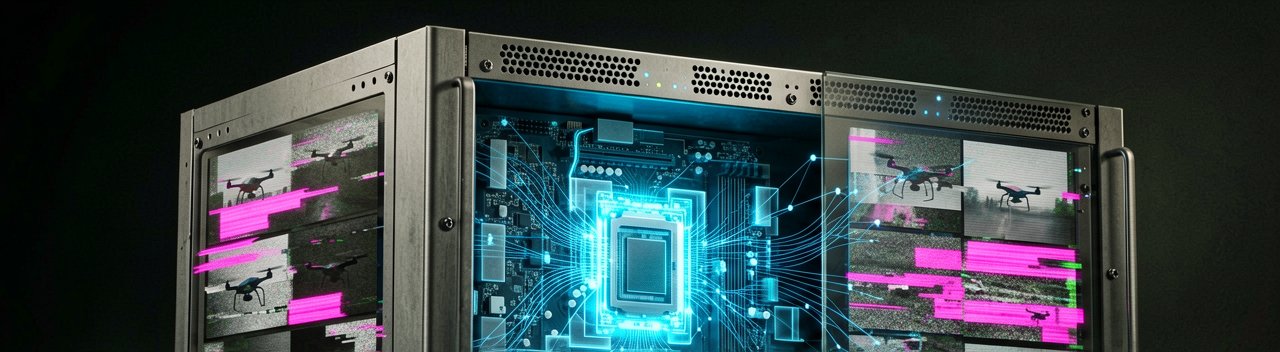
As predictive analytics and automated command networks dictate tactical movements, human oversight faces functional displacement. Military planners increasingly rely on automated targets generated by complex software suites, creating what defense analysts describe as a synthetic certainty. When algorithms process data, identify threats, and recommend kinetic actions in fractions of a second, human operators lack the actual time required to challenge or contest the machine's output. This structural transition creates severe accountability vulnerabilities, as responsibility for battlefield outcomes fragments across network engineers, data analysts, and procurement officers.
Infrastructure Upgrades and the Edge Computing Race
The industrialization of military AI requires a total modernization of foundational hardware and communication networks. Governments are directing massive capital allocations into secure digital battlefield environments, emphasizing new installations that integrate localized Internet of Things devices and advanced command hubs. Scaling these machine learning architectures requires robust processing power deployed directly to the tactical edge to maintain operational continuity during communication blackouts. Consequently, the defense tech sector is prioritizing ruggedized processing hardware and secure microelectronics capable of running advanced neural networks under extreme physical stress.
The Human Element and Operational Realities
Behind the Scenes of the Algorithmic Battlefield: The actual deployment of machine learning models on the front lines reveals a stark contrast between corporate marketing materials and the chaotic reality of active combat zones. While software executives present seamless demonstrations of automated threat detection in controlled testing environments, field operators consistently grapple with the unpredictable nature of data degradation in the wild. Mud, electronic jamming, and atmospheric interference routinely distort sensor feeds, forcing fragile neural networks to make high-stakes classifications based on corrupted inputs. When an algorithm is trained on pristine satellite imagery but must execute decisions using low-resolution, obscured drone video, the margin for catastrophic misidentification widens dramatically.
This technical friction has triggered an intense, quiet debate among veteran field commanders and civilian data scientists regarding the validity of algorithmic recommendations. Legacy military personnel argue that data-driven models lack the situational intuition, cultural nuance, and psychological understanding required to accurately read an adversary's intent during a crisis. Software developers counter that human judgment is inherently slowed by fear and cognitive overload, making automated processing an operational necessity when dealing with hypersonic threats or swarm attacks. This philosophical divide complicates training protocols, as traditional command structures struggle to integrate software engineers who view the battlefield through the sterile lens of optimization metrics rather than tactical history.
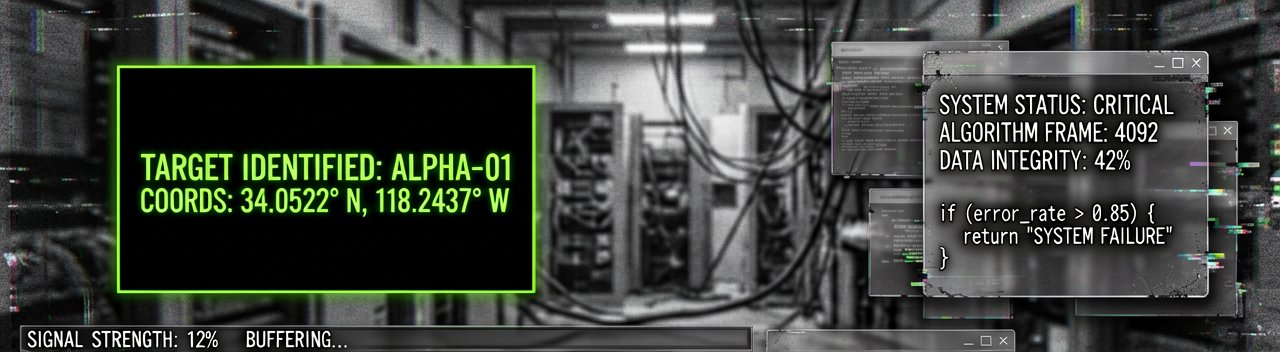
The historical precedent for this transition stems from early automated air-defense systems, which frequently suffered from automation bias—the tendency for human operators to trust computerized outputs over their own senses. In modern conflict, this dependency is amplified because the machine learning models operate as closed boxes, offering targeting suggestions without explaining the underlying logic or data correlations that led to the conclusion. Commanders are placed in the untenable position of either overriding a system that possesses vastly superior data-gathering capabilities or blindly trusting an unverified calculation. This dynamic effectively shifts the burden of ethical and legal compliance from trained military officers to the civilian engineers who wrote the original code months prior and thousands of miles away from the theater of operations.
Furthermore, the reliance on commercial software supply chains introduces severe counter-intelligence vulnerabilities that the defense sector is poorly equipped to manage. Because modern military artificial intelligence depends on open-source libraries, commercial cloud infrastructure, and global semiconductor pipelines, the attack surface expands well beyond the physical perimeter of a military base. Hostile actors no longer need to defeat an armored division on the ground if they can successfully execute a data-poisoning attack during the initial model-training phase or exploit a zero-day vulnerability in a routine software update. The weaponization of code has ultimately transformed the software repository into the primary line of engagement, where a single line of corrupted script can neutralize billions of dollars in hardware assets before a single shot is fired.
The Illusions of the Automated Sandbox
Reading Between the Lines of the Silicon Doctrine: The prevailing narrative surrounding military artificial intelligence presumes that algorithmic precision will inherently reduce the collateral damage of modern warfare. This techno-optimistic assumption ignores the historical reality that increasing the efficiency of targeting mechanisms invariably lowers the political and operational barriers to entering a conflict. When political leaders believe that operations can be conducted with sterile, automated precision and minimal risk to domestic personnel, the threshold for ordering kinetic strikes decreases. The paradox of the automated battlefield is that the pursuit of cleaner warfare frequently results in more frequent, protracted engagements that continuously destabilize volatile regions.
Furthermore, the current corporate race to supply military models operates on the deeply flawed premise that battlefield data is a static commodity that can be cleanly indexed and modeled. In practice, adversaries do not cooperate with the training parameters of a neural network; they actively adapt, disguise, and inject noise into the environment to exploit algorithmic blind spots. A system trained to recognize conventional military assets becomes a liability when confronting asymmetric tactics, civilian-integrated networks, or low-tech deception strategies designed specifically to trick computer vision systems. This over-reliance on data analytics creates a dangerous systemic vulnerability, where a command structure becomes blind to threats that simply cannot be quantified by existing sensors.
The financial realities of this technological pivot also expose severe contradictions within national defense strategies that favor commercial software procurement. While venture-backed defense startups promise agile, rapid deployment cycles that outpace traditional defense contractors, the underlying infrastructure relies heavily on brittle, highly centralized commercial cloud networks. This dependence creates a central point of failure, as a single cyber disruption or infrastructure outage at a commercial data center could theoretically paralyze the decision-making apparatus of an entire theater of operations. The military industrial complex is rapidly swapping the slow, bureaucratic inefficiencies of legacy hardware for the immediate, catastrophic vulnerabilities of software monoculture.
Ultimately, the displacement of human decision-making on the battlefield signals a broader shift toward a state of perpetual, algorithmic friction. As autonomous systems on opposing sides begin to interact at speeds beyond human comprehension, the potential for accidental, machine-driven escalation increases exponentially. A misinterpreted border patrol or an algorithmic misclassification could trigger an automated counter-response before diplomats or senior commanders even realize an incident has occurred. In the rush to secure an operational advantage through milliseconds of processing speed, nations are constructing a highly volatile global defense architecture where the spark of a future conflict may belong entirely to an unpatched software bug.
The Realities of Automated Command
"We have spent decades trying to take the fog out of war, only to replace it with a high-resolution, algorithmic glare that convinces us we can see perfectly in the dark—right up until the moment we trip over the power cord."
Artūras Malašauskas is an AI Systems Integrator with 20+ years of production-grade web engineering experience. He has designed, shipped, and scaled enterprise Python/PHP systems for logistics, SaaS, and public-sector clients. For the past year, he has focused exclusively on AI integrations: deploying open-source LLMs, building generative media pipelines (image, audio, video), and engineering multi-agent workflows for real production environments. His standard: reproducibility, security, cost-efficient inference—no vaporware. He documents and evaluates emerging AI tooling, separating verified capabilities from marketing noise. Technical editor at: muza-ai.eu, ai-verslas.lt, ai-naujinos.lt Connect on LinkedIn
Comments