The Algorithmic Front Line: Balancing Battlefield Innovation and Ethical Risks in the Pentagon’s AI Dilemma
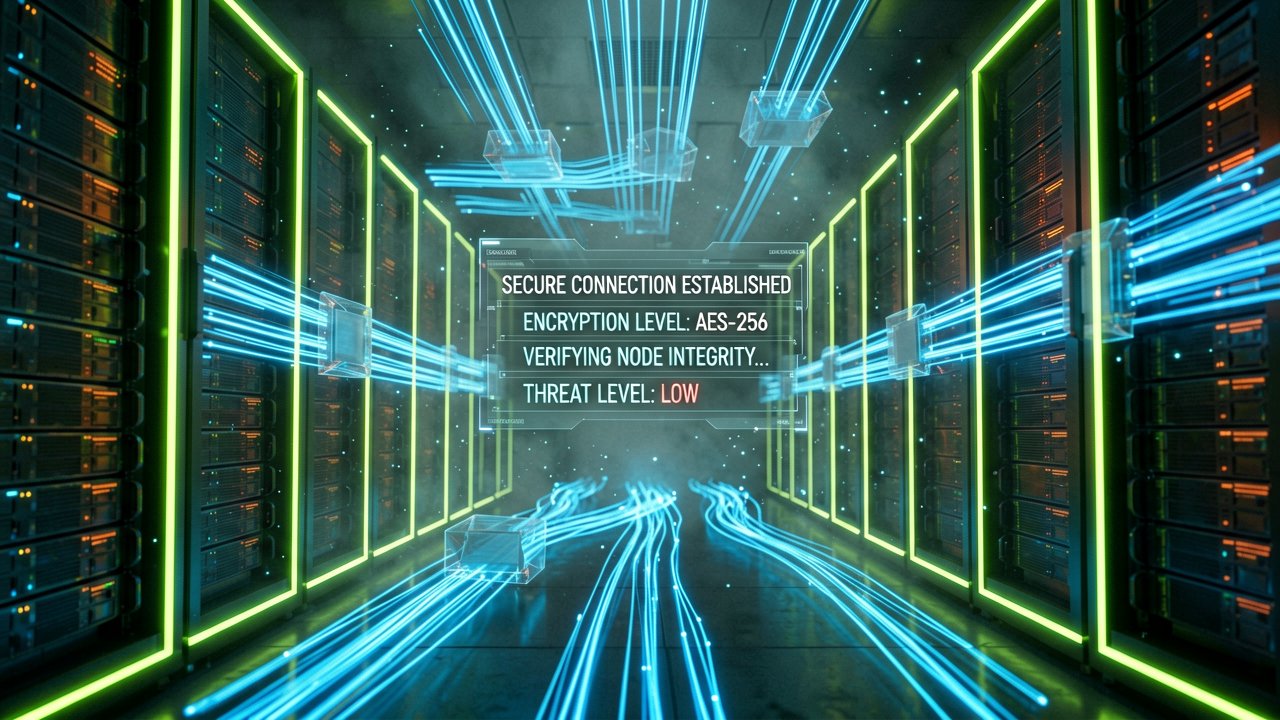
The global defense marketplace is undergoing a profound structural transformation as the United States Department of Defense accelerates the integration of autonomous systems into its core combat architecture. Driven by the strategic imperative to counter peer-adversary mass, the military is aggressively leaning on private-sector breakthroughs to field low-cost, expendable hardware. According to details tracked by the Congressional Research Service, initiatives like Replicator 1 aim to deploy thousands of all-domain, attritable autonomous systems to redefine the modern battlefield economics of attrition and swarming tactics. This rapid pivot from legacy, multi-billion-dollar exquisite platforms to software-defined, distributed networks represents the fastest procurement shift since the Cold War.
However, this transition introduces unprecedented operational and strategic friction. Defense contractors, venture-backed silicon firms, and military commanders find themselves caught in a complex balancing act between rapid engineering deployment and strict regulatory frameworks. While artificial intelligence provides unparalleled decision-making speeds and situational awareness, it strips away the traditional temporal buffers that human operators rely on during escalating crises. The market must now pivot to deliver not just raw computing power, but predictable, resilient systems that can operate under severe electronic warfare conditions without suffering catastrophic software failures or erratic target selection.
To mitigate these vulnerabilities, federal acquisition pipelines are increasingly tying procurement budgets directly to adherence with established ethical guardrails. Venture capital funding flowing into defense technology is now heavily predicated on designing systems that comply with strict government standards of technical accountability and oversight. As the Pentagon builds out an increasingly automated architecture, the vendor landscape is splitting between traditional hardware manufacturers and a new class of agile, software-first suppliers capable of embedding auditability into every algorithmic decision.
The Economics of Scale and Commercial Convergence
The push toward autonomous warfare has structurally altered the defense industrial base by lowering entry barriers for commercial software companies. Silicon Valley firms and defense-tech startups are rapidly capturing market share traditionally held by legacy aerospace primes. By utilizing commercial off-the-shelf components and open-source machine learning models, these new market entrants drastically compress development lifecycles from decades to weeks. This convergence forces a dramatic realignment of capital, with private equity pouring into autonomous drone swarms, edge-computing sensors, and AI-driven command-and-control software.
Architectural Vulnerabilities and Systemic Risks
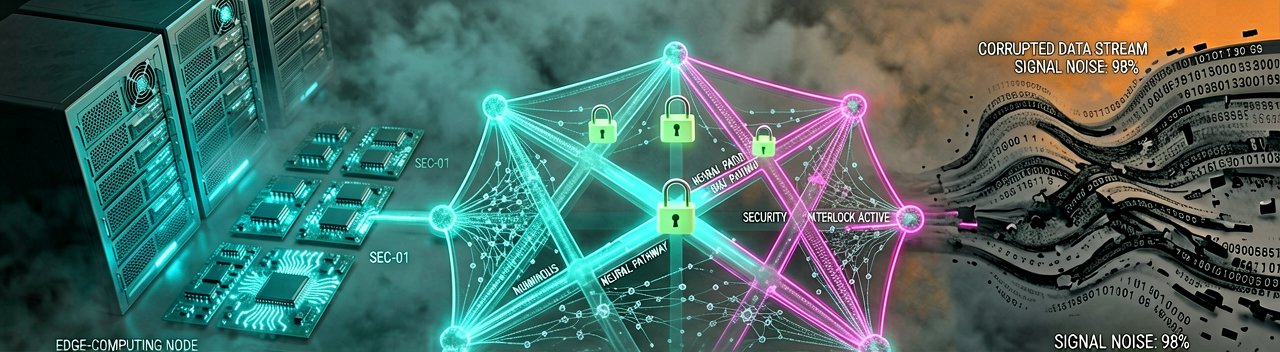
As battlefield management becomes increasingly algorithmic, the target surface for adversarial exploitation expands exponentially. Machine learning models are inherently susceptible to data poisoning, sensor spoofing, and adversarial prompt injections that can completely compromise autonomous intent. If an autonomous system misinterprets civilian infrastructure as a military asset due to corrupted sensor data, the strategic fallout could escalate conflicts instantly. Consequently, the defense market is seeing an absolute surge in demand for specialized validation, red-teaming, and continuous algorithmic testing services.
Enforcing Institutional Accountability
To avoid a total loss of oversight during chaotic operations, procurement mandates require strict adherence to five core defense principles: responsibility, equitability, traceability, reliability, and governability. These guidelines require that human operators always retain the ability to monitor, constrain, or completely deactivate autonomous units showing unintended behaviors. Software architectures must feature transparent, auditable decision paths rather than uninterpretable "black box" logic. Security vendors able to guarantee verifiable human-in-the-loop control boundaries are winning the largest shares of modernization funding.
Behind the Scenes of the Autonomous Procurement Shift
The acceleration toward an AI-driven battlespace has sparked an intense, quiet ideological rift between traditional Pentagon traditionalists and a rising faction of software-first technologists. For decades, the defense procurement model was built on predictability, prioritizing heavy, multi-billion-dollar hardware platforms designed to last half a century. Shifting this massive bureaucratic inertia to support disposable software-defined assets requires more than just capital. It requires a fundamental overhaul of military risk tolerance, as commanders are forced to rely on iterative code updates rather than fixed, mechanically proven weapon systems.
This operational pivot has fundamentally altered the relationship between the government and commercial technology suppliers. Silicon Valley executives, long hesitant to engage with the military due to employee pushback and ethical concerns, are quietly establishing specialized defense subsidiaries. These distinct corporate entities insulate core commercial brands while capturing lucrative modernization contracts. This shift is driven by the reality that the computational models required for sophisticated battlefield perception cannot be built using isolated military data alone; they require the massive computing infrastructure and pre-trained foundation models controlled exclusively by commercial tech giants.
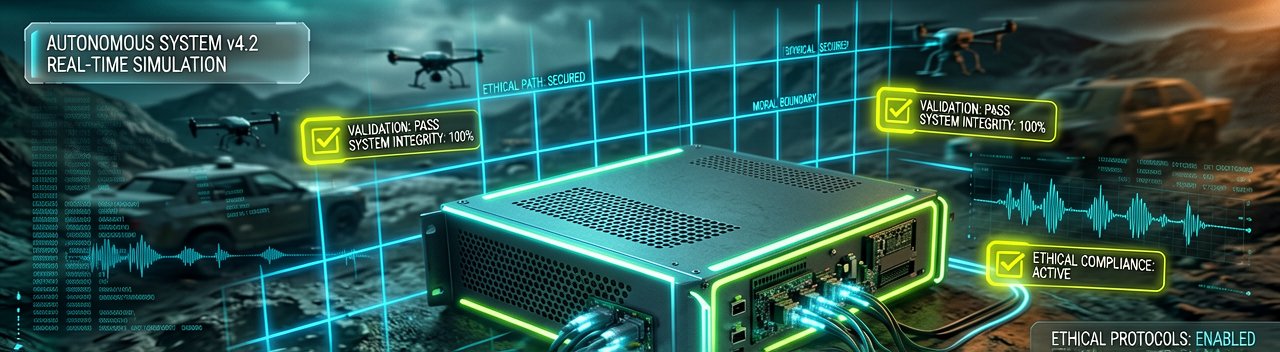
At the center of this integration sits a complex engineering challenge: the strict enforcement of deterministic boundaries on non-deterministic machine learning systems. Experienced defense engineers note that while a human soldier can adapt to completely novel tactical anomalies using intuition, an artificial intelligence model can fail unpredictably when encountering data slightly outside its training parameters. This vulnerability has turned data validation and continuous edge-testing into the fastest-growing sector of the defense tech market, as contractors race to build automated testing environments that simulate millions of chaotic battlefield scenarios before software is deployed to front-line units.
The historical precedent for this rapid technological shift traces back to early network-centric warfare concepts of the late 1990s, which frequently overpromised seamless battlefield visibility. Today's senior military leadership, having witnessed those early digital integration missteps, remains deeply skeptical of claims that software alone can eliminate the fog of war. This skepticism drives the current insistence on rigid architectural constraints, forcing developers to build hardcoded safety interlocks directly into weapon firmware. These physical and digital guardrails ensure that autonomous target classification can never automatically trigger a kinetic launch sequence without explicit, verified human authorization.
Ultimately, the Pentagon's AI dilemma is less about the technical capability of the algorithms and more about the institutional trust required to delegate critical battlefield tasks. As adversarial electronic warfare capabilities advance, autonomous systems must be prepared to operate in completely degraded environments without access to cloud computing or satellite communications. The strategic survival of these systems depends entirely on local edge-processing power. This dynamic ensures that the immediate future of defense procurement belongs to companies that can deliver compact, highly secure hardware capable of running complex, auditable models under the most severe operational stress.
Reading Between the Lines: The Illusion of Algorithmic Certainty
The prevailing narrative surrounding the Pentagon’s AI push assumes that deploying thousands of cheap, autonomous systems will naturally offset the industrial scale of near-peer adversaries. This view overlooks a stark operational contradiction: as systems become more distributed and less expensive, the backend infrastructure required to manage, secure, and update them grows exponentially more complex and vulnerable. Substituting hardware mass with software velocity does not eliminate logistics; it merely shifts the burden from moving physical ammunition to maintaining flawless, unhackable data pipelines across contested global networks. A single line of corrupted code or an unexpected software conflict could instantly ground an entire fleet of autonomous assets far more effectively than conventional air defenses.
Furthermore, the institutional insistence on absolute human accountability frequently clashes with the reality of algorithmic processing speeds. When artificial intelligence is introduced specifically to compress decision cycles from minutes to milliseconds, forcing a human operator to review and approve every kinetic action becomes an operational bottleneck. In a high-intensity conflict, commanders will face a brutal dilemma: either micro-manage their systems and lose the tactical speed advantage, or implicitly trust the algorithm’s recommendations to avoid being overwhelmed. This dynamic risks turning human-in-the-loop oversight into a mere rubber-stamping exercise, where operators lack the time and contextual data to genuinely challenge the machine’s target selections.
This reliance on automated intelligence also creates a dangerous strategic paradox regarding escalation management. In traditional warfare, human signals of restraint, miscalculation, or hesitation leave room for diplomatic de-escalation during a crisis. Autonomous systems, programmed to respond instantly to perceived threats based on rigid mathematical thresholds, lack the capacity for strategic pause or deliberate inaction. If two opposing algorithmic networks begin interacting under unmodeled battlefield conditions, they could trigger an escalatory loop of automated counter-responses before political leaders even realize a confrontation has begun. The true systemic danger is not a rogue artificial intelligence turning malicious, but rather a perfectly logical system executing its programming too efficiently in a chaotic situation.
Ultimately, the defense market's rush to monetize autonomous technology has created an environment where marketing hype often outpaces actual engineering validation. Venture-backed defense startups frequently demonstrate flawless drone coordination in controlled test ranges, yet these successes rarely translate smoothly to environments heavily degraded by advanced electronic warfare. The strategic push to field these systems rapidly before establishing rigorous, standardized validation methods creates a fragile foundation for future defense planning. Until the industry develops a reliable method to audit and predict how neural networks behave when confronted with entirely novel adversarial tactics, relying on algorithmic supremacy remains a high-stakes gamble wrapped in the language of technological inevitability.
"The ultimate irony of automated warfare is that we are spending billions of dollars to build highly advanced, lightning-fast artificial intelligence systems, only to realize we must immediately invent equally complex digital handbrakes to prevent them from accidentally starting World War III before breakfast."
Artūras Malašauskas is an AI Systems Integrator with 20+ years of production-grade web engineering experience. He has designed, shipped, and scaled enterprise Python/PHP systems for logistics, SaaS, and public-sector clients. For the past year, he has focused exclusively on AI integrations: deploying open-source LLMs, building generative media pipelines (image, audio, video), and engineering multi-agent workflows for real production environments. His standard: reproducibility, security, cost-efficient inference—no vaporware. He documents and evaluates emerging AI tooling, separating verified capabilities from marketing noise. Technical editor at: muza-ai.eu, ai-verslas.lt, ai-naujinos.lt Connect on LinkedIn
Comments