The Algorithmic Frontline: Market Dynamics of AI’s Dual-Use Dilemma in Crisis Zones

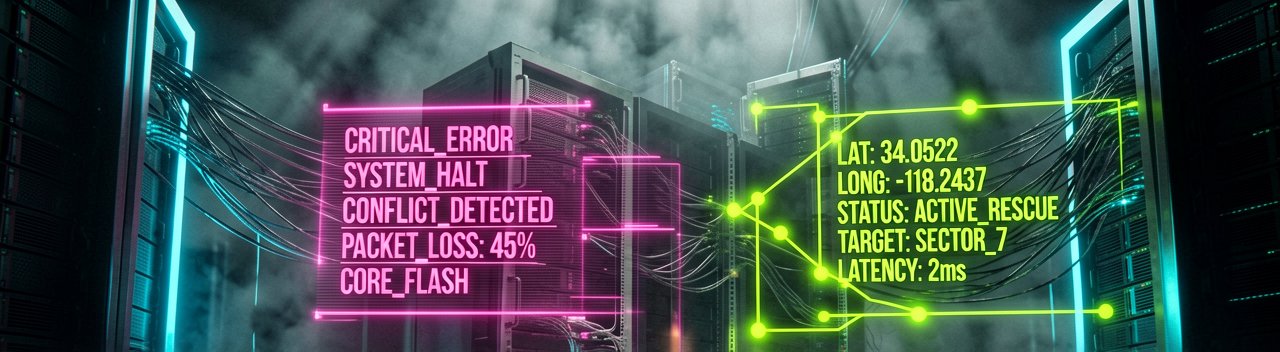
The geopolitical landscape has reached a defining structural shift as artificial intelligence transitions from experimental software to foundational dual-use infrastructure. In highly volatile environments, advanced machine learning architectures are simultaneously driving optimization across conflicting objectives. On one side, humanitarian organizations are deploying sophisticated algorithms to predict civilian displacement, streamline disrupted supply chains, and coordinate life-saving medical triage. On the opposite side, defense contractors and nation-states are scaling autonomous targeting suites and intelligence-fusion platforms, permanently altering the traditional velocity of armed engagement.
This rapid deployment has generated a highly lucrative yet ethical-complex market for software vendors, government contractors, and defense tech conglomerates. Global capital is pouring into algorithmic decision-support systems (DSS) and predictive modeling tools, accelerating the convergence of commercial technology and national security priorities. As private enterprise models become deeply integrated into state apparatuses, tech providers find themselves navigating a delicate landscape where software updates can directly dictate the precision of aid delivery or the lethality of a dynamic military strike.
Market Proliferation and Government Procurement Shifts
The monetization of conflict-zone AI has catalyzed a distinct pivot in government and defense procurement strategies. Rather than relying solely on legacy, slow-to-evolve hardware platforms, international militaries are rapidly absorbing commercial SaaS architectures to establish decision advantage. Software suites capable of ingestion and real-time synthesis of satellite imagery, social media telemetry, and drone feeds have seen unprecedented demand. According to research from the TRENDS Research & Advisory platform, systems like the Maven Smart System have proven capable of slashing operational decision cycles by 70% to 80% while identifying massive target pools within a 24-hour window. This acceleration of the OODA (Observe-Orient-Decide-Act) loop drives intense state competition, creating a highly competitive market where speed and analytical volume are prioritized above traditional multi-year vetting processes.
The Humanitarian Paradox and Ethical Vulnerabilities
While the defense sector secures aggressive capital, the humanitarian market presents a starkly different operational dynamic. Non-governmental organizations (NGOs) and international bodies are leveraging identical data-parsing techniques to automate early warning systems and protect vulnerable populations. However, these entities operate under severe resource constraints and an evolving landscape of digital manipulation. The core vulnerability within this framework is data integrity; algorithms trained on incomplete or culturally biased datasets can generate hazardous hallucinations or misallocate critical survival resources. Furthermore, the dual-use nature of these systems creates a severe counter-party risk, as predictive data pipelines designed to coordinate civil relief can inadvertently provide high-value operational telemetry if intercepted by hostile actors.
Regulatory Friction and Long-Term Strategic Outlook
The unchecked expansion of algorithmic warfare has outpaced the development of international legal frameworks, creating structural friction for tech companies looking to manage long-term liability. While technology remains legally bound by technological neutrality under international humanitarian law, the opacity of deep-learning neural networks makes true accountability difficult to audit. Moving forward, the market will likely see an intensification of compliance requirements, driven by international bodies demanding strict human-in-the-loop validation mechanisms. Tech vendors capable of engineering explainable, verifiable, and highly secure algorithmic sandboxes will dominate both defensive state procurement and international aid contracts, whereas opaque, un-auditable "black box" models will face mounting regulatory barriers.
The Hidden Architecture of Algorithmic Compromise
Behind the Scenes: The boardroom debates inside Silicon Valley’s elite defense-tech startups reveal a far more cynical calculus than the clean, surgical marketing brochures suggest. For decades, a cultural chasm separated consumer tech enthusiasts from the Pentagon's procurement officers, but that divide has evaporated into a highly integrated military-industrial-digital complex. Today, engineers who initially set out to optimize commercial supply chains find their proprietary code repositories repackaged into tactical edge-computing suites. This fluid migration of intellectual property from civic utility to kinetic asset is rarely accidental; it is driven by venture capital funds demanding aggressive, state-backed revenue streams to justify skyrocketing valuations.
This reality forces international aid organizations into an uncomfortable, symbiotic reliance on the very tech conglomerates that arm modern militaries. Humanitarian logistics networks now operate almost entirely on enterprise cloud infrastructure managed by global tech giants. When a non-profit utilizes predictive mapping to anticipate a famine or track refugee movements, they are using the exact geospatial processing frameworks deployed by military intelligence to map strike zones. The fundamental danger rests in this shared physical infrastructure, where a single security breach or policy shift by a corporate provider can immediately blind a relief mission or expose vulnerable populations to algorithmic tracking.
Veteran field officers express growing alarm over the loss of "humanitarian neutrality" in the digital age. Historically, aid workers gained access to dangerous territory by remaining strictly separated from the machinery of war, a distinction that becomes impossible when both sides rely on the same data pipelines. If a local warlord or hostile state believes that an NGO's food distribution app is gathering telemetry that feeds into a drone targeting network, the physical safety of aid workers evaporates. The industry is rapidly approaching a crisis point where data collection itself is viewed as a hostile act, turning digital tools from lifelines into liabilities.
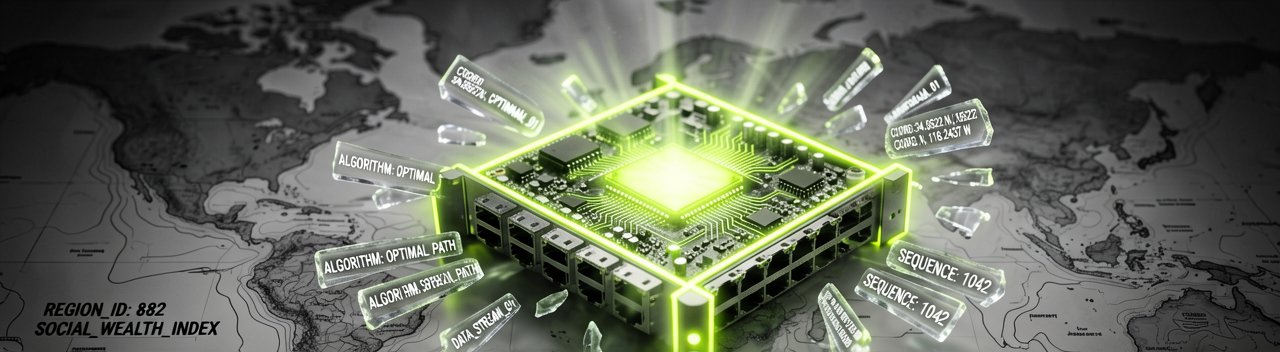
The historical precedent for this friction lies in the early automation of battlefield intelligence during the late twentieth century, but the current velocity of machine learning eliminates the time required for ethical reflection. In past conflicts, human analysts acted as a circuit breaker, spending hours validating satellite photography before authorizing an action. Current autonomous frameworks compress this timeline into milliseconds, creating a system where speed dictates survival. This relentless push for optimization strips away the deliberate, messy, and human negotiations that traditionally allowed civilian populations to navigate active conflict zones safely.
Ultimately, the burden of this technological shift falls on local populations who find themselves transformed into involuntary training data. Every interaction with a biometric identification system at a food depot, every ping from a medical clinic's satellite phone, and every post on localized social media networks trains the next iteration of the conflict model. Tech companies absorb this data to refine their products, selling the upgraded, battle-tested software back to state militaries as a premium service. This self-reinforcing loop ensures that conflict zones serve as the ultimate, real-world laboratory for dual-use technology, with corporate balance sheets expanding alongside the automation of the battlefield.
The Myth of Precision and the Reality of Friction
Reading Between the Lines: The prevailing marketing narrative surrounding AI in conflict zones centers on the concept of clinical precision, promising a world where collateral damage is minimized and humanitarian aid is delivered with surgical accuracy. This assumption falls apart under the messy, chaotic reality of actual warfare. Silicon Valley assumes that more data inherently yields better decisions, ignoring the fundamental nature of conflict, which is defined by deliberate deception, sensory fog, and structural unpredictability. When automated targeting engines encounter spoofed GPS data, intentional camouflage, or civilian populations mimicking defensive behaviors, the algorithm does not pause; it calculates a probability based on flawed logic and executes with catastrophic velocity.
This structural vulnerability exposes a profound contradiction at the heart of corporate ethics boards. Major technology corporations frequently publish sweeping manifestos regarding the ethical deployment of artificial intelligence and their commitment to human rights, while simultaneously competing for multi-billion-dollar cloud computing contracts with defense ministries. These companies attempt to resolve this moral friction by partitioning their operations, claiming their humanitarian data initiatives remain entirely insulated from their tactical weaponization projects. This division is a convenient fiction, as the underlying algorithmic breakthroughs in computer vision, natural language processing, and autonomous navigation are inherently fungible, meaning every advancement funded under the guise of crisis response ultimately sharpens the edge of kinetic warfare.
Furthermore, the long-term systemic risk of this algorithmic dependency is a total erosion of institutional accountability. When a human commander makes a catastrophic error in target identification or resource allocation, a clear chain of custody exists for legal and moral culpability. In an ecosystem dictated by deep learning networks, this responsibility is diffused across an amorphous web of data scientists, software vendors, third-party contractors, and automated pipelines. When a strike goes wrong or a civilian population is erroneously denied food aid due to an algorithmic glitch, the inevitable institutional defense shifts toward blaming the data inputs or the opacity of the neural network, effectively treating war crimes and logistical failures as un-auditable software bugs.
The trajectory of this technology points toward an increasingly automated geopolitical landscape where small tech firms hold unprecedented leverage over sovereign state operations. By maintaining control over proprietary source code, software updates, and cloud hosting environments, private enterprises have inadvertently become the ultimate arbiters of conflict endurance. If a tech executive decides to throttle access to a vital communication network or pull a specific predictive algorithm during an active engagement due to corporate public relations backlash, the entire strategic balance of a region can shift instantly. This reality subverts traditional notions of national sovereignty, leaving both vulnerable civilians and modern militaries hostage to the shifting political appeties of corporate boardrooms.
"We were promised that artificial intelligence would finally eliminate the fog of war; instead, it has simply automated the bureaucracy of devastation, proving that while human error is tragic, it takes a genuinely sophisticated algorithm to misallocate ten thousand tons of emergency rations to an empty desert with absolute, unyielding confidence."
Artūras Malašauskas is an AI Systems Integrator with 20+ years of production-grade web engineering experience. He has designed, shipped, and scaled enterprise Python/PHP systems for logistics, SaaS, and public-sector clients. For the past year, he has focused exclusively on AI integrations: deploying open-source LLMs, building generative media pipelines (image, audio, video), and engineering multi-agent workflows for real production environments. His standard: reproducibility, security, cost-efficient inference—no vaporware. He documents and evaluates emerging AI tooling, separating verified capabilities from marketing noise. Technical editor at: muza-ai.eu, ai-verslas.lt, ai-naujinos.lt Connect on LinkedIn
Comments