Decoding Gmail's AI Security Infrastructure: A Technical Breakdown of Threat Detection Algorithms
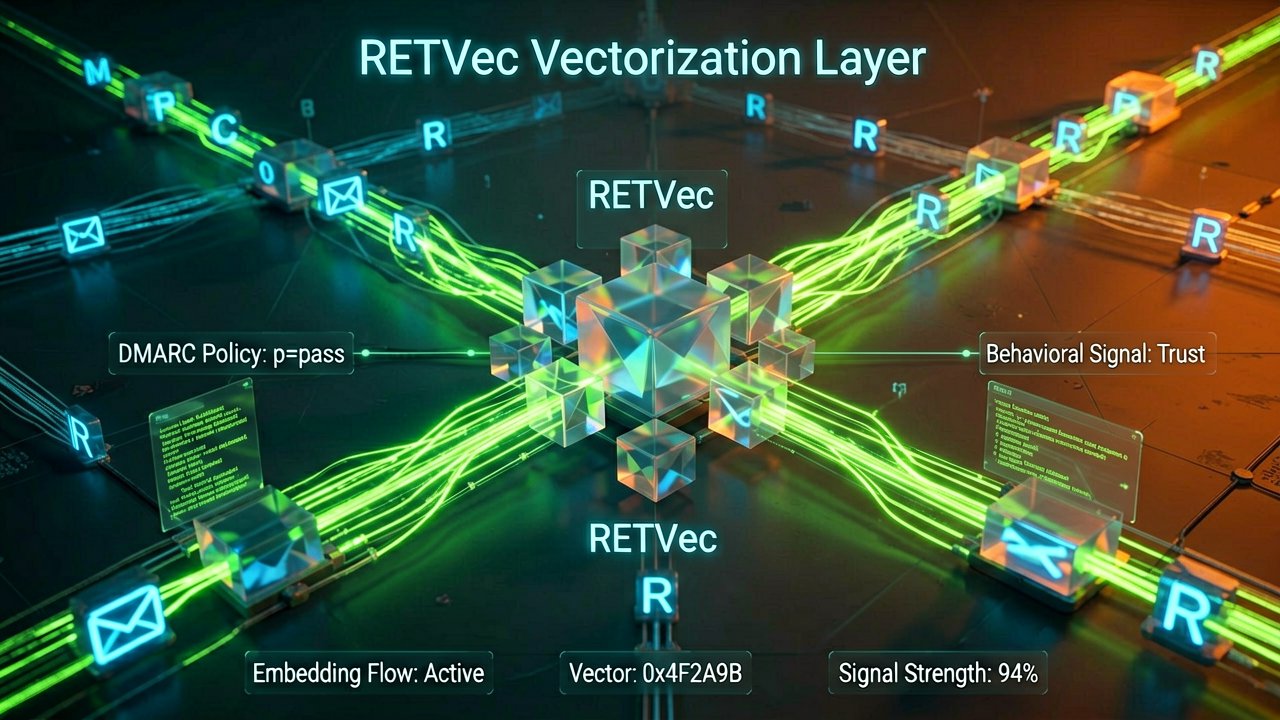
The enterprise email landscape has undergone a tectonic shift as adversarial tactics transition from basic social engineering to highly automated, large-scale campaigns. To counter these adaptive attacks, modern defense mechanisms must move past traditional, static signature matching toward real-time semantic analysis. Gmail's core security architecture has integrated sophisticated machine learning models capable of evaluating the underlying intent of an incoming payload rather than merely scanning for known malicious strings or domains.
A central pillar of this modern defense infrastructure is RETVec (Resilient Email Text Vectorizer), a lightweight, multilingual text vectorizer developed by Google to process adversarial text manipulation. Sophisticated threat actors frequently employ homoglyphs, invisible characters, and deliberate typos to bypass conventional natural language processing filters. By converting incoming email text directly into visual-like character embeddings, RETVec allows Gmail's underlying neural networks to recognize malicious patterns across more than 100 languages simultaneously without relying on heavy computational overhead or frequent vocabulary updates.
According to frontline security insights published by Google Cloud, adversaries are increasingly executing automated workflows to compress attack lifecycles and probe enterprise perimeters. In response to this compressed timeline, Gmail pairs structural text processing with deep behavioral and contextual analytics. By running highly localized, lightweight models at the ingestion layer alongside massive cloud-based threat intelligence pipelines, the infrastructure dynamically flags anomalous senders, malicious attachments, and weaponized hypermedia links before they reach the user inbox.
Advanced Text Processing via RETVec Architecture
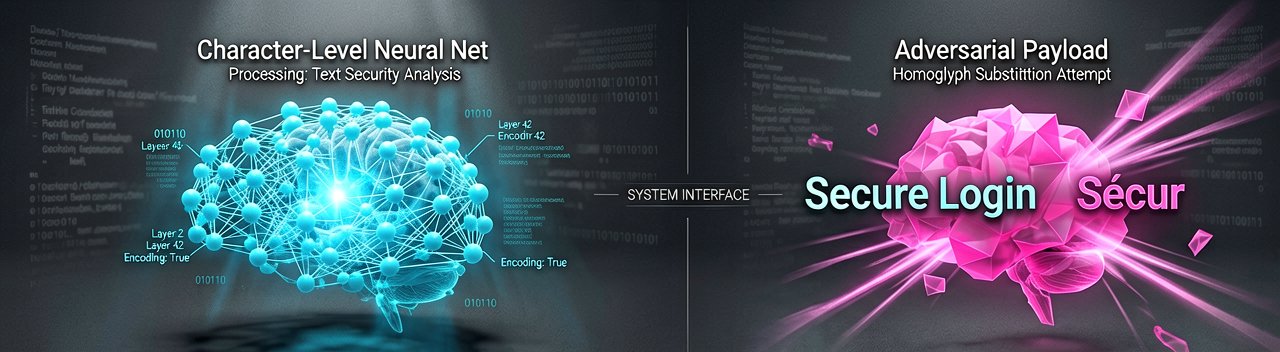
Traditional security filters break text down into tokens based on static dictionaries, making them vulnerable to character substitutions. RETVec solves this vulnerability by using a small machine learning model that reads words as sequences of characters, focusing on their visual similarity and structural arrangement. This architectural approach ensures that even if a phishing email misspells a financial institution's name using lookalike Cyrillic characters, the system yields vector representations similar to the legitimate spelling, triggering immediate enforcement actions.
Contextual Signal Integration and Dynamic Risk Scoring
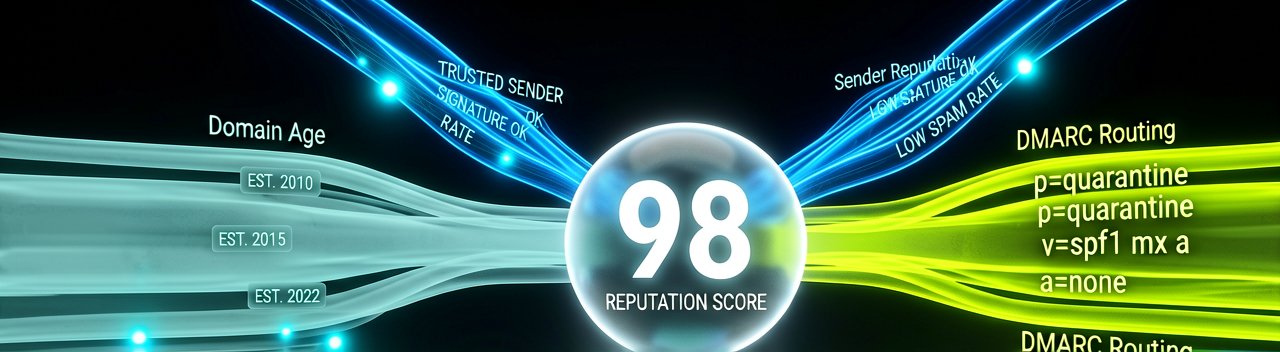
Isolating text analysis is insufficient when defending against zero-day infrastructure or compromised trusted accounts. Gmail's detection framework continuously integrates thousands of parallel signals, including domain age, routing authentication protocols like DMARC, and historical sender reputation. These disparate data points are fed into a centralized risk-scoring engine that determines whether to block the transmission, route it to a quarantine state, or inject a contextual security nudge directly into the user interface.
Architectural Resilience Against Generative Defenses
Beneath the Enforcement Layer: The foundational engineering achievement of Gmail’s modern security stack lies in its break from traditional tokenization dependencies. For decades, natural language processing models relied on rigid vocabularies that mapped strings to fixed numeric indices. This mechanical dependency created a structural vulnerability that malicious actors exploited through zero-width spaces, character scrambling, and lookalike Unicode substitutions. By introducing neural architectures that evaluate textual layout, the underlying models mimic human visual processing, neutralizing attempts to deceive the parser while maintaining low processing times.
Engineering teams at major cloud providers face a constant balancing act between detection accuracy and computing costs. Processing billions of daily messages requires an optimization strategy that minimizes latency without dropping security coverage. To manage this workload, the infrastructure uses a tiered routing system. Lightweight models operate directly at the ingestion gateways to handle known malicious signatures and basic spam patterns. Complex deep-learning models are reserved for messages that display structural anomalies, optimizing server usage and ensuring delivery speeds remain consistent.
Security researchers highlight that the deployment of these adaptive models has fundamentally altered the economics of digital extortion. In the past, threat actors could reuse a single phishing template by varying minor technical indicators like sender domains or IP addresses. Now, adversarial systems must alter the underlying narrative structure of the text to evade detection. This shifting dynamic forces attackers to use more resources per campaign, raising their operational costs and reducing the profitability of wide-scale phishing networks.
This technical evolution also reflects a broader strategic shift toward open-source telemetry and industry-wide collaboration. By making core components like the RETVec architecture publicly available, enterprise security teams can build a unified front against shared digital threats. This open methodology allows third-party platforms to integrate similar character-level processing defenses, closing communication vulnerabilities across the broader digital ecosystem and improving the accuracy of global threat intelligence networks.
The Convergence of Scale and Diminishing Returns
Reading Between the Lines: The assumption that larger machine learning models inherently provide better security ignores the harsh realities of real-time cloud operations. While academic research often celebrates marginal improvements in detection accuracy from multi-billion parameter models, deploying such heavy architectures at global scale introduces significant system latency. Gmail’s reliance on compressed, character-level neural networks proves that efficiency often matters more than raw model size. However, this optimization creates a technical paradox: by prioritizing speed and low compute costs, defensive algorithms risk missing highly customized, low-volume spear-phishing attacks that lack obvious structural tells.
Furthermore, the industry's rush to open-source core defensive components like RETVec presents a double-edged sword. Providing these tools to the public helps secure smaller enterprises, but it also gives threat actors a blueprint for testing their attacks. With access to the exact vectorization algorithms used by major email systems, attackers can run automated adversarial simulations locally. They can refine their character substitutions and text layouts until their phishing payloads reliably bypass the filter, effectively turning an open-source security tool into a optimization engine for malware delivery.
This dynamic challenges the prevailing vendor narrative that AI will permanently solve email security. The reality looks less like a permanent fix and more like an expensive, endless technological arms race. As defensive models get better at spotting semantic anomalies, attackers switch to legitimate, compromised infrastructure to launch their campaigns. When a malicious email originates from a trusted, fully authenticated enterprise account, the most advanced text-vectorization models can do little to stop it without causing high rates of false positives that disrupt legitimate business operations.
Ultimately, relying heavily on algorithmic defense creates an automation trap that shifts risk rather than eliminating it. By quietly filtering out the vast majority of digital noise, these systems inadvertently lower user vigilance. When a sophisticated attack finally slips through the neural layers, users are less prepared to spot the deception because they have been conditioned to trust their inbox implicitly. Tech companies must realize that engineering a technically flawless filter is a secondary problem; the real challenge is managing human behavior when those filters inevitably miss a target.
The ultimate irony of building a multi-billion dollar, character-level neural network to protect corporate communications is that it can still be completely defeated by a tired employee clicking a link because they thought it was an automated notification about office snacks.
Artūras Malašauskas is an AI Systems Integrator with 20+ years of production-grade web engineering experience. He has designed, shipped, and scaled enterprise Python/PHP systems for logistics, SaaS, and public-sector clients. For the past year, he has focused exclusively on AI integrations: deploying open-source LLMs, building generative media pipelines (image, audio, video), and engineering multi-agent workflows for real production environments. His standard: reproducibility, security, cost-efficient inference—no vaporware. He documents and evaluates emerging AI tooling, separating verified capabilities from marketing noise. Technical editor at: muza-ai.eu, ai-verslas.lt, ai-naujinos.lt Connect on LinkedIn
Comments