The Smartest Gatekeeper: Google Redefines Corporate Communication Safety With AI-Powered Email Security

Enterprise digital perimeters are undergoing a structural shift as standard signature-based filtering falls short against malicious campaigns engineered by generative algorithms. Legacy defenses historically evaluated static indicators such as sender reputation, bad domains, and known file hashes to halt inbound messaging vectors. However, adversaries now routinely employ large language models to assemble context-rich, socially engineered phishing lures that display perfect syntax and omit easily traceable malicious payloads. This sophisticated methodology forces security architects to transition from reactive perimeter filters to real-time, behavioral engine models capable of evaluating systemic communication intent.
Google has responded directly to this tactical landscape by integrating custom Gemini foundation models across its cloud communications infrastructure. Rather than auditing incoming mail in isolation, these updated engines continuously parse deep conversational context, structural changes, and peripheral metadata to discover anomalies that escape traditional pattern recognition. By executing real-time threat intelligence loops, the platform flags multi-stage corporate email compromise tactics and invisible prompt-injection schemes before they reach end-user interfaces. Organizations deploying these defenses establish an automated security posture capable of matching the rapid velocity of modern infrastructure threats.
Market Evolution: Transitioning from Static Rules to Adaptive Reasoning
The enterprise communications market has crossed a critical threshold where rule-based security policies present diminishing returns against polymorphic attack structures. Security leaders are recognizing that automated threat actors can bypass historical protection policies simply by varying their infrastructure and phrasing. According to systemic insights published within the Google Cloud framework, current threat landscapes demand defenses built around autonomous processing agents that scale detection capabilities in lockstep with incoming volume. This market transition redefines email protection from a basic administrative compliance checkbox into an active, continuous data-science application.
Defending the Workspace: Countering Prompt Injection and Semantic Manipulation
Integrating large language models directly into workplace applications introduces complex security vectors, notably indirect prompt injection hidden inside message bodies. Sophisticated adversaries use concealed text elements, such as zero-point fonts or white-on-white text blocks, to feed malicious directives to embedded corporate summary tools. When a generative assistant builds a tl;dr breakdown for an employee, it unwittingly parses these hidden instructions and prints a false security alert or urgent billing number inside the trusted application container. Mitigating these semantic manipulation risks requires advanced structural isolation layers that separate untrusted email payload inputs from core AI processing logic.

Strategic Imperatives: Architectural Controls for Contemporary Corporate Security
Building long-term communication resilience requires standardizing comprehensive protocols that extend beyond inbound scanning pipelines. Forward-looking enterprise architectures rely on strict configurations of SPF, DKIM, and DMARC parameters to ensure complete domain authentication across supply chains. Security operating centers must pair these standard baseline controls with continuous automated monitoring to counter sophisticated internal impersonation attempts and lookalike domains. Deploying intelligent, integrated security layers across shared cloud environments allows modern businesses to eliminate single points of failure while maintaining high operational speeds.
Behind the Scenes: The Invisible Arms Race Inside Corporate Inboxes
The transition to AI-driven email defense marks a fundamental departure from the deterministic security models that governed the past three decades of corporate computing. In the early days of enterprise networking, blocking a threat was as straightforward as cataloging a known malicious IP address or flagging an identical file hash across an industry-wide database. Today, that static approach is entirely obsolete because automated attack frameworks can generate billions of unique, contextually distinct phishing variants at practically zero cost. Security teams are no longer fighting static malware; they are locked in a continuous algorithmic competition against distributed systems that learn from every blocked message to optimize their next delivery attempt.
Enterprise stakeholders face a complex balancing act as they deploy these advanced protective models across global workforces. Chief Information Security Officers must carefully weigh the critical need for deep semantic analysis against the operational realities of message delivery latency and employee privacy expectations. If an AI security engine takes too long to parse and verify the intent of an inbound communication, it disrupts the real-time flow of corporate logistics and project management. Conversely, over-aggressive filtering algorithms risk isolating business-critical correspondence, creating costly communication bottlenecks that frustrate executives and disrupt external supply chain partners.
This technological shift also transforms the nature of human error within the modern workplace, moving the primary point of failure from simple links to cognitive trust. Historical security awareness training focused on teaching employees to spot obvious structural red flags, such as misspelled domain names, awkward grammatical choices, or generic urgent requests for wire transfers. Modern generative threats bypass these mental filters by accurately mimicking the precise tone, vocabulary, and interpersonal dynamics of established corporate vendor relationships. Consequently, security architectures must operate under the assumption that human users cannot reliably distinguish between legitimate and artificial communications without automated backend validation.
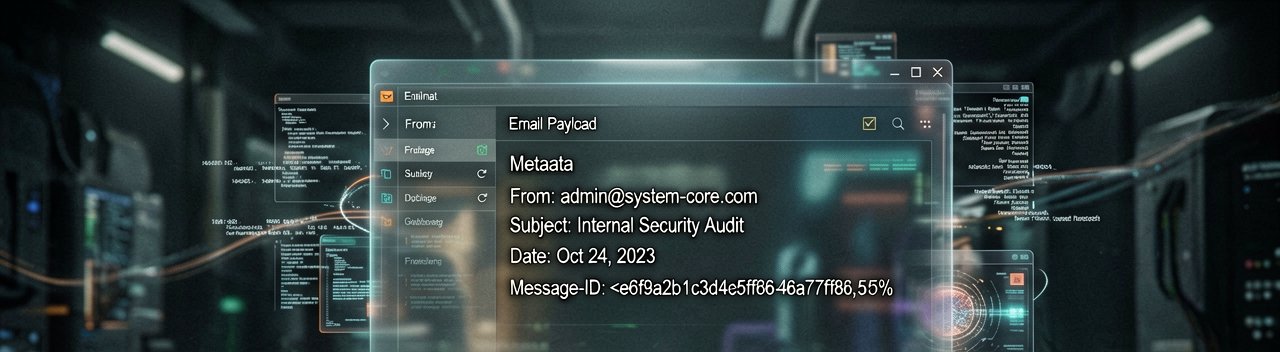
Looking ahead, the long-term efficacy of corporate communication security will depend on the industry's ability to establish collaborative, cross-platform threat intelligence networks. Because sophisticated threat actors rarely target a single organization in isolation, defensive AI models require continuous streams of diverse behavioral data to accurately identify emerging global attack patterns. Organizations that isolate their security infrastructure within proprietary siloes will find themselves increasingly vulnerable to coordinated, multi-vector campaigns that exploit unique blind spots. The future of digital workspace defense relies on a unified, systemic approach where adaptive machine learning models share real-time threat signals across competing technology ecosystems.
Reading Between the Lines: The Structural Paradox of Algorithmic Defense
The corporate rush to adopt large language models as defensive shield walls introduces a profound systemic irony into enterprise architecture. Security vendors pitch generative analysis as the ultimate cure for social engineering, yet the very infrastructure they deploy relies on the exact same underlying technology that lowered the barrier to entry for adversaries. By installing deep semantic parsers inside corporate communication hubs, organizations are essentially building more complex target profiles. This creates a circular dependency where enterprise buyers must continuously purchase higher tiers of analytical computing power simply to filter out the noise generated by their adversaries' matching computational models.
This dynamic challenges the widely held industry assumption that implementing native AI controls automatically reduces operational overhead for security teams. In practice, replacing simple regex rules with probabilistic machine learning engines introduces a highly unpredictable failure mode: semantic false positives. When a static filter blocks an email, an administrator can quickly audit the specific rule violation and fix it. When an advanced deep-learning model quarantines a high-value contract negotiation due to an ambiguous tonal anomaly, debugging the underlying decision logic becomes virtually impossible, forcing human analysts to spend hours parsing opaque behavioral scores.
Furthermore, relying heavily on cloud-hosted defensive layers creates deep vulnerabilities around infrastructure monoculture. As global organizations concentrate their communication channels within a handful of hyper-scaler environments, a single systemic vulnerability or algorithmic blind spot in a dominant security model can instantly compromise millions of corporate inboxes simultaneously. This centralizes the risk profile of global commerce into an incredibly narrow perimeter, transforming a distributed network problem into a highly concentrated target for coordinated nation-state campaigns.
Ultimately, the industry's fixation on technological silver bullets overlooks the stubborn reality that email remains an fundamentally insecure protocol by design. No amount of contextual analysis can alter the basic structural truth that anyone can attempt to deliver a message to anyone else at any time. True resilience requires shifting capital from purely speculative defensive layers toward strict architectural baselines, immutable zero-trust access loops, and rigorous out-of-band verification workflows. Until organizations accept that technology cannot entirely automate human trust, they will remain trapped in a costly cycle of upgrading filters to chase a moving target.
"We have spent thirty years building increasingly complex AI systems to determine whether an urgent invoice from the CEO is real, while completely overlooking the fact that the real CEO is currently struggling to remember their password on the corporate intranet."
Artūras Malašauskas is an AI Systems Integrator with 20+ years of production-grade web engineering experience. He has designed, shipped, and scaled enterprise Python/PHP systems for logistics, SaaS, and public-sector clients. For the past year, he has focused exclusively on AI integrations: deploying open-source LLMs, building generative media pipelines (image, audio, video), and engineering multi-agent workflows for real production environments. His standard: reproducibility, security, cost-efficient inference—no vaporware. He documents and evaluates emerging AI tooling, separating verified capabilities from marketing noise. Technical editor at: muza-ai.eu, ai-verslas.lt, ai-naujinos.lt Connect on LinkedIn
Comments