When Algorithms Decide: Pentagon's AI War Strategy Faces Backlash from Top Military Commanders
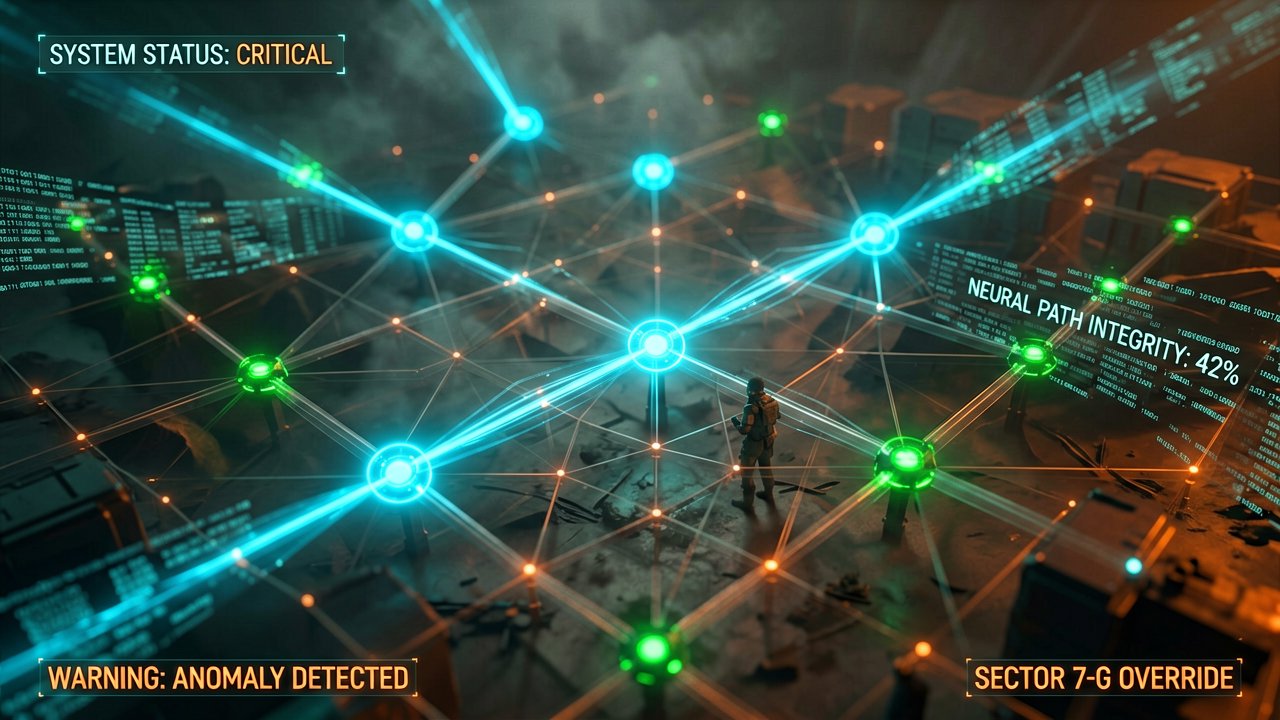
The Pentagon's aggressive transition toward an "AI-first" fighting force is encountering severe friction from within its own ranks. Top military commanders are raising urgent warnings regarding the reliability, ethics, and tactical brittleness of deploying algorithmic targeting and autonomous systems in active combat theaters. This internal pushback follows the high-profile ouster of commercial providers like Anthropic over safety constraints and the subsequent multi-billion dollar allocation to alternative tech giants willing to accept unrestricted operational deployment terms.
According to reports from ABC News, senior defense officials are demanding strict human-in-the-loop safeguards as Leadership drives a mandate for software operating without ideological boundaries. The internal rift highlights a strategic disconnect between civilian defense leadership prioritizing rapid technological deployment and operational commanders who face the unpredictable realities of chaotic battlefield data. This conflict is reshaping the defense tech landscape, driving unprecedented opportunities for smaller, defense-native startups willing to build tailored, command-compliant architectures.
Market Volatility and Procurement Realignments
The institutional backlash has triggered a notable pivot in defense procurement strategies. Venturing beyond monolithic large language models, the market is rapidly shifting toward specialized, highly auditable machine learning systems. Venture capital funding is flowing into a new tier of defense contractors focused heavily on edge computing, data validation, and counter-adversarial camouflage resilience.
The Command Structure vs. Algorithmic Autonomy
Military leadership remains deeply concerned about the inherent vulnerabilities of neural networks under combat conditions. Field tests exposing algorithmic failures against rudimentary physical manipulation have vindicated commanders demanding slower, more rigorous integration. The overarching commercial market must adapt to these shifting operational demands by prioritizing absolute sensor fidelity, auditability, and verifiable command override systems over pure processing speed.

Behind the Scenes: The Battle for Strategic Veto Power
The friction between the Pentagon’s civilian leadership and uniform commanders exposes a fundamental clash of organizational cultures. Silicon Valley-backed executives argue that operational delay in autonomous targeting represents a vulnerability when facing near-peer adversaries capable of processing data at electronic speeds. However, field commanders counter that current algorithmic models fail under the chaotic conditions of electronic warfare, where GPS spoofing and sensor degradation routinely degrade the integrity of military intelligence feeds.
Historical precedents from the early days of automated air defense systems illustrate why veteran officers remain highly skeptical of black-box solutions. Commanders emphasize that when a machine learning model encounters a tactical scenario outside its training data, its failure state is rarely graceful; instead, it yields high-confidence errors that could precipitate unauthorized civilian casualties or accidental strategic escalation. This risk is driving a unified demand from theater commanders for immutable, manual kill-switches built directly into every operational layer.
This internal resistance is forcing a massive structural realignment among premier defense tech integrators. Legacy contractors are hastily acquiring niche software firms specializing in explainable artificial intelligence (XAI) to appease military auditors who refuse to sign off on untraceable targeting recommendations. The commercial market must now pivot from delivering generic, high-speed computational power toward building highly transparent, verifiable architectures that respect the traditional chain of command.
Reading Between the Lines: The Illusion of Algorithmic Infallibility
The prevailing defense narrative assumes that pushing algorithms to the edge will naturally reduce the fog of war, yet current deployments suggest it merely automates the chaos. Silicon Valley pitches a vision of pristine, friction-free targeting matrices, but this idealism collapses when confronted with the physical realities of modern electronic warfare. In practice, substituting the flawed human intuition of a field commander for the opaque, unverified weights of a neural network creates a dangerous paradox where speed is routinely mistaken for strategic accuracy.
Furthermore, a profound contradiction lies at the heart of the Pentagon's procurement strategy. While defense officials publicly demand sovereign control over sensitive military software, they remain structurally dependent on commercial hyperscalers whose underlying training datasets remain proprietary secrets. This creates an unresolvable vulnerability where the ultimate arbiter of a tactical engagement is not a decorated general or an elected official, but a commercial software engineer who optimized a codebase months prior for maximum efficiency rather than ethical restraint.
Projecting these trends forward reveals a chilling operational landscape where electronic warfare tactics will shift from disabling physical hardware to actively gaslighting autonomous systems. Adversaries will exploit the deterministic nature of these algorithms, using cheap, physical anomalies to trigger catastrophic miscalculations in multi-billion dollar command structures. Until defense-native developers can deliver models capable of signaling their own uncertainty, the aggressive push for total automation will continue to introduce systemic brittle points into the national security apparatus.
"We have spent decades perfecting a military chain of command designed to assign clear accountability for every single bullet fired, only to hand the keys to an automated system where the ultimate defense for a catastrophic mistake is simply pointing at a server rack and blaming a software glitch."
Artūras Malašauskas is an AI Systems Integrator with 20+ years of production-grade web engineering experience. He has designed, shipped, and scaled enterprise Python/PHP systems for logistics, SaaS, and public-sector clients. For the past year, he has focused exclusively on AI integrations: deploying open-source LLMs, building generative media pipelines (image, audio, video), and engineering multi-agent workflows for real production environments. His standard: reproducibility, security, cost-efficient inference—no vaporware. He documents and evaluates emerging AI tooling, separating verified capabilities from marketing noise. Technical editor at: muza-ai.eu, ai-verslas.lt, ai-naujinos.lt Connect on LinkedIn
Comments