The Ghost in the Silicon: How AI-Driven Threats Are Dismantling Modern Device Architecture

For years, device security relied on a comfortable assumption: hardware-level architecture was a fortress too dense for the average hacker to crack. Silicon-level defenses, secure enclaves, and isolated execution environments were designed to keep the crown jewels of our digital lives safe, even if the operating system above them crumbled. But that era of relative isolation is officially over, dismantled by a structural shift in how cybercriminals discover and weaponize flaws.
Security researchers are watching a dramatic transformation unfold as artificial intelligence moves from generating clever phishing scripts to autonomously mapping physical device architectures. Armed with agentic models that analyze code, memory layouts, and circuit behavior at machine speed, sophisticated threat actors are bypassing traditional software defenses entirely. They aren't knocking on the front door anymore; they're rewriting the rules of the foundation.
The Asymmetric War on Hardware Boundaries
The core of the problem lies in how modern processors handle data. Hardware vulnerabilities are notoriously difficult to fix because they are baked directly into the silicon, rendering standard software patches irrelevant or devastatingly slow. According to recent threat analysis from CISO Marketplace, the average time between the public disclosure of a vulnerability and the deployment of an AI-generated exploit code dropped below four hours for critical flaws in early 2026. This lightning-fast translation from a theoretical flaw to an active attack chain leaves traditional security operations structurally unprepared to defend physical devices.
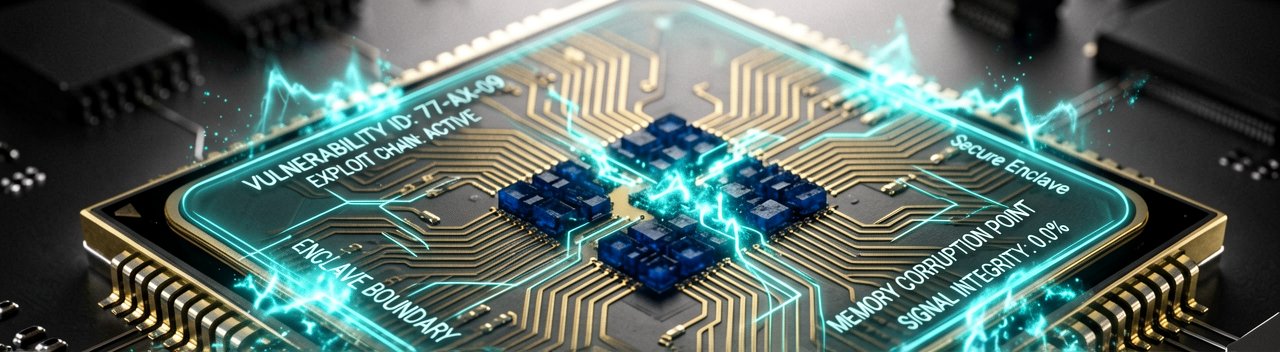
Instead of deploying static payloads that signature-based antivirus tools can easily flag, adversarial AI networks generate polymorphic malware that morphs continuously based on environmental signals. Once inside a system, these smart payloads look for hardware-level microarchitectural flaws, abusing shared caching mechanisms or manipulating secure enclaves. It's a highly targeted approach that treats the underlying hardware not as a barrier, but as an open book of side-channel opportunities.
A Broken Defensive Foundation
This reality forces us to rethink what device security even means when the physical hardware can be manipulated remotely without a human operator ever touching a keyboard. In its comprehensive evaluation, the CrowdStrike Global Threat Report highlights a staggering 89% increase in attacks driven by AI-enabled adversaries, with cross-domain tradecraft moving fluidly between identity, cloud, and local edge environments. Cybercriminals are no longer just logging in with stolen credentials; they are using automated discovery tools to weaponize undocumented zero-day vulnerabilities across hardware boundaries.
This evolution highlights a harsh truth: building bigger walls inside software is meaningless if the foundational architecture can be systematically mapped and exploited by machines that don't get tired. When an offensive AI can spot complex microarchitectural race conditions in a matter of seconds, human defenders relying on manual review cycles are essentially bringing a knife to a laser fight. The threat landscape has permanently shifted, and device security architectures must now evolve toward continuous behavioral isolation, or risk becoming obsolete before the silicon even leaves the factory.
What Most Reports Miss: The current panic over AI-driven exploitation masks a deeper, systemic crisis within the global semiconductor supply chain. For the past two decades, chip manufacturing has chased a single, relentless goal: maximizing performance per watt. To hit those aggressive benchmarks, chip designers routinely relied on speculative execution and predictive caching—engineering shortcuts that essentially guess what data a user will need next. While these optimizations fueled the smartphone and cloud booms, they also left behind a legacy of microscopic side-channels. Now, generative AI models trained on vast repositories of open-source hardware designs are exposing those exact design shortcuts, turning the industry's historical obsession with speed into its greatest security liability.
The Disconnect in Silicon Engineering
This architectural vulnerability has exposed a massive cultural rift between the hardware engineers who build the silicon and the software security teams tasked with defending it. Inside major design firms, the development cycle for a new microprocessor takes anywhere from three to five years, meaning the chips powering today's flagship devices were designed long before agentic AI exploit tools were even a concept. Software developers can push a security patch to millions of devices overnight, but a hardware designer cannot recall a million physically compromised microprocessors without causing economic catastrophe. This fundamental mismatch in development speeds has left human defenders perpetually flat-footed against automated, machine-speed discovery tools.
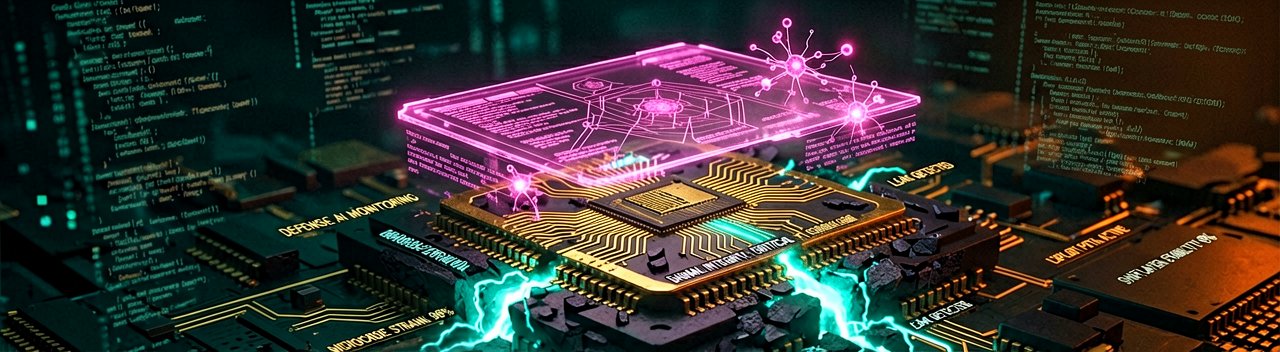
Furthermore, the democratization of sophisticated hardware emulation software has inadvertently handed adversaries a massive advantage. Today, a threat actor does not need a multimillion-dollar laboratory to test an exploit against a secure enclave. Instead, they can feed public hardware documentation into a local large language model, simulate the processor's behavior in a virtual environment, and let the AI run millions of automated permutations until a structural leak is found. It is a highly optimized, low-cost pipeline that has effectively commoditized state-sponsored capabilities for the broader cybercriminal underground.
Chai-Level Politics and Technical Debt
From a geopolitical standpoint, the stakes could not be higher for corporate boards and international regulators. Government agencies are quietly pressuring semiconductor foundries to adopt "secure-by-design" frameworks, yet enterprise buyers remain hesitant to fund the overhead. Re-engineering chips to eliminate these AI-mapped vulnerabilities requires adding redundant circuitry and isolating memory domains, a process that inherently degrades processing efficiency. Corporate executives are stuck in a brutal loop, forced to choose between marketing a slower, more secure device or a blazing-fast product that carries an invisible expiration date.
Ultimately, resolving this architectural crisis requires addressing decades of technical debt built into modern computing standards. The industry is beginning to experiment with zero-trust hardware principles, where even internal processor components do not inherently trust one another's data streams. However, until these foundational shifts become standard practice across all silicon fabrication plants, the industry will remain trapped in a reactive posture. Artificial intelligence has fundamentally rewritten the rules of engagement, proving that an enterprise's digital perimeter is only as strong as the physical atoms it is printed on.
The Paradox of Automated Defense
Reading Between the Lines: The tech industry’s favorite antidote to this architectural crisis is, rather ironically, more artificial intelligence. Silicon executives and cybersecurity vendors loudly champion the arrival of defensive AI agents capable of monitoring chip behavior in real time to neutralize threats before they manifest. Yet, this strategy introduces a glaring logical contradiction. Adding complex, AI-driven monitoring microcode directly into the processor structure expands the device's attack surface rather than shrinking it. We are essentially trying to secure a leaky pipe by wrapping it in an incredibly sophisticated, software-controlled valve that itself relies on the very hardware it is trying to protect.
This reliance on algorithmic shields ignores the messy reality of enterprise deployment and the human element. Even if a defensive AI flawlessly detects a microarchitectural anomaly, the remediation options at the hardware level are fundamentally limited. A software-defined firewall can drop traffic instantly, but a processor cannot simply shut down a compromised memory register without crashing the entire system. Consequently, organizations are left with an unpalatable choice: allow the automated defense to trigger frequent, highly disruptive system resets, or dial back the sensitivity and allow sophisticated side-channel leaks to slide under the radar unnoticed.
Furthermore, the economic math of this automated arms race heavily favors the attacker. Building a defensive AI model that can securely anticipate every conceivable microarchitectural exploit across dozens of legacy chip designs requires billions of dollars in continuous R&D. Conversely, an adversary only needs to find a single, unmonitored edge case within one specific processor iteration to compromise an entire product line. By framing this as a battle of algorithms, the tech industry is steering into an expensive, unsustainable war of attrition where the defense must maintain perfection while the offense only needs a single stroke of luck.
The Real-World Cost of Real-Time Security
Projecting this trend forward suggests that the true cost of AI-driven threats will not be measured in spectacular data breaches, but in a quiet, systemic tax on global computing productivity. As hardware manufacturers are forced to implement aggressive isolation protocols, runtime encryption, and redundant validation steps, the performance overhead will inevitably mount. The industry is rapidly approaching a point of diminishing returns where the raw computational gains promised by next-generation silicon will be entirely consumed by the background noise of securing that very same silicon from exploitation.
Ultimately, this architecture crisis exposes the fragility of our collective digital foundation, built on a decades-old gamble that physical hardware could remain a neutral, unbothered bystander in software security wars. That gamble has failed. As offensive AI tools become increasingly adept at manipulating physical boundaries, the industry's reluctance to fundamentally re-engineer chip design from the ground up looks less like pragmatic business risk management and more like collective tech industry denial.
"We spent forty years engineering microprocessors to think as fast as humanly possible, only to discover that they are completely defenseless against machines that think even faster. At this rate, the ultimate endpoint of modern device security won't be an unbreakable encryption algorithm, but a very expensive server rack that is incredibly safe simply because it is entirely unplugged from the wall."
Artūras Malašauskas is an AI Systems Integrator with 20+ years of production-grade web engineering experience. He has designed, shipped, and scaled enterprise Python/PHP systems for logistics, SaaS, and public-sector clients. For the past year, he has focused exclusively on AI integrations: deploying open-source LLMs, building generative media pipelines (image, audio, video), and engineering multi-agent workflows for real production environments. His standard: reproducibility, security, cost-efficient inference—no vaporware. He documents and evaluates emerging AI tooling, separating verified capabilities from marketing noise. Technical editor at: muza-ai.eu, ai-verslas.lt, ai-naujinos.lt Connect on LinkedIn
Comments