Beyond Perimeter Defense: The Architectural Shift Driving Threat Intelligence to $31.58 Billion

The old cybersecurity playbook is officially dead. For years, organizations relied on digital moats—firewalls and endpoint perimeters—to keep bad actors out. But as networks morphed into decentralized, multi-cloud ecosystems, that boundary dissolved entirely. Today, static defenses are no match for adversaries weaponizing generative AI to execute ultra-fast intrusions. Security operations centers (SOCs) are moving toward a continuous, predictive stance. This systemic shift is fueling massive market growth, with the global threat intelligence footprint projected to reach $31.58 billion by 2034, expanding at a compound annual growth rate of 18.30% according to data published by Fortune Business Insights .
To understand why this market is exploding, look at how modern security architecture is evolving. Historically, threat intelligence was treated as an isolated feed of static indicators of compromise (IoCs)—hashes and bad IP addresses copied into a spreadsheet. Modern infrastructure demands a unified, cloud-native telemetry engine. Today's Threat Intelligence Platforms (TIPs) sit at the center of the security stack, seamlessly linking external dark web monitoring with internal security orchestration, automation, and response (SOAR) workflows. This layout lets systems ingest heterogeneous data, normalize it in real time, and immediately enforce policies across network segments without human intervention.
From Contextual Telemetry to High-Performance Metrics
This architectural integration directly impacts operational metrics. Legacy defenses often left security teams drowning in false positives, causing high alert fatigue and average dwell times measured in weeks. Modern threat intelligence fixes this by switching focus to behavioral patterns, or Tactics, Techniques, and Procedures (TTPs). By mapping incoming data to frameworks like MITRE ATT&CK, platforms prioritize vulnerabilities based on active exploits rather than generic risk scores. This filtering turns raw data into actionable context, letting defenders spot multi-stage attacks early in the kill chain.
Ultimately, the value of these architectural upgrades shows up in performance metrics. The critical goal for any modern SOC is reducing Mean Time to Detect (MTTD) and Mean Time to Respond (MTTR). In a threat landscape where ransomware deployment can happen in minutes, catching a breach early is vital. Organizations using AI-driven threat intelligence report up to a 45% improvement in incident response times compared to traditional set-ups. By automating initial triage and playbook execution, enterprises stop threats instantly, changing cybersecurity from a game of catch-up into a proactive defense.

Behind the Scenes: The true bottleneck in modern threat intelligence isn't the lack of data; it's the sheer latency of ingestion and correlation. When billions of unstructured events hit a Security Information and Event Management (SIEM) system simultaneously, standard relational databases buckle under the load. Systems engineers bypass this structural choke point by building distributed, memory-optimized pipelines using Apache Kafka for stream processing and ScyllaDB or ClickHouse for low-latency columnar storage. This architecture lets organizations ingest raw, high-throughput network telemetry and dark web scrape logs simultaneously without dropping packets or delaying critical processing queues.
At the code level, optimizing these pipelines requires moving away from heavy parsing formats. Instead of continuously serializing and deserializing massive JSON payloads from external commercial feeds, high-performance engines use binary serialization formats like Protocol Buffers (Protobuf) or Apache Avro. This shift drastically minimizes network overhead and memory allocation spikes. Furthermore, parsing engines are frequently written in low-level languages like Rust or Go to eliminate Java’s garbage collection pauses, ensuring that the time from initial packet capture to Indicator of Compromise (IoC) extraction remains under a few milliseconds.
Algorithmic Correlation and Memory Tuning
Once data is inside the pipeline, the system must correlate it against active threat frameworks without exhausting CPU cycles. Rather than performing expensive string-matching operations across millions of signature strings, advanced platforms use specialized data structures like Bloom filters and Radix trees. A Bloom filter allows the system to instantly check if an incoming IP address or file hash exists within a massive threat database using a memory-efficient bit array. This probabilistic approach eliminates over 99% of unnecessary database lookups, routing only potential matches to deeper, deterministic analytical layers.
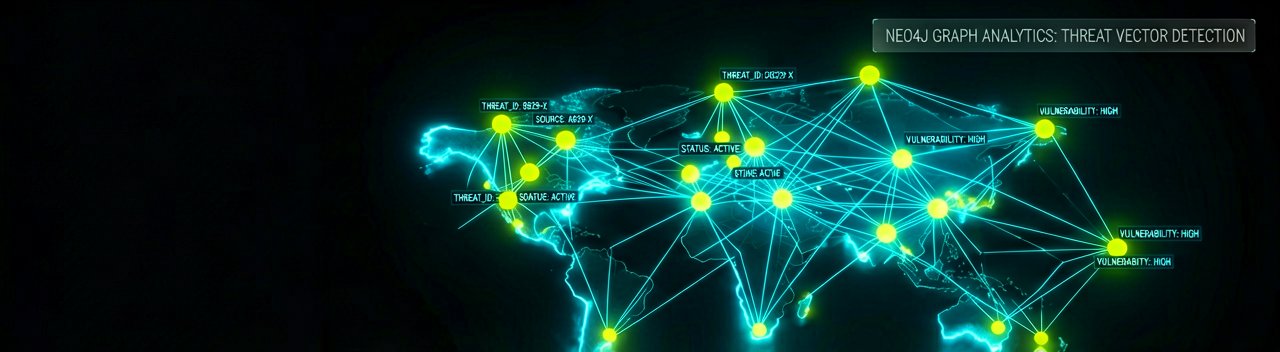
For deep behavioral analysis, the architecture transitions to graph databases like Neo4j or AWS Neptune. These systems map the relationships between seemingly unrelated events, such as a minor privilege escalation on a local workstation, an unusual DNS query to a rare top-level domain, and an outbound encrypted TLS session. By analyzing these events as interconnected graph nodes rather than isolated log entries, the platform calculates a unified risk score based on path distance and traversal patterns, flagging complex, multi-stage Advanced Persistent Threats (APTs) that standard signature scanners miss completely.
Finally, to prevent these deep-dive operations from degrading real-time defense capabilities, engineers implement strict resource isolation using kernel-level primitives. Microservices handling compute-heavy machine learning inference and pattern matching run in isolated Docker containers restricted by Linux cgroups and namespaces. This setups guarantees that an unexpected spike in complex threat correlation logic cannot starve the primary firewall API or automation playbooks of CPU cycles. The end result is a highly resilient, auto-scaling infrastructure that maintains sub-second responsiveness even during a widespread, coordinated distributed denial-of-service (DDoS) distraction attack.
Reading Between the Lines: The cybersecurity industry loves a massive market projection, but the breathless enthusiasm surrounding a $31 billion threat intelligence ecosystem masks a fundamental contradiction. Vendors promise that more data equals better security, yet enterprises are drowning in the sheer volume of telemetry they ingest. The uncomfortable truth is that a significant portion of commercial threat feeds consists of recycled, stale indicators of compromise that offer little tactical value. Organizations regularly pay premium subscription fees to ingest identical open-source data repackaged under different brand names, creating a false sense of security while inflating operational overhead.
This data duplication exposes a critical flaw in how organizations measure security performance. Security operations centers often brag about the volume of threat indicators they track, treating a massive database as proof of capability. However, this metric is largely meaningless if the internal security apparatus lacks the context to act on the information. An over-reliance on automated, unverified feeds frequently triggers a cascade of false positives, forcing analysts to waste hours chasing ghosts. In reality, inundating a SOC with low-fidelity alerts reduces overall agility, turning what should be a predictive tool into an expensive administrative burden.
The Realities of Automated Attribution
Furthermore, the industry's current fixation on AI-driven attribution is fraught with corporate hubris. Marketing brochures claim that machine learning algorithms can instantly identify specific threat actors and predict their next moves with pinpoint accuracy. This narrative ignores the ease with which sophisticated adversaries engage in false-flag operations. Sophisticated state-sponsored groups regularly insert the code signatures, language strings, and metadata of entirely different hacking collectives into their malware specifically to mislead automated analytical engines. Relying blindly on automated attribution risks steering incident response teams toward flawed strategic assumptions.
This dynamic shifts threat intelligence from a purely technical challenge to a complex geopolitical puzzle. As threat actors increasingly share infrastructure and lease out ransomware-as-a-service platforms, the lines between criminal enterprises and nation-state actors continue to blur. Purely algorithmic models struggle to adapt to these shifting alliances because they lack the geopolitical nuance required to understand the underlying motivations behind a campaign. Without human analysis to contextualize why a specific sector or region is being targeted, technical indicators remain isolated data points devoid of strategic foresight.
Looking toward 2034, the true winners in the threat intelligence space will not be the organizations with the largest data repositories, but those that master the art of radical filtering. The future belongs to lean, highly customized intelligence operations that prioritize internal telemetry correlation over external bulk ingestion. Until the industry shifts its focus from data accumulation to precise context validation, enterprises will continue to spend millions of dollars to discover exactly how they were breached three weeks after the data has already left the building.
Cybersecurity remains the only industry where we eagerly spend millions on weather forecasts that can tell us we are currently standing in a torrential downpour, while the rainmaker is already halfway home with our wallets.
Artūras Malašauskas is an AI Systems Integrator with 20+ years of production-grade web engineering experience. He has designed, shipped, and scaled enterprise Python/PHP systems for logistics, SaaS, and public-sector clients. For the past year, he has focused exclusively on AI integrations: deploying open-source LLMs, building generative media pipelines (image, audio, video), and engineering multi-agent workflows for real production environments. His standard: reproducibility, security, cost-efficient inference—no vaporware. He documents and evaluates emerging AI tooling, separating verified capabilities from marketing noise. Technical editor at: muza-ai.eu, ai-verslas.lt, ai-naujinos.lt Connect on LinkedIn
Comments