The Silent Revolution: How AI is Redefining Security Leadership Education
For years, executive cybersecurity education followed a predictable, comfortable script. Aspiring Chief Information Security Officers (CISOs) gathered in wood-paneled university halls to pore over historical case studies, decipher regional compliance checklists, and memorize boilerplate crisis communication frameworks. It was an educational model built for a slower world, one where a data breach evolved over weeks and defenses were meticulously mapped out in static PDF binders. Today, that entire paradigm is being fundamentally dismantled by a silent academic revolution.
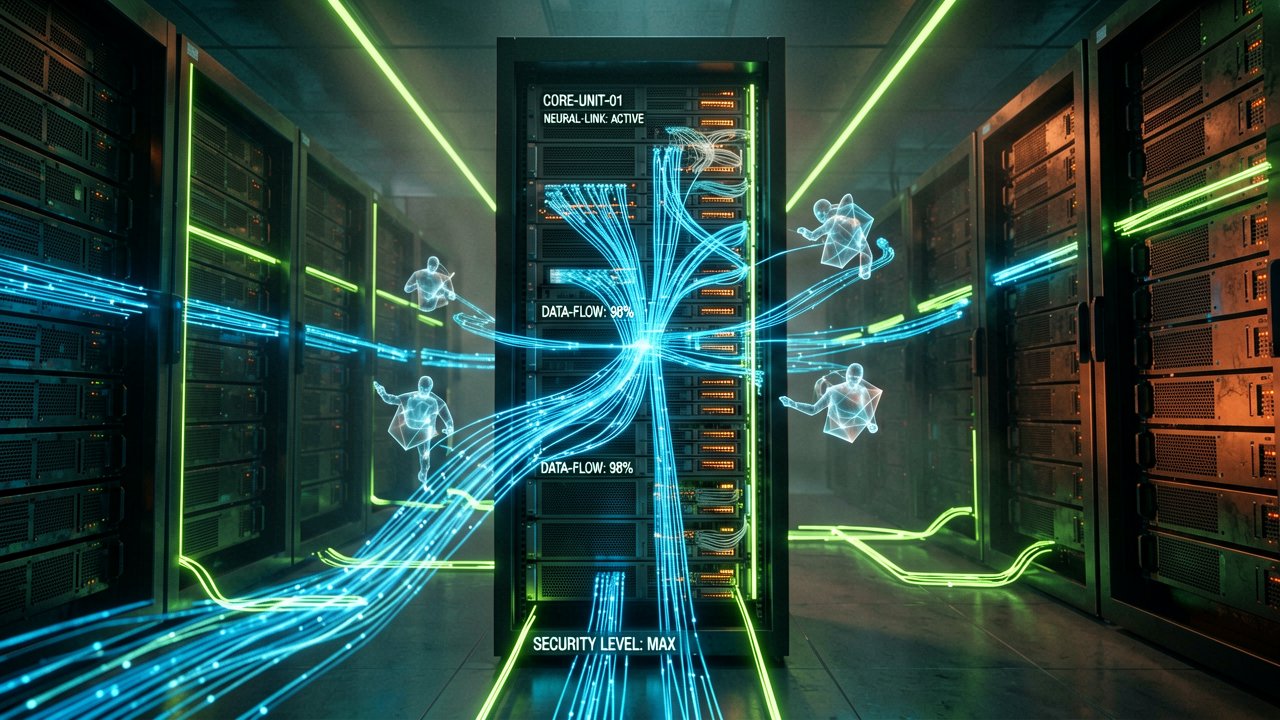
The catalyst isn't just the sheer volume of modern exploits, but the architectural transformation of executive curricula. Elite institutions are aggressively phasing out traditional lecture formats in favor of deeply technical, hands-on environments. Rather than debating policy abstractions, modern security leaders are dropped directly into live-fire simulation environments. This educational architecture bridges the gap between high-level governance and granular technology, ensuring that modern risk officers speak both the language of the boardroom and the reality of the server rack.
From Algorithms to Boardrooms
At the center of this pedagogical shift is the urgent need to understand adversarial machine learning and complex automated defense layers. For instance, programs like the Duke Executive Cybersecurity Certificate Programs are explicitly restructuring their timelines to place operational artificial intelligence at the forefront of executive risk mitigation. Leaders are no longer just learning how to manage human teams; they are mastering the oversight of autonomous software agents that parse petabytes of network traffic in real time.
The modern curriculum architecture forces a structural pivot from passive defense to algorithmic resilience. Students explore how large language models can be weaponized via prompt injection or compromised through subtle data poisoning. To combat this, training tracks now mandate deep dives into automated orchestration platforms. Executive candidates actively build AI-driven risk registers, learning to map automated defenses against emerging structural vulnerabilities. The goal is to produce leaders who don't just understand security policy, but actively comprehend how autonomous models function under pressure.

Quantifying Success in the AI Era
Moving from system architecture to empirical validation, the true efficacy of this educational overhaul is reflected in modernized performance metrics. Traditional executive training measured success through attendance, multiple-choice testing, and final essays. Modern, AI-integrated programs have replaced these outdated standards with rigorous, real-time telemetry. Today's cohorts are evaluated on concrete operational benchmarks: mean time to detect (MTTD) simulated automated attacks and the precision of their automated containment playbooks.
This data-driven training philosophy mirrors the reality of modern corporate infrastructure. Specialized credentials, such as the Cloud Security Alliance Trusted AI Safety Expert program, explicitly grade professionals on their ability to securely deploy and govern complex generative platforms. Instead of theoretical grading, performance is captured through live lab telemetry, measuring how quickly a leader can isolate a compromised model while minimizing operational downtime. By anchoring executive success to quantifiable, technical performance, the industry is engineering a new class of resilient, highly competent security leaders.
Behind the Scenes: The curriculum shifts redefining security leadership are not just administrative; they are deeply rooted in the underlying engineering realities of AI pipeline security. In modern corporate environments, an executive cannot effectively manage risk without understanding the low-level vulnerabilities inherent in automated systems. As large language models and neural networks become embedded into enterprise security orchestration, automation, and response (SOAR) workflows, the primary attack surface shifts from traditional network ports to the data and computing pipelines themselves. Security leaders must understand that protecting an AI-driven enterprise requires engineering safeguards at the compilation, ingestion, and inference layers.
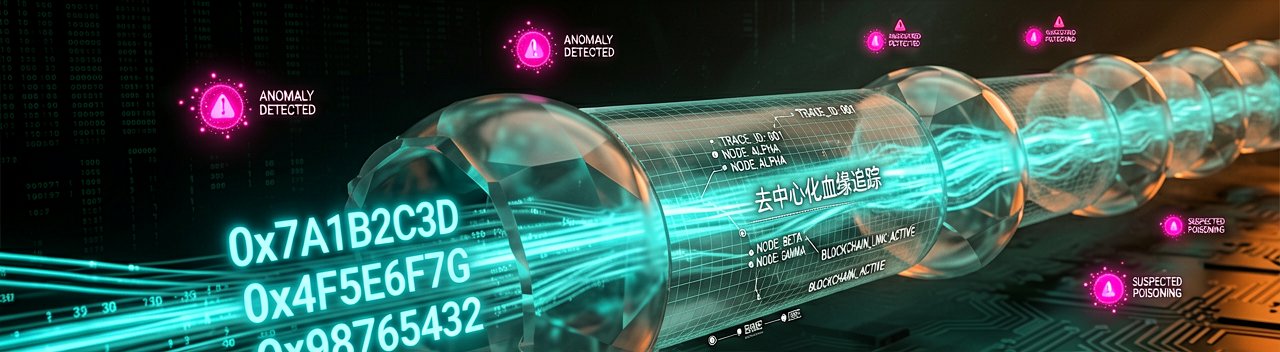
A primary architectural priority taught in advanced technical leadership tracks is the mitigation of training data poisoning and data supply chain manipulation. Systems engineers know that deep learning models lack an inherent understanding of trust boundaries; they simply optimize weights based on input distributions. If malicious vectors alter training sets even slightly, they can introduce subtle backdoors that remain latent until triggered by a specific token during runtime inference. To address this, modern curricula cover the optimization of rigorous input hashing, decentralized lineage tracking via cryptographic ledgers, and automated sanitization pipelines. Executives learn to mandate automated outlier detection algorithms that scan multi-terabyte data pools before any training loop begins.
Optimizing Inference and Reducing Latency Penalties
Beyond data integrity, the physical reality of running machine learning models introduces severe resource constraints and latency penalties that complicate real-time defense. In high-throughput environments, deploying an unoptimized model for real-time anomaly detection can cripple network performance, causing bottlenecks that adversaries easily exploit. Engineering-focused leadership courses emphasize the trade-offs of model quantization, where floating-point weights are converted from 32-bit to 8-bit representations. This reduction shrinks memory footprints and dramatically accelerates hardware-accelerated matrix multiplication on the GPU cluster, allowing enterprise firewalls to execute deep packet inspection via neural networks without dropping legitimate traffic.
Furthermore, the integration of memory-efficient attention mechanisms is treated as a critical operational metric. Leaders are trained to audit system configurations for techniques like FlashAttention, which optimizes memory read/write cycles between GPU high-bandwidth memory and on-chip SRAM. By minimizing the overhead of standard transformer architectures, security platforms achieve linear scaling in processing speed rather than quadratic degradation. This technical optimization ensures that when a massive distributed denial-of-service attack hits infrastructure, the automated defense models remain responsive and capable of analyzing incoming traffic patterns under peak load.
Ultimately, this technical immersion transforms how security executives design organizational governance. They move past treating artificial intelligence as a black box and begin approaching it as a highly complex, deterministic state machine requiring precise memory management, rigid input validation, and optimized runtime execution environments. Armed with this knowledge, a modern risk officer can confidently direct engineering teams to implement hardware-level confidential computing environments, such as secure enclaves, ensuring that model parameters and proprietary enterprise data remain encrypted even during active RAM execution cycles.
Reading Between the Lines: The breathless rush to integrate artificial intelligence into executive security education harbors a glaring contradiction. While academic institutions and corporate bootcamps market these modernized curricula as the ultimate defense against automated threats, they are simultaneously creating a monolithic class of leaders who rely on identical algorithmic playbooks. This systemic homogeneity introduces a secondary layer of risk. If every freshly minted CISO is taught to deploy the exact same automated orchestration frameworks and optimization models, adversaries will no longer need to find unique corporate vulnerabilities. They will simply exploit the universal blind spots inherent in the standardized AI models taught in the classroom.
Furthermore, the industry's obsession with real-time telemetry and data-driven performance metrics overlooks a fundamental truth about human behavior under pressure. Replacing traditional essays with live-fire lab scenarios creates an environment that rewards immediate, tactical triage over long-term strategic reflection. A student who optimizes GPU memory allocation or mitigates an inference bottleneck during a three-hour simulation is demonstrating technical proficiency, not necessarily long-term leadership viability. There is a very real danger that this educational evolution will yield highly capable system administrators who carry executive titles but lack the macroeconomic perspective required to navigate multi-year geopolitical or regulatory shifts.
The Illusion of Autonomy
We must also critically examine the tech industry's premise that autonomous software agents can entirely decouple risk management from human error. The marketing promises a self-healing corporate perimeter, but the engineering reality reveals a complex web of technical debt. When an automated system dynamically updates firewall rules based on predictive threat modeling, it introduces a level of systemic opacity that makes forensic auditing nearly impossible. Executive education programs frequently gloss over this accountability gap, failing to prepare future leaders for the inevitable moment an unexplainable algorithmic decision triggers a catastrophic compliance violation or an accidental network self-destruction.
This gap highlights the ultimate irony of the current educational shift: the more we automate the curriculum to keep pace with digital threats, the more dependent we become on the very tech monoculture we are trying to defend against. True security resilience has historically relied on out-of-the-box thinking, institutional intuition, and unpredictable human maneuvers. By forcing security leadership education into a rigid, quantifiable, machine-optimized mold, academia may inadvertently be training the nuance out of the next generation of defenders, leaving them highly efficient, perfectly optimized, and entirely unprepared for the messy, unquantifiable realities of human-led corporate warfare.
"Ultimately, we are training executives to manage systems that think in microseconds, all so they can explain the resulting multi-million dollar errors to a boardroom that still operates on quarterly fiscal calendars and forgotten password resets."
Artūras Malašauskas is an AI Systems Integrator with 20+ years of production-grade web engineering experience. He has designed, shipped, and scaled enterprise Python/PHP systems for logistics, SaaS, and public-sector clients. For the past year, he has focused exclusively on AI integrations: deploying open-source LLMs, building generative media pipelines (image, audio, video), and engineering multi-agent workflows for real production environments. His standard: reproducibility, security, cost-efficient inference—no vaporware. He documents and evaluates emerging AI tooling, separating verified capabilities from marketing noise. Technical editor at: muza-ai.eu, ai-verslas.lt, ai-naujinos.lt Connect on LinkedIn
Comments