Silicon Facilitators: The Rise of Generative AI in the Security Crisis Room
For years, the corporate cybersecurity tabletop exercise has followed a predictable, painfully slow script. A consultant walks into a room with a thick binder, drops a hypothetical ransomware outbreak onto the mahogany table, and watches executives debate their way through an outdated checklist. It was better than nothing, but it lacked the chaotic, breakneck velocity of an actual breach. That cozy dynamic is disappearing as organizations quietly hand over the reins of crisis leadership workflows to autonomous AI agents capable of orchestrating hyper-realistic simulations on the fly.
The architecture underpinning these modern systems is a far cry from basic, pre-recorded multiple-choice software. Platforms developed by security innovators like ThreatGEN use generative AI backends to absorb an enterprise’s actual network topologies, compliance mandates, and organizational charts. This deep internal data ingestion allows the system to construct localized, evolving narratives where every choice a human executive makes triggers a dynamic counter-response from an AI threat actor. Instead of waiting for a human moderator to manually calculate the collateral damage of shutting down a regional data center, the agentic model adjusts the simulation instantly. It actively pushes out multi-channel injects, spinning up simulated press leaks, frantic employee messages, and regulatory warning shots in real time to mimic a genuine operational disaster.
From Scripted Drills to Machine-Driven Metrics
This technical evolution is fundamentally redefining how security leadership evaluates organizational readiness. Transitioning from manual preparation to automated deployment has fundamentally changed the math behind business resilience, with platform data from providers like ChaosTrack showing an 85% reduction in exercise preparation times. Rather than burning weeks of internal engineering resources to design a single, static drill, security teams can now deploy highly complex scenarios within minutes. This drastic drop in friction means that strategic response training is no longer an annual compliance box-checking chore; it can be integrated directly into routine operations as a continuous, metric-driven cycle.
The true value of these autonomous facilitators, however, lies in their ability to strip subjectivity out of performance tracking. As an exercise unfolds, the underlying AI engines continuously log and analyze every decision, communication delay, and regulatory oversight across departments. The system evaluates the leadership team's actions against precise frameworks like NIST, NIS2, or DORA, generating granular data points on technical triage, internal collaboration efficiency, and executive decision speeds. By comparing real-time operational choices against established playbooks, the software provides security leaders with hard, mathematical insight into where their human defense layer will likely buckle long before an actual adversary has the chance to exploit it.
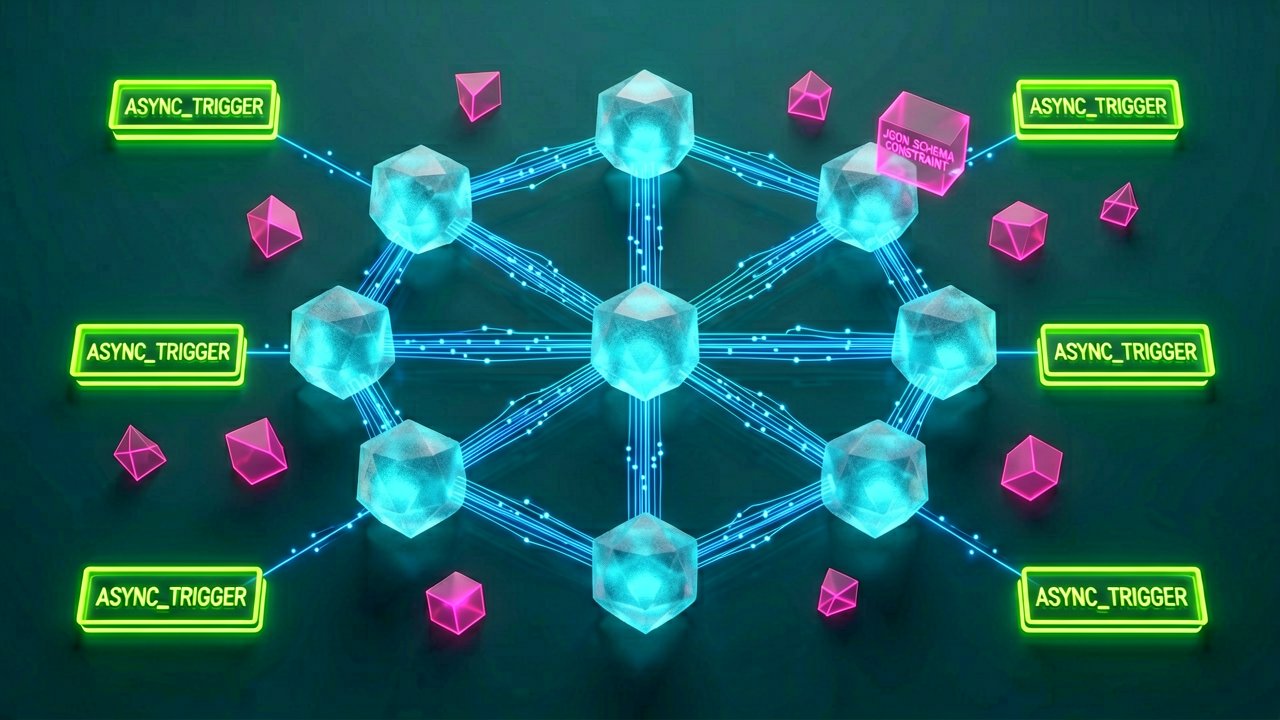
Behind the Scenes: The illusion of a chaotic, real-time corporate crisis is maintained by a highly structured, low-latency state engine operating beneath the user interface. Systems engineers building these platform architectures must move past basic stateless API wrappers, which falter under the rapid, multi-user inputs of an executive team. Instead, modern training engines rely on an asynchronous, event-driven orchestration layer that coordinates state updates across multiple distributed nodes. When a Chief Legal Officer or a CISO submits an action, that input is tokenized, classified, and instantly fed into a centralized state machine that evaluates the cascading operational blast radius.
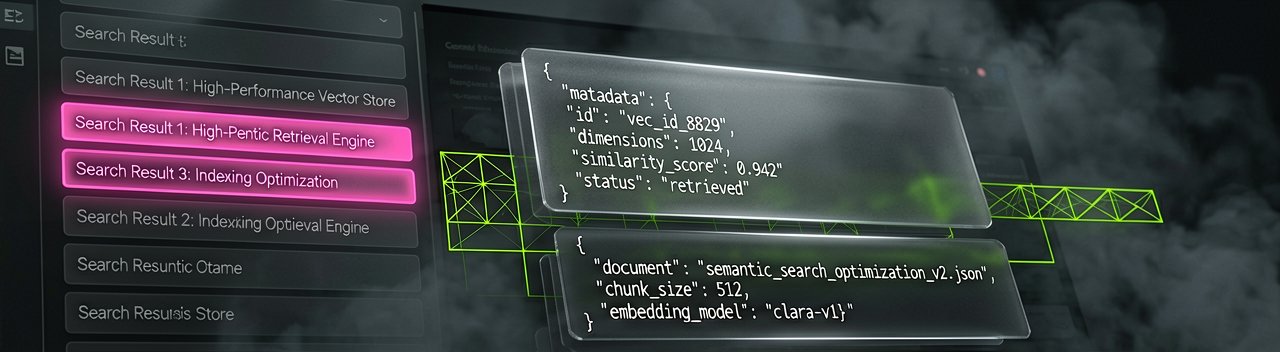
To prevent the generative AI from hallucinating unrealistic scenarios or drifting away from corporate compliance frameworks, engineers implement strict Retrieval-Augmented Generation architectures paired with deterministic guardrail layers. The raw network topologies, asset registries, and incident response playbooks are stored within a high-performance vector database. When an inject occurs, the system utilizes semantic search to pull only the highly relevant structural realities of that specific enterprise. A lightweight orchestration layer then combines this context with the user input, forcing the large language model to output structured JSON payloads that conform to strict schema definitions rather than unpredictable natural language.
Optimizing the Engine for Infinite Threat Paths
Managing the computational cost and latency of these continuous loops requires aggressive optimization at the database and prompt-engineering levels. Because a single simulation can branch into thousands of potential threat paths based on executive choices, maintaining a monolithic context window quickly leads to token exhaustion and sluggish response times. Engineers bypass this bottleneck by designing a hierarchical context management system. High-level strategic states are cached in an in-memory database like Redis for sub-millisecond retrieval, while the granular historical logs of the simulation are compressed and summarized asynchronously by a secondary, background LLM thread.
Furthermore, handling multi-vector simulations means the system must simulate parallel actions from adversarial groups, regulatory bodies, and panicked customers simultaneously. This requires the deployment of isolated, lightweight agent microservices that communicate via high-throughput message brokers like Apache Kafka. Each agent operates with its own specific prompt instructions and local memory constraints, running independently to simulate distinct external forces. By decoupling the adversary logic from the media reaction engine, the architecture guarantees that a sudden surge of human inputs during a peak simulation phase will not cause a bottleneck or desynchronize the overall exercise state.
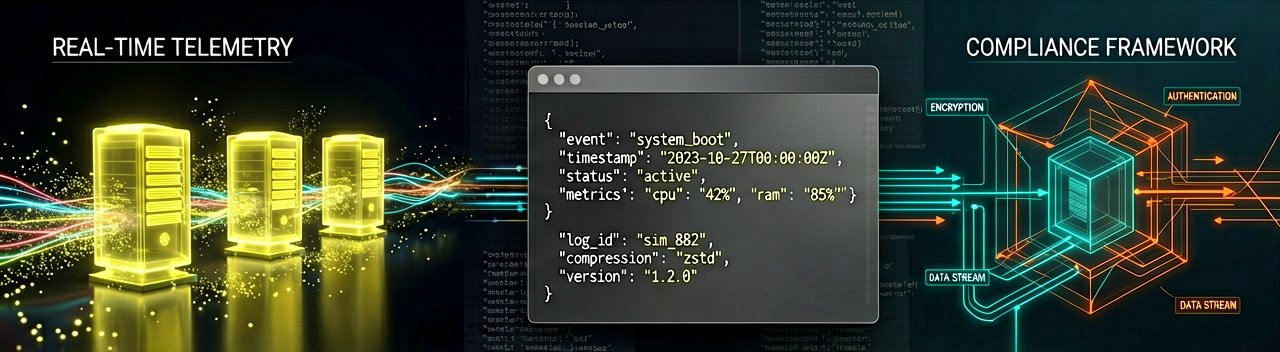
The final architectural hurdle involves translating this massive stream of asynchronous events into clean, structured performance metrics without degrading system performance. Telemetry pipelines must capture every event, decision timestamp, and API failure silently in the background. These raw logs are processed through a real-time data streaming analytics engine that maps human actions directly against compliance vector embeddings. By offloading this analytical crunching to dedicated processing nodes, the core simulation engine remains entirely focused on generating the next tactical threat vector, keeping the pressure on the executive team uninterrupted.
Reading Between the Lines: The sudden corporate rush to outsource crisis leadership training to autonomous AI engines ignores a fundamental paradox. While vendor marketing materials heavily emphasize the elimination of human bias and the benefits of infinite, repeatable scenario generation, they rarely acknowledge that these models are trained on the exact same public threat reports, static playbooks, and historical breach data that security teams already fail to implement effectively. Offloading strategic preparation to an algorithm risks creating a dangerous feedback loop, where executives learn to defeat a simulated adversary optimized for predictable, machine-defined behaviors, leaving them utterly blind to the irrational, erratic tactics of a real-world human attacker.
Moreover, the metrics generated by these automated tabletop simulations introduce a false sense of quantitative security that boards are eager to exploit. An 85% reduction in exercise preparation time is an excellent operational efficiency metric, but it does not automatically correlate to an 85% increase in executive competence under fire. When compliance frameworks like NIS2 or DORA push organizations to prove continuous readiness, the temptation to game the machine-driven scoring system becomes inevitable. Corporate leadership can easily fall into the trap of training to beat the specific telemetry algorithms of the platform, optimizing their response speeds and decision paths to earn a high readiness score on an internal dashboard while leaving true organizational resilience completely unchanged.
The Danger of Algorithmic Groupthink in the C-Suite
The deeper architectural integration of live enterprise data into these training systems also raises significant, unexamined security risks. Constantly feeding internal network topologies, operational vulnerabilities, and executive communication patterns into a generative AI model creates a hyper-concentrated honeypot of strategic intelligence. If the third-party platform hosting these training simulations suffers a breach, the adversary gains access to a literal blueprint of how the company’s leadership will react to a specific crisis. By automating the discovery of human defense gaps, organizations are essentially building a custom manual on how to psychologically and technically dismantle their own executive response team.
Ultimately, relying on isolated, algorithmic agents to simulate chaotic external forces like regulatory crackdowns and public relations meltdowns reduces the messy, political reality of a corporate crisis to a series of structured JSON payloads. In an actual catastrophic breach, the breakdown in communication rarely happens because a CISO forgot a step in a NIST playbook; it happens because of office politics, panic, conflicting financial incentives, and human exhaustion. An AI engine can perfectly model a cascading server failure or a mathematical compliance violation, but it cannot truly simulate the unpredictable, emotional friction of a board room turning on its own leadership when millions of dollars vanish overnight.
We have successfully automated the art of the corporate drill to the point where executives can now fail a catastrophic ransomware simulation in record time, receive a beautifully formatted AI-generated autopsy of their strategic collapse, and still have time to make their afternoon tee time.
Artūras Malašauskas is an AI Systems Integrator with 20+ years of production-grade web engineering experience. He has designed, shipped, and scaled enterprise Python/PHP systems for logistics, SaaS, and public-sector clients. For the past year, he has focused exclusively on AI integrations: deploying open-source LLMs, building generative media pipelines (image, audio, video), and engineering multi-agent workflows for real production environments. His standard: reproducibility, security, cost-efficient inference—no vaporware. He documents and evaluates emerging AI tooling, separating verified capabilities from marketing noise. Technical editor at: muza-ai.eu, ai-verslas.lt, ai-naujinos.lt Connect on LinkedIn
Comments