The AI Revolution in Cybersecurity: SentinelOne's Bold Bet on Machine Learning Sparks Industry Debate
For years, the cybersecurity industry has been locked in a reactive cycle, chasing the tails of sophisticated threat actors with signature-based patches and manual oversight. SentinelOne is trying to flip that script entirely. By leaning into an autonomous, agent-centric architecture, they aren't just adding a chatbot to a dashboard; they’re betting that machine learning can—and should—take the wheel. It's a move that's earned them a spot as a leader in the 2026 Gartner® Magic Quadrant™ for the sixth year running, but it’s also sparked a fierce debate over how much human intuition we’re willing to trade for machine speed.
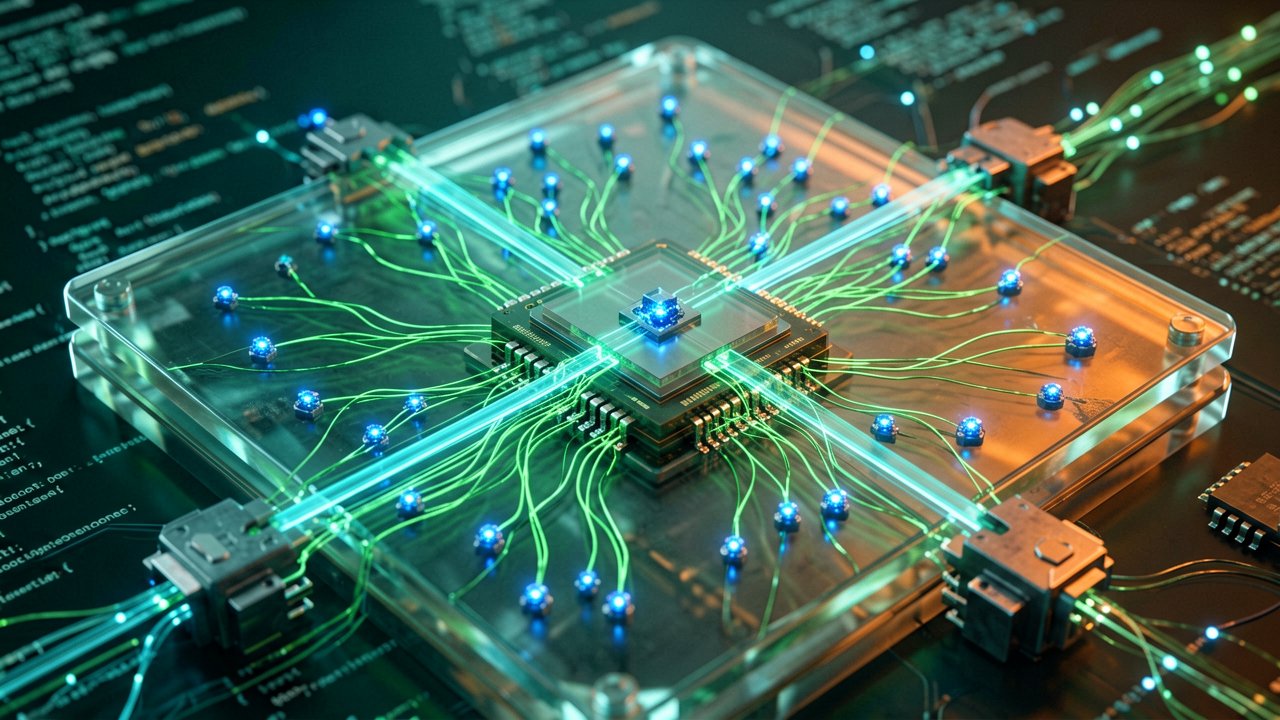
At the heart of this shift is the Singularity Platform, which avoids the common "cloud-first" trap where protection vanishes the moment a device goes offline. Instead, SentinelOne pushes its behavioral AI directly to the local agent. This means the engine is constantly observing system processes, correlating events in real-time, and—crucially—executing its own mitigation steps without waiting for a signal from a remote server. While competitors often rely on massive data lakes and human-led "1-10-60" response benchmarks, SentinelOne's autonomous approach is designed to move at the speed of the hardware itself.
Performance Under Fire
The proof, as they say, is in the telemetry. In the 2024 MITRE ATT&CK Enterprise Evaluations, SentinelOne's machine-learning-first strategy translated to 100% protection and detection rates with zero configuration changes or delays. That "zero-delay" metric is the one that really makes the industry sweat. In a world where a ransomware payload can encrypt a drive in seconds, a detection that takes four minutes to travel to the cloud and back is effectively a failure. Their latest "Purple AI" release takes this a step further, functioning as an agentic security analyst that reportedly cuts threat identification times by 63%, according to IDC research.
Skeptics, however, worry about the "black box" problem. When an AI makes an autonomous decision to isolate a critical server, the fallout from a false positive can be just as damaging as a breach. SentinelOne counters this with their "Storyline" technology, which visualizes the exact chain of events the AI used to reach its conclusion, attempting to provide the transparency that traditional black-box models lack. As the industry watches this "bold bet" play out, the divide between human-centric and autonomous-first defense is becoming the defining fault line of modern digital security.
Architectural Integrity and the Autonomous Edge
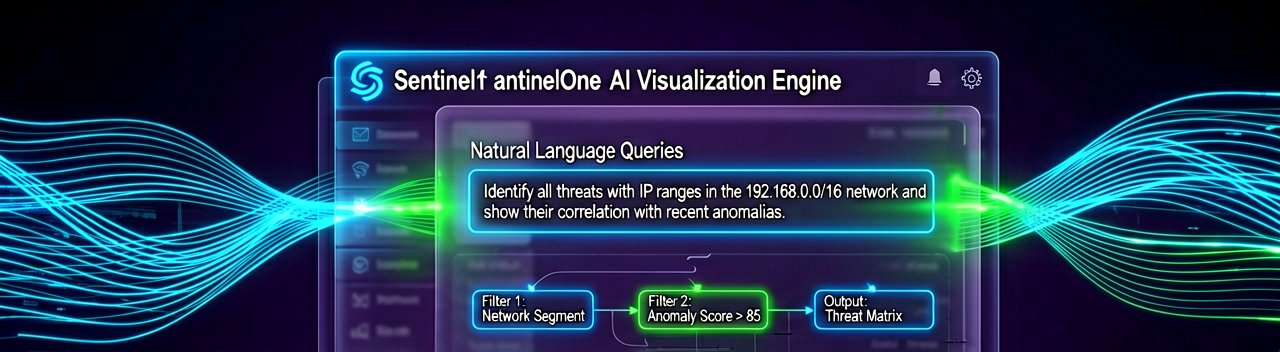
Behind the Scenes: The true friction in modern endpoint security isn't just about the sophistication of the neural network, but where that logic actually executes within the kernel. For a systems engineer, the "Singularity" architecture is less about marketing and more about the tight optimization of its local agent. Unlike legacy EDR tools that act as mere data forwarders—choking network bandwidth by streaming terabytes of raw telemetry to a backend—SentinelOne’s agent utilizes a proprietary Behavioral AI engine that lives on the endpoint. This agent is built to hook into low-level system calls with minimal overhead, ensuring that the process of monitoring doesn't become a performance bottleneck itself.
The magic happens through a concept known as "Storyline," which is essentially a real-time graph database running locally. As every process, file modification, and network connection occurs, the agent automatically tags and links these events into a cohesive ID. This allows the system to maintain stateful awareness without needing to query a remote database. When a malicious process attempts to inject code into a legitimate memory space, the engine doesn't just see a singular suspicious event; it sees the entire causal chain. Because this context is preserved locally, the mitigation response—like a surgical rollback—can be triggered in milliseconds, effectively unweaving the damage before the encryption keys are even generated.
Optimization at this level requires a deep focus on memory management and CPU scheduling to avoid the "AV lag" that users loathe. The agent is designed to operate in user-mode as much as possible while maintaining a tiny kernel-mode driver for visibility, a balance that prevents system instability. By offloading the heavy lifting of data correlation to the edge, the platform achieves a massive reduction in "mean time to detect" (MTTD). This shift from cloud-dependent analysis to localized autonomous compute represents a fundamental departure from the industry standard of "collect everything, analyze later" as seen in documentation from SentinelOne.
Scaling this across a global enterprise introduces the challenge of fleet-wide visibility without compromising the autonomy of individual nodes. To solve this, the architecture utilizes a multi-tenant cloud console that acts as a management plane rather than a processing engine. This ensures that even if the global management console experiences an outage, every single protected laptop or server remains a fully functional, self-defending unit. For the engineers tasked with maintaining uptime, this decoupling of the control plane from the data plane is the ultimate fail-safe in a high-stakes threat landscape.
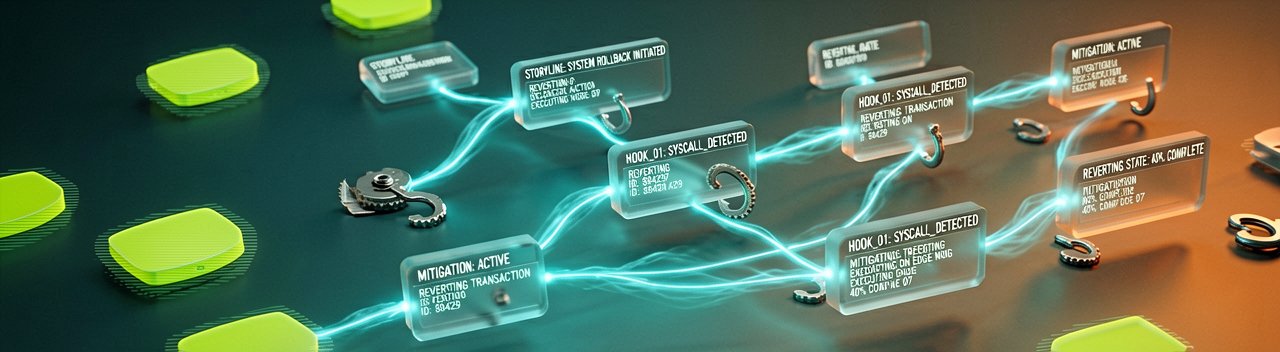
Furthermore, the integration of generative interfaces like Purple AI isn't just a cosmetic addition; it’s an abstraction layer over complex PowerQuery and SQL-like syntax. It translates natural language into precise telemetry filters, allowing analysts to hunt for indicators of compromise (IoCs) across millions of endpoints in seconds. By optimizing the underlying data indexing, the system can return results from a "warm" data tier faster than traditional cold-storage solutions. This blend of high-performance local execution and rapid-access global search is what defines the next era of cyber defense, as detailed in recent performance benchmarks by MITRE Engenuity.
The Friction of Autonomy: Trust vs. Control
Reading Between the Lines: The pivot toward autonomous security creates a fundamental paradox: we are building systems designed to outrun human intervention because human reaction time is now a liability. While SentinelOne champions a "zero-delay" world, the industry remains quietly terrified of the "black box" consequences. We are essentially handing the keys of the kingdom to algorithms that, while statistically superior, lack the contextual nuance to understand that a sudden spike in database queries might be an urgent end-of-quarter financial audit rather than a data exfiltration attempt. This tension between high-velocity protection and the risk of automated self-sabotage is the silent tax of the AI revolution.
There is also a growing contradiction in the "democratization" of security through tools like Purple AI. On one hand, these generative interfaces aim to bridge the skills gap by allowing junior analysts to hunt for threats using natural language. On the other hand, relying on an AI to interpret and summarize complex telemetry risks a dangerous "automation bias," where the analyst stops questioning the data and starts blindly trusting the summary. If the AI hallucinates or misses a subtle lateral movement because it wasn't explicitly in the training set, the human-in-the-loop becomes a mere rubber stamp for machine error. The challenge for SentinelOne isn't just making the AI smarter; it's ensuring that the human remains capable of spotting when it’s being outsmarted by an adversary who is also using AI-powered weaponization.
Looking forward, the shift toward "agentic" security—where AI doesn't just suggest actions but autonomously orchestrates them across identity and cloud layers—raises significant governance questions. As these systems become more interconnected, the attack surface for "adversarial AI" expands. A sophisticated attacker might not need to write code at all; they could potentially manipulate the environmental data to trick the autonomous agent into isolating the wrong systems or ignoring malicious ones entirely. According to research on automation bias, the best defense still requires a calibrated balance of technical fail-safes and human skepticism. SentinelOne's bold bet will ultimately be judged not by how many threats it stops, but by how gracefully it handles the one time it inevitably gets it wrong.
In the end, we’re racing toward a future where our servers are defended by digital bodyguards that are faster, smarter, and never sleep—which is great, right up until your bodyguard decides that the CEO’s new spreadsheet looks a bit too much like a ransom note.
Artūras Malašauskas is an AI Systems Integrator with 20+ years of production-grade web engineering experience. He has designed, shipped, and scaled enterprise Python/PHP systems for logistics, SaaS, and public-sector clients. For the past year, he has focused exclusively on AI integrations: deploying open-source LLMs, building generative media pipelines (image, audio, video), and engineering multi-agent workflows for real production environments. His standard: reproducibility, security, cost-efficient inference—no vaporware. He documents and evaluates emerging AI tooling, separating verified capabilities from marketing noise. Technical editor at: muza-ai.eu, ai-verslas.lt, ai-naujinos.lt Connect on LinkedIn
Comments