The Brains in the Agent: Inside SentinelOne’s Local Machine Learning Architecture

The cybersecurity industry has spent years chasing the holy grail of zero-day defense, but the traditional approach of shipping suspicious files off to a remote cloud sandbox for analysis introduces an inevitable, dangerous delay. Legacy platforms usually require constant cloud connectivity to remain smart, leaving disconnected endpoints completely exposed. SentinelOne flips this script by moving the machine learning engine directly onto the device itself, deploying an autonomous agent that acts as a local security analyst. By eliminating the reliance on a cloud-based brain, the SentinelOne platform secures endpoints at machine speed, regardless of whether a machine is connected to a network or completely offline.
At the core of this architecture sits a two-stage machine learning pipeline consisting of Static AI and Behavioral AI. Before a file even executes, the local agent uses its Static AI engine to dissect the binary structure, predicting malicious intent based on code characteristics rather than traditional, easily evaded signatures. If the file passes this initial gate and begins to run, the Behavioral AI engine takes over to monitor system behavior in real time. Rather than looking for a specific piece of bad code, it tracks process relationships, memory usage, and kernel interactions, tracking the entire execution chain to spot anomalies like process hollowing or credential theft from security subsystems.
Decoding the Storyline Engine
What truly separates this approach from generic endpoint detection tools is how the agent contextually structures data through patented Storyline technology. Most security sensors dump a massive, uncorrelated stream of events into a centralized console, forcing security teams to manually piece together how an intruder moved through the network. SentinelOne's engine automatically connects the dots right at the source, continuously tracing all OS behaviors and assigning them to a single, easily traceable timeline. If an attack occurs, the agent does not just flag the individual malicious action; it retains the context of every related process, allowing analysts to understand the entire lifespan of the threat instantly.
This automated contextualization yields massive advantages when it comes to operational performance metrics, dramatically cutting down the alert fatigue that plagues modern security operations centers. During independent tests conducted by MITRE, the Singularity platform consolidated days of complex adversarial testing into a single-digit handful of campaign-level alerts, tracking thousands of raw actions down to their exact attack stories. By organizing data so cleanly at the endpoint level, the architecture filters out irrelevant system background noise, resulting in an 88% reduction in false-positive alert volume compared to traditional security tools.
Translating Architecture Into Speed
This localized intelligence translates directly into rapid, definitive threat containment. Because the machine learning logic runs locally within the agent driver, the system achieves instant detection with zero delayed alerts, dropping containment response times down from hours to mere seconds. When the behavioral engine spots ransomware activity, such as unauthorized file encryption patterns, it can trigger an autonomous rollback mechanism that restores the targeted files to their healthy, pre-attack state without requiring a full system re-image.
Ultimately, shifting the computational heavy lifting to an on-device AI model proves that speed and accuracy in cybersecurity depend entirely on proximity to the threat. By avoiding the architectural gap of sending data back and forth to the cloud, the platform achieves total visibility across the enterprise footprint. It provides defense teams with a highly scalable, self-defending architecture engineered to neutralize modern, automated threats before they can establish a foothold.
Behind the Scenes: The execution of complex behavioral models on an endpoint requires strict adherence to kernel-level performance constraints to prevent system degradation. SentinelOne accomplishes this by implementing its agent as a lightweight kernel driver that utilizes low-overhead hooks via event tracing frameworks like Event Tracing for Windows (ETW) or eBPF in Linux environments. This architecture allows the agent to intercept critical system calls, file system modifications, and memory allocations directly within the kernel space before the context switches to user space. By capturing telemetry at this fundamental layer, the system eliminates the tampering risks associated with user-mode API hooking while maintaining a minimal CPU and memory footprint.
To process this massive stream of telemetry without exhausting local system resources, the agent relies on an optimized ring buffer architecture. Raw system events are fed into high-speed, thread-safe memory rings where initial stateless filtering occurs immediately. Common, benign system behaviors from trusted operating system processes are discarded or aggregated at the driver level based on localized allowlists. This ensures that only non-trivial or anomalous event sequences are passed upward to the user-mode service where the heavy machine learning evaluation takes place, protecting the endpoint from processor spikes during high-I/O operations.
Vectorized Calculations and Local Feature Extraction
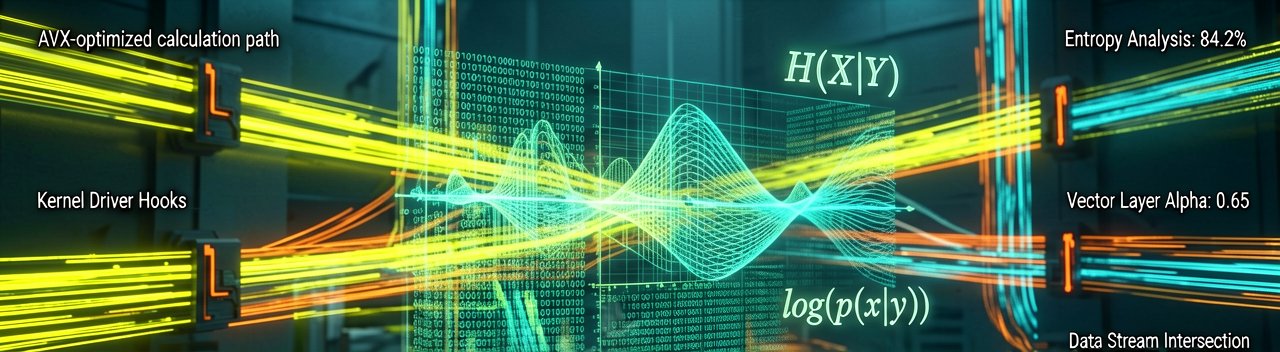
Once events pass the initial kernel-level filtering, the local engine transforms the raw telemetry into structured feature vectors for machine learning inference. This feature extraction process is highly optimized, utilizing hardware acceleration features like Intel AVX or ARM NEON vector instructions when available on the host processor. By parallelizing the mathematical calculations required to parse file entropy, import tables, and basic block structures, the Static AI engine can evaluate a 50-megabyte binary file in less than ten milliseconds, making the pre-execution check virtually imperceptible to the end user.
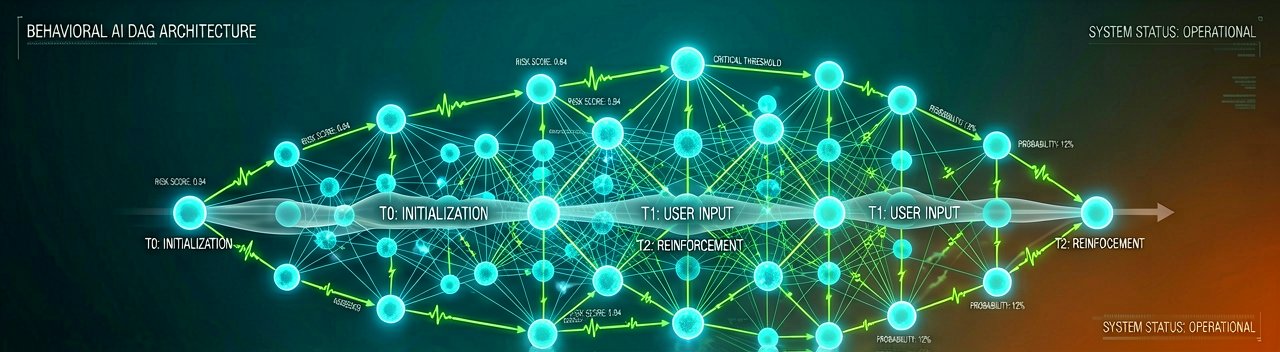
The Behavioral AI engine treats the ongoing system telemetry as a continuous directed acyclic graph (DAG), where nodes represent OS objects like processes, files, registry keys, and network sockets, and edges represent actions. Rather than running a resource-heavy neural network continuously, the agent applies lightweight, rule-based heuristics to calculate risk scores for specific sub-graphs. Only when a particular branch of the graph crosses a specific risk threshold does the agent invoke its deep learning models to evaluate the entire chain of execution for malicious intent, balancing detection accuracy with rigorous resource budgeting.
Memory safety and isolation are critical for an agent operating with elevated system privileges. The user-mode components of the architecture isolate the machine learning model runtimes inside protected processes, preventing malicious code from attempting to inject code into or dump the memory of the security agent itself. Model updates are delivered as highly compressed, serialized arrays of weights and biases rather than executable code updates, allowing the system to update its detection capabilities seamlessly without requiring an OS reboot or a disruption to the core driver architecture.
Reading Between the Lines: The enterprise marketing machine regularly presents autonomous endpoint security as a flawless, set-it-and-forget-it panacea, yet engineering reality rarely cooperates with marketing slide decks. While offloading threat detection to a localized machine learning engine undeniably solves the cloud-latency dilemma, it simultaneously introduces a delicate architectural contradiction. By trading a centralized cloud brain for thousands of distributed local agents, organizations are essentially deploying a massive, fragmented fleet of micro-computers that must all maintain peak algorithmic efficiency without hogging system RAM. Security teams must reckon with the fact that optimization is an endless game of trade-offs, where suppressing a processor spike might mean missing a highly sophisticated, slow-brewing attack vector.
This localized model approach also faces an uphill battle against the shifting nature of modern enterprise software. As corporate environments increasingly rely on complex devops pipelines, dynamic scripting environments, and automated administrative tools, the line between a benign system management script and a malicious living-off-the-land attack becomes razor-thin. Local behavioral engines are forced to make high-stakes judgment calls on highly ambiguous data structures, creating a natural tension between maximum security and operational uptime. When an autonomous agent decides to instantly isolate a critical production server based on a mathematically valid but operationally harmless behavioral anomaly, the resulting business downtime can easily rival the damage of an actual security breach.
Furthermore, the long-term efficacy of static and behavioral AI models operating in isolation remains tethered to the quality of their underlying training data. Attackers do not operate in a vacuum; they actively study endpoint agents, developing sophisticated evasion techniques specifically designed to mimic the exact statistical profiles that local models consider safe. By subtly altering execution timing, scattering malicious API calls across disparate threads, or artificially inflating file entropy, adversaries can systematically blind the feature extraction pipeline. This ongoing arms race suggests that completely severing dependency on centralized cloud intelligence is an ideological luxury rather than a permanent operational reality, forcing platforms to continuously recalibrate the balance between local autonomy and global cloud telemetry.
The Real-World Operational Balance
The operational reality of managing these autonomous fleets inevitably shifts the burden of proof from detection capabilities to long-term maintenance costs. While reducing false positives by significant margins looks impressive in controlled testing environments, maintaining that level of fidelity across diverse, legacy-heavy enterprise networks requires continuous tweaking and exceptional policy oversight. If a security team is forced to write exhaustive local exclusion lists to keep specialized software running smoothly, they are effectively carving blind spots directly into the autonomous defense perimeter, quietly undoing the very machine learning protection they purchased.
Ultimately, projecting the future of endpoint architecture requires looking past the industry hype surrounding total autonomy. Localized AI engines represent a massive leap forward from the fragile, signature-dependent tools of the past, but they are components of a broader strategy, not a standalone shield. True resilience will belong to architectures that can seamlessly blend this immediate, kernel-level local defense with broader, cross-domain telemetry processing, ensuring that the local agent remains smart enough to act instantly but connected enough to never fight entirely in the dark.
Replacing a legacy signature database with an onboard artificial intelligence engine is an undeniable engineering triumph, but it does mean your security budget now relies on an algorithmic goalkeeper that might occasionally tackle your own midfielders just to prove it is paying attention.
Artūras Malašauskas is an AI Systems Integrator with 20+ years of production-grade web engineering experience. He has designed, shipped, and scaled enterprise Python/PHP systems for logistics, SaaS, and public-sector clients. For the past year, he has focused exclusively on AI integrations: deploying open-source LLMs, building generative media pipelines (image, audio, video), and engineering multi-agent workflows for real production environments. His standard: reproducibility, security, cost-efficient inference—no vaporware. He documents and evaluates emerging AI tooling, separating verified capabilities from marketing noise. Technical editor at: muza-ai.eu, ai-verslas.lt, ai-naujinos.lt Connect on LinkedIn
Comments