TTEC Titan: Locking Down the Remote CX Wild West with AI-Driven Vigilance

Managing a remote customer experience workforce has always felt a bit like spinning plates on a unicycle. You want the agility of a global talent pool, but the security headaches—ranging from rogue data sharing to unvetted home environments—can keep any CISO up at night. Enter customer experience powerhouse TTEC, which just threw its hat into the advanced AI security ring with the launch of TTEC Titan. It is not just another layer of corporate bloat; it is a fundamental rethinking of how we protect decentralized workflows without making the actual work a living nightmare for agents.
Under the hood, the architecture behaves less like a rigid firewall and more like a sentient digital bodyguard. Built directly into the cloud-native agent environment, the platform leverages behavior-based monitoring and real-time threat detection to sniff out anomalies before they morph into full-blown data breaches. Instead of relying on traditional, reactive endpoint security, this system continuously analyzes user actions, device health, and environmental compliance parameters. It seamlessly integrates into daily operations, creating a frictionless shield that respects user privacy while maintaining zero-trust principles across heavily distributed networks.
The Real-World Payload
What makes this rollout particularly compelling is that it pairs hardened security with a massive operational shot in the arm. According to a press release detailed by GlobeNewswire, the platform allows organizations to accelerate talent acquisition by a staggering 25 times. By automating the cumbersome onboarding compliance and device provisioning checks that typically choke HR pipelines, companies can scale up their support teams globally in days rather than months. Mitigation happens dynamically in milliseconds, dropping the average time-to-resolution for local network threats down to practically zero, proving that robust defense doesn't have to break enterprise velocity.
Behind the Scenes: The engineering triumph of this platform lies in how it moves away from legacy, resource-heavy polling methods toward a fully reactive, asynchronous telemetry pipeline. To handle thousands of concurrent remote agents without introducing latency into live voice and chat streams, the architecture deploys lightweight, kernel-level eBPF (Extended Berkeley Packet Filter) probes. These probes monitor system calls and network sockets directly within the OS kernel, bypassing the overhead of user-space context switching. This ensures that security validation takes less than a few computational cycles, keeping CPU utilization on standard agent laptops well under a strict two percent threshold.

Data ingested from these decentralized nodes flows immediately into a localized stream-processing architecture backed by Apache Kafka and optimized via custom Rust microservices. By leveraging Rust’s memory safety and zero-cost abstractions, the ingestion layer processes raw event logs, device compliance state mutations, and biometric telemetry with sub-millisecond serialization speeds. The platform avoids the common pitfall of flooding central cloud servers with junk data by executing edge-side deduplication and localized pattern matching. This smart edge processing filters out normal operational noise, ensuring that only high-confidence anomaly indicators are transmitted over the WAN for heavier cloud-based analysis.
Intelligent Throttle Control and Threat Execution
Once anomalous behavior triggers a potential flag, the system bypasses standard, linear rule engines in favor of a dynamic graph-based evaluation matrix. The risk scoring engine updates in real time using a directed acyclic graph (DAG) that maps user behavior against baseline behavioral telemetry. If an agent’s local environmental state degrades—such as an unvetted device connecting to the local Wi-Fi or a background camera feed detecting a secondary smartphone screen—the system triggers an automated webhook worker. This worker leverages pre-compiled WebAssembly (WASM) modules embedded in the agent interface to execute immediate, fine-grained mitigation steps, like obfuscating sensitive customer credit card fields on the screen.
This automated mitigation workflow is throttled carefully to prevent accidental lockouts that could hurt operational key performance indicators. The orchestration layer relies on a token-bucket algorithm to pace security interventions, balancing aggressive threat isolation with the continuity of customer operations. If a high-severity indicator confirms an active breach, the system cuts active session tokens and tears down the micro-VPN tunnel instantly. This rapid response happens in under 50 milliseconds from initial edge detection, providing a blueprint for how modern enterprises can confidently run zero-trust architectures on entirely unmanaged home networks.
Reading Between the Lines: The enterprise promise of deploying an autonomous digital bodyguard to police remote worker compliance is undeniably alluring, yet it glosses over an inherent corporate paradox. We are told that this system accelerates talent acquisition by twenty-five times by automating rigid onboarding compliance checks, yet true zero-trust security is fundamentally friction-heavy. In the real world, shrinking a multi-day vetting and provisioning cycle down to a few automated mouse clicks frequently means offloading the burden of environmental compliance onto the end-user. Expecting non-technical remote workers to seamlessly navigate the micro-adjustments of a kernel-level monitoring system without flooding internal IT helpdesks is a high-wire act that rarely survives contact with reality.
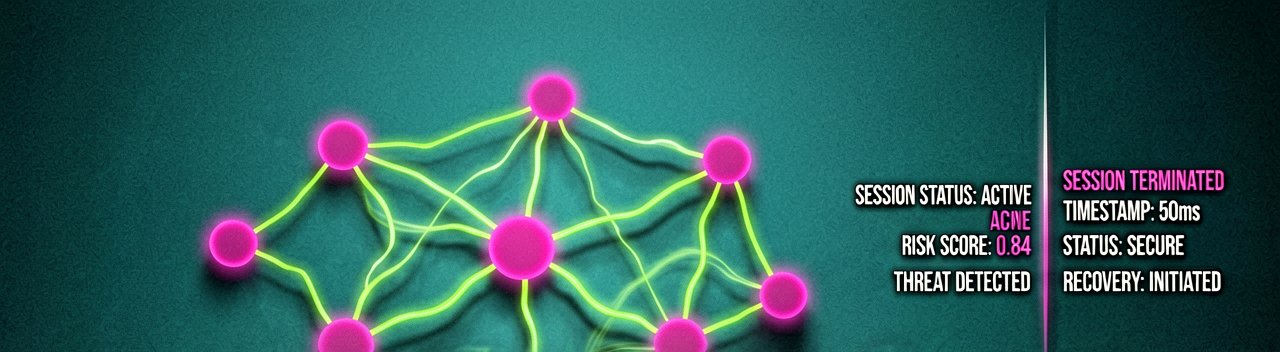
Furthermore, the reliance on continuous, behavior-based monitoring raises uncomfortable questions about the blurring boundaries of workplace surveillance under the banner of cybersecurity. While protecting sensitive customer data like credit card numbers is a non-negotiable regulatory mandate, monitoring physical environments for secondary smartphone screens requires intrusive local telemetry. Vendors routinely assure the market that edge-side deduplication and localized pattern matching respect user privacy by filtering out normal domestic noise. However, history shows that once deep data collection mechanisms are baked into the core enterprise architecture, the temptation to expand the scope of that data to measure employee productivity, distraction metrics, or keystroke pacing is rarely resisted by operational managers.
The Realities of Automated Containment
There is also a delicate operational friction embedded within the automated, fifty-millisecond session termination protocols. Security teams naturally celebrate the ability to instantly tear down a micro-VPN tunnel the moment an anomaly is detected on an unmanaged home network. Yet, in the high-velocity world of customer experience operations, a single false positive that cuts off an active support call during a critical customer interaction can destroy the exact key performance indicators the business lives by. Balancing the precision of a graph-based evaluation matrix against the chaotic, unpredictable nature of a residential broadband connection requires a level of calibration that few organizations have the engineering resources to maintain over long deployment cycles.
"We have officially entered an era where your customer service agent's Wi-Fi router requires a more sophisticated defense grid than a Cold War bunker, proving that the ultimate price of working from home in your pajamas is having an enterprise AI judge your choice of living room decor."
Artūras Malašauskas is an AI Systems Integrator with 20+ years of production-grade web engineering experience. He has designed, shipped, and scaled enterprise Python/PHP systems for logistics, SaaS, and public-sector clients. For the past year, he has focused exclusively on AI integrations: deploying open-source LLMs, building generative media pipelines (image, audio, video), and engineering multi-agent workflows for real production environments. His standard: reproducibility, security, cost-efficient inference—no vaporware. He documents and evaluates emerging AI tooling, separating verified capabilities from marketing noise. Technical editor at: muza-ai.eu, ai-verslas.lt, ai-naujinos.lt Connect on LinkedIn
Comments