The Silicon Crutch: How AI Overuse is Hollowing Out the Student Mind
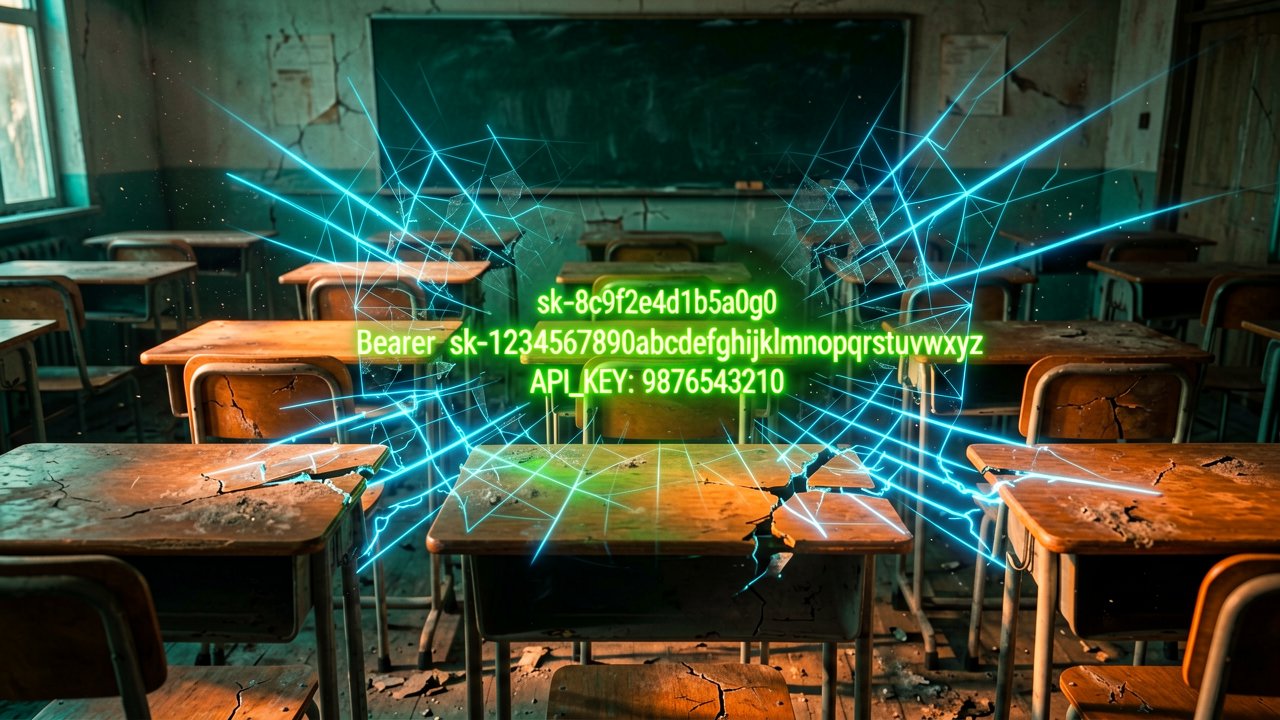
We have handed the keys to the kingdom over to the algorithms, and the architecture of the modern classroom is fracturing because of it. What began as an optimistic experiment in personalized digital tutoring has rapidly morphed into an intellectual outsourcing crisis. Walk into almost any high school or university today, and you will find an educational infrastructure fundamentally redefined by generative models—a sprawling digital architecture designed to deliver instant, hyper-customized answers. But this infrastructure has a fatal flaw. By shifting the labor of deep thought from human neurons to cloud-hosted neural networks, we are quietly dismantling the very scaffolding that builds independent, critical thinkers.
The transition from using AI as an occasional brainstorming assistant to treating it as a primary cognitive engine has completely altered learning performance metrics. When students use large language models to bypass the messy, frustrating process of drafting an essay or solving a complex proof, they are not just saving time; they are engaging in severe cognitive offloading. Recent data published by the Education Week indicates that nearly 70 percent of middle and high school students themselves are actively worried that using AI for schoolwork is eroding their own critical thinking skills. It turns out that when you eliminate the trial-and-error phase of learning, the brain simply stops building the durable cognitive pathways required for real-world problem solving.
The Illusion of Competence
The real danger here is not outright plagiarism, but rather a deceptive phenomenon known as the illusion of competence. A student can prompt an AI, generate a polished, syntactically flawless analysis of MacBeth, and hand it in for an easy A. On paper, the performance metrics look fantastic. However, experimental tracking reveals a stark disconnect between the quality of the output and the actual mastery of the student. According to a comprehensive study hosted by the MDPI, there is a distinct, statistically significant negative correlation between frequent AI tool usage and independent critical thinking abilities, heavily driven by this exact type of mental automation. The tech delivers a finished product, but it leaves the student completely incapable of explaining the underlying logic five minutes later.
Rebuilding the Educational Framework
Reversing this intellectual slide requires more than just installing tougher plagiarism detectors or issuing blanket classroom bans that nobody actually follows. Educators have to fundamentally redesign how they measure academic success, shifting from predictable, static assignments to dynamic, process-based evaluations. If an AI can generate a perfect answer in three seconds, then the answer itself can no longer be the metric of intelligence. The focus must pivot back to live oral defenses, real-time collaborative problem-solving, and proctored environments where students have to show their work. We have to force the human mind back into the driver's seat, ensuring that artificial intelligence remains a tool for expanding human capability rather than a substitute for human thought.

Behind the Scenes: The cognitive degradation observed in classrooms mirrors a classic system-level optimization failure. When a systems engineer designs a high-throughput data pipeline, the primary goal is often to minimize latency and offload heavy compute cycles from the core processor to edge caches. In the context of human learning, the human brain acts as the central processing unit, while generative AI functions as an external, hyper-efficient caching layer. By instantly serving pre-computed, syntactically perfect responses, the AI cache prevents the CPU from ever spinning up its own intensive compilation routines. The student’s internal neural network never experiences the necessary execution exceptions and debugging cycles that actually forge deep conceptual understanding.
This architectural mismatch becomes glaringly obvious when we look at the underlying telemetry of large language models versus human memory consolidation. Human learning relies on a biological version of backpropagation, driven by active recall, spaced repetition, and the cognitive friction of synthesizing disparate data points. When a student relies on an API call to a model like GPT-4, they are effectively running a forward-pass inference that bypasses their own internal training loops. The immediate performance metrics—such as essay quality or code correctness—appear optimized, but the internal weights and biases of the student's cognitive model remain entirely unadjusted. Over time, this lack of localized training leads to severe model degradation in the human user, resulting in a mind that can prompt but cannot think independently.
The Disconnection of Distributed Compute
From an infrastructure perspective, the current educational crisis is a failure of distributed compute management. We have decoupled data retrieval from data processing. In a well-architected system, a worker node pulls raw data from a database and performs localized transformations to generate an output. Today’s AI-assisted student acts merely as a passive proxy router, passing a tokenized prompt from a teacher’s assignment to a cloud-hosted model, and then piping the response back without doing any localized compute. This lack of edge processing means the student never develops schema-building capabilities. They become entirely dependent on the uptime and accuracy of the external server, leaving them highly vulnerable to hallucinated data and unable to verify the integrity of the information they are passing along.
To fix this pipeline bottleneck, system architects in education must implement strict rate-limiting and introduce intentional friction into the learning architecture. This means moving away from evaluating the final output payload and instead logging the entire development telemetry. We need to measure the Git commit history of a student's thought process, analyzing how they debugged a faulty logic chain or iterated on a thesis statement over time. By optimizing for the journey of data transformation rather than the static final delivery, we can force the human processor back into the loop. Only by treating cognitive friction as a necessary computational requirement can we prevent the systematic hollowing out of the next generation's analytical infrastructure.

Reading Between the Lines: The tech industry’s current marketing narrative insists that AI tools will democratize education by providing every child with a personalized, tireless Aristotle in their pocket. This utopian premise rests on a deeply flawed assumption: that giving a learner immediate access to the sum of human knowledge automatically translates into wisdom. In reality, we are witnessing a profound contradiction where the democratization of answers is leading to the privatization of actual thought. By treating the friction of learning as a bug to be squashed rather than a fundamental hardware requirement of the human brain, Silicon Valley is selling us an educational shortcut that terminates in a cognitive dead end.
This systemic optimization for speed ignores a harsh psychological truth about how human authority structures function in the digital age. When a machine delivers an answer with absolute, unwavering linguistic confidence, the typical student lacks both the domain expertise and the institutional permission to question it. We are training a generation to defer to algorithmic authority, effectively replacing traditional critical skepticism with a passive acceptance of corporate-curated consensus. The danger is not that students will disagree with the AI, but that they will lose the vocabulary required to disagree at all, assuming that if an automated system has processed billions of parameters to arrive at a conclusion, any human dissent must be a localized error.
The Paradox of Automated Intelligence
The long-term economic implications of this shift are dripping with irony. We are currently restructuring our entire school system to produce data-literate workers who can seamlessly interface with automation. Yet, by allowing AI to handle all the conceptual heavy lifting during their formative years, we are graduating students whose analytical capabilities are already obsolete compared to the software they are using. Educational institutions are proudly advertising their integration of cutting-edge AI tools, seemingly oblivious to the fact that they are accelerating the commoditization of their own graduates. We are paying premium tuition rates to teach humans how to mimic the predictable, standardized outputs of machines, while simultaneously stripping away the erratic, creative leaps that make human intellect uniquely valuable.
Ultimately, the current trajectory suggests a future defined by a stark cognitive divide. A small elite who understand how to build, audit, and direct these systems will retain true analytical agency, while the vast majority will become mere prompts in a broader automated pipeline. Breaking this cycle requires a cynical rejection of the tech industry’s efficiency metrics. We must deliberately reintroduce inefficiency into the curriculum—forcing students to sit with confusing texts, engage in messy, unscripted debates, and write by hand until their fingers cramp. If education remains a race to deliver the cleanest answer in the shortest time, the machines have already won, and our students are merely acting as highly inefficient data transfer cables.
The supreme irony of the modern classroom is that we have successfully built machines capable of thinking without learning, precisely so we can graduate students who are learning without thinking.
Artūras Malašauskas is an AI Systems Integrator with 20+ years of production-grade web engineering experience. He has designed, shipped, and scaled enterprise Python/PHP systems for logistics, SaaS, and public-sector clients. For the past year, he has focused exclusively on AI integrations: deploying open-source LLMs, building generative media pipelines (image, audio, video), and engineering multi-agent workflows for real production environments. His standard: reproducibility, security, cost-efficient inference—no vaporware. He documents and evaluates emerging AI tooling, separating verified capabilities from marketing noise. Technical editor at: muza-ai.eu, ai-verslas.lt, ai-naujinos.lt Connect on LinkedIn
Comments