Empowering Tomorrow's Innovators: Mizoram's Bold Leap in Tech Education
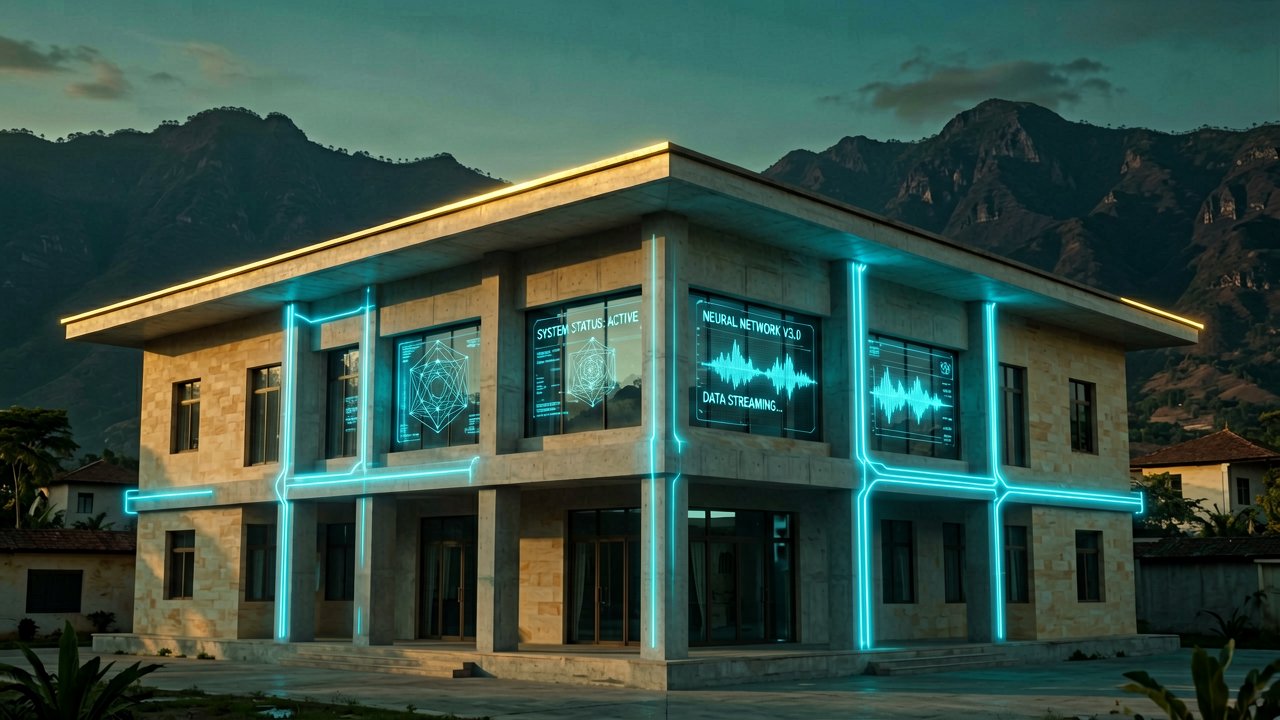
Mizoram is quietly pulling off one of the most ambitious educational pivots in Northeast India. It is a region traditionally celebrated for its high literacy rates but frequently hampered by its geographic remoteness. Now, the state is shifting its focus from basic textbook literacy to high-end digital competency, fundamentally redefining how its youth will engage with the global tech economy. Rather than waiting for opportunities to trickle down from India's major tech hubs, local leaders are embedding advanced industry skills directly into the public school system.
This forward-thinking shift took a massive, tangible step forward on May 29, 2026, when the state inaugurated the region's first-ever school-level technology skills lab, known as the New Age Tech Skills Centre. Located at the Government Comprehensive Model School in Aizawl, this facility serves as a blueprint for modern educational reform. It bridges the gap between traditional learning and industry requirements. By treating emerging technologies as core components of secondary education rather than specialized university electives, the state is positioning its younger generation to leapfrog old economic hurdles.
A Powerful Coalition of Industry and Governance
The establishment of this cutting-edge hub is a masterclass in public-private collaboration, tracing its origins back to a pivotal Corporate Social Responsibility workshop organized in June 2025 by the Confederation of Indian Industry and the state's CSR Cell. Mizoram School Education Minister Dr. Vanlalthlana led the grand opening. The initiative is being driven forward through a joint alliance involving the School Education Department, global manufacturing giant Bharat Forge Limited, and technical partner SimuSoft Technologies. It represents a coordinated effort to operationalize India's National Education Policy 2020 on the ground.
Instead of relying on dry, out-of-date computer science courses, classrooms are introducing students to specialized AI curriculum materials and textbooks designed directly by industry practitioners. The collaborative effort ensures that public school students are not just learning about code but are gaining intuitive, real-world context on how these tools operate in massive industrial settings. By combining the logistical weight of state government with corporate funding and corporate expertise, Mizoram has created a blueprint that other states in the region are watching closely.

Inside the New Age Labs
What sets this facility apart is the sheer sophistication of the technologies being put into the hands of ordinary students. The curriculum targets a comprehensive list of disruptive, 21st-century sectors, giving students a foundation in fields that are currently reshaping the global job market:
- Artificial Intelligence (AI): Hands-on modules that unpack machine learning algorithms and practical programming applications.
- Robotics & IoT: Interactive labs teaching automation, physical computing, and interconnected sensory networks.
- 3D Printing & CAD: Digital design courses that culminate in rapid prototyping and mechanical construction.
- Drone Technology & CNC Simulation: Practical training mapping out the future of logistics, automated manufacturing, and modern engineering workflows.
This practical methodology was on full display during the opening launch, which featured live demonstrations of autonomous robotics and immersive simulations. By moving away from theoretical rote-learning, the state is actively building a highly adaptable workforce capable of navigating the complex global technology landscape. You can learn more about this rollout via the Directorate of Information & Public Relations, which documents the transformation as it unfolds across the state.
Beneath the Polished Press Releases: The real triumph of Mizoram’s educational overhaul lies in how it systematically dismantles the geographic isolation that has historically bottlenecked Northeast India's talent pool. For decades, ambitious youth from Aizawl had to migrate to overcrowded tech hubs like Bengaluru, Hyderabad, or Pune just to touch modern enterprise hardware. By planting industrial-grade robotics, 3D printers, and AI workflows directly into a local government school, the state is effectively reversing this pipeline. It signals a shift from exporting raw, untrained labor to cultivating a highly specialized, localized tech ecosystem capable of remote global collaboration.
This localized approach addresses a long-standing criticism of India’s tech boom: the deep digital divide between tier-one metropolitan areas and rural border states. In Mizoram, where mountainous terrain and infrastructure bottlenecks complicate traditional manufacturing, digital skills represent a unique, weightless economy. Local educators note that while teaching children to code is a great first step, introducing them to computer-aided design and autonomous drone simulation introduces them to practical problem-solving. This approach transforms students from passive tech consumers into active infrastructure builders who understand how software interacts with physical machinery.
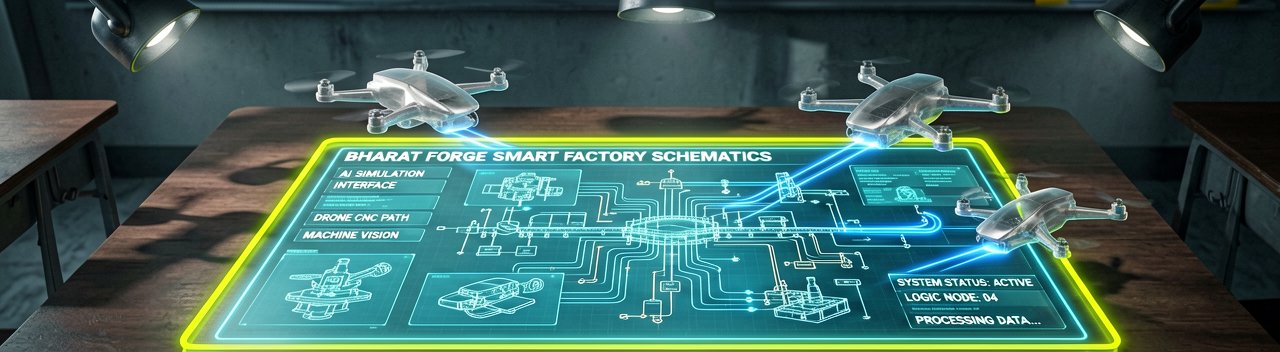
The strategic involvement of Bharat Forge Limited adds a critical layer of industrial pragmatism that is rarely found in standard public education initiatives. According to administrative insiders, corporate partners were adamant that the curriculum must not become a static textbook exercise. Instead, the training models mirror the exact predictive maintenance and automated logistics workflows used in modern smart factories. This integration ensures that the state's investment aligns perfectly with actual market demands, turning high school classrooms into active incubation pipelines for the national manufacturing sector.
Overcoming Institutional Inertia
The roll-out of the New Age Tech Skills Centre was not without its administrative hurdles, requiring a massive cultural shift among the local faculty. Traditional pedagogy in the region has long favored rote memorization—a legacy system that routinely produces high literacy percentages but often falls short in creative, open-ended problem solving. Retraining veteran public-school educators to manage fluid, project-based STEM labs required intensive, continuous workshops. Teachers had to pivot from being the sole source of textbook facts to acting as open-ended facilitators in a highly dynamic, failure-tolerant laboratory environment.
Furthermore, sustaining this momentum requires a long-term strategy for infrastructure maintenance and software updates, a common point of failure for well-intentioned public tech rollouts. The collaboration addresses this vulnerability by embedding tech support and periodic curriculum updates directly into the corporate partnership framework. By keeping local businesses and technical partners co-invested in the day-to-day operations, Mizoram is building an educational ecosystem designed to evolve seamlessly alongside the breakneck pace of global technological innovation.
Reading Between the Lines: The celebratory optics of a state-of-the-art tech lab can easily obscure the formidable structural realities that Mizoram must now navigate. While launching a flagship center in the capital city of Aizawl provides an excellent proof of concept, scaling this model across a rugged, economically stratified state is an entirely different beast. The true measure of this initiative will not be found in the well-lit corridors of a model school, but in how effectively these advanced curricula can survive the frequent power outages and sporadic internet connectivity that still plague the state's more remote districts.
There is also a glaring contradiction in pushing for hyper-advanced artificial intelligence and drone simulations within an educational infrastructure that often still grapples with basic resource allocation. Skeptics rightly point out that introducing high-end technical training risks widening the internal equity gap within Mizoram itself, creating a tech-savvy urban elite while rural schools continue to struggle for foundational science textbooks. If the government fails to match its digital ambition with a simultaneous, aggressive upgrade to baseline rural infrastructure, this bold leap could inadvertently worsen local socioeconomic disparities.
Furthermore, the long-term economic payoff of this educational pivot remains heavily dependent on an external variable: regional industry retention. Mizoram is investing heavily in creating a sophisticated workforce, but the state currently lacks the domestic tech ecosystem, venture capital, and corporate footprint required to employ them locally. Without a parallel economic development strategy to attract tech firms or incentivize local startups, Aizawl risks simply funding a highly efficient, taxpayer-subsidized talent pipeline that feeds tech hubs in the south and west, effectively subsidizing wealthier states' economies.
The Realities of the Digital Horizon
Evaluating this gamble requires looking past the corporate jargon of "disruptive sectors" and examining the unpredictable evolution of the global job market itself. Training teenagers on specific software or CNC simulators assumes a degree of industry stability that simply no longer exists in the age of generative AI. By the time these secondary school students graduate from universities and enter the job market in the 2030s, the entry-level technical roles they are being prepared for today may look entirely different or be completely automated out of existence.
To avoid training a generation for a workplace that no longer exists, the curriculum must prioritize fundamental computational logic and cognitive flexibility over specific tool mastery. The state's partnership with industrial heavyweights provides a buffer against obsolescence, but bureaucratic education departments are notoriously slow to pivot when fast-moving tech trends shift overnight. Mizoram’s grand experiment will ultimately stand or fall on its institutional agility—specifically, its willingness to continuously dismantle and rebuild its curriculum as rapidly as the technology evolves.
It turns out that teaching teenagers to master artificial intelligence and drone mechanics is the easy part; the real challenge is convincing a state's bureaucracy to upgrade its own operating system at the same blistering speed.
Artūras Malašauskas is an AI Systems Integrator with 20+ years of production-grade web engineering experience. He has designed, shipped, and scaled enterprise Python/PHP systems for logistics, SaaS, and public-sector clients. For the past year, he has focused exclusively on AI integrations: deploying open-source LLMs, building generative media pipelines (image, audio, video), and engineering multi-agent workflows for real production environments. His standard: reproducibility, security, cost-efficient inference—no vaporware. He documents and evaluates emerging AI tooling, separating verified capabilities from marketing noise. Technical editor at: muza-ai.eu, ai-verslas.lt, ai-naujinos.lt Connect on LinkedIn
Comments