Bridging the AI Wild West: Why EC-Council’s ADG Framework is the Operational Discipline Enterprises Need
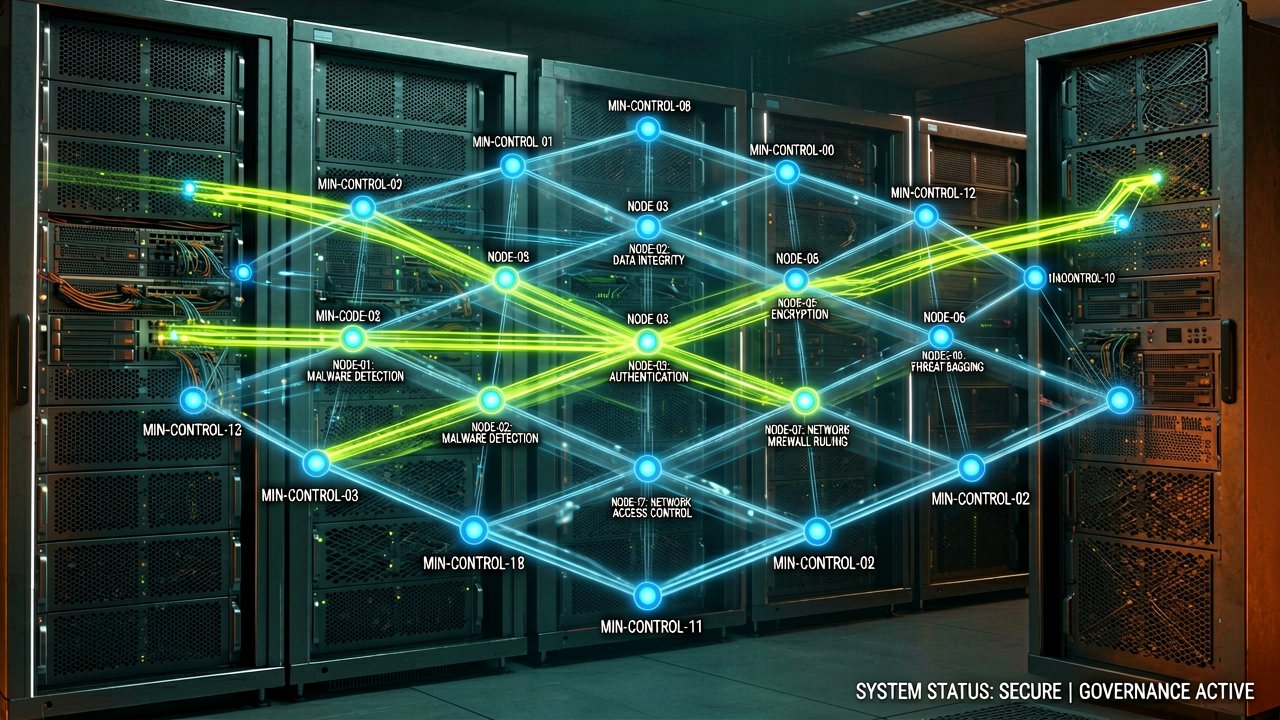
For the past few years, enterprise AI deployment has looked less like a structured rollout and more like a land grab. Organizations have lunged headfirst into large language models and agentic ecosystems, prioritizing rapid scaling while security teams frantically tried to keep up. It is a deploy-first, fix-later mentality that has left corporate infrastructure dangerously exposed. Recognizing this expanding vulnerability, cybersecurity training giant EC-Council has launched its Adopt. Defend. Govern. (ADG) AI Framework. Built in collaboration with industry practitioners from heavyweights like Salesforce, Citi, and Microsoft, this open-source initiative aims to turn abstract ethics guidelines into repeatable, auditable operational practices.
What makes the ADG Framework notable isn’t just another list of high-level moral principles; the industry already has plenty of those. Instead, it introduces a highly structured, modular architecture tailored to multi-model environments and complex agentic AI systems. The matrix organizes an enterprise defense strategy into 9 distinct governance surfaces and enforces 12 defined minimum controls. It maps these defenses against 4 critical harm classes and 4 industry threat catalogs while accounting for 3 different tiers of system autonomy. By applying 9 specific deployment pattern overlays, security architects can systematically address modern vulnerabilities like prompt injection, data poisoning, and model exploitation. This structural design bridges the gap between raw code and corporate compliance, mapping directly to rigid external standards like the EU AI Act, ISO/IEC 42001, and the NIST AI Risk Management Framework.
From Compliance Checkboxes to Measurable Performance Indicators
The true genius of the architecture lies in how it seamlessly translates these rigid technical controls into real-world performance metrics. Instead of relying on passive questionnaires, the framework includes an AI Readiness Self-Assessment Tool designed to provide data-driven visibility into an organization's actual threat exposure. By tracking specific, quantifiable indicators across the three operational pillars—Adopt, Defend, and Govern—executives can actively measure system resilience. The framework tracks performance from the initial business alignment and workforce readiness down to the operational latency of real-time security guardrails. For corporate boards, this granular data shift changes everything. It transforms AI oversight from an anxious leap of faith into an evidence-based discipline where risk mitigation can be audited, tracked, and optimized at scale.
Engineering Resilient Guardrails for Multi-Model Infrastructures
Behind the Scenes: The core challenge of securing enterprise AI lies in the latency overhead introduced by inline security orchestration layer processing. Systems engineers cannot simply wrap every API call in synchronous validation loops without severely degrading user experience and increasing operational costs. The ADG Framework addresses this constraint by decoupling input sanitization from the core model execution path through asynchronous evaluation layers and predictive token caching. By processing outbound vector embeddings through a decentralized broker model, security teams can scan for adversarial suffix injections before the payload hits the primary inference pipeline.

Optimizing this architecture requires strict memory-boundary isolation and the deployment of lightweight, fine-tuned verification models situated at the network edge. These specialized micro-models analyze semantic drift and payload variance, acting as an intelligent firewall that flags anomalies before they reach deep neural layers. To maintain throughput, token stream evaluation utilizes parallelized chunking strategies, allowing the system to inspect concurrent inputs without blocking the primary attention heads. This decoupling limits the performance tax to a negligible fraction of total inference time while establishing an auditable defensive perimeter.
Beyond payload scanning, state-management optimization is critical when deploying autonomous agentic workflows that require multi-hop reasoning loops. Ephemeral contextual state-tracking ensures that memory buffers do not retain sensitive data across distinct user sessions, effectively eliminating cross-tenant leakage. Engineers utilize strict tokenization filters and encrypted state caches to manage session data dynamically, destroying the cryptographic keys immediately upon session termination. This hard boundary thwarts complex multi-turn prompt extraction attacks that attempt to manipulate the system by slowly poisoning the active contextual memory window.
From an execution standpoint, these modular controls transition smoothly into live telemetry logging and performance instrumentation. Instead of relying on static logs, the framework drives dynamic telemetry streams that monitor vector similarity scores, model response entropy, and token consumption anomalies in real time. These metrics feed into automated orchestration controllers, which can dynamically throttle or isolate a compromised agent without taking the entire application cluster offline. Treating security controls as code-level performance parameters allows enterprises to scale complex AI workflows with the predictable reliability of traditional microservices.
The Compliance Mirage and the Realities of Agentic Liberty
Reading Between the Lines: The tech industry has an incurable habit of treating frameworks as panaceas, as if publishing a structured matrix automatically tames the inherent unpredictability of non-deterministic systems. EC-Council’s ADG Framework is undoubtedly a masterclass in bureaucratic mapping, yet it subtly glosses over a fundamental contradiction in modern AI engineering. We are trying to impose rigid, deterministic governance controls onto systems whose primary commercial value lies precisely in their ability to be creative, adaptive, and fluid. When an enterprise deploys an autonomous agent with three tiers of autonomy, enforcing twelve strict controls can easily become an exercise in fighting the technology's core architecture.
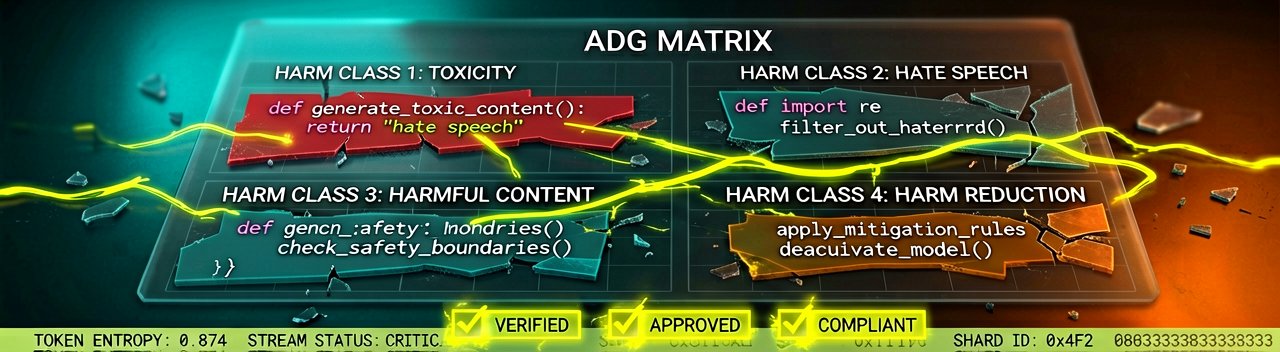
Furthermore, the reliance on an AI Readiness Self-Assessment Tool introduces a classic corporate pitfall: the compliance mirage. It is entirely possible for an enterprise IT department to check every box on the ADG surface matrix, optimize their vector similarity logging, and still fall victim to a novel, zero-day prompt injection attack that exploits a previously unmapped semantic vulnerability. Frameworks naturally incentivize organizations to defend against the threat vectors they can easily categorize and measure, often leaving them blind to emergent behaviors that manifest only when multiple autonomous models begin interacting in closed-loop corporate ecosystems.
We must also look skeptically at the open-source collaboration backing this initiative. While having giants like Salesforce and Microsoft at the table lends immense credibility, it also ensures the framework aligns neatly with the commercial architectures these very providers are selling. A framework that implicitly favors massive, centralized, multi-model infrastructures can inadvertently marginalize lean, highly specialized decentralized open-source models that do not fit into tidy corporate governance buckets. True security at enterprise scale will ultimately require less reliance on neat structural taxonomies and a greater commitment to adversarial chaos engineering.
"Ultimately, deploying an AI governance framework is a lot like putting guardrails on a unicycle; it looks incredibly reassuring on paper, right up until the moment physics reminds you that the vehicle itself was never built to stand perfectly upright."
Artūras Malašauskas is an AI Systems Integrator with 20+ years of production-grade web engineering experience. He has designed, shipped, and scaled enterprise Python/PHP systems for logistics, SaaS, and public-sector clients. For the past year, he has focused exclusively on AI integrations: deploying open-source LLMs, building generative media pipelines (image, audio, video), and engineering multi-agent workflows for real production environments. His standard: reproducibility, security, cost-efficient inference—no vaporware. He documents and evaluates emerging AI tooling, separating verified capabilities from marketing noise. Technical editor at: muza-ai.eu, ai-verslas.lt, ai-naujinos.lt Connect on LinkedIn
Comments