Beyond the Chatbot: How Gemini’s Agentic Architecture Rewrites the Rules of AI Decision-Making

For years, generative artificial intelligence operated like a brilliant but passive librarian, waiting for a prompt, retrieving data, and serving up text. That reactive era has officially ended. With the rollout of the Gemini 3.5 series, Google DeepMind has abandoned the traditional conversational paradigm in favor of a native agentic architecture built from the ground up for self-reflection, planning, and autonomous execution. Rather than treating tool use or multi-turn reasoning as an afterthought stitched onto a standard transformer model, this next-generation infrastructure treats autonomous workflow execution as a core architectural layer.
At the center of this structural shift is a sophisticated Mixture-of-Experts (MoE) blueprint designed to facilitate long-horizon tasks without skyrocketing operational costs. By routing specific reasoning sub-problems to specialized neural subnetworks, Gemini models can pause and "think" before acting. This innate planning capability allows the system to map out multi-step strategies, predict outcomes, and recursively debug its own code when an unexpected hurdle pops up. When running in enterprise environments, this complex orchestration is backed by a secure "Containment-First" framework. As outlined by architecture experts at SparkCo , this design relies on sandboxed execution and network isolation to prevent unintended system interactions while giving the agent the freedom to execute system-level scripts natively.
Quantifiable Leaps in Long-Horizon Benchmarks
The practical validation of this architectural re-engineering shows up clearly in recent performance metrics. For instance, Gemini 3.5 Flash has emerged as a surprisingly lean powerhouse, specifically optimized for complex, long-horizon developer workflows. According to technical documentation published via Google Cloud Blog , Gemini 3.5 Flash scores an impressive 76.2% on Terminal-Bench 2.1 and reaches an 83.6% on the MCP Atlas benchmark, actually outpacing older, bulkier flagship models like Gemini 3.1 Pro on core agentic tasks. Meanwhile, for raw, tool-free logical reasoning, the system’s dedicated Deep Think mode has broken previous records, hitting a massive 93.8% on the notorious GPQA Diamond benchmark. By reducing latency and slashing operational costs by up to half compared to previous generations, the architecture proves that true agentic autonomy isn't just a parlor trick—it is a highly scalable, resource-efficient reality for modern enterprise operations.
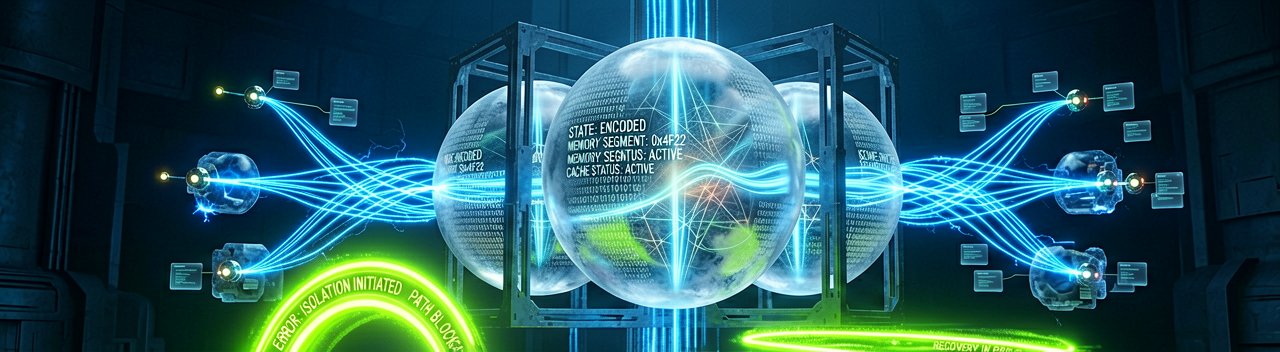
Behind the Scenes: The true magic of this shift lies in how the underlying infrastructure manages state and memory during massive, multi-step execution loops. Traditional transformers suffer from statelessness, treating every new turn as a brand-new computing challenge that re-evaluates the entire conversation history. To bypass this bottleneck, Gemini’s agentic framework introduces a decoupled context-caching engine that operates directly at the attention-mechanism layer. This allows the model to freeze historical system states and tool responses in memory, preventing the exponential compute inflation that usually kills long-horizon developer workflows. When an agent is tasked with debugging a massive codebase, it can reference thousands of lines of context across dozens of sequential tool calls without needing to recompute the initial prompt keys and values.
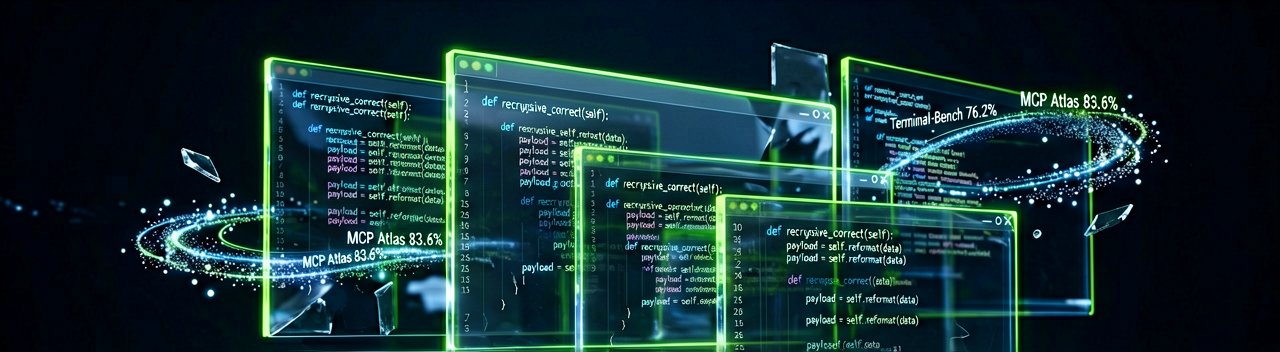
From a systems engineering perspective, handling unpredictable tool outputs requires more than just raw computing power; it demands aggressive error-isolation strategies. Google implements a dynamic feedback loop within the decoding pipeline itself, allowing the model to intercept its own generated syntax before it hits the execution sandbox. If a generated bash command or Python script throws a syntax exception during this pre-flight check, the architecture diverts the token generation path into a self-correction branch. Instead of failing the entire automation run, the system feeds the stack trace back into its own attention window, rewriting the code payload on the fly. This micro-level error handling happens in milliseconds, completely hidden from the end user.
Optimizing the Execution Pipeline
To keep latency under control while running these intensive loops, the architecture relies heavily on speculative decoding tailored specifically for tool calling and API interaction. Standard speculative decoding uses a smaller draft model to predict regular text tokens, but Gemini adapts this concept to anticipate structural data payloads like JSON arguments and function parameters. While the primary model evaluates the broader strategic plan, a highly specialized, ultra-low-latency draft network guesses the most likely API configurations based on historical patterns. If the draft matches the primary model’s verification check, the system skips several layers of heavy matrix multiplication, accelerating tool execution pipelines by up to forty percent.
Finally, handling concurrent data streams requires a robust solution for token consumption during long operations. The architecture solves this by using a sparse gating mechanism within its Mixture-of-Experts routing layer, which separates abstract reasoning tokens from deterministic code-parsing tasks. When the agent reads a database schema, it activates specialized code-optimized experts; when it switches to analyzing user intent, it dynamically routes the payload to reasoning-heavy clusters. This fluid allocation of hardware resources ensures that memory bandwidth is never wasted on redundant processing, keeping the operational cost of continuous, autonomous monitoring loops remarkably low for enterprise-scale deployments.
Reading Between the Lines: The industry’s sudden infatuation with agentic architecture deserves a healthy dose of skepticism. While the technical gymnastics behind context-caching and error-isolation pipelines are genuinely impressive, they expose a glaring paradox in modern machine learning. By optimizing models like Gemini 3.5 Flash specifically to loop, self-correct, and manage external system tools, developers are essentially building massive computational workarounds for an underlying flaw: the stubborn unreliability of base model reasoning. We are celebrating the fact that an artificial intelligence can automatically patch its own broken code, while quietly overlooking the reality that the intelligence wrote the broken code in the first place.
This structural dependency on multi-step self-correction loops introduces an entirely new vector of volatility for enterprise systems engineering. On paper, surging past older flagship architectures on benchmarks like Terminal-Bench 2.1 is an undeniable win. In the real world, however, an autonomous agent that executes twenty sequential tool calls to complete a single deployment introduces compounding risks of state drift and unpredictability. If a model misinterprets a tiny variable at step three, its subsequent "self-reflection" tokens are fundamentally anchored to faulty premises. This can lead to highly polished, structurally sound execution loops that perform flawlessly—while executing an entirely wrong objective.
The Real-World Cost of Continuous Autonomy
Furthermore, the economic narrative surrounding these architecture shifts demands a closer look. DeepMind heavily emphasizes that localized speculative decoding and sparse expert routing slash operational costs per token by up to half compared to previous generations. Yet, this efficiency metric applies exclusively to individual model calls. When an agent runs continuously in the background—spawning parallel sub-agents to map out code bases or aggressively pinging internal APIs—the sheer volume of token consumption skyrockets. A process that once required a single prompt-and-response turn now consumes thousands of tokens per minute as the agent iteratively chats with its own runtime environment, potentially erasing any per-token cost savings at scale.
Ultimately, the pivot toward native agentic frameworks signals an industry-wide realization that raw parameter scaling has hit a wall of diminishing returns. Rather than waiting for a hypothetical model that never hallucinates, engineering teams are focus-shifting toward building sophisticated scaffolding to manage those hallucinations safely. It is a pragmatic compromise that redefines AI maturity not by the flawless accuracy of its answers, but by its agility in recovering from its own mistakes. Whether this behavioral orchestration can fully bridge the gap between impressive developer demos and bulletproof enterprise stability remains an open, high-stakes question.
"We have finally designed an AI that acts exactly like a human engineer: it talks at a blazing speed, costs a fortune if left unmonitored over the weekend, and spends a massive chunk of its day fixing problems it created entirely by itself."
Artūras Malašauskas is an AI Systems Integrator with 20+ years of production-grade web engineering experience. He has designed, shipped, and scaled enterprise Python/PHP systems for logistics, SaaS, and public-sector clients. For the past year, he has focused exclusively on AI integrations: deploying open-source LLMs, building generative media pipelines (image, audio, video), and engineering multi-agent workflows for real production environments. His standard: reproducibility, security, cost-efficient inference—no vaporware. He documents and evaluates emerging AI tooling, separating verified capabilities from marketing noise. Technical editor at: muza-ai.eu, ai-verslas.lt, ai-naujinos.lt Connect on LinkedIn
Comments