The Stygian Abyss Reborn: How a Decade of Grassroots Innovation Resurrected Ultima Underworld
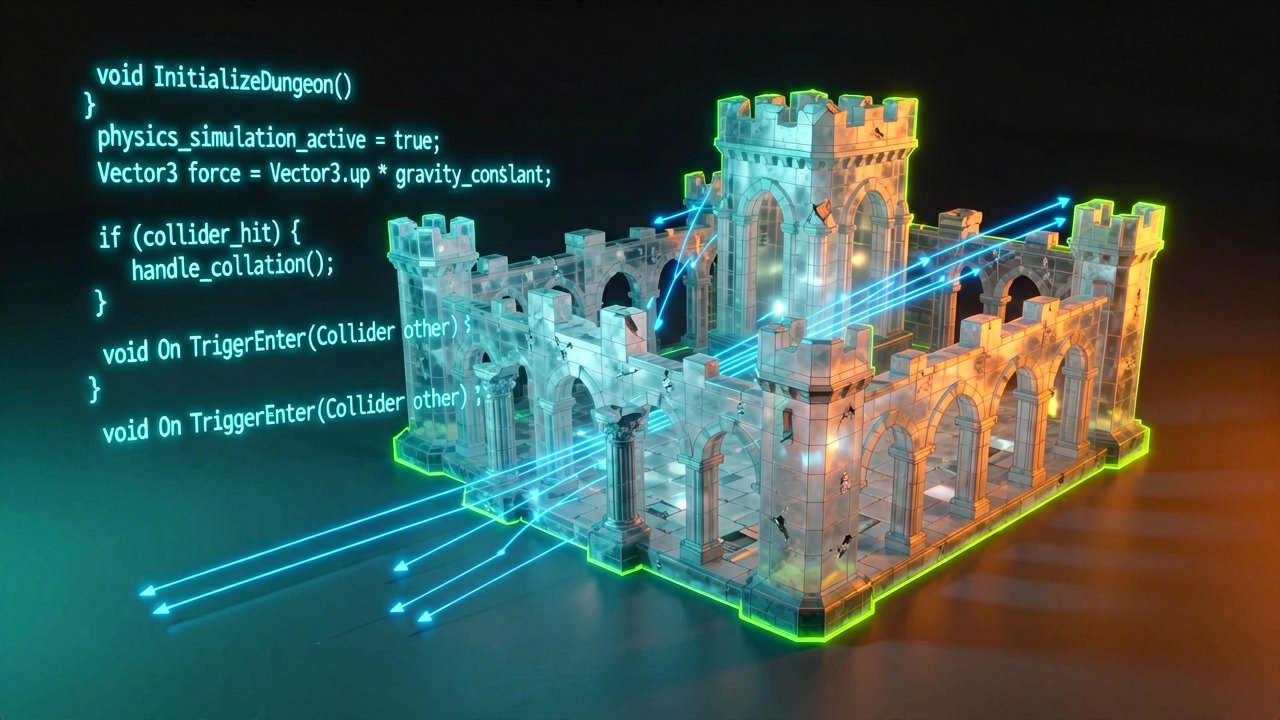
When Looking Glass Studios unleashed Ultima Underworld: The Stygian Abyss in 1992, they didn't just build a game; they engineered the blueprint for the modern immersive sim. Decades before players could freely scale mountains in modern open-world titles, this dungeon crawler introduced true 3D movement, physics, and an unscripted atmosphere that left an indelible mark on game design. Yet, playing it today usually means wrestling with archaic DOS emulation and clunky controls. That preservation bottleneck finally shattered in early 2026 when a dedicated group of independent modders operating under the Unity Underground banner quietly released a spectacular, comprehensive remaster of the classic. It's a masterclass in how community-driven passion can salvage gaming history when corporate owners look the other way.
This massive undertakings didn't happen overnight. It represents over ten years of meticulous reverse-engineering and development to completely port the game's logic into a modern engine. What makes this specific project stand out is how it elevates raw preservation into creative innovation. Rather than merely making the old code compatible with modern operating systems, the developers swapped out flat sprites and tile layouts for true 3D geometry and fully realized character models. They didn't stop at the visuals, either. The project brings integrated controller support and entirely new sound effects to the table, solving the accessibility issues that have long kept younger RPG enthusiasts from exploring the depths of the Abyss. It bridges the gap between 1990s depth and 2020s convenience without compromising the grim, oppressive atmosphere that made the original legendary.
Balancing Nostalgia and Modern Engineering
Re-engineering a milestone title requires navigating a legal and technical minefield, a reality well documented by gaming outlets like Rock Paper Shotgun. To sidestep the inevitable wrath of corporate copyright holders, the Unity Underground team designed the project to function strictly as an engine overhaul. It acts as an advanced wrapper, meaning players must provide the original game data files to actually run the remaster. It's a clever, time-tested strategy that protects independent creators while honoring the intellectual property. By utilizing the flexibility of the Unity engine, these grassroots developers achieved what multi-million-dollar studios often deem unprofitable: salvaging a highly complex, historically vital piece of software art and making it instantly intuitive for a new generation of players.
What Most Reports Miss: The Invisible Code and Architectural Alchemy
To truly appreciate what the Unity Underground team achieved, one must look beneath the polished textures and into the terrifying labyrinth of 1990s source code. The original Ultima Underworld was written in an era before standardized graphics APIs like DirectX or OpenGL even existed. Looking Glass Studios had to write their own custom software renderers, building physics formulas and lighting calculations entirely from scratch out of raw assembly and C code. Porting this chaotic, highly optimized ancient architecture into a modern object-oriented environment like Unity isn't a simple copy-paste job. It requires a profound, almost archaeological understanding of how programmers thought thirty years ago, translating forgotten logic hacks into systems that modern processors can comprehend without breaking the game's core feel.

The magic of the immersive sim genre relies entirely on a delicate web of systemic interactions. If a torch burns out, the light level drops, affecting enemy line-of-sight; if an item is dropped into water, physics dictate its buoyancy. When you alter the underlying engine engine to accommodate modern frame rates, these systemic dependencies often collapse. Early builds of the remake suffered from game-breaking physics glitches where doors would fly off their hinges or projectiles would teleport through walls because the original game logic tied physics calculations directly to the CPU's clock speed. Resolving these desynchronizations required the developers to meticulously separate the legacy simulation ticks from Unity's rendering loops, ensuring that the dungeon's ecosystem behaves exactly as it did in 1992, even at a silky-smooth 144 frames per second.
This technical triumph also highlights a growing philosophical rift between the gaming community and corporate publishers regarding historical preservation. While massive conglomerates frequently view classic titles through the cynical lens of intellectual property management—often letting legendary IPs sit in legal limbo or pulling them from digital storefronts due to licensing disputes—grassroots developers treat them as living cultural heritage. The decade spent on this remake wasn't fueled by the promise of venture capital or digital pre-order bonuses, but by a collective anxiety that an foundational pillar of RPG history was quietly fading into functional obsolescence. It stands as a fierce, working proof that preservation is a proactive act of creation, not just a passive archival effort.
Ultimately, the success of this project shifts the conversation around what a "remaster" should actually be. In an industry currently saturated with lazy, AI-upscaled cash-grabs that often strip away the art style and atmosphere of the originals, this fan-made overhaul proves that technical modernization requires a human soul. By demanding that players own the original files, the modders have simultaneously respected the legal boundaries of ownership while breathing radical new life into a forgotten masterpiece. They have set a formidable new benchmark for community-led restoration, proving that the most enduring custodians of gaming history aren't the executives in boardrooms, but the fans who refuse to let the fire go out in the abyss.
Reading Between the Lines: The Fragile Illusion of Digital Longevity
The euphoric reception surrounding the Unity Underground project obscures a harsh, structural paradox that plagues modern gaming. Enthusiasts celebrate this release as a definitive victory for preservation, yet the entire endeavor hinges on a legal tightrope that could snap at any moment. By relying on a wrapper architecture that requires original game assets, the developers have temporarily placated corporate lawyers, but they haven't solved the underlying vulnerability of the medium. The project exists entirely at the mercy of corporate apathy; should the current copyright holder decide that a free, superior community version threatens a future monetization strategy, a swift cease-and-desist letter could scrub the project from mainstream repositories overnight, proving that digital preservation remains a hostage to corporate whim.

Furthermore, this decade-long odyssey exposes the profound inefficiency of relying on volunteer labor to safeguard cultural milestones. While it is heartwarming to witness a handful of brilliant engineers donate thousands of hours to rescue a 1992 classic, this model is fundamentally unsustainable. Thousands of equally influential titles from the late DOS and early Windows eras are quietly rotting in the digital ether because they lack the specific, cult-like status required to inspire a ten-year volunteer rescue mission. Celebrating this single triumph as a template for the future ignores the reality that grassroots innovation is a lottery system, where only the most famously nostalgic intellectual properties win the lottery of survival, leaving the rest of gaming history to turn into unplayable code.
There is also a subtle irony in how these modernization efforts alter the psychological reality of playing a retro masterpiece. In smoothing out the jagged edges, integrating modern controller layouts, and eliminating the friction of DOS-era interfaces, the remaster inevitably sanitizes the historical context of 1992. The original Ultima Underworld was defined by its hostility and its demanding, alien mechanics; wrestling with the interface was an intrinsic part of the claustrophobic terror of the Stygian Abyss. By making the experience palatable to a generation raised on modern ergonomics, the remake risks transforming a brutal historical artifact into a comfortable, contemporary simulation, raises the uncomfortable question of whether we are preserving the past or merely rewriting it to fit our current comfort zones.
"We pour millions into cloud architectures and live-service roadmaps designed to vanish the moment a server costs too much to run, yet the only software guaranteed to survive the next apocalypse is a thirty-four-year-old dungeon crawler, kept alive entirely by a group of obsessive hobbyists weaponizing pure spite against corporate neglect."
Artūras Malašauskas is an AI Systems Integrator with 20+ years of production-grade web engineering experience. He has designed, shipped, and scaled enterprise Python/PHP systems for logistics, SaaS, and public-sector clients. For the past year, he has focused exclusively on AI integrations: deploying open-source LLMs, building generative media pipelines (image, audio, video), and engineering multi-agent workflows for real production environments. His standard: reproducibility, security, cost-efficient inference—no vaporware. He documents and evaluates emerging AI tooling, separating verified capabilities from marketing noise. Technical editor at: muza-ai.eu, ai-verslas.lt, ai-naujinos.lt Connect on LinkedIn
Comments