Algorithmic Arms Race: How New Regulatory Mandates are Forcing Wall Street to Re-Engineer Cyber Defense

The digital perimeter of Wall Street is undergoing a forced architectural evolution. In response to a sharp escalation in threat sophistication, the New York State Department of Financial Services issued a critical advisory warning institutions about the weaponization of frontier artificial intelligence models. This regulatory intervention addresses a reality that security teams have quietly feared for months: highly capable, autonomous AI models are drastically reducing the technical and economic barriers for malicious actors attempting to discover and exploit novel software vulnerabilities.
This warning builds directly on the sweeping framework established by the regulator's amended cybersecurity rules, which reached their multi-year enforcement climax. By mandating rigorous baseline controls, including continuous, automated asset inventories and phishing-resistant multi-factor authentication, the state has effectively shifted compliance from a periodic checklist to an active, real-time operational discipline. Financial services companies doing business in New York—a geographic footprint that implicitly encompasses global banking giants and specialized insurance firms alike—are now legally required to align their risk postures with an environment where cyberattacks execute at machine speed.
The Realities of Automated Vulnerability Discovery
What Most Reports Miss: The traditional window for patching software flaws has practically vanished. Historically, when a zero-day vulnerability emerged, security teams could rely on a buffer period measured in days or weeks while threat actors reverse-engineered code to build reliable exploits. Frontier AI models have completely collapsed this timeline. Malicious tools can now ingest complex code repositories, identify nested logical flaws, and generate tailored, chained payloads in a fraction of the time it takes an enterprise governance committee to schedule a preliminary emergency meeting. The asymmetry favors offense; attackers do not wait for procurement reviews, leaving defenders structurally exposed unless their scanning and remediation pipelines are fully automated.
This paradigm shift has triggered a quiet restructuring of security budgets across the financial sector. Chief Information Security Officers are rapidly shifting capital away from legacy, signature-based perimeter defenses and reallocating it toward continuous runtime validation and zero-trust data architectures. Compliance is no longer treated as an annual regulatory hurdle managed by legal teams, but as a live engineering problem where system observability and rapid patch deployment serve as the primary metrics of corporate survival. Under the current enforcement climate, failing to maintain an accurate, real-time inventory of digital assets is viewed by regulators not as a minor technical oversight, but as an immediate, systemic vulnerability.

Tightening the Identity Perimeter
The regulatory emphasis has heavily zeroed in on identity verification as the ultimate fallback line of defense. Because frontier AI models excel at generating highly personalized social engineering campaigns and mimicking human behavioral patterns, conventional multi-factor authentication methods like SMS codes or voice verification are officially recognized as obsolete. Financial institutions are being pushed by guidelines from organizations like the Canadian Centre for Cyber Security and domestic watchdogs to adopt hardware-based tokens and digital certificates that cannot be easily intercepted or spoofed by AI-driven deepfakes. Managing access privileges has shifted to a strict implementation of the principle of least privilege, requiring continuous, automated reviews of who has access to non-public information.
Furthermore, the systemic risk introduced by third-party vendor ecosystems has become a primary target for enforcement scrutiny. Modern financial institutions rely on a web of cloud providers, algorithmic trading vendors, and niche software platforms, each representing a potential entry point for automated supply-chain exploits. Regulators expect covered entities to actively audit the AI models and data management pipelines used by their vendors, forcing a standard of due diligence that extends deep into the secondary software ecosystem. As these interconnected digital dependencies grow more complex, corporations that treat cyber resilience as a secondary priority risk severe regulatory penalties and catastrophic operational disruptions.
The Compliance Theater vs. Operational Reality
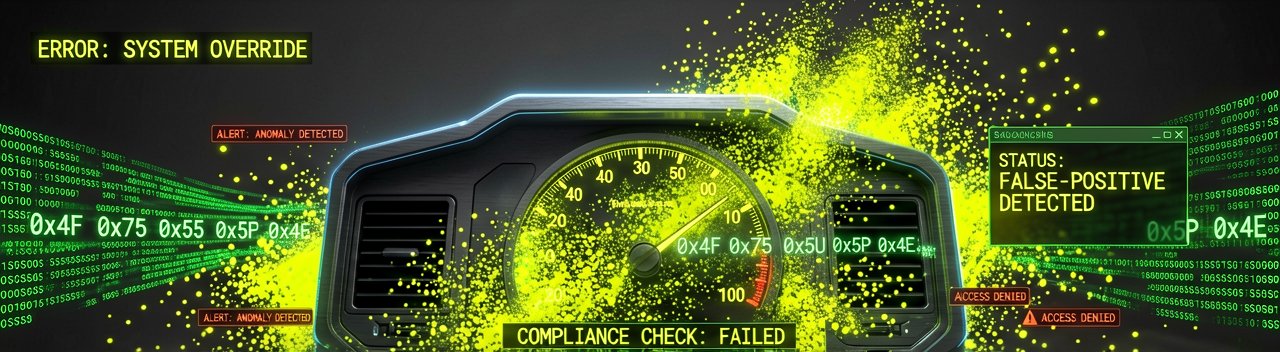
Reading Between the Lines: The rush to implement automated defense mechanisms risks creating a dangerous paradox where the appearance of compliance masks a deeper operational vulnerability. Financial institutions are aggressively deploying AI-driven security tools to satisfy the strict reporting and inventory mandates of modern regulators, yet these systems are frequently tuned to prioritize volume over accuracy. The resulting deluge of automated alerts often paralyzes security operations centers, burying genuine signals of highly sophisticated, low-and-slow frontier AI incursions beneath thousands of mundane, false-positive flags. Compliance frameworks assume that more data equals better security, but in the field, data saturation often breeds administrative blindness.
Furthermore, an unacknowledged contradiction lies at the heart of the regulatory push for continuous asset tracking and instant vulnerability patching. The very tools used to automate compliance audits and map enterprise infrastructure are themselves software platforms containing proprietary code, third-party libraries, and potential backdoors. By mandating that financial entities grant these scanning agents deep, persistent access across internal networks to ensure total observability, regulators are inadvertently forcing banks to expand their attack surface. A compromise of a central, highly privileged compliance monitoring platform could give an advanced threat actor total control over the exact ecosystem the tool was bought to protect.
The financial burden of this escalating technological arms race will also inevitably reshuffle the competitive landscape. While Tier-1 global banks possess the capital to build parallel, redundant AI defense systems and hire specialized prompt engineers, regional institutions and mid-sized asset managers face structural disadvantages. The escalating cost of compliance is quietly driving sector consolidation, as smaller firms find themselves financially incapable of maintaining the bleeding-edge technological posture demanded by state watchdogs. Ultimately, the quest for a perfectly secure financial ecosystem may achieve its goals not by neutralizing advanced cyber threats, but by pricing the smaller market participants out of existence entirely.
Wall Street's compliance officers are discovering that chasing absolute security in the age of frontier AI is a lot like upgrading a treadmill: you spend millions on the latest, fastest model, only to realize the machine still controls the speed, and stepping off isn't an option.
Artūras Malašauskas is an AI Systems Integrator with 20+ years of production-grade web engineering experience. He has designed, shipped, and scaled enterprise Python/PHP systems for logistics, SaaS, and public-sector clients. For the past year, he has focused exclusively on AI integrations: deploying open-source LLMs, building generative media pipelines (image, audio, video), and engineering multi-agent workflows for real production environments. His standard: reproducibility, security, cost-efficient inference—no vaporware. He documents and evaluates emerging AI tooling, separating verified capabilities from marketing noise. Technical editor at: muza-ai.eu, ai-verslas.lt, ai-naujinos.lt Connect on LinkedIn
Comments