Behind the Scenes of the NYDFS Frontier AI Defense Strategy

What Most Reports Miss: The recent advisory issued by the New York Department of Financial Services is not a sudden, isolated warning, but rather the execution of a long-planned regulatory trap. By sounding the alarm on "frontier AI models" capable of automating zero-day exploits at unprecedented speeds, the regulator is subtly signaling that the traditional compliance grace periods are officially over. Financial institutions can no longer treat artificial intelligence as a futuristic line item on a risk assessment; it is now an active threat vector that state examiners will scrutinize under a microscope.
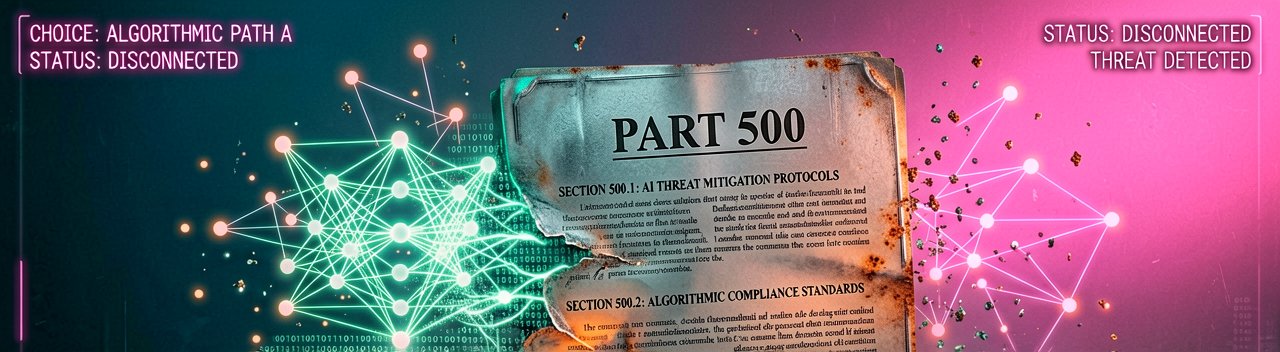
Industry insiders point out that this latest advisory acts as a force multiplier for the agency's strict Part 500 rules, which finished phasing in late last year. While the guidance itself is technically non-binding, the regulatory history of the empire state reveals a harsher reality. Security compliance officers remember when the department penalized insurance firms that failed to patch public-facing vulnerabilities after receiving explicit threat bulletins. This advisory functions exactly the same way, establishing a documented baseline of awareness that strips companies of the "we did not know" defense if an AI-driven breach occurs.
The Trap of Legacy Infrastructure
The core tension in this regulatory push lies within the archaic IT baselines of Wall Street's largest institutions. Transitioning away from legacy hardware is an expensive, multi-year endeavor, yet the state is explicitly urging firms to dump end-of-life systems that cannot keep pace with AI-accelerated vulnerability scanning. Cybercriminals are already using early-stage frontier tools to map corporate attack surfaces in minutes, leaving companies with sprawling, uninventoried digital assets highly exposed to automated exploitation.
Furthermore, the defensive protocols recommended by the state are forcing a complete overhaul of identity verification standards. Legacy multi-factor authentication methods like SMS text and voice confirmation are practically useless against advanced generative deepfakes, pushing the industry toward physical hardware keys and digital certificates. As the state intensifies its cybersecurity examinations, the financial sector must pivot from a posture of passive checking to continuous, zero-trust monitoring to survive the next generation of digital threats.

The Cybersecurity Illusion
Reading Between the Lines: The state's aggressive push for AI-resistant cybersecurity measures exposes a fundamental paradox within modern financial regulation. The agency is demanding that institutions defend against frontier AI capabilities while relying on a regulatory framework that inherently moves at bureaucratic speed. By telling firms to deploy advanced technical defenses immediately, the regulator shifts the entire burden of defining "adequate defense" onto the private sector, reserving the right to punish companies retroactively if those arbitrary defenses fail.
This dynamic creates a significant compliance contradiction for mid-sized financial firms. These entities are caught in an escalating arms race, forced to purchase expensive, proprietary AI defense tools from the exact same tech conglomerates that are building the frontier models driving the threat. The resulting loop funnels massive corporate budgets into automated defense systems that operate as black boxes, meaning financial compliance officers are now trusting algorithms they do not fully understand to protect assets from other algorithms they cannot see.
Ultimately, these mandates risk codifying a culture of superficial compliance rather than genuine security innovation. Instead of engineering resilient, decoupled networks, financial institutions are incentivized to build complex, expensive paper trails to satisfy state examiners during routine audits. When the next major systemic breach inevitably occurs, it will likely bypass these standardized digital walls entirely, proving that checklist-driven regulations are structurally incapable of neutralizing a rapidly evolving, non-human threat vector.
"We are rapidly approaching a regulatory reality where a bank's chief information security officer must spend half their day defending the network from autonomous digital entities, and the other half explaining to a human auditor why a machine-learning algorithm made a completely logical choice that violated a footnote written in 2020."
Artūras Malašauskas is an AI Systems Integrator with 20+ years of production-grade web engineering experience. He has designed, shipped, and scaled enterprise Python/PHP systems for logistics, SaaS, and public-sector clients. For the past year, he has focused exclusively on AI integrations: deploying open-source LLMs, building generative media pipelines (image, audio, video), and engineering multi-agent workflows for real production environments. His standard: reproducibility, security, cost-efficient inference—no vaporware. He documents and evaluates emerging AI tooling, separating verified capabilities from marketing noise. Technical editor at: muza-ai.eu, ai-verslas.lt, ai-naujinos.lt Connect on LinkedIn
Comments