Beyond the Code: How the Feds Are Hardening CyberCorps SFS with AI Protocols

The federal government is quietly engineering a massive pivot in how it mints its next generation of digital defenders. For over two decades, the National Science Foundation has quietly populated the ranks of agencies like the NSA, CISA, and the Department of Defense using its highly successful CyberCorps Scholarship for Service framework. But the old playbooks are being rewritten on the fly because the threat landscape has definitively fractured. Traditional perimeter defenses do not cut it anymore when the adversary is weaponizing automated, machine-learning-driven exploits at machine speed.
This structural transformation became glaringly obvious when the program underwent an unprecedented evolution, officially emerging from its cocoon as the U.S. National Science Foundation CyberAI SFS initiative. It is a strategic acknowledgment that a modern security professional who is blind to artificial intelligence is, frankly, a liability to national security. The updated guidelines demand that academic institutions rewrite their core tracks, requiring students to complete a rigorous hybrid curriculum that bridges standard defense strategies with advanced algorithmic manipulation. This is not just a cosmetic modification to attract tech-savvy applicants; it is an overhaul designed to produce professionals who can treat AI as both the shield and the primary target.
The Architecture of CyberAI Threat Mitigation
The updated technical framework splits the defense paradigm into two distinct, non-negotiable disciplines that reflect the dual realities of modern warfare. The first is Focus Area–Cyber, which essentially trains operators to integrate machine learning directly into active security workflows to predict anomalies before they manifest as outright data breaches. Instead of relying on static, signature-based detection mechanisms that sophisticated actors bypass with ease, these operators leverage predictive models to analyze network telemetry in real-time. By dynamically shifting network topologies and automating patch deployments, they are turning historical security concepts into living, responsive ecosystems.
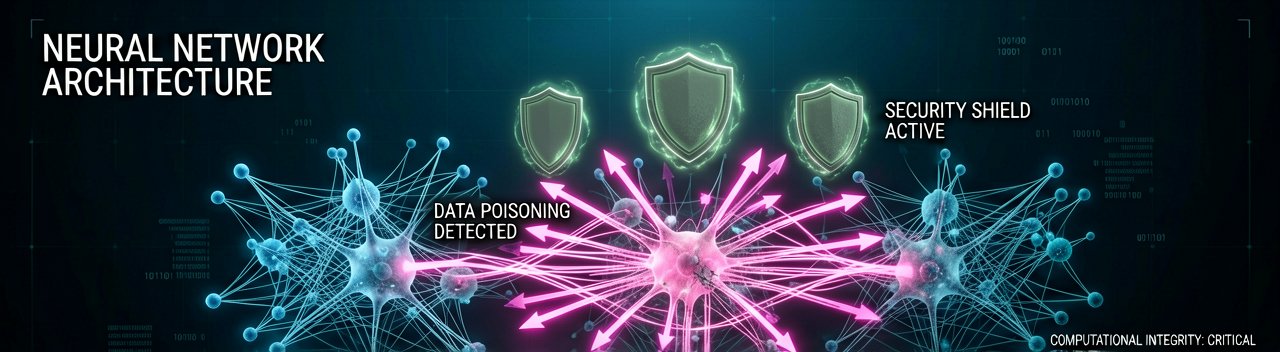
Conversely, the Focus Area–AI tract flips the perspective, turning a critical eye on the severe vulnerabilities inherent inside the neural networks themselves. These engineers are taught to anticipate adversarial maneuvers like data poisoning, where a malicious actor alters training sets to create deliberate blind spots in a model. They also work heavily on mitigating model inversion attacks, a terrifying technique where hackers reverse-engineer public AI outputs to extract classified training data. Ensuring the supply-chain security of foundational models has moved from an academic afterthought to a critical frontline defense protocol.
A Massive Realignment of the Candidate Pool
What makes this operational shift so fascinating from a market perspective is how it expands where these government-backed experts can actually land after graduation. Historically, CyberCorps alumni were funneled strictly into traditional security operations centers or defensive infrastructure roles within state and federal departments. According to an in-depth analysis from Granted AI, the expanded statutory mandate explicitly allows scholarship recipients to fulfill their service requirements within newly minted AI governance offices, specialized AI red teams, and automated policy compliance divisions. This unlocks an incredibly broad spectrum of job placement opportunities across the federal government.
By treating the security of emerging technologies and machine learning pipelines as intertwined issues, the state is effectively standardizing public-sector technical requirements for the next decade. The ripple effects will hit private industry quickly, as corporations scramble to recruit professionals with the exact same dual-competency skill sets to safeguard commercial intellectual property. By altering the training ground at the university level, the federal apparatus is forcing a broad baseline elevation across the entire engineering landscape, ensuring that AI threat mitigation is baked directly into the foundation of future technology rather than bolted on as an afterthought.
Deep-Dive: Inside the Algorithmic Arms Race
What Most Reports Miss: The real bottleneck in this national security overhaul isn't the underlying math; it is the sheer velocity of the pedagogical pivot. Academia traditionally moves at a glacial pace, requiring years to ratify new degree tracks through bureaucratic curriculum committees. Yet, faculty members within the CyberAI SFS network are being forced to build laboratories for adversarial machine learning almost overnight. Senior defense officials privately note that the biggest vulnerability right now is the scarcity of professors who can fluidly teach both low-level kernel exploitation and the nuances of transformer model architecture. The government is throwing millions at university research grants to close this gap, but building a pipeline of dual-threat educators remains a high-stakes scramble behind closed doors.
Inside the intelligence community, stakeholders are split on the immediate operational risks of deploying these newly minted automated protocols. Traditionalists argue that handing network remediation over to autonomous AI agents introduces unpredictable logic loops that sophisticated adversaries could weaponize to trigger cascading system failures. On the other side of the aisle, a younger cohort of technical directors pushes the reality that human analysts are simply too slow to counter automated, polymorphic malware that changes its code signature every few seconds. This friction has turned federal labs into testing grounds for hybrid "human-in-the-loop" systems, where AI handles the frantic telemetry triage but a human operator retains final authority over destructive countermeasures.
The geopolitical stakes underlying this educational push cannot be overstated. Declassified threat assessments reveal that foreign intelligence agencies are already actively probing American academic research institutions to map out the exact vulnerabilities being studied within these scholarship programs. By targeting the training data and open-source repositories used by student researchers, adversaries hope to poison the defensive tools before they are ever deployed in live federal networks. Consequently, participating universities have had to radically harden their own campus networks, transforming standard computer science departments into highly secure facilities that resemble corporate defense contractors more than traditional spaces of open academic inquiry.
Ultimately, this convergence of machine learning and defensive operations is fundamentally redefining the profile of the ideal intelligence asset. The era of the isolated hacker staring at green text on a dark screen is giving way to data scientists who understand how to audit deep neural networks for subtle, malicious perturbations. The success of the CyberAI SFS framework will not be measured by the number of scholarships awarded, but by how effectively these graduates can anticipate the next paradigm shift in autonomous warfare. As the first wave of hybridized specialists prepares to enter active federal service, the government is placing a massive, expensive bet that algorithmic literacy will be the ultimate deciding factor in maintaining digital sovereignty.
An Unforgiving Calculus of Automation
Reading Between the Lines: The triumphalist narrative surrounding the automation of federal cyber defense conveniently glisses over an unsettling paradox. By shifting from human-centric triage to machine-learning-driven mitigation protocols, the government is essentially engineering a highly sophisticated single point of failure. The premise that predictive models will outsmart human adversaries assumes that those adversaries will continue playing by classical rules. In reality, introducing complex algorithmic defenses simply expands the attack surface, trading predictable, localized software bugs for inscrutable, systemic vulnerabilities within the AI models themselves that are far harder to diagnose and patch.
Furthermore, the bureaucratic mandate to deploy these automated shields creates an undeniable conflict of interest within federal agencies. While the National Science Foundation accelerates the deployment of AI defense frameworks, the intelligence apparatus simultaneously relies on discovering exploits in those exact same technologies to conduct offensive operations abroad. This institutional schizophrenia means that a breakthrough in securing a neural network by a CyberAI SFS graduate might inadvertently blind an offensive team operating under a different agency directive. The lack of a unified, transparent doctrine on whether to patch an algorithmic vulnerability or exploit it ensures that the internal policy landscape remains as chaotic as the threat matrix it aims to fix.
There is also the glaring issue of retention that the strategic market projections rarely acknowledge. The federal government is funding the expensive education of these elite data defenders, betting that a multi-year service commitment will sufficiently fortify the public sector. However, the private tech sector watches this pipeline with predatory interest, fully aware that a candidate trained by the feds in adversarial machine learning is worth a fortune on the open market. Once these scholars clear their mandatory service windows, the salary delta between a federal GS-grade paycheck and a Silicon Valley total compensation package will trigger a massive talent drain, effectively turning a taxpayer-funded national security initiative into an elite, free preparatory school for corporate tech giants.
"We are spending billions to replace sleep-deprived analysts with sophisticated algorithms that don't blink, seemingly oblivious to the fact that the enemy is building algorithms specifically designed to make our algorithms hallucinate. In the end, the future of national security may just come down to whose multi-million-dollar math equation throws a temper tantrum first."
Artūras Malašauskas is an AI Systems Integrator with 20+ years of production-grade web engineering experience. He has designed, shipped, and scaled enterprise Python/PHP systems for logistics, SaaS, and public-sector clients. For the past year, he has focused exclusively on AI integrations: deploying open-source LLMs, building generative media pipelines (image, audio, video), and engineering multi-agent workflows for real production environments. His standard: reproducibility, security, cost-efficient inference—no vaporware. He documents and evaluates emerging AI tooling, separating verified capabilities from marketing noise. Technical editor at: muza-ai.eu, ai-verslas.lt, ai-naujinos.lt Connect on LinkedIn
Comments