AI Security Startup Gray Swan’s $40M Raise Signals Growing Market Demand for Proactive Cyber Defenses

The cybersecurity landscape just witnessed a major financial validation of its next critical frontier. Gray Swan AI, an innovative artificial intelligence safety and security company founded by world-leading Carnegie Mellon University researchers, has secured a $40 million funding round to scale its proactive defense infrastructure. The massive capital injection reflects an urgent enterprise pivot away from legacy reactive firewalls and toward continuous, automated threat intelligence capable of bulletproofing autonomous AI systems before deployment.
This milestone arrived this week amid a surge in real-world exploits targeting generative AI setups. By formalizing this capital expansion, Gray Swan plans to expand its core engineering team and broaden its automated red-teaming operations. Silicon Valley's sudden willingness to write massive checks for AI-specific defense indicates that protecting the enterprise application layer from prompt injections, model hijacking, and compliance failures is no longer a niche technical concern—it is a boardroom imperative.
What Most Reports Miss: The Illusion of Fixed Guardrails
The shift from static chatbots to highly autonomous, agentic workflows has fundamentally broken traditional enterprise security paradigms. When a company links an LLM directly to its internal databases, payment gateways, or third-party APIs, a single successful jailbreak ceases to be an embarrassing text output and instantly becomes a systemic data breach. Most superficial industry reports focus heavily on the raw funding dollar amount, but the real story lies in why standard endpoint defenses are entirely blind to these behaviors. Traditional firewalls scan for known malicious code signatures, whereas an adversarial prompt looks exactly like standard, everyday human language.
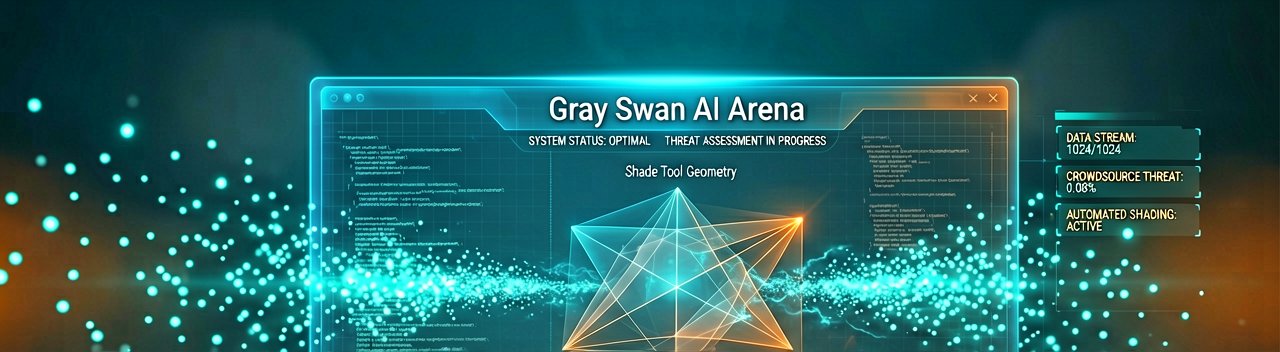
To combat this vulnerability, Gray Swan’s strategy relies heavily on crowdsourced threat intelligence, operating the world's largest live adversarial network. Through their interactive platform, known as the Gray Swan AI Arena , over 15,000 global security researchers and hobbyists constantly stress-test frontier models to claim cash bounties. This continuous loop feeds fresh threat data directly back into the company’s automated red-teaming tool, Shade, and its real-time AI firewall, Cygnal. Instead of relying on rigid, pre-programmed security rules, the platform actively learns from thousands of novel, decentralized attack strategies discovered on a daily basis.

This collaborative approach has already drawn massive validation from both federal entities and the creators of the world's most powerful models. The startup actively partners with the NIST AI Security Institute, alongside frontier giants like OpenAI, Anthropic, and Google DeepMind, to publish comprehensive security benchmarks based on millions of adversarial prompt injections. Enterprise tech buyers are recognizing that model safety cannot be achieved through a single pre-deployment audit; it requires a living, adaptive infrastructure capable of evolving alongside the fast-moving vulnerabilities of autonomous agents.
Reading Between the Lines: The Great AI Security Paradox
The venture capital rush into AI defense mechanisms introduces a bizarre, cyclical economic paradox that tech leaders are hesitant to voice publicly. Organizations are currently spending millions of dollars to acquire complex enterprise software that prevents another piece of complex enterprise software from completely breaking down. This structural dynamic creates a self-sustaining tech economy where the rapid, sometimes reckless deployment of generative models directly fuels the emergency demand for startups like Gray Swan. Security is being treated as a premium, lucrative add-on luxury rather than a foundational architecture inherent to the core models themselves.
This dynamic also highlights a major contradiction in how companies approach automated safety tooling. The prevailing market logic suggests that the only way to police autonomous AI agents at scale is by deploying another layer of autonomous AI agents to watch over them. While automated red-teaming platforms significantly reduce manual auditing times, they also expand the digital attack surface. Relying on an algorithmic firewall to detect sophisticated semantic exploits means trusting that the defense model itself cannot be manipulated, poisoned, or bypassed by an equally clever adversary.
Furthermore, the current industry heavy reliance on crowdsourced bug bounties to keep pace with threats exposes a clear systemic vulnerability. Relying on the collective intelligence of thousands of independent researchers creates an incredibly chaotic feedback loop that is highly difficult for conservative enterprise risk frameworks to properly quantify. If the broad market shifts from a posture of genuine preventive design to an ongoing game of digital whack-a-mole, long-term stability will remain elusive. As these systems become more deeply embedded into critical infrastructure, the industry will eventually have to confront whether it is truly building resilient software, or simply paying a premium to manage inevitable chaos.
"We are officially trapped in the ultimate tech loop: building incredibly smart systems that require equally smart systems just to keep them from handing over the corporate keys to anyone who asks politely."
Artūras Malašauskas is an AI Systems Integrator with 20+ years of production-grade web engineering experience. He has designed, shipped, and scaled enterprise Python/PHP systems for logistics, SaaS, and public-sector clients. For the past year, he has focused exclusively on AI integrations: deploying open-source LLMs, building generative media pipelines (image, audio, video), and engineering multi-agent workflows for real production environments. His standard: reproducibility, security, cost-efficient inference—no vaporware. He documents and evaluates emerging AI tooling, separating verified capabilities from marketing noise. Technical editor at: muza-ai.eu, ai-verslas.lt, ai-naujinos.lt Connect on LinkedIn
Comments