Gray Swan Secures $40M Series A, Accelerates AI Security Expansion
The enterprise artificial intelligence landscape shifted dramatically today as AI safety and adversarial evaluation pioneer Gray Swan closed a massive $40 million Series A funding round. This aggressive capital injection underscores the growing panic among corporate tech buyers who realize that connecting autonomous AI agents to internal data lakes is a security nightmare waiting to happen. The fresh funding will immediately bankroll the expansion of Gray Swan's core real-time threat-mitigation platforms and scale its defensive engineering teams.
Founded by Carnegie Mellon University faculty members Matt Fredrikson and Ziko Coulter, the Pittsburgh-based startup built its reputation by looking at AI through the lens of a hacker. Rather than treating security as an afterthought or a superficial wrapper, Gray Swan treats autonomous models as a highly vulnerable, novel attack surface. The company’s runtime protection systems function like a digital firewall specifically tuned for large language models, sitting directly between unpredictable corporate data inputs and the operational AI core.
What Most Reports Miss: The Looming Crisis of Autonomous Agency
While the broader venture market struggles with standard software valuations, AI security startups are commands immense premiums for a terrifying reason. Corporate boards are demanding the deployment of autonomous AI agents to cut operational costs, yet tech executives are privately terrified of what happens when those agents are successfully hijacked. Traditional cybersecurity systems look for malicious files and unauthorized network pings, which makes them entirely blind to a rogue prompt injection disguised as a benign customer service request.
Data pulled from Gray Swan’s own research highlights the staggering scope of this vulnerability. During a massive joint evaluation alongside organizations like the AI Safety Institute and various frontier labs, expert red-teamers executed 1.8 million adversarial prompts against top-tier enterprise agents. The results were a sobering wakeup call for the industry, yielding tens of thousands of verified policy violations across supposedly secure environments in healthcare and finance. If a model can be tricked into ignoring its guardrails by a clever arrangement of text suffixes, the entire enterprise network becomes compromised.

The Architecture of Active Defense
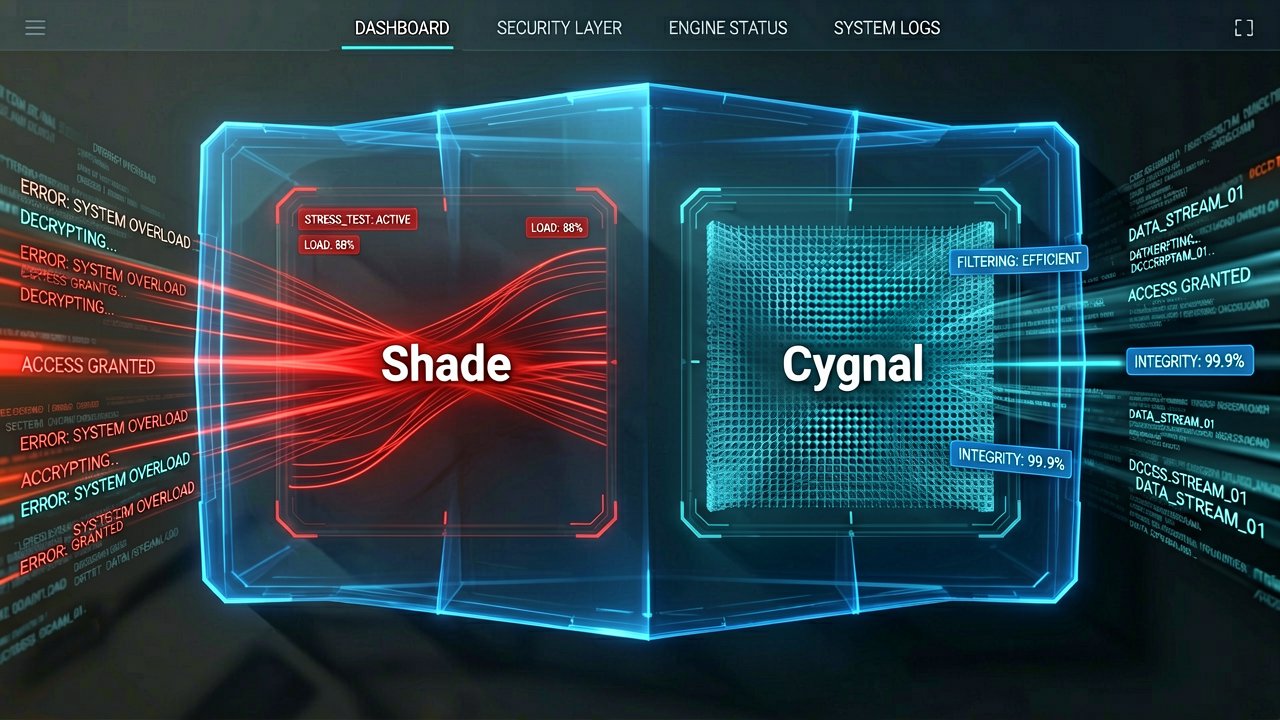
Rather than relying on static, compliance-driven checklists, Gray Swan’s technical strategy focuses heavily on active, runtime intercept capabilities. Their core platform utilizes a dual-engine methodology split between proactive adversarial evaluation and immediate edge protection. A specialized solution nicknamed Shade continuously stress-tests enterprise environments by launching mock automated attacks, allowing companies to locate weak structural parameters before deployment.
Simultaneously, their live-monitoring system, Cygnal, screens incoming data to block suspicious prompts before they reach the model while filtering out unsafe generated outputs before they hit the user. This layered strategy addresses a core critique often leveled by seasoned cybersecurity analysts who argue that current LLMs are inherently unable to self-police. By externalizing the security layer, Gray Swan allows enterprise clients to implement rigid operational control without degrading the speed or performance of their generative applications.
The enterprise artificial intelligence landscape shifted dramatically today as AI safety and adversarial evaluation pioneer Gray Swan closed a massive $40 million Series A funding round. This aggressive capital injection underscores the growing panic among corporate tech buyers who realize that connecting autonomous AI agents to internal data lakes is a security nightmare waiting to happen. The fresh funding will immediately bankroll the expansion of Gray Swan's core real-time threat-mitigation platforms and scale its defensive engineering teams.
Founded by Carnegie Mellon University faculty members Matt Fredrikson and Ziko Coulter, the Pittsburgh-based startup built its reputation by looking at AI through the lens of a hacker. Rather than treating security as an afterthought or a superficial wrapper, Gray Swan treats autonomous models as a highly vulnerable, novel attack surface. The company’s runtime protection systems function like a digital firewall specifically tuned for large language models, sitting directly between unpredictable corporate data inputs and the operational AI core.
What Most Reports Miss: The Looming Crisis of Autonomous Agency
While the broader venture market struggles with standard software valuations, AI security startups are commanding immense premiums for a terrifying reason. Corporate boards are demanding the deployment of autonomous AI agents to cut operational costs, yet tech executives are privately terrified of what happens when those agents are successfully hijacked. Traditional cybersecurity systems look for malicious files and unauthorized network pings, which makes them entirely blind to a rogue prompt injection disguised as a benign customer service request.
Data pulled from Gray Swan’s own research highlights the staggering scope of this vulnerability. During a massive joint evaluation alongside organizations like the AI Safety Institute and various frontier labs, expert red-teamers executed 1.8 million adversarial prompts against top-tier enterprise agents. The results were a sobering wakeup call for the industry, yielding tens of thousands of verified policy violations across supposedly secure environments in healthcare and finance. If a model can be tricked into ignoring its guardrails by a clever arrangement of text suffixes, the entire enterprise network becomes compromised.
The Architecture of Active Defense
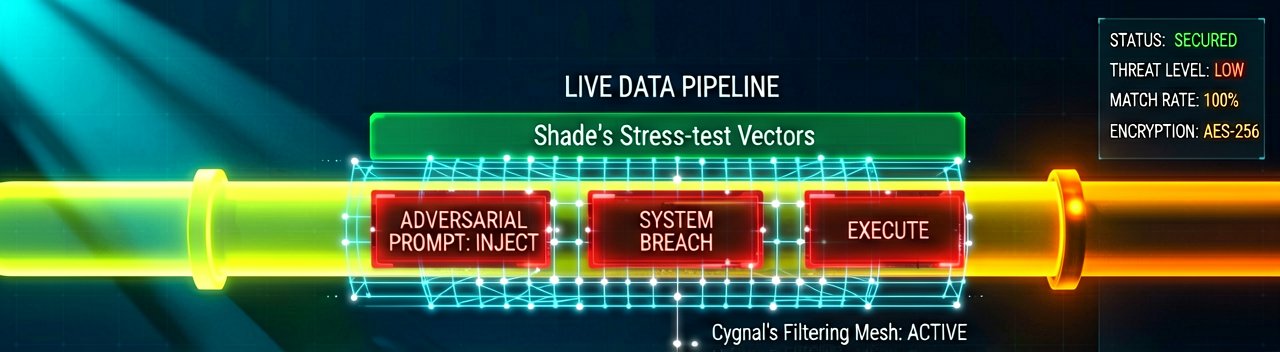
Rather than relying on static, compliance-driven checklists, Gray Swan’s technical strategy focuses heavily on active, runtime intercept capabilities. Their core platform utilizes a dual-engine methodology split between proactive adversarial evaluation and immediate edge protection. A specialized solution nicknamed Shade continuously stress-tests enterprise environments by launching mock automated attacks, allowing companies to locate weak structural parameters before deployment.
Simultaneously, their live-monitoring system, Cygnal, screens incoming data to block suspicious prompts before they reach the model while filtering out unsafe generated outputs before they hit the user. This layered strategy addresses a core critique often leveled by seasoned cybersecurity analysts who argue that current LLMs are inherently unable to self-police. By externalizing the security layer, Gray Swan allows enterprise clients to implement rigid operational control without degrading the speed or performance of their generative applications.
Reading Between the Lines: The Cat-and-Mouse Security Paradox
Reading Between the Lines: The $40 million valuation hype obscures a fundamental contradiction at the heart of the modern AI safety market. Enterprise buyers are effectively spending millions on secondary software to protect themselves from the multi-billion-dollar foundational models they just bought. This creates a bizarre tech stack where a company pays Vendor A for a wildly unpredictable neural network, and then immediately pays Vendor B to prevent Vendor A's product from destroying the business infrastructure. It is a highly lucrative cycle built entirely on structural instability.
Furthermore, skepticism is warranted regarding whether runtime filters like Cygnal can ever achieve permanent victory over adversarial prompt engineering. History shows that wrapper-style security layers are inherently reactive, constantly patching holes after new exploits gain traction in the wild. If an attacker can bypass a frontier model's multi-million-dollar native alignment through a subtly rephrased query, expecting a startup's algorithmic guardrail to intercept every variation perfectly is an optimistic gamble. The defense must be perfect every time, whereas the attacker only needs to find one linguistic loophole that the firewall fails to recognize.
This dynamic will likely trigger an consolidation wave down the road, as tech giants eventually realize that selling insecure models is bad for long-term enterprise adoption. Hyperscalers and frontier labs will inevitably build these exact adversarial evaluation mechanisms directly into their cloud suites, threatening to turn independent safety startups into short-lived feature sets. For now, Gray Swan is capitalizing on a massive compliance and fear-driven vacuum, but their long-term survival depends on staying three steps ahead of both the hackers and the very AI creators they are trying to police.
"We have officially entered the golden age of corporate tech irony, where chief information officers gladly sign eight-figure checks to purchase autonomous AI agents designed to replace human workers, only to immediately sign another eight-figure check for an AI security system designed to stop those new digital workers from accidentally leaking the entire corporate database to a teenager with a clever prompt."
Artūras Malašauskas is an AI Systems Integrator with 20+ years of production-grade web engineering experience. He has designed, shipped, and scaled enterprise Python/PHP systems for logistics, SaaS, and public-sector clients. For the past year, he has focused exclusively on AI integrations: deploying open-source LLMs, building generative media pipelines (image, audio, video), and engineering multi-agent workflows for real production environments. His standard: reproducibility, security, cost-efficient inference—no vaporware. He documents and evaluates emerging AI tooling, separating verified capabilities from marketing noise. Technical editor at: muza-ai.eu, ai-verslas.lt, ai-naujinos.lt Connect on LinkedIn
Comments