The Synthesized Voice Battle: Kenjiro Tsuda Takes On TikTok in Landmark AI Case
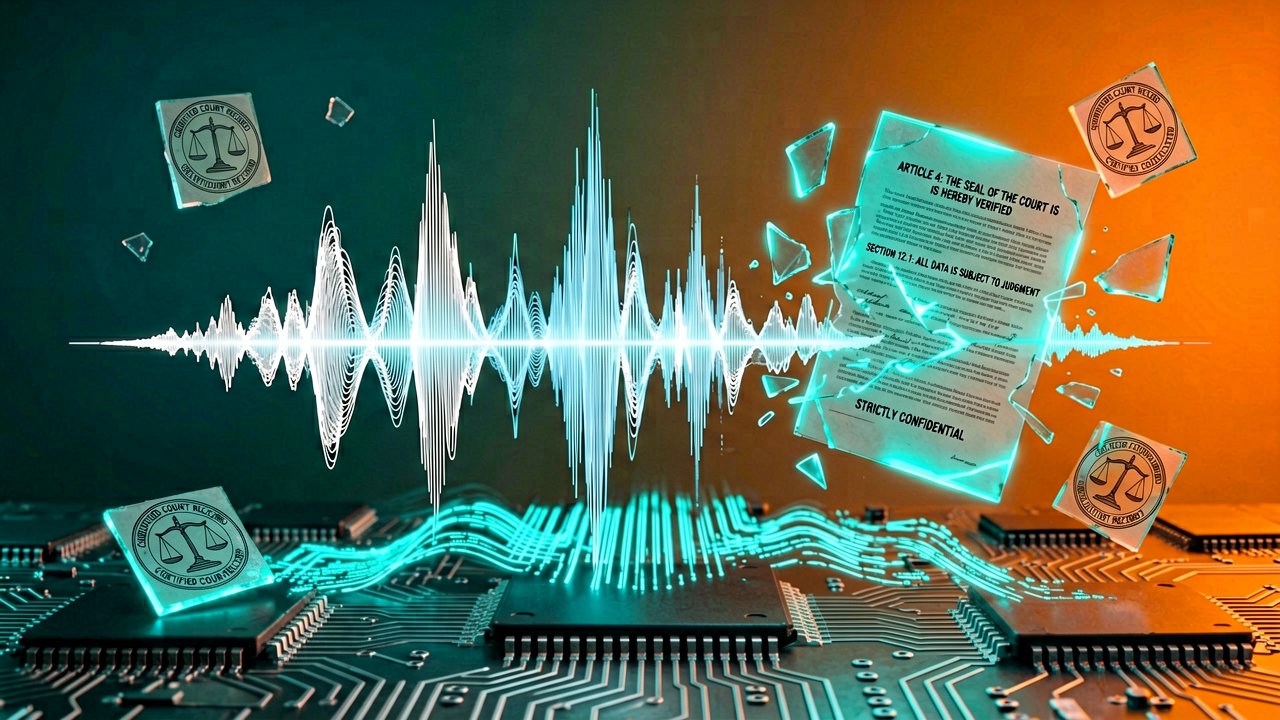
What Most Reports Miss: While mainstream tech coverage often treats generative audio as a harmless tool for viral internet jokes, the legal battle brewing in the Tokyo District Court exposes a profound systemic crisis within the global entertainment pipeline. When legendary voice actor Kenjiro Tsuda—the unmistakable vocal force behind iconic anime characters like Kento Nanami in Jujutsu Kaisen and Seto Kaiba in Yu-Gi-Oh!—filed a lawsuit against TikTok's corporate operator, it wasn’t just a simple dispute over a few rogue videos. It marked Japan's first major judicial stand against unauthorized, monetization-driven AI voice synthesis, exposing the massive gap between cutting-edge tech deployment and traditional legal protections for human talent.
The core conflict stems from a single anonymous TikTok account that managed to rack up thousands of followers by posting at least 188 videos between July 2024 and September 2025, utilizing a highly accurate digital replica of Tsuda’s signature deep, gravelly voice. These weren't amateur fan projects made for fun; according to court documents, the account translated those familiar, deep-toned narrations on urban legends and trivia into a lucrative commercial enterprise, generating an estimated ¥500,000 to ¥750,000 in monthly ad revenue. Tsuda's legal team initially won a court order forcing ByteDance\'s video platform to disclose the uploader’s personal information, but because that digital paper trail led to outdated data, the actor redirected his legal firepower directly toward the platform itself in November 2025, demanding the immediate deletion of the infringing content.
By targeting the platform infrastructure, this litigation targets the very mechanics of how user-generated content networks profit from synthetic media. The defense strategy relies heavily on technical semantics, with TikTok’s legal representation countering that the videos merely utilize a "generic male voice" trained on a completely unrelated individual\'s speech. Yet, the public comment sections on the platform tell a completely different story, as hundreds of organic user reactions explicitly identifying the narrator as Tsuda are being presented as evidence to demonstrate clear commercial confusion. This specific detail elevates the trial beyond a standard copyright claim, transforming it into a definitive test of Japan's Unfair Competition Prevention Law and the highly protected "right of publicity."
The Blind Spot in Intellectual Property Law
The friction here highlights a massive legal loophole: under current Japanese legal frameworks, a human voice is not recognized as copyrightable property. While a musical recording or a specific script enjoys robust statutory protections, the biometric frequencies, cadence, and distinct timber of an actor\'s natural vocal chords sit in a legal gray area. Tech companies have long taken advantage of this vulnerability, treating the open web as a free-for-all data harvesting ground to train sophisticated voice-cloning algorithms without obtaining consent or offering financial compensation. Tsuda’s legal team is attempting to establish a firm precedent by arguing that copying a recognizable celebrity voice explicitly to siphon views and build an audience directly damages the underlying value of that performer\'s brand.
A Fragmented Industry Under Threat
Within Japan\'s legendary voice acting industry, known locally as seiyuu, the anxiety surrounding these developments is palpable. Unlike Hollywood, where coordinated union actions like the SAG-AFTRA strikes have established foundational barriers against corporate AI exploitation, the Japanese voice acting community operates on a highly decentralized freelance network that lacks uniform collective bargaining leverage. If an elite performer like Tsuda can have his unique acoustic signature cloned, packaged, and monetized by an anonymous account with zero repercussions, entry-level actors face an existential threat of being completely replaced by synthetic assets in commercial narration and background dubbing. The outcome of this trial will likely determine whether the industry can survive the current technological transition, or if it will be forced to watch its creative workforce systematically automated away by corporate platforms.
Government Intervention in the Age of Generative Tech
The sweeping systemic implications of this lawsuit have caught the attention of federal regulators, forcing legislative bodies to accelerate their regulatory timelines. Recognizing that existing legal frameworks are entirely unequipped to manage the sheer speed of generative audio deployment, Japan’s Justice Ministry established a dedicated expert panel to evaluate civil liability standards for unauthorized AI likeness and voice replication. This panel is rushing to draft clear operational guidelines to give artists a clear, viable path to pursue damages against bad-faith creators and platforms. As the Tokyo High Court's Intellectual Property Division oversees the closed-door discovery phase of Tsuda’s suit, the tech sector and the creative arts find themselves locked in a definitive struggle over the fundamental right to own one\'s personal identity in a digital landscape.
The Counter-Intuitive Reality of Platform Immunity
Reading Between the Lines: The tech industry’s defense strategy in this case exposes a glaring contradiction in how social media giants manage their generative ecosystems. Platforms like TikTok heavily market their built-in AI voice filters and text-to-speech tools as democratic instruments for creative expression, yet they routinely retreat behind the shield of passive distributor status the moment those same tools replicate a celebrity's identity. This creates a deeply flawed ecosystem where a platform can algorithmically boost synthetic content to maximize user engagement and ad revenue, while simultaneously disavowing any legal responsibility for the biometric data driving that traffic. The argument that the audio merely represents a "generic male voice" is particularly disingenuous when the platform's own recommendation engine deliberately served the videos to anime fans who immediately identified the voice as Tsuda’s.
Furthermore, the lawsuit exposes the inherent friction between legacy intellectual property frameworks and the reality of decentralized digital distribution. Industry trade groups frequently call for stricter copyright enforcement, yet the true bottleneck is not the lack of rules, but the sheer impossibility of tracking automated infringement at scale. Even if Tsuda wins a decisive victory against ByteDance, the legal remedy remains fundamentally reactive, requiring individual creators to spend massive amounts of time and capital fighting an endless wave of anonymous uploaders. This whack-a-mole reality suggests that judicial precedents, while symbolically important, are entirely inadequate tools for policing an internet where a flawless vocal clone can be synthesized in minutes using a consumer-grade laptop and a few dollars worth of cloud computing power.
Projecting this battle forward reveals a highly transactional future for the voice acting industry rather than a complete replacement of human talent. The long-term threat to performers is not that AI will render them obsolete, but that it will systematically erode their market leverage by turning human voice prints into cheap, licensed commodities. Instead of hiring an actor for an expensive, multi-day studio session, production houses will increasingly demand the right to buy or lease an artist's digital vocal asset in perpetuity. This shift will inevitably create a stark, two-tier economy where an elite class of performers can command premium licensing fees for their digital twins, while the vast majority of working actors are forced to sign away their vocal rights just to secure entry-level employment.
The supreme irony of the generative AI boom is that technology has finally advanced to the point of flawlessly replicating the human soul, only for the internet to immediately use it to narrate low-effort videos about urban legends for pennies on the dollar.
Artūras Malašauskas is an AI Systems Integrator with 20+ years of production-grade web engineering experience. He has designed, shipped, and scaled enterprise Python/PHP systems for logistics, SaaS, and public-sector clients. For the past year, he has focused exclusively on AI integrations: deploying open-source LLMs, building generative media pipelines (image, audio, video), and engineering multi-agent workflows for real production environments. His standard: reproducibility, security, cost-efficient inference—no vaporware. He documents and evaluates emerging AI tooling, separating verified capabilities from marketing noise. Technical editor at: muza-ai.eu, ai-verslas.lt, ai-naujinos.lt Connect on LinkedIn
Comments