The Frontier Friction: How the UK-Australia AI Pact Rewrites the Rules of Cyber Defense

The traditional boundaries of national defense have dissolved into strings of code, and our current cyber strategies can barely keep up with machine-speed threats. Recognizing that a keyboard-wielding human is no longer a match for automated vulnerabilities, the United Kingdom and Australia have chosen to pool their algorithmic resources. It is a calculated pivot away from abstract ethical debates toward hard-nosed national security, signaling a new era where international alliances are defined by computational clout.
On May 25, 2026, the two nations formalized this strategic alignment during a ministerial meeting in Canberra, signing a Memorandum of Understanding designed to tackle fast-moving frontier AI risks. UK AI Minister Kanishka Narayan and Australia’s Assistant Minister for Science, Technology and the Digital Economy, Dr. Andrew Charlton, inked the agreement to bridge their respective oversight bodies. The pact directly links the newly rebranded UK AI Security Institute with the emerging Australian AI Safety Institute, creating a unified front against next-generation digital warfare as detailed by the UK Government.
A Shield Forged in Shared Intelligence
This bilateral arrangement goes well beyond standard diplomatic pleasantries. Under the framework, both institutes will actively share data on advanced AI capabilities, establish rigorous benchmarks for testing deep-learning models, and execute joint research initiatives. Crucially, the partnership includes structural staff exchanges, allowing experts from London and Canberra to work side-by-side in analyzing how malicious actors exploit generative AI to turbocharge ransomware and network penetration.
By integrating these specialist teams, the allies are attempting to reverse a dangerous trend where offensive AI tools outpace defensive capabilities. The collaboration builds upon a broader geopolitical framework, mirroring the technology-sharing spirit of the AUKUS security partnership and the defense integration outlined by Caribbean News Global. For Australia, the agreement injects immediate technical expertise into its National AI Plan, helping the country safely accelerate technology adoption without leaving its critical infrastructure exposed to automated exploits.
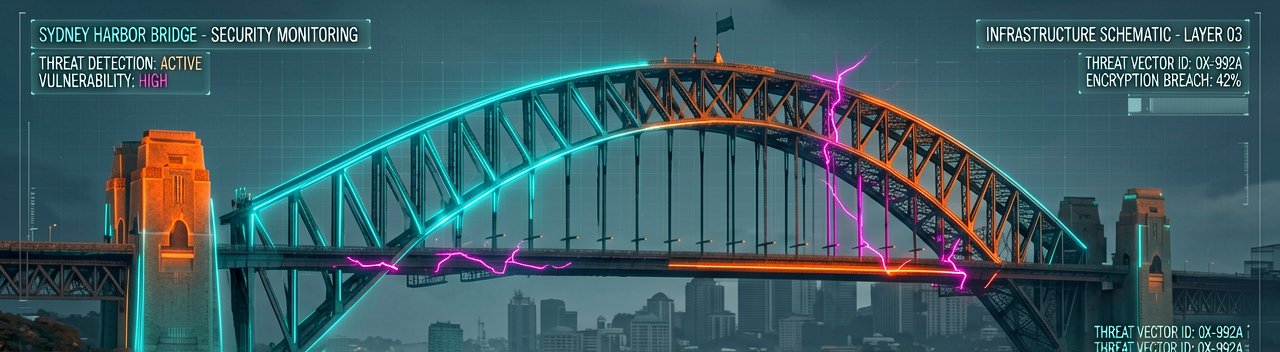
From General Safety to Hardline Security
The timing of this agreement highlights a fundamental shift in how Western governments view artificial intelligence. Early regulatory frameworks focused heavily on bias, transparency, and intellectual property, but the conversation has firmly migrated to national resilience. The UK’s decision to rebrand its research body to the AI Security Institute underscores this transition, prioritizing defense against cyberattacks, critical infrastructure disruption, and state-sponsored digital espionage over softer ethical guidelines.
As advanced models demonstrate an uneasy knack for autonomously finding software flaws, isolated defense strategies are effectively obsolete. By codifying deep-tech collaboration, the UK and Australia are building a distributed digital radar. This unified testing ecosystem ensures that before a powerful new model goes live, its systemic vulnerabilities are scrutinized through a security lens that protects both Westminster and the Pacific.
What Most Reports Miss: The Silent Code War in the Indo-Pacific
The strategic blueprint behind this partnership is deeply tied to a shifting geopolitical landscape where cyber superiority determines regional dominance. For years, the UK and Australia have watched sovereign networks face persistent, state-sponsored penetration attempts. By formalizing this AI security pact, both nations are moving away from passive firewalls and leaning into predictive defense. The integration aims to use machine learning to map out and counter advanced persistent threats before they can compromise critical infrastructure across the Pacific and European theaters.
Inside Whitehall and Canberra, defense officials have quietly admitted that the speed of modern malware development has rendered traditional human-led triage obsolete. The alliance is less about creating a bureaucratic advisory board and more about building an automated early-warning system. By standardizing model evaluations, the joint institutes can simulate how hostile actors might weaponize commercial large language models to automate the discovery of zero-day vulnerabilities in public utilities and defense networks.

This initiative also serves as a crucial counterweight to the fragmented nature of global AI governance. While the European Union leans heavily on sweeping legislative mandates like the AI Act, and the United States navigates a complex web of executive orders, the UK and Australia are taking a modular, defense-first approach. This agility allows them to bypass prolonged legislative gridlock and rapidly deploy technical testing frameworks that keep pace with the hyper-accelerated timelines of private Silicon Valley labs.
There is an undeniable economic subtext to this security integration as well. Both countries recognize that a resilient digital infrastructure is a prerequisite for long-term economic competitiveness. By creating a standardized, high-security environment for frontier AI, they are attempting to signal to major technology firms that their sovereign markets are both safe for investment and robust against digital economic espionage. It positions the duo as the premier testing ground for secure, enterprise-grade artificial intelligence.
Ultimately, this pact closes a critical gap in the existing Five Eyes intelligence alliance, which was originally built for signals intelligence rather than real-time algorithmic warfare. By establishing a shared baseline for AI vulnerability assessment, the two nations are pioneering a template for modern digital sovereignty. The success of this initiative will likely dictate how future tech-centric alliances are structured, transforming traditional defense pacts into dynamic, software-driven coalitions.
Reading Between the Lines: The Illusion of Algorithmic Sovereignty
While the press releases paint a picture of seamless algorithmic defense, the reality of executing a transcontinental AI security pact is fraught with friction. Governments love to announce partnerships that project tech-savviness, but aligning the security apparatus of two distinct nations running on different regulatory timelines is an uphill battle. The core tension lies in the definition of "safe" AI, a metric that remains highly subjective and constantly shifts depending on whether a state is prioritizing rapid commercial innovation or absolute threat mitigation.
A glaring contradiction in this strategy is the heavy reliance on private tech giants to provide the very frontier models being tested. Both the UK and Australia are essentially attempting to audit closed-source technologies developed by corporations that hold their proprietary algorithms closer than state secrets. This dynamic creates a lopsided power structure where state security institutes are perpetually playing catch-up, evaluating vulnerabilities only after commercial models have been built, trained, and partially deployed to the public.
Furthermore, sharing highly sensitive threat data across vast distances introduces its own set of vulnerabilities. While staff exchanges and joint research initiatives sound excellent on paper, the mechanics of transferring raw telemetry on active cyber warfare vectors require an extraordinary level of trust and bureaucratic alignment. If either nation suffers a domestic data breach, the shared pipeline itself becomes a potential vector for the very adversaries they are trying to outsmart, turning a collaborative shield into a centralized target.
There is also the real risk of creating a false sense of security through institutional bloating. Establishing specialized safety and security institutes can inadvertently create another layer of slow-moving oversight that stifles the agility required to fight automated threats. If these bodies become bogged down in the same red tape that plagues traditional defense procurement, the pact will do little to stop agile, decentralized hacking collectives who operate entirely outside the bounds of international law and institutional frameworks.
Projecting into the next few years, this alliance will likely face its truest test not in a controlled laboratory environment, but during a major, multi-vector cyber incident. If the shared testing benchmarks fail to predict a catastrophic, AI-driven exploit against critical infrastructure, the political fallout will be swift. The success of this pact hinges entirely on whether these two nations can transform a diplomatic memorandum into a living, adapting piece of defensive software before their adversaries automate the next major breach.
"In the modern theater of digital warfare, international treaties are signed in ink, but national security is still written in patches. We have essentially agreed to build a very sophisticated, highly secure, binational smoke detector—now we just have to hope the house doesn't burn down while we argue over who gets to press the test button."
Artūras Malašauskas is an AI Systems Integrator with 20+ years of production-grade web engineering experience. He has designed, shipped, and scaled enterprise Python/PHP systems for logistics, SaaS, and public-sector clients. For the past year, he has focused exclusively on AI integrations: deploying open-source LLMs, building generative media pipelines (image, audio, video), and engineering multi-agent workflows for real production environments. His standard: reproducibility, security, cost-efficient inference—no vaporware. He documents and evaluates emerging AI tooling, separating verified capabilities from marketing noise. Technical editor at: muza-ai.eu, ai-verslas.lt, ai-naujinos.lt Connect on LinkedIn
Comments