UK and Australia Forge Strategic AI Security Pact to Counter Cyber Threats
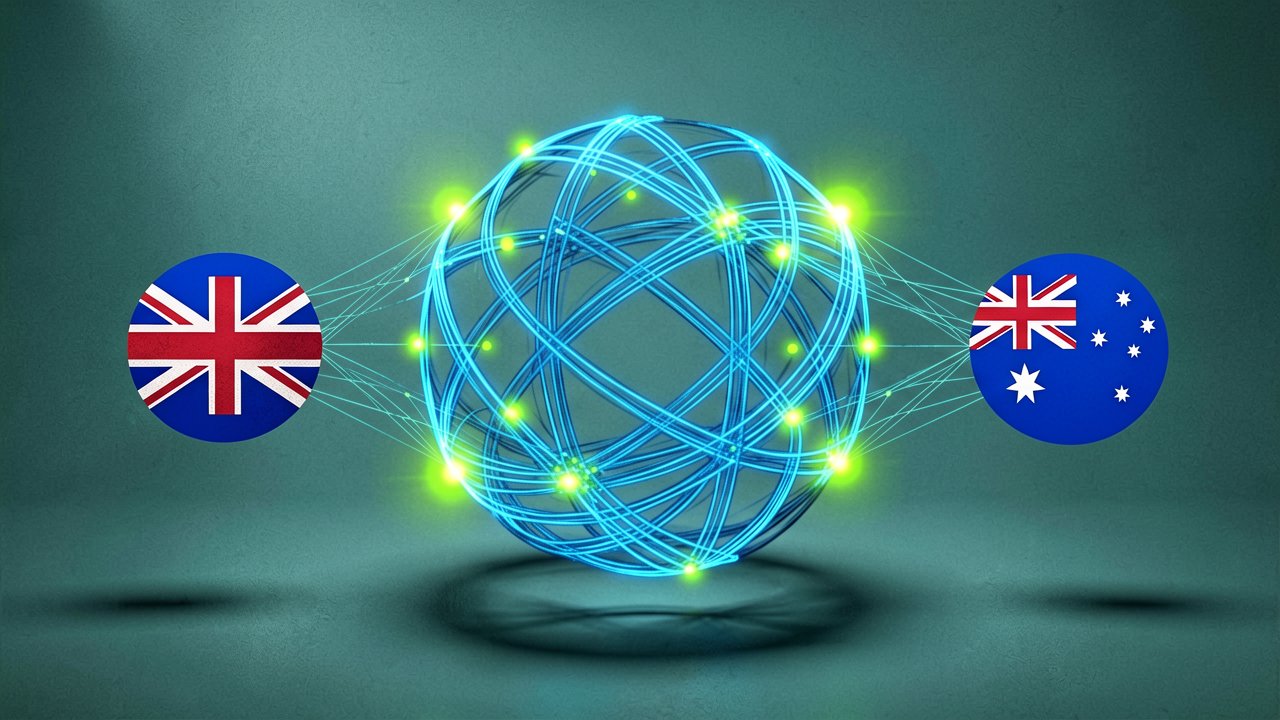
Behind the Scenes: The timing of this alliance highlights a growing urgency inside intelligence circles. Western nations are moving past simple ethical guidelines for technology. Instead, they are rushing to build hard operational defenses against autonomous network threats. Security experts increasingly worry about rogue states weaponizing frontier software to map and exploit system flaws automatically.
The deal reflects a pivot for the British government, which recently shifted its research focus from social bias to high-stakes threats like automated hacking and infrastructure vulnerabilities. By formalizing staff exchanges and matching raw data, London gains a critical outpost in the Indo-Pacific region. At the same time, Canberra secures a direct line to the advanced testing capabilities of the UK AI Security Institute.
A Practical Defensive Front
Historically, global tech summits resulted in broad declarations that lacked enforcement mechanisms. This latest memorandum of understanding bridges that gap by establishing daily technical coordination between the two nations. Technicians will actively run simulations to analyze how cutting-edge algorithmic models behave when deployed by hostile cyber actors.
A central pillar of the initiative is the shared commitment to the International Network for Advanced AI Measurement, Evaluation and Science. Through this network, officials aim to establish definitive baselines for what constitutes an unmanageable software risk. Combining the distinct geographical and operational insights of both countries makes it far easier to track anomalies across global digital supply chains.
This coordinated pressure also signals a message to commercial developers. Tech firms are facing a unified bloc of democratic regulators demanding early, transparent access to proprietary models. By creating a standardized framework for vulnerability testing, the allied nations are taking the lead in determining the safety parameters of future systems.
Reading Between the Lines: While the joint announcement presents a united front against digital threats, it conveniently sidesteps a glaring geopolitical reality. Both nations are trying to regulate a technology that is moving much faster than their own bureaucratic systems. Bureaucrats are essentially trying to build a cage for a beast that changes its shape every few months.
The core contradiction lies in the reliance on private tech giants for national defense. Governments want to inspect and control these advanced software models, yet they depend entirely on the commercial industry to build them. This creates an awkward dynamic where regulators must politely ask for access from the very corporations they are supposed to oversee.
The Enforcement Mirage
Furthermore, an agreement built on testing and knowledge sharing holds very little hard power. If a tech company creates a powerful tool that poses a dual-use threat, neither the UK nor Australia has a clear mechanism to stop its global release. This focus on measurement and evaluation looks less like a shield and more like a high-tech scoreboard for recording inevitable security breaches.
The strategy also assumes that hostile actors will play by rules that can be studied in a lab. State-sponsored hackers do not wait for safety certifications before deploying malicious code. By focusing so heavily on defensive simulations, the pact risks preparing for the last war rather than the next unpredictable cyber attack.
Ultimately, the alliance will be judged by its actions during the next major network crisis, not by its diplomatic paperwork. Until these agencies can actively block a threat in real time, the agreement remains a prestigious research project. It is a well-meaning effort that highlights just how far governments are lagging behind the private sector.
It turns out that securing the digital frontier looks less like a sleek sci-fi thriller and more like two governments agreeing to share a single umbrella in a cyber downpour, while hoping the people who made the umbrella don't decide to charge extra for the handle.
Artūras Malašauskas is an AI Systems Integrator with 20+ years of production-grade web engineering experience. He has designed, shipped, and scaled enterprise Python/PHP systems for logistics, SaaS, and public-sector clients. For the past year, he has focused exclusively on AI integrations: deploying open-source LLMs, building generative media pipelines (image, audio, video), and engineering multi-agent workflows for real production environments. His standard: reproducibility, security, cost-efficient inference—no vaporware. He documents and evaluates emerging AI tooling, separating verified capabilities from marketing noise. Technical editor at: muza-ai.eu, ai-verslas.lt, ai-naujinos.lt Connect on LinkedIn
Comments