Silicon Scarcity and Gridlock: Why Musk Believes America’s AI Boom Is Facing a Security Crisis

The race for artificial intelligence supremacy has hit a massive wall, and it isn't a lack of clever code. Tech billionaire Elon Musk, alongside a growing chorus of industry leaders, has sounded the alarm on an impending domestic crisis: a devastating combination of an acute memory chip shortage and an gridlocked energy infrastructure that actively threatens U.S. national security. While Washington has focused heavily on securing high-profile processing units, the foundational architecture required to actually run these systems is quietly crumbling under the weight of exponential AI demand.
According to reports tracked by Mint, Musk flagged that even the best-case production forecasts from traditional suppliers won't satisfy the sheer volume of advanced silicon needed to sustain the nation’s strategic AI roadmap. The warning highlights a glaring vulnerability: the United States is rapidly running out of the Dynamic Random-Access Memory (DRAM) and high-bandwidth memory components that act as the vital circulatory system for advanced neural networks. Without these domestic hardware guarantees, critical defense infrastructure, autonomous logistics, and sovereign AI models are left dangerously exposed to volatile overseas supply chains.
The Real Bottleneck Isn't Just Silicon
The crisis is unfolding on two distinct fronts. First, the industry has triggered what insiders call a "super-cycle" of demand, where AI data centers devour standard semiconductor manufacturing capacity. This leaves foundational sectors—including defense systems, automotive manufacturing, and consumer electronics—scrambling for leftover components. Tech giants are finding that the latest AI clusters consume up to ten times the memory of previous generations, creating an unprecedented hardware deficit that analysts predict will stretch well toward the end of the decade.
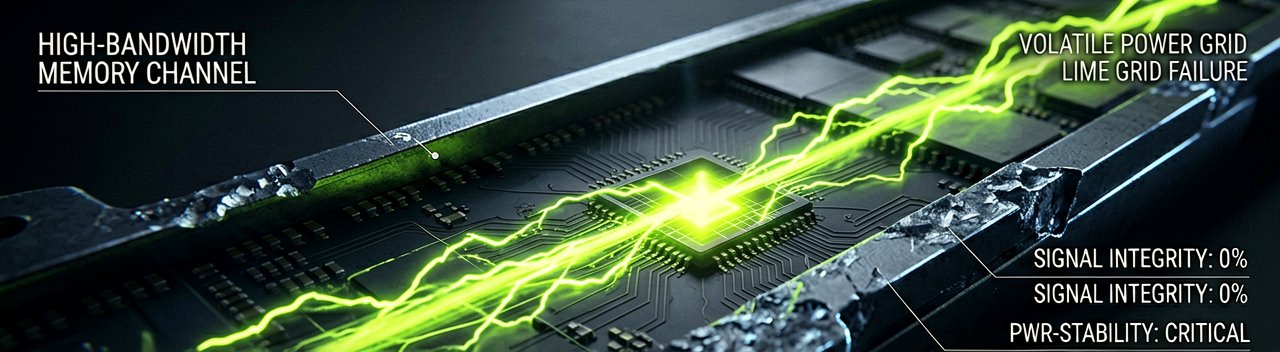
Compounding the physical chip shortage is a stark operational reality that Musk brought to the forefront during industry discussions in early 2026. The issue isn't just baking the silicon; it's turning it on. The current generation of AI data centers requires astronomical amounts of electricity, and the aging American power grid is fundamentally unequipped to handle the load. Lengthy regulatory approval processes, congested transmission lines, and lagging utility capacity mean that billions of dollars in high-tech hardware risk sitting completely idle simply because there isn't enough power to boot them up.
The $55 Billion Domestic Gamble
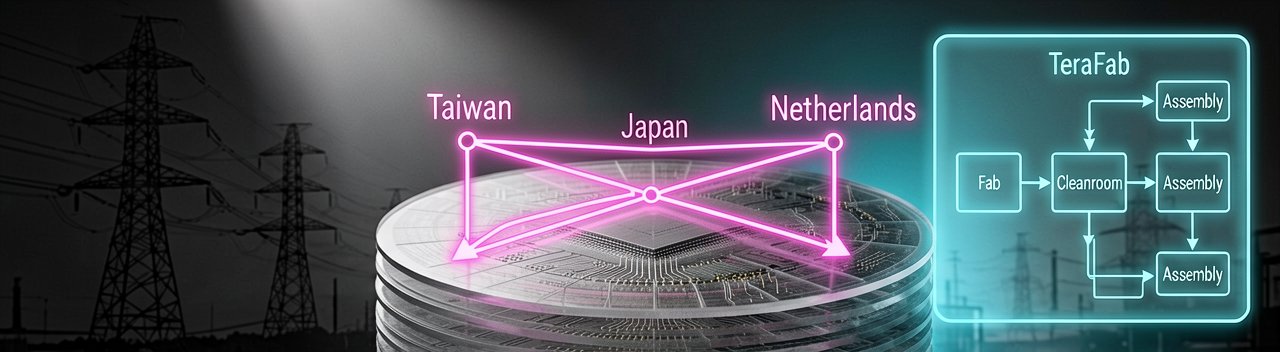
Faced with what he views as regulatory and systemic complacency, Musk isn't waiting for a federal bailout. To bypass geopolitical friction points and guarantee a stable pipeline for his ventures, his aerospace firm SpaceX recently laid out a massive defensive strategy. As detailed by The New York Times, the company plans to spearhead a transformative $55 billion investment to build a domestic semiconductor manufacturing complex dubbed the "TeraFab."
This massive East Texas project represents an unprecedented vertical integration attempt, aiming to combine advanced logic, specialized memory, and cutting-edge packaging all under a single domestic roof. By moving production entirely onshore, the goal is to shield essential aerospace, robotics, and national security intelligence systems from the vulnerabilities of the global market. However, with modern fabrication facilities taking anywhere from three to five years to build and calibrate, the immediate future remains a high-stakes waiting game against international competitors who face far fewer domestic infrastructural hurdles.
Reading Between the Lines: The prevailing narrative that billions of dollars in domestic subsidies will seamlessly secure America's technological sovereignty ignores a glaring operational paradox. Silicon Valley and Washington have positioned the construction of domestic mega-fabs as a silver bullet for national security, yet these facilities will still rely on a deeply centralized global supply chain for raw materials. A factory built in Texas or Ohio is only as sovereign as its access to Taiwanese testing facilities, Japanese photoresists, and Dutch lithography optics. By focusing almost exclusively on the geographic location of the foundries, the current strategy merely shifts the point of failure rather than eliminating it, creating a false sense of security while leaving the underlying vulnerabilities completely intact.
Furthermore, there is a fundamental contradiction between the tech industry’s public hand-wringing over national security and its private capital allocation. While executives sound the alarm about state-sponsored cyber threats and geopolitical choke points, the vast majority of current AI development remains focused on highly commercial, consumer-facing applications designed to maximize ad revenue or automate white-collar tasks. The argument that a chip shortfall directly threatens national defense loses its bite when the very hardware in short supply is being overwhelmingly funneled into generating deepfakes and optimizing algorithmic feed engagement rather than securing critical infrastructure or hardening military networks.
The Subsidized Mirage of Independence
Projecting these trends forward reveals a highly skeptical outlook for real hardware independence. The sheer financial gravity of the semiconductor industry means that even a $55 billion private infusion represents just a drop in the bucket compared to the trillions required to fully replicate the East Asian tech ecosystem on Western soil. Historically, heavily subsidized industrial shifts suffer from severe long-term inefficiencies once the initial wave of political enthusiasm and taxpayer funding dries up. Without a permanent, economically viable domestic market for every single tier of the component supply chain, these mega-projects risk becoming incredibly expensive, state-supported monuments to geopolitical anxiety.
Ultimately, the true bottleneck may not be a lack of silicon or electricity, but a deficit of specialized human capital. Building advanced fabrication plants is entirely different from staffing them with the highly disciplined, hyper-specialized engineering workforce required to run sub-nanometer cleanrooms at profitable yields. As the West attempts to crash-program its way out of a multi-decade manufacturing deficit, it faces a stark demographic reality that cannot be resolved by signing checks or fast-tracking regulatory permits, suggesting that the timeline for true silicon autonomy is far longer than anyone in Washington is willing to admit.
It turns out that building the future requires a shocking amount of the past, specifically concrete, copper wires, and real estate. We spent years being told that artificial intelligence would make physical borders obsolete, only to discover that the entire digital revolution can still be held hostage by a delayed shipment of specialized plastic and a localized power outage in Texas.
Artūras Malašauskas is an AI Systems Integrator with 20+ years of production-grade web engineering experience. He has designed, shipped, and scaled enterprise Python/PHP systems for logistics, SaaS, and public-sector clients. For the past year, he has focused exclusively on AI integrations: deploying open-source LLMs, building generative media pipelines (image, audio, video), and engineering multi-agent workflows for real production environments. His standard: reproducibility, security, cost-efficient inference—no vaporware. He documents and evaluates emerging AI tooling, separating verified capabilities from marketing noise. Technical editor at: muza-ai.eu, ai-verslas.lt, ai-naujinos.lt Connect on LinkedIn
Comments