The Shadow Code: Inside the Silent AI Overhaul of Global Defense Frameworks
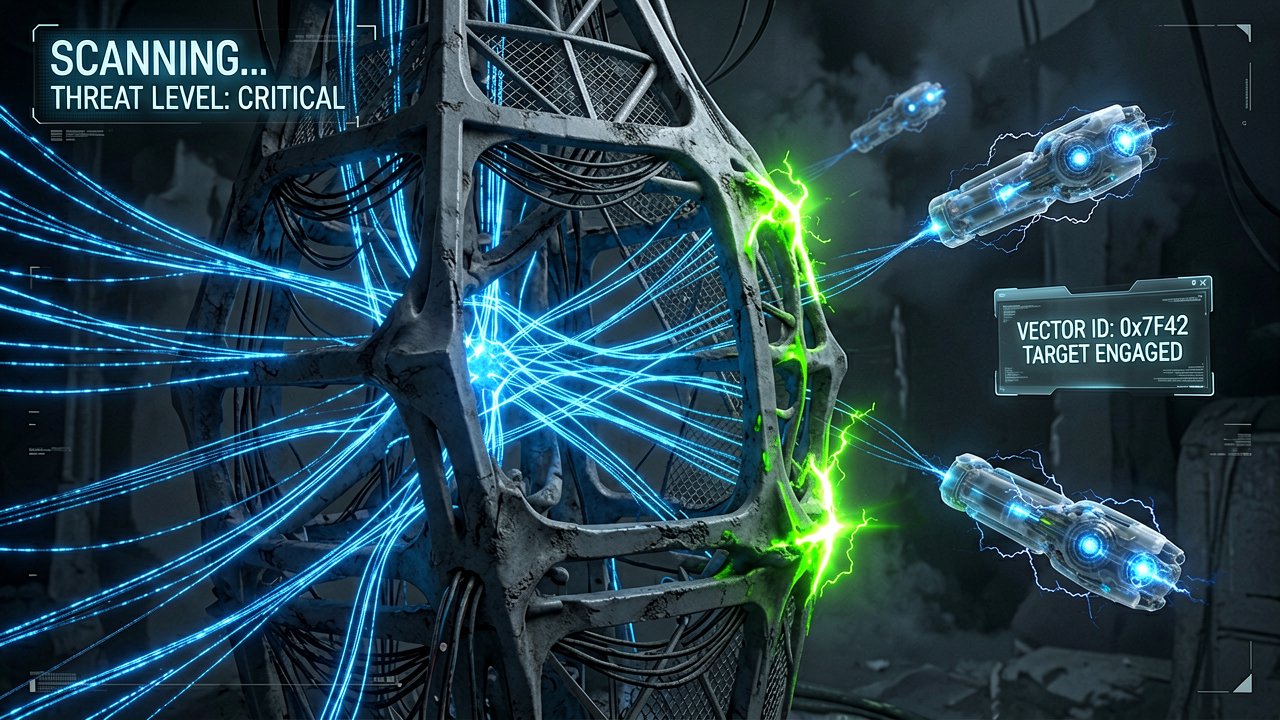
Behind the Scenes: While public debate remains hyper-focused on the existential threats of artificial intelligence or the casual misuse of generative chatbots, a far more urgent crisis has quietly forced a radical restructuring of global national security architectures. Government security frameworks, originally built to withstand human-orchestrated hacks and predictable malware variants, are proving completely obsolete against a new wave of autonomous, self-evolving threat vectors. Sophisticated adversaries are no longer just writing malicious code; they are deploying agentic AI systems that scan infrastructure vulnerabilities, mutate to bypass security controls, and execute zero-day exploits in fractions of a second, completely outpacing human intervention capabilities.
This rapid weaponization of machine learning has triggered a massive, high-stakes game of regulatory and technical catch-up across global capitals. Legacy compliance lists and reactive patch management models are giving way to aggressive, mandated transitions toward active AI-driven defenses. Regulators are suddenly realizing that traditional perimeter defenses are useless when deepfakes can seamlessly impersonate chief executives in high-security environments and large language models can automatically orchestrate highly targeted, contextual social engineering campaigns across thousands of government employees simultaneously.
The resulting policy shift represents the most significant strategic realignment since the dawn of the internet, fundamentally turning cyber defense from an information technology operations issue into a core pillar of national survival. For instance, the 2026 National Cybersecurity Strategy explicitly integrates AI across five of its six primary policy pillars, mandating the rapid deployment of autonomous agents for large-scale network defense and active disruption of threat actors. This represents an unprecedented structural pivot that forces public agencies and private operators of critical infrastructure to fight algorithm with algorithm.
The Double-Edged Sword of Automated Defense
The core paradox haunting modern defense officials is that every tool deployed to protect an organization simultaneously expands its attack surface. When a government agency integrates an advanced AI model to monitor network traffic or automate incident response, it introduces complex software pipelines, massive data repositories, and model weights that themselves become premium targets for hostile intelligence services. Securing this highly specialized infrastructure requires entirely new defensive paradigms, as standard firewalls and access tokens offer zero protection against sophisticated data poisoning attacks or adversarial prompts designed to blind automated security systems.
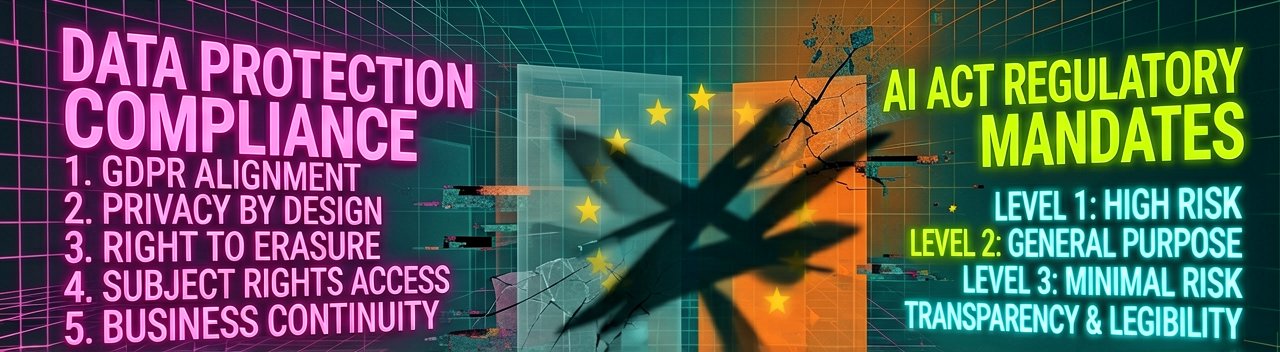
This dynamic has triggered a volatile regulatory collision between localized restrictions and federal security mandates. In the United States, a complex legal battle is unfolding as the federal government attempts to enforce streamlined national AI standards to maintain an edge against foreign adversaries, while individual states enforce their own varying compliance and privacy mandates. This fragmentation creates a massive headache for the defense industry, which must navigate a conflicting landscape where state laws demand hyper-transparency while national security initiatives demand rapid, unhindered operational deployment.
Sovereignty and the Supply Chain Cleanse
Across the Atlantic, the legislative focus has shifted heavily toward ensuring pure technological sovereignty and eliminating structural vulnerabilities within the digital supply chain. European defense officials have sounded intense alarms over a systemic reliance on foreign cloud providers and external advanced computing resources, viewing this infrastructure dependence as a critical vulnerability in the event of an AI-accelerated conflict. The European Union has responded by aggressively rolling out its comprehensive AI Act, enforcing strict transparency, risk mitigation, and automated system labeling requirements to neutralize algorithmic manipulation before it can degrade civic infrastructure.
To back stop these rules, the newly proposed EU Cybersecurity Act focuses heavily on insulating information and communication technology supply chains from high-risk, third-country suppliers. The initiative expands the mandate of the European Union Agency for Cybersecurity to provide active vulnerability management and real-time early alerts across all member states. This multi-layered approach makes it explicitly clear that modern geopolitical power is no longer measured solely by physical hardware or troop counts, but by the resilience, independence, and sheer velocity of a nation's defensive code.
The Compliance Mirage and the Speed of Code
Reading Between the Lines: The feverish rush to codify AI security standards exposes a fundamental contradiction at the heart of modern governance. Bureaucracy, by its very design, is a deliberative and glacial process, while algorithmic evolution operates on a scale of milliseconds. By the time a comprehensive regulatory framework winds its way through legislative committees, public comment periods, and inter-agency revisions, the specific machine learning vulnerabilities it was designed to mitigate have inevitably mutated or become entirely obsolete. This structural delay means that governments are effectively fighting an automated, hyper-speed conflict using the policy equivalent of smoke signals and paper trails.
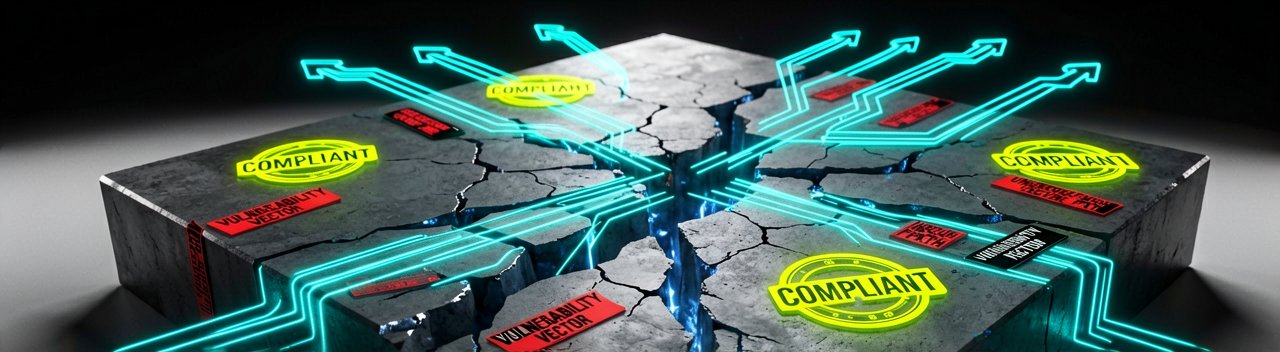
Furthermore, the heavy reliance on rigid compliance checklists creates a dangerous illusion of security. When agencies treat regulatory adherence as the ultimate goal rather than a baseline requirement, they inadvertently incentivize defensive complacency. A system can be perfectly compliant with every mandate laid out in a national strategy while remaining utterly defenseless against an unprecedented, adaptive zero-day attack orchestrated by an autonomous adversary. This gap between theoretical compliance and operational reality leaves critical infrastructure highly vulnerable to exploitation, despite millions of dollars spent on checking bureaucratic boxes.
The geopolitical reality also complicates the utopian vision of global algorithmic harmony. While Western democracies spend years debating ethical boundaries, data privacy rights, and civil liberties, adversarial regimes operate with no such constraints. This stark asymmetry creates a strategic bottleneck where democratic nations risk over-regulating their own defense sectors, inadvertently stalling domestic technological innovation while rival states rapidly deploy unconstrained, highly aggressive AI tools on the global stage.
The Real Costs of the Algorithmic Arms Race
Beyond the legal friction lies a deeper, systemic issue regarding resource concentration. Building, training, and securing truly resilient AI models requires astronomical amounts of computational power, specialized silicon, and elite engineering talent. This concentration of capability creates an uncomfortable reality where sovereign states are increasingly dependent on a handful of mega-corporations that control the underlying infrastructure. Consequently, national security frameworks are no longer strictly dictated by state intelligence agencies, but are effectively outsourced to private entities whose primary allegiances are to global shareholders rather than national borders.
This dynamic shifts the balance of power in ways that current defense frameworks are completely unequipped to handle. If a private cloud provider decides to update its core algorithms or restrict model access due to corporate liability fears, an entire nation's automated defense perimeter could be altered overnight without a single vote being cast in parliament. Skeptics rightly point out that the current regulatory push is less about governments taking control of AI, and more about them desperately trying to negotiate terms of service with the tech titans who actually own the digital high ground.
"We are rapidly approaching a point where the only thing faster than an AI-driven cyberattack is the speed with which a government committee can schedule a meeting to discuss it, proving that while the code may be autonomous, the bureaucracy remains comforting, reassuring, and thoroughly analog."
Artūras Malašauskas is an AI Systems Integrator with 20+ years of production-grade web engineering experience. He has designed, shipped, and scaled enterprise Python/PHP systems for logistics, SaaS, and public-sector clients. For the past year, he has focused exclusively on AI integrations: deploying open-source LLMs, building generative media pipelines (image, audio, video), and engineering multi-agent workflows for real production environments. His standard: reproducibility, security, cost-efficient inference—no vaporware. He documents and evaluates emerging AI tooling, separating verified capabilities from marketing noise. Technical editor at: muza-ai.eu, ai-verslas.lt, ai-naujinos.lt Connect on LinkedIn
Comments