When Faith Meets Code: The Pope's AI Encyclical and the Ethics We’re Ignoring

Silicon Valley has spent years moving fast and breaking things, but it finally ran into a force that refuses to be disrupted by an algorithm. When Pope Leo XIV bypassed traditional protocol to personally launch his first encyclical, Magnifica Humanitas, he brought an unexpected partner to the altar: the co-founder of Anthropic. It was a calculated, striking image. On one side stood the leader of a two-millennium-old institution dedicated to the human soul, and on the other, a pioneer of the very systems threatening to redefine what being human even means.
This unprecedented alliance reflects a strategic market shift that tech executives can no longer afford to dismiss as mere public relations. The Vatican isn't just offering passive commentary from the sidelines anymore; it’s aggressively entering the governance arena to counter commercial ambitions that prioritize rapid deployment over human dignity. By framing artificial intelligence through an anthropological lens, the encyclical forces us to confront a harrowing reality. We’re so hyper-focused on technical optimization and market capitalization that we’re completely ignoring the systemic erosion of human agency right under our noses.
The Dangerous Illusion of Moral Neutrality
For a long time, the tech industry shielded itself behind the comfortable myth that math and code are inherently neutral. The dominant narrative insisted that an algorithm is simply a tool, and responsibility lies solely with the end-user. The Vatican’s landmark document completely shatters this defense by arguing that ethical discernment must examine the very design, data selection, and hidden biases embedded within the models themselves. When developers train a system on a curated subset of reality, they aren't just building a processor; they're digitizing a highly specific, often flawed vision of society.
This structural bias becomes outright terrifying when applied to automated warfare and surveillance. The encyclical's urgent plea to "disarm" artificial intelligence targets the creeping integration of autonomous target identification by global superpowers. As algorithmic decision-making replaces human conscience in lethal contexts, the tech sector faces a profound crisis of responsibility. Industry giants like Microsoft and Cisco previously signaled their alignment with these concerns by signing the Rome Call for AI Ethics, but the rapid monetization of generative models has severely strained those early commitments.
The Devaluation of the Human Creative Spirit
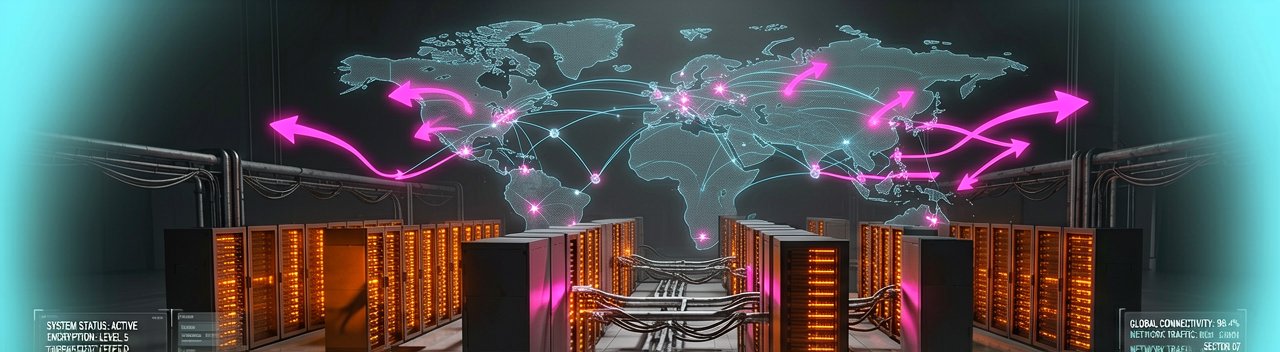
Beyond the immediate physical dangers of automated conflict, the text shines a harsh light on the subtle, daily degradation of human culture. Massive data centers are processing human expression at an industrial scale, turning art, music, and literature into predictive text strings. We’re rapidly transforming from active creators into passive consumers of what the Pope brilliantly describes as "unthought thoughts." This trend risks reducing human intellect to a mere efficiency metric, leaving us vulnerable to a flood of deepfakes and synthetic realities designed to exploit our psychological vulnerabilities.
Tech companies often justify this relentless automation by promising an era of unprecedented productivity and labor displacement solutions. However, this market-driven philosophy entirely misses the deeper spiritual and psychological value of work. When we replace genuine human expression with a sterilized "Powered by AI" label, we strip away the authenticity and ownership that connect communities. True progress shouldn't mean building an automated future that excludes the human spirit just to maximize corporate profit margins.
Behind the Corporate Veil: The alliance between the Vatican and Silicon Valley's elite did not materialize overnight. Behind closed doors, a quiet but intense diplomatic effort has been unfolding within the Pontifical Academy for Life for over a decade. Long before OpenAI’s public debut sparked a global frenzy, Church scholars were quietly meeting with computational linguists and venture capitalists. This hidden history reveals that the Church is not merely reacting to a trend, but rather playing a long game, positioning itself as the ultimate arbiter of human identity in an era where the line between biological and artificial cognition is increasingly blurred.
This deep-seated skepticism toward unchecked technological expansion stems from the Church’s historical encounters with previous industrial revolutions. Vatican archivists frequently draw parallels between today’s generative model boom and the early days of print media or industrial automation, noting that without a moral anchor, rapid disruption inevitably consolidates power among a select few. Today, that power is concentrated in the hands of a small cartel of tech executives who control the planetary computing infrastructure, effectively making decisions that dictate the flow of information for billions of people.

The Realpolitik of Algorithmic Colonialism
What mainstream tech reporting consistently overlooks is the geographical and socioeconomic divide embedded within the AI supply chain. While Western firms celebrate breakthroughs in sophisticated reasoning, the material reality of AI relies heavily on the exploitation of low-wage data annotators in the Global South and the ecological depletion of communities surrounding massive data centers. The encyclical addresses this asymmetry directly, warning against a new form of "algorithmic colonialism" where wealthier nations export biased models that systematically disenfranchise developing economies.
From the perspective of major tech firms, however, the pressure to deliver immediate quarterly returns creates a systemic barrier to implementing these ethical frameworks. Insiders acknowledge that pausing development to vet a model for spiritual or cultural safety could mean losing the market dominance required to sustain their massive capital investments. This tension exposes a widening chasm between the idealistic pledges signed at ethics conferences and the cutthroat reality of market competition, where speed is prioritized over systemic safety.
Ultimately, the true battleground for AI governance will not be fought in legislative chambers, but within the internal engineering cultures of these tech giants. By appealing directly to the individual conscience of developers and product managers, the Vatican is attempting to foster an internal resistance against the commodification of human experience. The success of this effort depends on whether a generation of engineers, raised on the philosophy of disruption, can be convinced that some human boundaries are simply too sacred to code.
Reading Between the Lines: The sudden eagerness of Silicon Valley tech giants to embrace papal guidance reveals a deeply pragmatic, almost cynical paradox. These companies are not suddenly experiencing a spiritual awakening; they are desperately seeking a shield against impending, heavy-handed government regulation. By wraping themselves in the noble fabric of the Vatican’s ethical frameworks, tech executives hope to signal that they can regulate themselves through high-minded principles, thereby avoiding the painful sting of antitrust lawsuits and rigid legislative mandates.
This strategic positioning exposes a glaring contradiction at the heart of corporate "AI for Good" campaigns. The very business models driving these entities are structurally incompatible with the encyclical's call for human-centric restraint. A system built entirely on maximizing user engagement, harvesting personal data, and scaling infrastructure at all costs cannot simply pivot to prioritize the quiet sanctity of the human soul. This creates a bizarre corporate theater where CEOs publicly nod in agreement with papal warnings about systemic bias, while simultaneously greenlighting algorithms optimized to exploit human psychology for ad revenue.
The Bureaucratic Gridlock of Digital Salvation
Projecting the long-term implications of this intersection between faith and tech suggests a future bogged down by bureaucratic gridlock rather than moral clarity. As tech firms attempt to implement these sweeping philosophical mandates, we are likely to see the rise of an entirely new industry of ethical compliance consultants. These corporate gatekeepers will specialize in "ethics-washing," translating profound theological warnings into sterile corporate checklists that can be easily bypassed during the next product launch cycle, leaving the actual power dynamics entirely unchanged.
Furthermore, relying on religious institutions to set global standards for a borderless technology creates its own set of geopolitical frictions. In a pluralistic world, a framework heavily rooted in Western theological traditions faces immediate resistance and skepticism from secular societies and nations with different cultural paradigms. Instead of creating a universal blueprint for safe deployment, this dynamic risks fracturing global AI governance into competing ideological blocs, each claiming the moral high ground while building increasingly powerful systems behind closed doors.
It seems Silicon Valley has finally discovered something more complex than quantum computing: the art of the multi-century public relations campaign, where the ultimate goal is convincing the world that a software update can achieve absolution.
Artūras Malašauskas is an AI Systems Integrator with 20+ years of production-grade web engineering experience. He has designed, shipped, and scaled enterprise Python/PHP systems for logistics, SaaS, and public-sector clients. For the past year, he has focused exclusively on AI integrations: deploying open-source LLMs, building generative media pipelines (image, audio, video), and engineering multi-agent workflows for real production environments. His standard: reproducibility, security, cost-efficient inference—no vaporware. He documents and evaluates emerging AI tooling, separating verified capabilities from marketing noise. Technical editor at: muza-ai.eu, ai-verslas.lt, ai-naujinos.lt Connect on LinkedIn
Comments