Why ESET’s $40M AI Bet Matters for the Future of Independent Cyber Defense

The cybersecurity landscape just shifted, and it did not happen quietly. At ESET World 2026 in Berlin, Slovakia-headquartered cybersecurity stalwart ESET dropped a definitive hammer on the market by announcing a Tech Wire Asia -reported €40 million (roughly $40 million) investment completely dedicated to artificial intelligence. For a firm that has historically prided itself on blending heavy human telemetry with machine learning, this isn’t just a routine patch or an incremental product refresh. It’s a full-throated defense strategy tailored to an era where AI agents are no longer just tools for productivity—they’re rapidly morphing into an unpredictable new attack surface.
The numbers trickling out of ESET’s telemetry labs tell a stark story. Since March 2026, the company’s systems scanned nearly 800,000 unique AI "skills"—modular instructions that teach autonomous AI agents how to interact with external tools and databases. Out of those, roughly 25,000 were flagged as suspicious, and thousands were flat-out blocked as malicious. It turns out the software supply chain powering today's autonomous AI ecosystem is growing so rapidly that security vendors are scrambling to plug the gaps before malicious code infiltrates third-party applications or hijacks enterprise workflows.
Challenging the Monopolies of Big Tech
What makes this move particularly compelling from an industry standpoint is the philosophy behind it. ESET isn't just taking this cash to rent API keys from major cloud provider monopolies. Instead, as detailed via a GlobeNewswire press release, CEO Richard Marko emphasized that digital and European cybersecurity sovereignty matters. The future of global cyber defense simply shouldn't depend on proprietary models owned and gated by a tiny handful of Big Tech players. By funding its own security-first foundational AI models, ESET is drawing a line in the sand, positioning itself as a fiercely independent alternative capable of controlling its own engineering design and downstream execution.
Building the Next-Gen Security Stack
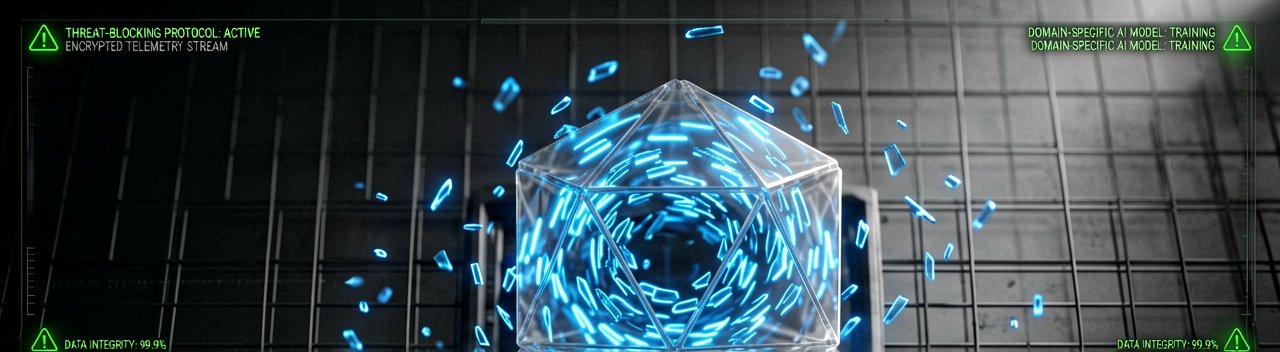
The multi-year capital injection focuses heavily on three foundational pillars meant to fundamentally rewire how enterprises intercept threats. First up is the creation of proprietary, domain-specific AI models explicitly trained on decades of nuanced cybersecurity threat intelligence. Beyond building standalone neural engines, ESET is pouring funds into a highly layered AI security architecture. This includes specialized intermediary tools designed to sit squarely between everyday business applications and LLMs to prevent data leaks, alongside protocol defenses optimized to police agent-to-agent chatter across a corporate network.
Finally, a massive chunk of change is heading toward building a next-generation AI Security Operations Center. Modern XDR systems pump out dizzying oceans of daily telemetry data, and relying on basic chatbot wrappers to replace human analysts has proven to be a pipe dream for most security teams. ESET aims to use its updated automation models to rapidly categorize, enrich, and translate complex log events, taking the heavy lifting off overworked IT teams. Supported by an aggressive three-year hiring plan to push its R&D squad up to 1,000 engineers, this initiative proves that the battle lines for modern digital resilience are officially being drawn in code.
What Most Reports Miss: This $40 million gambit is not just an offensive play into the AI hype cycle; it is a calculated defense of ESET's historical legacy as a champion of lightweight, highly optimized endpoint code. For decades, the Bratislava-based firm built its reputation on the efficiency of its NOD32 scanning engine, which famously protected machines without hogging system resources. Shifting to heavy, resource-intensive artificial intelligence models presents a fascinating engineering paradox for a company that has traditionally resisted bloated software, forcing its research teams to pioneer highly compressed, localized machine learning models that run effectively at the edge.
Industry insiders note that the European backdrop of this announcement is far from coincidental. As Western enterprises navigate the stringent compliance mandates of the European Union’s AI Act, ESET is positioning itself as the compliant, privacy-first alternative to Silicon Valley's data-hungry ecosystem. While American tech giants face intense scrutiny over how they scrape telemetry data to train their foundational models, ESET’s emphasis on European digital sovereignty serves as a powerful marketing lever, appealing directly to continental enterprises and government agencies wary of foreign data sovereignty vulnerabilities.
The pivot toward policing autonomous AI agents also highlights a massive, unaddressed vulnerability in modern enterprise workflows. As companies rush to deploy AI assistants that automatically read emails, update databases, and execute API calls, they inadvertently introduce a highly exploitable vector known as indirect prompt injection. Security analysts have long warned that a malicious actor could hide invisible instructions inside a routine PDF document or web page, which an autonomous agent would read and execute, potentially leading to unauthorized data exfiltration or credential theft without ever tripping traditional firewall defenses.

By shifting its investigative focus toward the software supply chains of these modular AI "skills," ESET is attempting to intercept threats before they reach the execution phase. This proactive stance requires an entirely different style of threat intelligence, moving beyond static file hashes and known malicious IP addresses into the fluid, semantic realm of natural language logic anomalies. It is a high-stakes evolution that requires traditional malware researchers to think more like linguists and cognitive scientists, transforming the very definition of what it means to hunt for bugs in the wild.
The Realities of the AI Talent War
Executing this strategy over the next three years hinges entirely on ESET's ambitious plan to scale its core research and development team to 1,000 engineers. In the current economic climate, competing for top-tier machine learning talent puts a mid-sized independent player in direct competition with the virtually bottomless pockets of hyperscale cloud providers and venture-backed AI startups. ESET is banking on its massive, proprietary data lake—built from decades of global endpoint telemetry—as the ultimate recruitment carrot for purist data scientists who want to train models on real-world chaotic data rather than synthetic datasets.
Ultimately, this capital injection signals the end of the traditional antivirus era and the beginning of a messy, continuous war of algorithmic attrition. The success of ESET’s transformation will not be measured by the size of its press releases, but by how effectively its domain-specific models can outmaneuver the adversarial AI tools already being weaponized by sophisticated cybercriminal syndicates. As autonomous systems begin defending against autonomous threats, the line between software security and systemic infrastructure resilience has officially vanished.
Reading Between the Lines: While a forty-million-dollar war chest sounds impressive on a corporate balance sheet, it is a drop in the bucket compared to the capital expenditure of the tech giants ESET is actively criticizing. When Microsoft, Google, and Amazon are pouring tens of billions annually into AI infrastructure, independent vendors face a brutal math problem. ESET’s rhetoric around "digital sovereignty" is a clever geopolitical differentiator, but building truly proprietary, security-first foundational models from scratch requires an astronomical amount of compute power, raising valid questions about whether this investment can yield a competitive edge or if it will simply be swallowed by cloud utility bills.
There is also a glaring contradiction in the industry’s current fixation on AI-driven Security Operations Centers. The cybersecurity sector has spent years suffering from a boy-who-cried-wolf problem, with legacy systems burying analysts under an avalanche of false positives. Flooding the defensive stack with more autonomous, generative algorithms risks swapping old, predictable false positives for sophisticated, hallucinatory anomalies. If an AI agent misinterprets a benign, poorly written piece of legacy enterprise code as a zero-day threat and autonomously isolates a critical server, the resulting self-inflicted downtime could do just as much damage as the actual malware it was trying to prevent.
Furthermore, ESET’s pivot to policing the software supply chain of AI "skills" exposes a fundamental vulnerability in the tech industry's current development rush. Silicon Valley has spent the last two years preaching a philosophy of moving fast and breaking things with LLM integrations, routinely prioritizing rapid feature adoption over secure design architectures. By attempting to wrap protective guardrails around inherently unpredictable third-party AI plugins, security vendors are essentially trying to build a fortress on top of shifting sand, playing a reactive game of catch-up against an infinitely adaptable attack surface.
The long-term implication for corporate IT departments is a significant hike in the hidden costs of complexity. Organizations adopting these next-generation defensive architectures will soon find themselves managing a dizzying web of AI systems designed to watch other AI systems, which are in turn monitoring human users. This compounding algorithmic layer risks turning corporate networks into black boxes, where troubleshooting an IT failure requires parsing the incomprehensible decisions of competing neural networks rather than reviewing standard, predictable system logs.
The Skeptic's Architecture
Ultimately, the threat landscape is evolving into a war of economic attrition where the offense still enjoys a massive structural advantage. Cybercriminals do not need to build multi-million-dollar foundational models or comply with the EU AI Act; they merely need to find a single logical loophole in a prompt, or rent access to open-source models tweaked for malicious code generation. ESET's massive push for engineering talent assumes that throwing human minds at algorithmic problems can close this gap, but human scale rarely wins against automated, distributed exploitation loops over a long enough timeline.
"We are rapidly approaching a surreal corporate future where an enterprise's AI assistant will spend half its day accidentally leaking trade secrets, while its AI security agent spends the other half hallucinating elaborate conspiracies to stop it—all while the human IT staff sits on the sidelines, waiting for the machines to finish their expensive argument so they can finally get back to resetting passwords."
Artūras Malašauskas is an AI Systems Integrator with 20+ years of production-grade web engineering experience. He has designed, shipped, and scaled enterprise Python/PHP systems for logistics, SaaS, and public-sector clients. For the past year, he has focused exclusively on AI integrations: deploying open-source LLMs, building generative media pipelines (image, audio, video), and engineering multi-agent workflows for real production environments. His standard: reproducibility, security, cost-efficient inference—no vaporware. He documents and evaluates emerging AI tooling, separating verified capabilities from marketing noise. Technical editor at: muza-ai.eu, ai-verslas.lt, ai-naujinos.lt Connect on LinkedIn
Comments