Beyond the Chatbot: How Ukraine’s Sovereign AI Infrastructure is Shaking Up the Global Tech Hierarchy
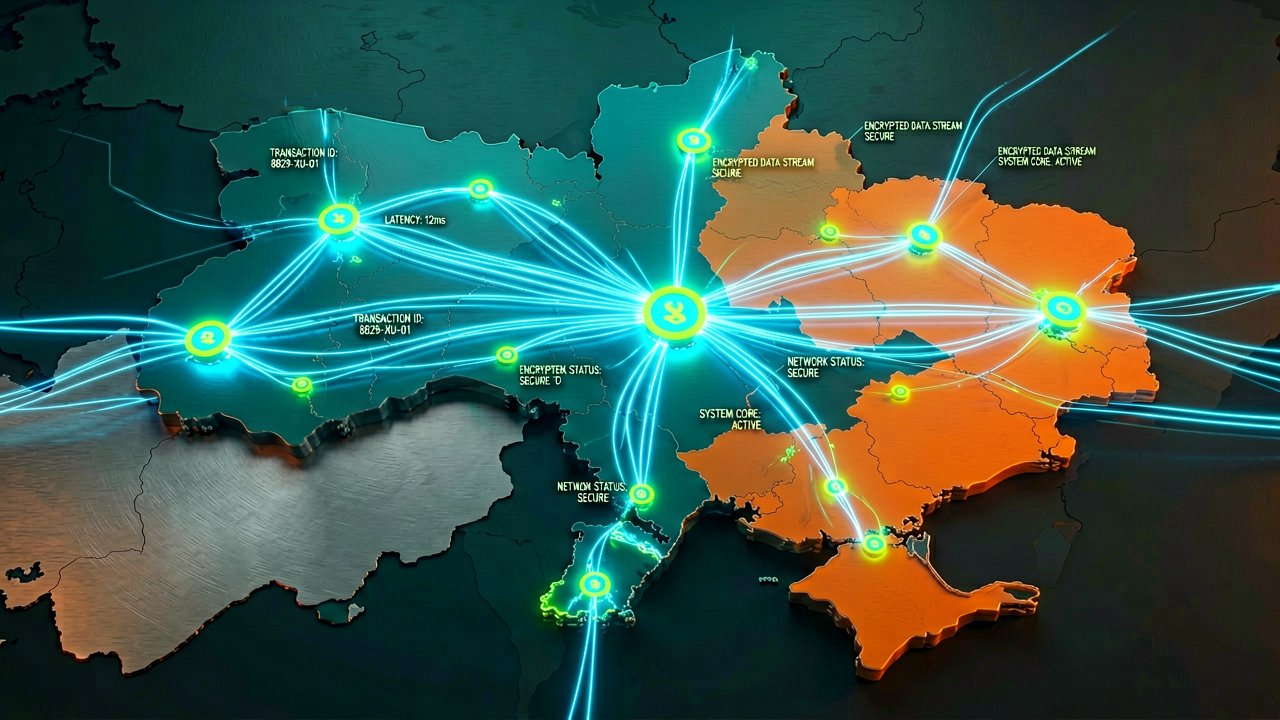
While Silicon Valley remains hyper-focused on commercializing large language models for corporate productivity, a remarkably resilient tech sector in Eastern Europe has quietly fundamentally rewritten the rules of civic technology. Ukraine has actively stepped onto the global stage by exporting highly specialized, agentic AI frameworks designed not just to converse, but to govern, execute services, and handle crisis-level communications. Born out of strict logistical necessity under the pressure of wartime realities, the rapid rollout of these tools marks a stark transition from the generalized assistant ecosystem dominated by big tech toward targeted, action-oriented infrastructure.
The institutional momentum became undeniably clear when the Ministry of Digital Transformation of Ukraine successfully launched Diia.AI, a highly integrated national AI assistant designed to completely bypass legacy bureaucratic friction. Rather than forcing citizens to navigate complex portals, the platform operates as a conversational agent capable of ordering public administration services and instantly pulling official records. This deep integration earned international acclaim as Europe’s top GovTech solution, setting a profound precedent for how governments can deploy autonomous tech with high citizen trust. The global pivot isn't a distant roadmap either; Ukraine’s rapid structural digital reforms have already pushed the nation up fourteen places in the Ministry of Digital Transformation of Ukraine global AI readiness rankings, positioning it as an aggressive competitor in the international technology trade.
The Architecture of the Agentic State
What separates this framework from generalized chat models like OpenAI's ChatGPT or Google's Gemini is its fundamental philosophy. Big tech built an expansive conversational sandbox; Ukraine is pioneering an "agentic state" where the AI operates as an authorized transactional engine. By transitioning from simple search queries to active execution—such as generating immediate income reports directly through a prompt—the ecosystem removes human intermediary layers entirely.
This pragmatic methodology traces back to pioneering experiments in automated diplomacy. The world witnessed a glimpse of this transition when the Ministry of Foreign Affairs deployed Victoria Shi, an AI-generated digital spokesperson tasked with handling verified consular updates. As detailed by The Guardian , the avatar saved invaluable diplomatic hours by managing routine public statements while utilizing unique cryptographic QR codes to completely neutralize the threat of deepfakes. This wasn't a gimmicky tech demo; it was an active defensive strategy to optimize limited human capital during a crisis.

A Direct Challenge to Silicon Valley’s Monopoly
For ChatGPT and its contemporaries, the emergence of localized, sovereign AI models introduces a complex competitive dynamic. For years, the reigning tech narrative assumed that whoever owned the largest data centers and the most expansive parameter models would naturally win the global market. However, massive general-purpose systems suffer from severe hallucinations, massive energy overheads, and persistent data sovereignty concerns that make foreign governments incredibly hesitant to adopt them for critical public infrastructure.
By building a sovereign LLM and establishing its own dedicated AI Factory infrastructure, Ukraine is establishing a blueprint for localized, secure, and hyper-functional systems. Western enterprises and municipal governments are looking closely at these agile frameworks as they realize that massive commercial models are often ill-suited for strict compliance environments. The message echoing from the tech sectors of Eastern Europe is clear: the future of artificial intelligence does not belong exclusively to the highest corporate bidder, but to the most adaptive, field-tested deployment.
The Real Friction in the Machine: Behind the smooth interfaces of Diia.AI and Victoria Shi lies a intense, behind-the-scenes engineering battle against algorithmic bias and hostile information warfare. When engineers at the Ministry of Digital Transformation first began prototyping these sovereign systems, they quickly realized that commercial foundational models trained predominantly on Western internet corpora were fundamentally unequipped to handle the nuances of a nation under existential stress. Early iterations frequently stumbled over highly specific regional administrative codes, localized corruption terminology, and the rapid shift in linguistic vernacular that occurs during geopolitical crises. To build a system that citizens could actually trust with their official records, tech teams had to completely overhaul their data ingestion pipelines, prioritizing hyper-local datasets and implementing aggressive, real-time filtering to neutralize sophisticated foreign data-poisoning campaigns aimed at disrupting the state’s digital architecture.
This stark divergence in development philosophy has sparked a quiet ideological rift between Eastern European tech architects and Silicon Valley executives. While American venture capitalists measure success through user acquisition metrics, exponential parameter growth, and enterprise software-as-a-service monetization, Ukrainian developers have had to treat uptime and factual accuracy as matters of national security. Prominent tech leaders within the region frequently argue in closed-door sessions that Western AI development has become dangerously bloated and detached from practical utility. They contend that the global tech market is experiencing an artificial asset bubble driven by generalized chatbots that can write poetry but fail catastrophically when tasked with navigating strict, unyielding legal frameworks or processing high-stakes municipal logistics without human oversight.

The Sovereignty Paradox and Foreign Adoption
As Ukraine actively begins exporting this battle-tested GovTech blueprint to international markets, Western democratic allies are facing a complex sovereignty paradox. European municipalities, particularly across Scandinavia and the Baltic states, are eager to adopt these highly structured, transaction-oriented AI frameworks to streamline their own aging bureaucratic systems. However, incorporating foreign-designed agentic infrastructure into core government networks presents unprecedented regulatory hurdles under strict privacy frameworks like the General Data Protection Regulation. Tech journalists tracking these international trade negotiations note that the primary selling point of the Ukrainian model—its deep, unrestricted integration into national registries—is precisely what makes risk-averse Western legal teams hesitate, forcing a delicate recalibration of how data boundaries are drawn between the state and the machine.
Ultimately, this global expansion signals a profound shift in the geopolitics of technology, breaking the historical monopoly held by a handful of corporate giants in California and Washington. By demonstrating that an agile, resource-constrained nation can successfully build, secure, and deploy its own sovereign LLMs under the most hostile conditions imaginable, the project has provided a definitive proof of concept for middle-power nations worldwide. Governments from Central Asia to South America are now looking at this decentralized, highly practical approach as a viable alternative to digital colonialism, realizing they no longer have to blindly outsource their national data infrastructure to foreign tech monopolies to remain competitive in the rapidly evolving machine age.
The Realities of the Machine: Beneath the optimistic rhetoric of a decentralized AI revolution lies an uncomfortable truth about systemic dependency that the tech community routinely ignores. While Ukraine’s rapid deployment of sovereign GovTech is heralded as a triumph over Silicon Valley's monopoly, the underlying hardware telling these machines how to think remains firmly rooted in Western supply chains. A sovereign large language model is only as autonomous as the microprocessors it runs on, and as long as specialized AI accelerators are designed in California and manufactured in Taiwan, true technological independence remains a convenient fiction. The strategic vulnerability has simply shifted from the software layer to the physical infrastructure, meaning these highly specialized national systems are still entirely at the mercy of global hardware cartels and shifting export controls.
Furthermore, the transition from an informational chatbot to an agentic state entity introduces a profound democratic contradiction that public officials are hesitant to address. When an artificial intelligence system moves beyond providing answers and begins actively processing legal documents, authorizing state services, and managing civic registries, the traditional mechanisms of bureaucratic accountability begin to dissolve. In a conventional government setting, a citizen can challenge a clerk's decision through established legal appeals, but challenging an unyielding, closed-source algorithmic workflow inside a state apparatus is a near-impossible task. The efficiency gains of bypassing human intermediary layers are undeniably immense, but they arrive at the direct expense of institutional transparency, threatening to replace traditional red tape with an opaque, algorithmic black box.
The Sustainability of Field-Tested Tech
There is also the highly contentious question of whether a tech ecosystem forged in the crucible of an existential crisis can successfully adapt to the mundane, peacetime realities of international markets. The extreme utility and rapid adoption of these tools were driven by absolute necessity, where risk tolerances were drastically altered by the immediate demands of national survival. When exported to stable, highly risk-averse Western democracies, this aggressive development philosophy runs headfirst into a wall of institutional inertia, labor union resistance, and paralyzing legal caution. A municipal government in Western Europe is far more likely to spend three years debating the ethical implications of an automated spokesperson than it is to deploy one overnight, suggesting that the global market for crisis-tested GovTech may be significantly smaller and more fragmented than its current momentum indicates.
It turns out that automating the state is remarkably easy right up until you have to explain to a suburban city council why a computer algorithm decided to deny their neighbor's zoning permit without a human being in the room to yell at.
Artūras Malašauskas is an AI Systems Integrator with 20+ years of production-grade web engineering experience. He has designed, shipped, and scaled enterprise Python/PHP systems for logistics, SaaS, and public-sector clients. For the past year, he has focused exclusively on AI integrations: deploying open-source LLMs, building generative media pipelines (image, audio, video), and engineering multi-agent workflows for real production environments. His standard: reproducibility, security, cost-efficient inference—no vaporware. He documents and evaluates emerging AI tooling, separating verified capabilities from marketing noise. Technical editor at: muza-ai.eu, ai-verslas.lt, ai-naujinos.lt Connect on LinkedIn
Comments