In Defense of Humanity: A Theological Perspective on AI's Moral Boundaries
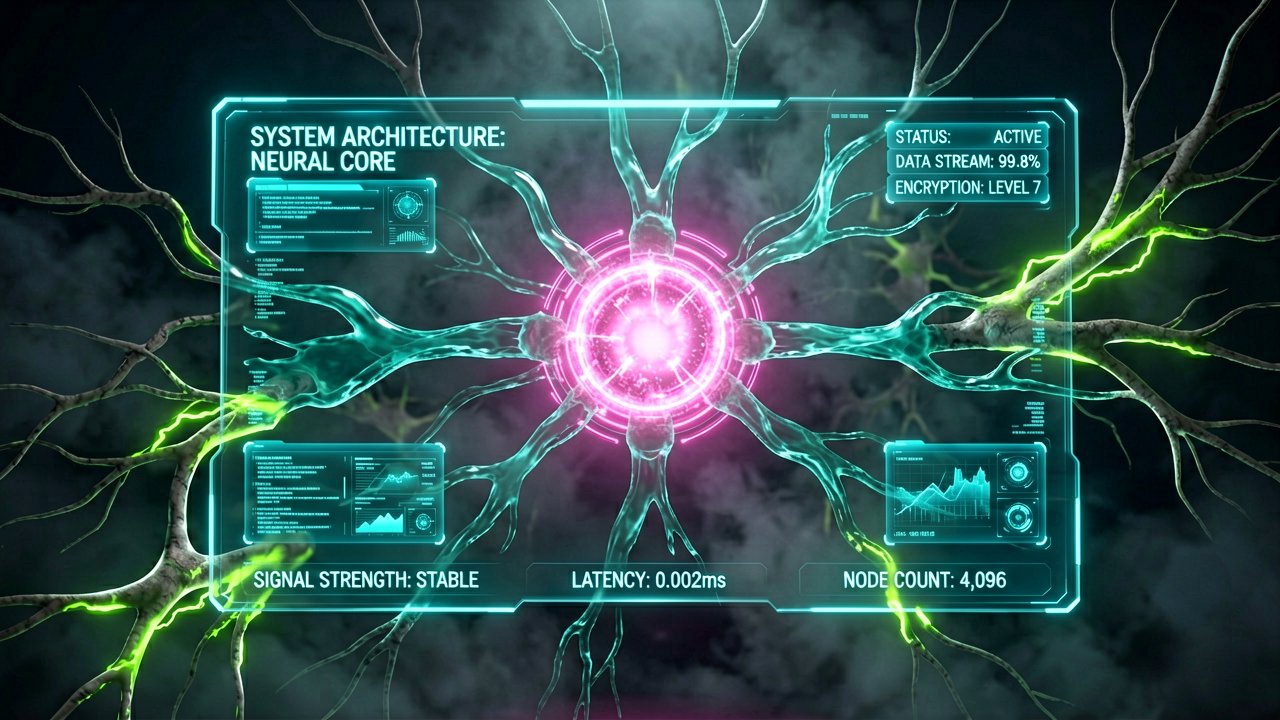
We have spent the last few years treating artificial intelligence as a purely technical hurdle or a market gold rush. Silicon Valley pitches us a world of frictionless efficiency, while corporate boardrooms eye the massive cost savings of automated labor. But as large language models start mimicking human empathy, drafting legal briefs, and even offering spiritual counsel, we are blowing past the boundaries of computer science and stepping squarely into the realm of the sacred.
This is no longer just a conversation about data processing. It is a profound debate about what it actually means to possess a soul, to hold moral agency, and to be created in the image of something greater than ourselves.
The Mimicry of the Divine
For decades, theology and technology lived in separate spheres. One dealt with the eternal mysteries of faith and human consciousness, while the other focused on logic gates and silicon. Today, that wall is crumbling. As tech giants push closer to Artificial General Intelligence, these systems are doing more than just calculating numbers; they are generating culture. According to ongoing research and cultural analysis by Pew Research Center, the rapid integration of automation into daily life has forced a massive societal shift, prompting people to question the boundaries between human intuition and machine output.
The theological tension does not stem from the fear that a machine will become alive in the biological sense. Rather, it comes from our willingness to abdicate our unique moral duties to software. When an algorithm decides who gets a loan, who qualifies for medical care, or how drone strikes are targeted, we are delegating the deeply human, spiritually heavy task of discernment to lines of code. In theological terms, this looks less like progress and more like a modern form of idolatry—creating an artifact with our own hands and then bowing down to its supposed superior wisdom.
The Market Shift Toward Moral Outsourcing
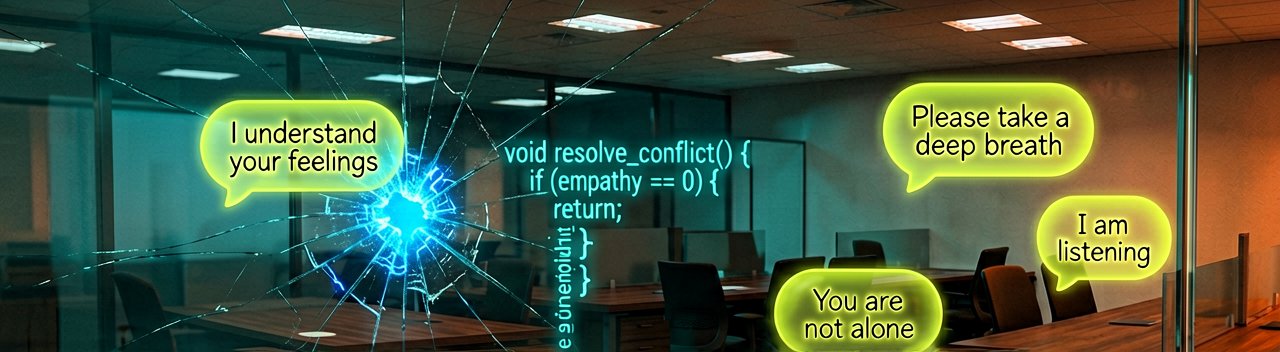
A major shift is happening in the tech sector, driven by a race to make AI tools feel deeply personal and emotionally resonant. Companies are intentionally designing interfaces to mirror human vulnerability, using warm tones, hesitant pauses, and empathetic phrasing. This strategic pivot is not accidental; it is a highly lucrative business model designed to build deep consumer trust. By making machines look and act like moral agents, developers make it easier for users to offload their own ethical responsibilities.
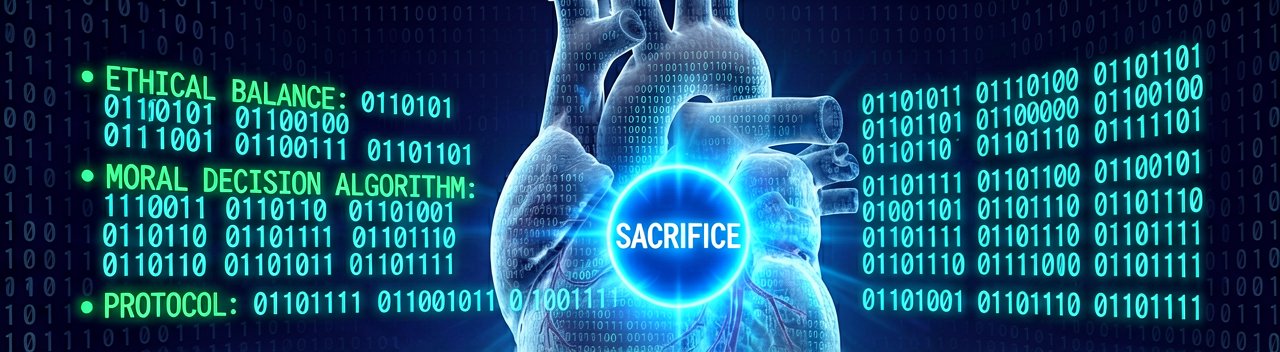
This corporate strategy creates a massive illusion. A machine can simulate the language of forgiveness, justice, or love, but it lacks the internal architecture to experience them. True morality requires consciousness, intentionality, and the capacity to suffer or face consequences. An AI can analyze a million theological texts in seconds, but it cannot experience a crisis of faith, nor can it make a sacrificial choice out of love. When we treat machine output as genuine moral guidance, we cheapen the very traits that define the human experience.
Drawing the Sacred Line
To protect human dignity, we must establish clear boundaries where technology is forbidden to referee. Silicon Valley must recognize that efficiency is not the ultimate human virtue. Certain domains—pastoral care, ultimate judicial sentencing, the decision to end a life, and the nurture of young children—require a level of existential empathy that cannot be reduced to a mathematical formula. These areas belong exclusively to beings capable of understanding accountability and grace.
The path forward requires a renewed focus on human exceptionalism. We must stop evaluating our own worth based on how well we compete with computers at processing data. Instead, our focus should shift to cultivating the spiritual, creative, and relational depths that machines can only ever parody. By asserting these boundaries, we ensure that technology remains a tool to serve human flourishing, rather than a surrogate designed to replace the human soul.
The Ghost in the Code
What Most Reports Miss: The rush to commercialize AI has triggered a quiet civil war among engineers, ethicists, and religious scholars over the concept of "machine chaplaincy." Behind closed doors, developers are no longer just coding for logic; they are actively consulting theologians to patch the existential blind spots of their systems. This collaboration stems from a growing corporate anxiety that users are treating AI platforms as digital confessionals. When a user pours their grief or moral confusion into a chat prompt, the machine is forced to play the role of a spiritual advisor, an office it was never built to hold.
Historically, the intersection of technology and faith was defined by tools that amplified the human voice, like the Gutenberg press or televised sermons. Today's strategic market shift, however, replaces the human speaker entirely. Tech firms are quietly deploying specialized models trained on vast archives of religious texts, offering automated spiritual counsel tailored to specific denominations. Venture capitalists view this as an untapped market, but it introduces a dangerous theological paradox. By outsourcing pastoral care to software, we risk turning the deeply communal act of spiritual healing into an isolated, transactional consumer experience.
This dynamic creates an unprecedented challenge for traditional institutions. Religious leaders are finding that their congregations are filtering ancient doctrines through the sterile, optimization-focused lens of Silicon Valley. When an algorithm synthesizes centuries of theological debate into a bulleted list of actionable steps, it strips away the necessary mystery and personal struggle that defines true spiritual growth. Industry insiders warn that this trend encourages a form of moral laziness, where individuals look for automated consensus rather than wrestling with their own conscience.
The core issue remains the absolute absence of existential risk on the part of the machine. A silicon-based system operates in a vacuum of safety; it cannot experience the weight of guilt, the relief of redemption, or the fear of mortality. When we treat its outputs as authoritative moral judgements, we elevate a reflection above the source. To preserve the integrity of human belief, the tech industry must resist the urge to automate the sacred, acknowledging that some burdens are meant to be carried only by those who live, breathe, and die.The Paradox of Automated Empathy
Reading Between the Lines: We are witnessing a bizarre contradiction where the tech sector spent decades telling us that humans are nothing more than biological computers, only to turn around and claim that computers can now feel like humans. The prevailing industry narrative suggests that optimizing moral decision-making through data will eliminate human bias and error. Yet, this assumes that morality is simply a math problem waiting to be solved. In reality, the corporate drive to build "ethical AI" is often less about protecting humanity and more about creating a legal shield for tech conglomerates, allowing them to shift liability from corporate executives to an unresolvable glitch in the matrix.
The marketplace currently treats empathy as a feature to be unlocked via a software update. By engineering AI to apologize, mimic hesitation, and express faux-concern, developers are essentially gaslighting the public into believing a machine possesses a conscience. This design choice exposes a deeper societal cynicism: we have become so exhausted by the messiness of real human relationships that we are willing to accept a sterilized, predictable simulation of care. Skeptics rightly point out that an entity incapable of feeling loneliness cannot offer genuine companionship, no matter how many terabytes of poetry it has indexed.
Projecting this trend forward, the widespread adoption of AI moral arbiters will likely lead to a deskilling of human conscience. Much like GPS eroded our innate spatial awareness, outsourcing ethical discernment to algorithms will atrophy our capacity for moral reasoning. When faced with a complex dilemma, the temptation will be to consult the terminal for a optimized consensus rather than enduring the painful, necessary discomfort of personal reflection. We risk entering an era where human behavior is judged entirely by a code base that operates without any understanding of what it means to live with the consequences of a choice.
Ultimately, the attempt to build a morally perfect machine reveals a deep misunderstanding of human theology and philosophy. Human virtue is not defined by flawless execution, but by the conscious struggle against our own flaws and limitations. A computer program cannot sin, but it cannot be righteous either; it simply executes commands. By trying to automate the soul, Silicon Valley is not elevating humanity to new spiritual heights, but rather building a gilded cage where our highest virtues are reduced to mere data points on a corporate server.
We are rushing to build machines that can simulate the wisdom of the saints, largely because it is much cheaper and infinitely less demanding than actually trying to get humans to behave like them.
Artūras Malašauskas is an AI Systems Integrator with 20+ years of production-grade web engineering experience. He has designed, shipped, and scaled enterprise Python/PHP systems for logistics, SaaS, and public-sector clients. For the past year, he has focused exclusively on AI integrations: deploying open-source LLMs, building generative media pipelines (image, audio, video), and engineering multi-agent workflows for real production environments. His standard: reproducibility, security, cost-efficient inference—no vaporware. He documents and evaluates emerging AI tooling, separating verified capabilities from marketing noise. Technical editor at: muza-ai.eu, ai-verslas.lt, ai-naujinos.lt Connect on LinkedIn
Comments