The Automation of Intellect: Why the AI Education Debate is Facing the Wrong Enemy

We are looking at the classroom of the future through the wrong lens. For the past few years, the public discourse around artificial intelligence in education has been trapped in a loop of panic over cheating algorithms and automated grading systems. Tech evangelists promise hyper-personalized lesson plans tailored by algorithms, while skeptics worry about the death of the traditional essay. But this hyper-focus on the software itself misses the much larger, creeping threat to our schools.
The real crisis isn’t technological; it is existential. We are quietly allowing silicon valley narratives to reshape learning into a purely transactional experience—a series of inputs and outputs where knowledge is downloaded rather than discovered. In this rush toward optimization, we risk dismantling the irreplaceable human infrastructure of education: the mentorship, the shared vulnerability of confusion, and the messy, unquantifiable spark of peer-to-peer inspiration.
As venture capital floods into educational technology, market forces are driving a strategic shift from holistic institutional learning to unbundled, subscription-based micro-credentials. Silicon Valley is positioning AI not as a tool to support teachers, but as a cost-effective replacement for them. A recent analysis by MIT Technology Review highlights how this aggressive push toward automated tutoring platforms often prioritizes standardized metrics over deep comprehension, turning schools into testing factories optimized for algorithmic compliance.
What Most Reports Miss: The Invisible Loss of Cognitive Friction
The Hidden Cost of Frictionless Learning: The current corporate playbook for AI integration operates on a seductive premise: learning should be seamless. If a student struggles with a concept, the algorithm instantly pivots, breaking the information down into smaller, easily digestible micro-bites. While this keeps engagement metrics high and frustration levels low, it strips away the exact cognitive friction required to build genuine critical thinking skills. Deep learning requires a degree of struggle, a period of sitting with confusion and navigating intellectual discomfort—experiences that an optimization engine is explicitly programmed to eliminate.
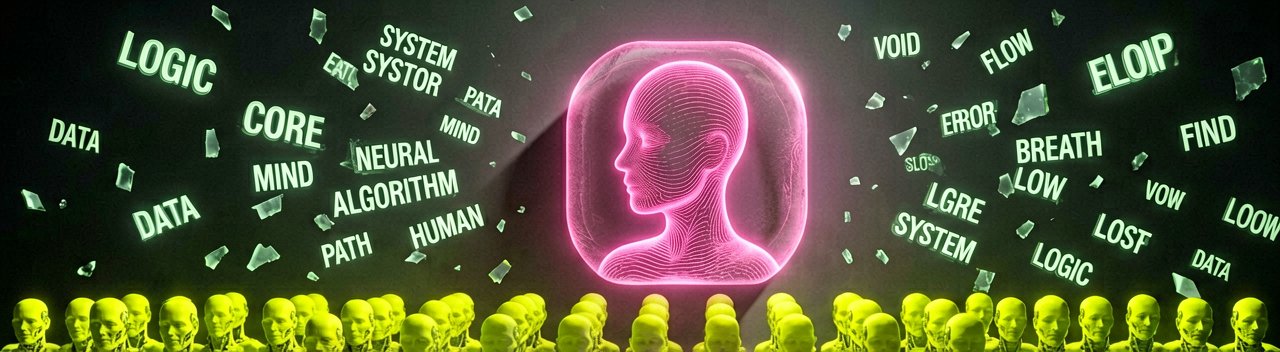
Historically, educational breakthroughs have rarely come from isolated individuals absorbing perfectly curated facts. They happen in the friction of the seminar room, through the miscommunications, debates, and emotional resonance of human interaction. When a student receives feedback from a machine, the interaction is fundamentally hollow; it carries no social stakes. A critique from a respected professor or a counterargument from a classmate matters because human relationships matter. Replacing this dynamic with an artificial echo chamber turns education into a solitary, gamified chore rather than a communal rite of passage.
Furthermore, the strategic market shifts we are witnessing reveal a cynical undercurrent in the "AI for all" egalitarian rhetoric. Elite private institutions are already doubling down on small, human-led seminars and mentorship models, marketing the human touch as a premium luxury good. Meanwhile, underfunded public school systems are being steered toward algorithmic oversight and software-driven instruction as a budget-saving measure. This creates a deeply unequal educational landscape where the wealthy are taught by humans to think critically, while the marginalized are managed by machines to perform tasks.
Ultimately, the metrics used by tech firms to measure educational success—completion rates, test scores, and platform time—are fundamentally misaligned with the true purpose of learning. Education is not an assembly line designed to produce compliant economic units as efficiently as possible. It is the process by which a society passes down its values, cultivates empathy, and trains citizens to question authority. By outsourcing this profound responsibility to black-box algorithms, we are trading our intellectual sovereignty for convenience, and the cost of that transaction will be paid by the next generation.
The Efficiency Trap and the Mirage of Equity
Reading Between the Lines: The tech sector’s grand promise of algorithmic equity collapses under the weight of its own internal contradictions. We are told that AI tutors will democratize elite education by giving every child with an internet connection a personal, infinitely patient digital mentor. Yet, this assumes that the primary barrier to educational success is simply a lack of content delivery. It willfully ignores the systemic realities—stable housing, nutrition, well-funded physical infrastructure, and emotional support systems—that actually dictate a student's ability to learn, revealing the Silicon Valley model as a tech-solutionist fantasy designed to bypass structural social reform.

There is a glaring irony in using generative models to foster human intelligence. These systems operate by predicting the most statistically probable next word based on historical data, effectively institutionalizing conformity and the status quo. When we outsource the evaluation of student thought to these predictive engines, we create an ideological closed loop. Students quickly learn to write essays that mirror the bland, risk-averse prose the grading algorithm is trained to recognize as "correct." This rewards intellectual compliance and actively penalizes the eccentric, avant-garde, or genuinely subversive insights that have historically driven human progress forward.
Projecting this trend forward suggests a grim institutional trajectory where the university degree itself is thoroughly hollowed out. As AI tools handle both the generation of student work and the grading of that work, higher education risks becoming a ghost town of automated bureaucracy. We face a future where artificial intelligence writes the papers, artificial intelligence evaluates them, and the human student steps into the loop merely to pay the tuition and collect a credential. This systemic deskilling will produce a generation of graduates who possess certificates of competence but lack the cognitive stamina to formulate an original argument or challenge a flawed consensus.
"We seem determined to build a world where machines do the reading, writing, and thinking for us, leaving humans free to focus exclusively on the grueling, exhausting work of scrolling through the resulting summaries."
Artūras Malašauskas is an AI Systems Integrator with 20+ years of production-grade web engineering experience. He has designed, shipped, and scaled enterprise Python/PHP systems for logistics, SaaS, and public-sector clients. For the past year, he has focused exclusively on AI integrations: deploying open-source LLMs, building generative media pipelines (image, audio, video), and engineering multi-agent workflows for real production environments. His standard: reproducibility, security, cost-efficient inference—no vaporware. He documents and evaluates emerging AI tooling, separating verified capabilities from marketing noise. Technical editor at: muza-ai.eu, ai-verslas.lt, ai-naujinos.lt Connect on LinkedIn
Comments