Why Silicon Valley Can't Ignore the Vatican's New Commandment on AI

For years, the technology sector has treated ethical guidelines like corporate marketing—shiny, flexible, and ultimately subservient to quarterly growth. But a profound shift is underway as the Holy See steps directly into the algorithmic arena. Pope Leo XIV's first encyclical, Magnifica Humanitas, delivers an uncompromising reality check to tech oligarchs, drawing a hard line against outsourcing human dignity to automated code.
This is not just another toothless white paper from a distant committee. By positioning this landmark document against the backdrop of an unregulated technology arms race, the Vatican is forcing a fundamental rethink of what it means to build intelligent systems. It asserts that treating human creativity and consciousness as mere training grounds for machine models risks burying the very talents that define our humanity.
Stepping Beyond Voluntary Ethics
Silicon Valley has long mastered the art of self-regulation theater, creating internal ethics boards that are easily dismantled when profits demand it. The Vatican’s intervention directly challenges this fragile status quo, insisting that a cold code of voluntary regulations is entirely insufficient to govern a tool capable of altering human thought. According to reporting by the U.S. Conference of Catholic Bishops, church leadership argues that an exclusively ethical approach fails unless it is anchored in a deeper anthropological vision—one that asks what a human being is worth when compared to a digital android.
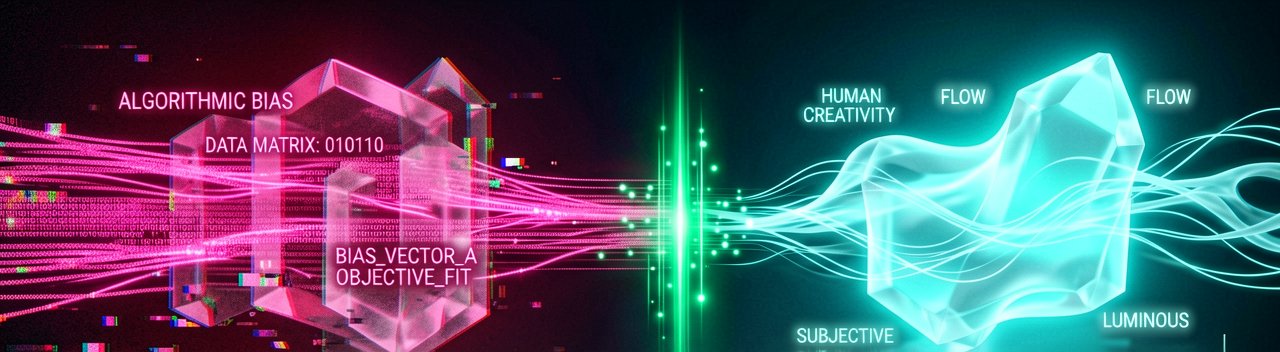
The timing of this critique coincides with massive market anxieties. As commercial generative models proliferate, they increasingly degrade the public information ecosystem and drive a destabilizing "spiral of annihilation" in automated military systems. Rather than merely pleading for better data guardrails, the encyclical targets the philosophical core of modern tech development, urging creators to resist the commercial temptation to replace human judgment entirely.
An Unexpected Alliance
Perhaps the most fascinating twist in this unfolding narrative is how the Vatican is choosing to deliver its message to the world. In a move that has sent shockwaves through both religious and tech circles, the official presentation features an alliance with prominent sector insiders, including the co-founder of AI safety heavyweight Anthropic, as noted by Religion News Service . This strategic pairing shows that the Call for AI Ethics is expanding beyond theoretical theology into active industry engagement.
By bringing leading builders to the table, the Holy See bridges the gap between ancient moral philosophy and cutting-edge laboratory research. It signals a sophisticated understanding that changing the trajectory of artificial intelligence requires moving past abstract condemnation to demand structural, real-world restraint directly from those holding the keys to the data centers.
The Architectural Crisis of Faith
Behind the Silicon Veil: The true tension pulsing through the Vatican’s intervention is not a fear of machine intelligence, but an indictment of engineering hubris. For decades, the tech industry operated on a foundational myth that complex problems could be entirely optimized by sufficient data and compute power. Pope Leo’s encyclical systematically deconstructs this secular faith, pointing out that the current trajectory of large language models treats human knowledge as a finite resource to be mined, compressed, and sold back to a dependent public. This commodification creates a closed loop where machines train on human output, only to replace the very creators they copied.
Inside the research labs of San Francisco and London, engineers are quietly grappling with the same structural dead ends that the Holy See highlights from a theological perspective. The rapid race toward Artificial General Intelligence has left little room for the concept of the soul, yet developers frequently run into the limits of synthetic data and the moral decay of algorithmic bias. When a system hallucinates a legal precedent or misdiagnoses a patient, it is not merely a software bug; it is an architectural limitation born from an inability to understand the weight of human consequence.
This reality is forcing a realignment among industry pragmatists who realize that raw scaling laws cannot fix a fundamental lack of empathy. By framing AI safety not as a set of technical constraints but as a preservation of human dignity, the Vatican provides a vocabulary that secular tech workers have struggled to articulate under the pressure of venture capital demands. The document acts as an unexpected shield for internal whistleblowers and researchers who have long argued that shipping unverified models into the wild is a profound dereliction of social duty.
Challenging the Oligopoly
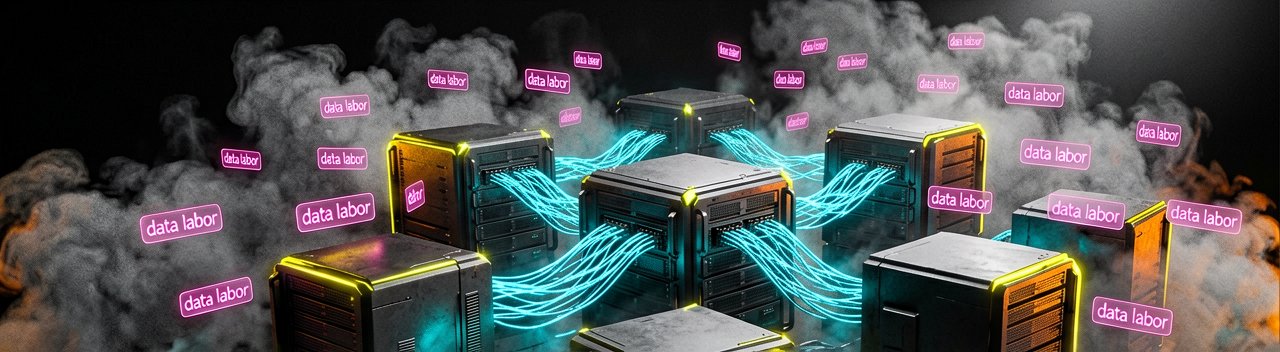
The strategic market shift here is driven by economic reality as much as moral philosophy. A handful of trillion-dollar corporations currently control the computational infrastructure required to build state-of-the-art models, creating a digital feudalism where global citizens are reduced to mere data laborers. The encyclical directly challenges this concentration of power, asserting that technological progress cannot be democratic when its gatekeepers are accountable only to shareholders. This stance aligns the church with a growing international coalition of regulators seeking to break up data monopolies.
Historically, the Vatican has stepped into industrial revolutions at the exact moment capital began to completely eclipse human labor. Just as Pope Leo XIII championed workers' rights against industrial exploitation in the late nineteenth century, the current papacy is drawing a line in the sand for cognitive liberty. The core message is clear: the human mind is not a training set, and the inner life of the individual must remain a sanctuary immune to corporate algorithmic predictability.
The Paradox of Divine Infrastructure
Reading Between the Lines: A profound irony underpins the Vatican’s sudden moral authority over the artificial intelligence landscape. The Holy See is demanding structural restraint from an industry built entirely on the premise of borderless, infinite expansion. While tech executives nod solemnly at the Pope’s warnings regarding human dignity, their data centers continue to consume staggering amounts of electricity and water, driving a material exploitation that directly contradicts the church's environmental doctrines. This creates a bizarre scenario where the tech elite can comfortably champion the encyclical’s abstract humanism while ignoring its tangible critique of unchecked digital capitalism.
Furthermore, the alliance between the papacy and commercial AI pioneers exposes a delicate contradiction in intentions. Silicon Valley’s sudden embrace of theological guardrails looks less like a genuine spiritual awakening and more like a sophisticated regulatory hedge. By aligning themselves with a global moral authority, dominant AI firms can insulate themselves against harsher, legally binding antitrust legislation from secular governments. They effectively substitute enforceable democratic laws with high-minded ethical platitudes that carry no real penalty for non-compliance.
The long-term implication of this moral intervention is unlikely to be a sudden halt in algorithmic advancement, but rather a fragmentation of the tech ecosystem along philosophical lines. We are moving toward a bifurcated market where "ethically certified" or human-centric models will command a premium for enterprise clients, while less scrupulous actors operate in regulatory havens overseas. The Vatican may succeed in creating a specialized niche for conscientious computing, but the broader, hyper-competitive global landscape will likely remain indifferent to encyclicals when market dominance is on the line.
"Ultimately, Silicon Valley’s willingness to seek absolution from the Vatican suggests that tech billionaires are finally waking up to the terrifying reality of what they have unleashed—or, perhaps more realistically, they have simply realized that a papal blessing is the ultimate form of public relations insurance for a machine that refuses to confess its sins."
Artūras Malašauskas is an AI Systems Integrator with 20+ years of production-grade web engineering experience. He has designed, shipped, and scaled enterprise Python/PHP systems for logistics, SaaS, and public-sector clients. For the past year, he has focused exclusively on AI integrations: deploying open-source LLMs, building generative media pipelines (image, audio, video), and engineering multi-agent workflows for real production environments. His standard: reproducibility, security, cost-efficient inference—no vaporware. He documents and evaluates emerging AI tooling, separating verified capabilities from marketing noise. Technical editor at: muza-ai.eu, ai-verslas.lt, ai-naujinos.lt Connect on LinkedIn
Comments