Behind the Silicon Veil: The AI Revolution is Laundering Human Anxiety
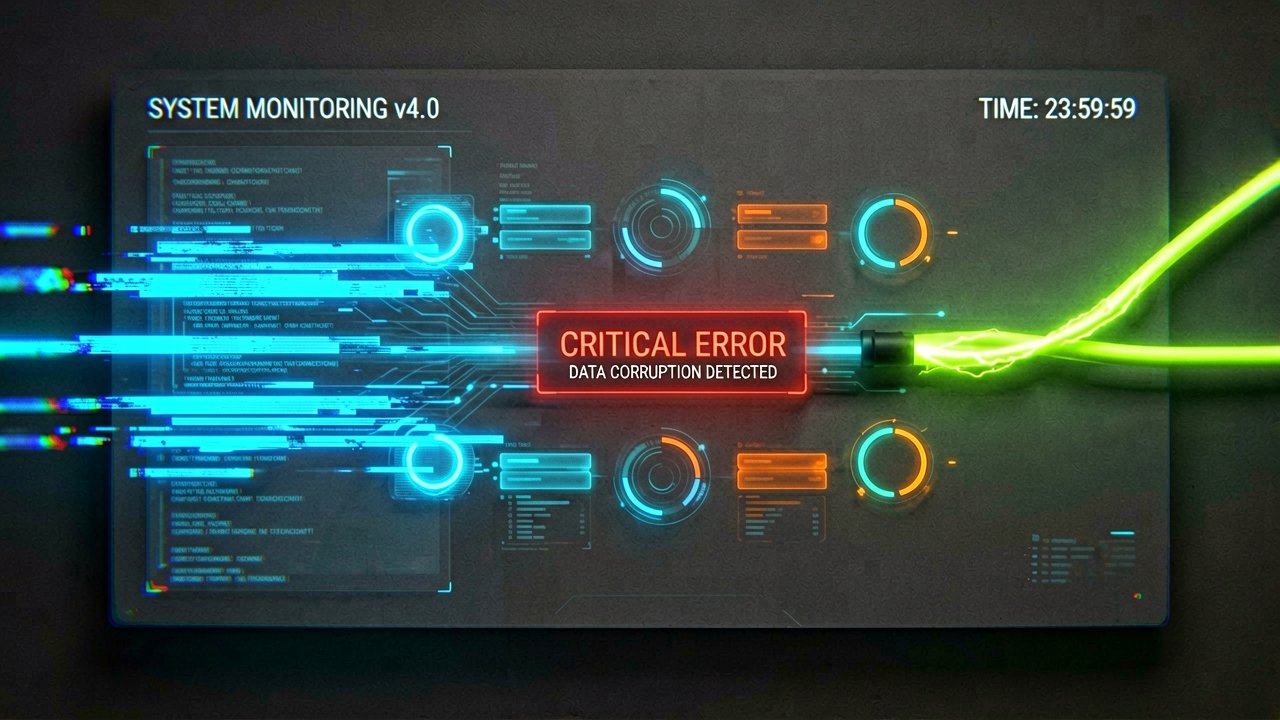
Every morning, millions of professionals log into work and perform a quiet, exhausting ritual. They massage database entries, clean up sloppy automated text drafts, or train internal software models that feel less like cutting-edge infrastructure and more like glorified spreadsheets. Publicly, their employers boast about building automated futures and integrating frictionless technology. Privately, these workers feel a heavy, lingering dread that they are actively training their own cheaper, less competent replacements.
We have reached peak "AI washing," a corporate branding trend where businesses aggressively embellish their technical software capabilities to satisfy anxious boards and hungry investors. Tech optimization was supposed to reduce burnout, but it has triggered a subtle workplace crisis. Executives demand instant productivity gains from tools that frequently error, forcing middle management and junior staff to spend hours fixing hallucinations. The current market isn't experiencing an automated takeover; it is drowning in marketing jargon designed to mask a massive collective panic.
The Compliance Backlash and Shifting Market Realities
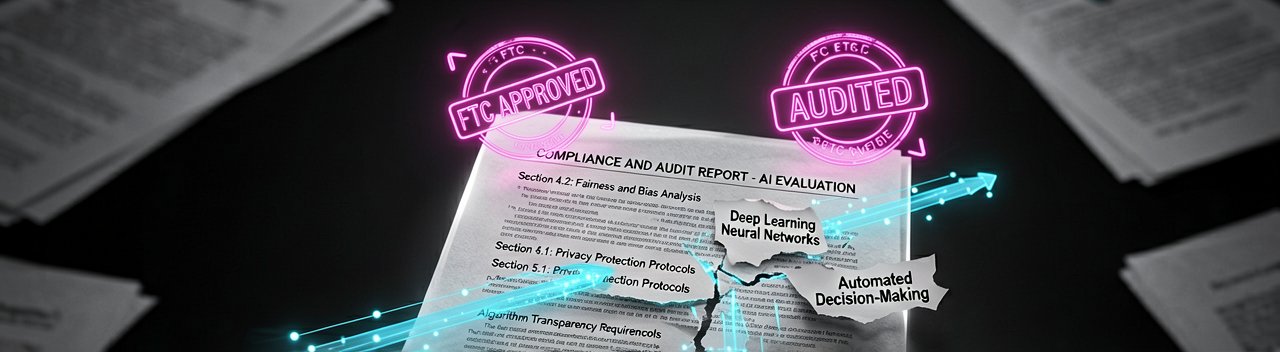
The regulatory hammer is finally falling on empty corporate promises. Federal oversight bodies have fundamentally shifted their strategies, explicitly moving from tech fascination to consumer protection enforcement. The Federal Trade Commission has launched targeted crackdowns against companies making deceptive, unverified claims about automation replacing human staff. Regulators are no longer treating vague buzzwords as harmless marketing fluff; they are evaluating them as outright corporate deception. At the same time, international frameworks like the European Union's strict compliance guidelines are forcing global firms to audit their data architectures thoroughly or face severe financial penalties.
This shifting legal landscape is exposing the massive disconnect between executive talking points and everyday workplace realities. When a company inflates its digital capabilities, it creates an impossible standard for its human workforce. Staff are forced into a difficult paradox: if they avoid using the mandated tools, they look uncompetitive, but if they point out the tech's deep flaws, they risk being seen as obsolete. The enterprise software sector is realizing that overhyped marketing eventually destroys consumer trust and employee morale.
Moving from Exploitation to Meaningful Augmentation
True technological evolution does not happen by replacing human critical thinking with unvalidated algorithmic outputs. Academic and industry studies show that the highest performance gains consistently come from professionals who view automated tools with skepticism, treating them as basic infrastructure rather than absolute authorities. Sustainable growth requires organizations to stop using software as a shortcut to cut labor costs and start investing heavily in human training, process redesign, and transparent management. True innovation requires moving past empty corporate jargon to focus on genuine, supportive augmentation that respects human skill.
What Most Reports Miss: The current corporate obsession with automation obscures a historical cycle that seasoned economic reporters recognize immediately. Ever since the dawn of industrialization, executives have weaponized the promise of imminent, fully autonomous machinery to suppress wages and neutralize labor organizing. The corporate jargon dominating today's boardrooms serves the exact same strategic purpose. By portraying generative tools as an inevitable, self-evolving force, management shifts the blame for workforce reductions from human decision-making to the natural progression of technology.
This dynamic creates a profound psychological strain on white-collar workers who were previously told their specialized knowledge protected them from economic displacement. Copywriters, junior lawyers, and software engineers are now trapped in a cycle of performative compliance, forced to use faulty systems to prove they are forward-thinking. Industry insiders observe that employees spend more time rewriting sub-par automated outputs than they would have spent creating original work from scratch. This invisible labor keeps the system afloat, yet it goes completely unacknowledged in quarterly earnings calls.
The Real Corporate Cost of Synthetic Infrastructure
Beneath the optimistic public relations campaigns lies a harsh financial reality that enterprise vendors rarely discuss. High-volume synthetic data pipelines and predictive software models are incredibly expensive to maintain, requiring massive computation power and constant human oversight. Venture capital firms are quietly demanding that their tech startups pivot from unbridled growth to actual profitability, forcing a sudden realization that total automation is rarely cost-effective. Companies that rushed to downsize their human departments are now quietly rehiring specialists to fix the structural errors introduced by unmonitored systems.
Furthermore, the long-term impact on institutional knowledge is catastrophic. When organizations outsource entry-level tasks to software, they destroy the traditional pipeline for developing senior talent. Junior staff who would normally learn the nuances of an industry by performing routine operations are left without a clear path toward mastery. Forward-looking labor economists warn that by optimizing strictly for short-term productivity metrics, businesses are effectively cannibalizing their future leadership pools.
The true path forward lies in stripping away the marketing mystique and treating these tools as basic, everyday infrastructure. True augmentation requires an organizational culture where workers feel secure enough to openly criticize software limitations without fearing immediate termination. Only by dismantling the corporate myth of the flawless machine can we build a workspace where technology actually supports human ingenuity instead of driving collective anxiety.
Reading Between the Lines: The prevailing narrative framing automation as an uncontrollable force of nature is a deliberate misdirection. Tech conglomerates aggressively promote the illusion of sentient, independent systems because it distracts the public from the deeply mundane reality of their business models. Strip away the sci-fi packaging and what remains is a classic infrastructure play, dependent entirely on massive data scraping and low-wage content moderation. The contradiction is glaring: the very companies preaching a future of absolute human obsolescence rely on a global army of underpaid humans to manually flag, sort, and clean their data inputs.
This dependency exposes the soft underbelly of the current enterprise strategy. By treating human intelligence as an expensive liability to be minimized, corporations are introducing unprecedented systemic risks into their workflows. Automated models are intrinsically backward-looking, trained on past data to predict the most statistically probable next step. When businesses rely entirely on these systems for strategic decision-making, they create a dangerous feedback loop of cultural and intellectual stagnation. The result is a flood of identical marketing strategies, generic software code, and uninspired corporate policies that completely lack the chaotic spark of genuine human innovation.
The Looming Liability of the Uniform Workspace
The financial markets are beginning to wake up to the legal and operational liabilities of this hyper-automated landscape. Insurance underwriters and risk analysts are quietly raising premiums for firms that depend too heavily on unverified digital workflows, citing concerns over intellectual property theft and systemic system failures. If a company replaces its compliance department with software, it inherits a massive vulnerability when that software misinterprets a shifting regulatory standard. The illusion of cost-efficiency quickly evaporates when a single automated mistake triggers a multi-million dollar class-action lawsuit or a devastating public relations crisis.
Ultimately, the corporate world will have to reckon with the fact that anxiety is a terrible driver of economic productivity. Workers who spend their days looking over their shoulders do not take the creative risks necessary to keep a company competitive in a turbulent market. The organizations that thrive in the coming decade will not be the ones that automated the most people out of their jobs, but the ones that successfully used technology to eliminate administrative drudgery, freeing their workforce to focus on complex, high-stakes problem-solving.
"We were promised a glittering future where artificial minds would handle our spreadsheets while humans wrote poetry and painted masterpieces. Instead, we have ended up with a corporate reality where the software writes the poetry while the humans spend forty hours a week cleaning up its spreadsheets."
Artūras Malašauskas is an AI Systems Integrator with 20+ years of production-grade web engineering experience. He has designed, shipped, and scaled enterprise Python/PHP systems for logistics, SaaS, and public-sector clients. For the past year, he has focused exclusively on AI integrations: deploying open-source LLMs, building generative media pipelines (image, audio, video), and engineering multi-agent workflows for real production environments. His standard: reproducibility, security, cost-efficient inference—no vaporware. He documents and evaluates emerging AI tooling, separating verified capabilities from marketing noise. Technical editor at: muza-ai.eu, ai-verslas.lt, ai-naujinos.lt Connect on LinkedIn
Comments