The Architecture War Inside Modern AI Agent Frameworks

Building an autonomous software agent sounds incredibly simple until you actually try to push it into production. The tech community spent most of 2024 falling in love with proof-of-concept multi-agent systems, fascinated by how easily a handful of distinct personas could pass text back and forth. However, as enterprise software rollouts accelerate throughout 2026, the honeymoon is officially over. Engineering teams have collectively hit a massive wall trying to connect these highly unpredictable, non-deterministic agentic workflows to deterministic corporate infrastructure.
The problem is not the underlying large language models. The problem lies entirely within the orchestration layer, a chaotic technical battlefield where frameworks are rapidly rewriting their core codebases just to survive real-world constraints. According to data tracking production deployments via Alice Labs, the industry has seen a harsh stratification between frameworks designed for fast prototyping and those built to handle the grueling demands of enterprise scalability. Developers are shifting away from loosely structured conversations toward highly explicit, graph-based state management architectures.
The Death of Runaway Chatter
Early iterations of frameworks like Microsoft’s AutoGen leaned heavily into conversational multi-agent architectures. In these systems, agents operate much like humans in a chatroom, autonomously passing messages back and forth to complete a task. It works beautifully in demo scripts. In production, however, this unconstrained flexibility regularly collapses into a black hole of runaway token consumption. Without rigid guardrails, two autonomous agents can easily trap themselves in an infinite loop of polite agreement, burning through thousands of dollars in API costs without ever returning a final answer.
To combat this, the architectural pendulum has swung violently toward stateful, directed acyclic graphs. Modern production infrastructure demands complete determinism over how data moves between point A and point B. Instead of letting agents freely negotiate their next steps, dominant platforms force developers to map out explicit nodes and edges. Every state transition, fallback loop, and conditional branch must be pre-defined. It eliminates the magic, but it ensures that a financial reporting agent cannot suddenly decide to ignore a critical verification step.
The Integration Bottleneck and Asynchronous Scale
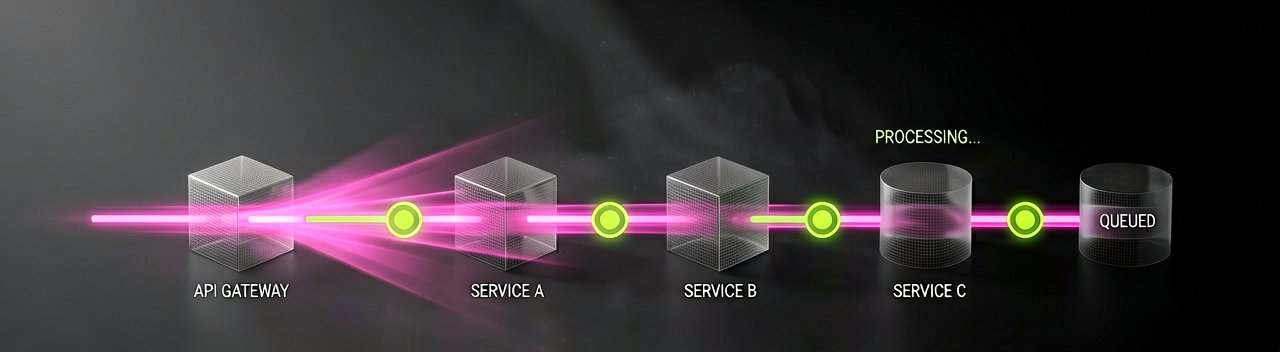
Integrating these frameworks into legacy corporate ecosystems introduces an entirely separate set of headaches. Traditional enterprise systems were built for predictable, low-latency API calls. They are thoroughly unequipped for an AI agent that might issue hundreds of irregular queries per minute while analyzing a complex workflow. When an agent experiences a tool failure or a rate limit halfway through an explicit pipeline, the entire system can stall if the underlying framework lacks robust background persistence.
This reality has triggered a major push toward event-driven GenAI architectures. Frameworks are aggressively moving away from synchronous execution blocks to embrace asynchronous event pipelines. Microsoft addressed this exact bottleneck by rolling out a completely overhauled asynchronous engine for its agent tooling, enabling hundreds of concurrent agent conversations to process in parallel without choking the network thread. The focus has rapidly pivoted from optimizing raw model capability to building resilient, fault-tolerant plumbing that keeps long-running agent tasks alive when external software environments inevitably fail.
Human-in-the-Loop as a Structural Requirement
Pure autonomy is a myth in highly regulated enterprise environments. Companies cannot afford to give an agent an open-ended goal and a corporate credit card without continuous oversight. Consequently, framework developers have spent a massive portion of the past year baking human-in-the-loop control surfaces directly into their core architectures. This goes far beyond a simple command-line prompt asking for confirmation before running a script.
Modern agent architectures treat the human operator as a first-class state node. The framework can completely freeze the state machine, persist the entire reasoning history to a database, and wait indefinitely for a manager to approve, edit, or reject the agent's proposed path. Once the human provides feedback, the graph resumes processing exactly where it left off. Building this level of auditability requires massive structural overhead, which is exactly why the market is aggressively consolidating around a select few enterprise-grade libraries capable of handling complex state management without breaking a sweat.

Behind the Scenes of the Enterprise Transition: The shift away from loose chat architectures toward rigid state machines has triggered an intense ideological rift within the software engineering community. On one side are the research purists who argue that constraining an agent with predefined paths completely defeats the purpose of utilizing a non-deterministic foundation model. They believe that heavily structured graphs transform advanced AI agents into glorified, highly expensive if-then statement processors. Yet, the engineering reality on the ground has forced a pragmatic compromise, driven by the absolute necessity for predictable behavior in production systems.
Chief Information Officers and security teams are the primary drivers behind this architectural tightening. Throughout 2025, corporate legal departments frequently blocked agent deployments due to the legal liability of unmonitored model outputs and unpredictable tool execution. A financial agent that hallucinated an invalid API parameter could inadvertently corrupt database records or trigger unauthorized transactions. By enforcing graph-based boundaries, enterprise architects can now present compliance teams with a deterministic visual map of exactly where data flows, providing a level of auditability that pure conversational frameworks simply cannot match.
This technical friction has also forced a massive re-evaluation of data serialization standards within these agentic systems. In a standard multi-agent setup, passing complex, unstructured text between nodes quickly degrades the model's reasoning capabilities over long sessions. Modern frameworks are mitigating this by enforcing strict schema validation, such as Pydantic models, at every single node boundary. Before an agent can pass its output to the next node in the graph, that output must be structurally validated against a precise schema. If the model fails to output the required format, the framework automatically triggers a local self-correction loop without disrupting the broader system state.
Meanwhile, the infrastructure costs associated with maintaining these stateful graphs are quietly skyrocketing. Storing the complete memory history, system prompts, tool outputs, and orchestration metadata for hundreds of concurrent, long-running agent sessions requires a highly resilient database layer. Enterprise teams are increasingly forced to deploy specialized vector databases and distributed caching systems just to manage agent memory states across geographical regions. This hidden infrastructure tax has shifted the competitive landscape, favoring established cloud providers who can offer integrated, low-latency state storage alongside their model hosting services.
Reading Between the Lines: The software industry's sudden obsession with rigid state charts exposes a glaring paradox at the heart of the generative AI boom. Silicon Valley spent years selling a future where autonomous, free-thinking software agents would entirely eliminate the need for brittle, hard-coded legacy logic. Yet, the moment these agents were introduced to real-world business problems, engineers rushed to build complex architectural cages around them to strip away that very same autonomy. We are witnessing an uncomfortable truth: the primary value of an advanced language model in an enterprise agent framework is not its ability to think freely, but its ability to gracefully handle messy, unstructured data just before shoving it back into a highly traditional, deterministic pipeline.
This architectural compromise reveals a deeper friction inside corporate IT departments regarding the true cost of agentic efficiency. While framework marketing teams champion the idea of a single agent doing the work of five human developers, they rarely account for the specialized engineering squad required to maintain the orchestration plumbing. Tuning graph transitions, debugging non-deterministic API failures, and continually patching prompt injections within multi-agent networks has created a whole new category of technical debt. Instead of reducing human labor, the current agent paradigm is largely shifting hours away from operational staff and piling them onto high-priced infrastructure engineers.
Looking ahead, this tension will likely force a structural split in how AI agent frameworks are designed and monetized. The dream of a universal, open-ended digital worker that logs into a web browser and clicks buttons like a human is rapidly losing ground to hyper-specific, narrow micro-agents embedded directly into existing software suites. The frameworks that survive the next wave of consolidation will not be the ones claiming full cognitive independence, but the ones that act as invisible, highly efficient data translators. True agent scalability relies entirely on making these systems so predictable and boring that they fit seamlessly into an enterprise monitor dashboard right alongside the database backups and network traffic logs.
"We spent half a decade trying to build software that mimics human intuition, only to realize that the first thing corporate infrastructure demands of an intelligent agent is a thorough, legally binding lobotomy."
Artūras Malašauskas is an AI Systems Integrator with 20+ years of production-grade web engineering experience. He has designed, shipped, and scaled enterprise Python/PHP systems for logistics, SaaS, and public-sector clients. For the past year, he has focused exclusively on AI integrations: deploying open-source LLMs, building generative media pipelines (image, audio, video), and engineering multi-agent workflows for real production environments. His standard: reproducibility, security, cost-efficient inference—no vaporware. He documents and evaluates emerging AI tooling, separating verified capabilities from marketing noise. Technical editor at: muza-ai.eu, ai-verslas.lt, ai-naujinos.lt Connect on LinkedIn
Comments