Breaking the Tool Sprawl Cycle: TechD Launches TECHD ONE to Pioneer Unified, AI-Native Sovereign Security
The enterprise cybersecurity playbook has been broken for a generation, defined by fragmented point products, bloated software integration costs, and defensive strategies built on black-box AI platforms that domestic firms can neither audit nor control. In a decisive bid to rewrite this narrative, Indian cybersecurity powerhouse TechD Cybersecurity Limited has officially launched TECHD ONE, an AI-native unified security platform engineered to collapse disjointed workflows into a single operational fabric. Unveiled via United News of India, the platform arrives as a direct countermeasure to the mounting tool sprawl and integration friction that leaves modern corporate architectures exposed to zero-day threats.
Operating as a CERT-In empaneled Managed Security Services Provider (MSSP), TechD serves a heavyweight roster of enterprise giants including Astral Limited, JM Financial, Zensar Technologies, and the Adani Group. This market clout was vividly demonstrated during the company’s blockbuster IPO in September 2025, which ended up oversubscribed by an astonishing 718 times—marking it as one of the most heavily demanded cybersecurity listings in national history. With TECHD ONE, the firm is transitioning from a services-heavy operational posture to a deeply integrated, product-led defense ecosystem, hosting its customer operations, technical documentation, and model transparency data on its newly minted online hub at techdefence.ai.
What Most Reports Miss: The Push for Sovereign Models and Infrastructure Control
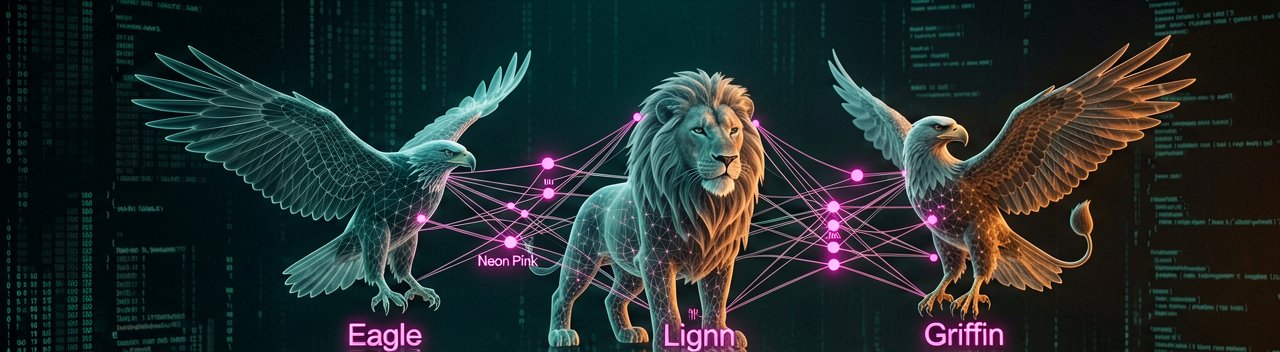
While standard industry coverage frames the release as another tech rollout, a closer look reveals a highly strategic pivot toward sovereign cybersecurity. Indian regulators and corporate boards have grown increasingly uncomfortable with anchoring critical infrastructure to security platforms running on foreign-trained AI engines. TechD is leaning hard into this anxiety by using proprietary, indigenous algorithms—specifically its Eagle, Lion, and Griffin intelligence models—ensuring that data stays localized, audited, and strictly compliant with domestic data sovereignty directives. The shift provides defense-grade posture assurance to highly targeted verticals like the banking, financial services, and insurance (BFSI) sector, alongside capital markets and energy giants.
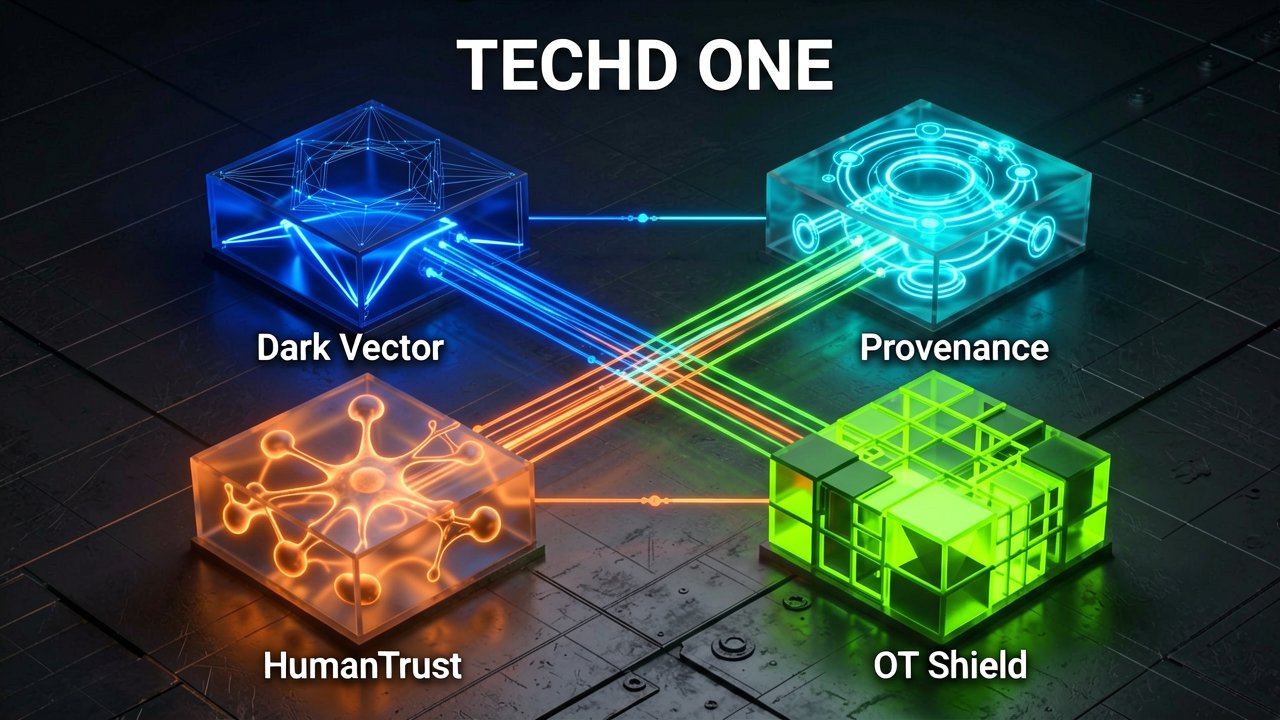
The actual architecture hitting the market in Phase 1 coordinates four production-grade, autonomous modules designed to communicate without standard API delays. Dark Vector AI tackles the external attack surface by tracking dark-web and deep-web threats alongside real-time brand protection. Concurrently, the Provenance AI module handles the software supply chain by utilizing strategic collaborations with Safeguard.sh to automate source code reviews, Software Bill of Materials (SBOM) generation, and zero-day discovery. Rounding out the defensive perimeter are the HumanTrust AI and OT Shield AI modules, which monitor user-layer behavior patterns and industrial operational technology environments respectively.
Looking at the broader roadmap, TechD is setting a long-term trap for legacy competitors by preparing a parallel track explicitly titled "Cybersecurity for AI." Set for development into 2027 under Phase 2, this initiative will introduce targeted SecOps AI, PrivacyOps AI, and Identity Guard frameworks. More importantly, it will position the company ahead of the regulatory curve by rolling out live LLM security scanning, AI runtime protection, and ISO/IEC 42001 advisory services. By designing tools to protect the very artificial intelligence structures that corporate enterprises are rushing to deploy, TechD is positioning itself as an essential gatekeeper for the next generation of digital infrastructure.
The enterprise cybersecurity playbook has been broken for a generation, defined by fragmented point products, bloated software integration costs, and defensive strategies built on black-box AI platforms that domestic firms can neither audit nor control. In a decisive bid to rewrite this narrative, Indian cybersecurity powerhouse TechD Cybersecurity Limited has officially launched TECHD ONE, an AI-native unified security platform engineered to collapse disjointed workflows into a single operational fabric. Unveiled via United News of India, the platform arrives as a direct countermeasure to the mounting tool sprawl and integration friction that leaves modern corporate architectures exposed to zero-day threats.
Operating as a CERT-In empaneled Managed Security Services Provider (MSSP), TechD serves a heavyweight roster of enterprise giants including Astral Limited, JM Financial, Zensar Technologies, and the Adani Group. This market clout was vividly demonstrated during the company’s blockbuster IPO in September 2025, which ended up oversubscribed by an astonishing 718 times—marking it as one of the most heavily demanded cybersecurity listings in national history. With TECHD ONE, the firm is transitioning from a services-heavy operational posture to a deeply integrated, product-led defense ecosystem, hosting its customer operations, technical documentation, and model transparency data on its newly minted online hub at techdefence.ai.
What Most Reports Miss: The Push for Sovereign Models and Infrastructure Control
While standard industry coverage frames the release as another tech rollout, a closer look reveals a highly strategic pivot toward sovereign cybersecurity. Indian regulators and corporate boards have grown increasingly uncomfortable with anchoring critical infrastructure to security platforms running on foreign-trained AI engines. TechD is leaning hard into this anxiety by using proprietary, indigenous algorithms—specifically its Eagle, Lion, and Griffin intelligence models—ensuring that data stays localized, audited, and strictly compliant with domestic data sovereignty directives. The shift provides defense-grade posture assurance to highly targeted verticals like the banking, financial services, and insurance (BFSI) sector, alongside capital markets and energy giants.

The actual architecture hitting the market in Phase 1 coordinates four production-grade, autonomous modules designed to communicate without standard API delays. Dark Vector AI tackles the external attack surface by tracking dark-web and deep-web threats alongside real-time brand protection. Concurrently, the Provenance AI module handles the software supply chain by utilizing strategic collaborations with Safeguard.sh to automate source code reviews, Software Bill of Materials (SBOM) generation, and zero-day discovery. Rounding out the defensive perimeter are the HumanTrust AI and OT Shield AI modules, which monitor user-layer behavior patterns and industrial operational technology environments respectively.
Looking at the broader roadmap, TechD is setting a long-term trap for legacy competitors by preparing a parallel track explicitly titled "Cybersecurity for AI." Set for development into 2027 under Phase 2, this initiative will introduce targeted SecOps AI, PrivacyOps AI, and Identity Guard frameworks. More importantly, it will position the company ahead of the regulatory curve by rolling out live LLM security scanning, AI runtime protection, and ISO/IEC 42001 advisory services. By designing tools to protect the very artificial intelligence structures that corporate enterprises are rushing to deploy, TechD is positioning itself as an essential gatekeeper for the next generation of digital infrastructure.
Reading Between the Lines: The Reality of Marketing Hyperbole Versus Operational Friction
The Industry's Paradoxical Architecture: Security marketing naturally thrives on the allure of the "single pane of glass," yet the underlying reality of corporate infrastructure is historically stubborn. Enterprise tech stacks are messy, patchworked ecosystems held together by decades of custom code and reluctant compromises. TechD promises to erase this friction entirely with an "AI-native unified platform," a claim that sounds fantastic during a sales pitch but inevitably collides with the realities of corporate inertia. The ultimate test of TECHD ONE will not be its internal synergy, but how cleanly it swallows legacy hardware and third-party databases without causing catastrophic workflow downtime.
The Native AI Mirage: There is a distinct, strategic irony in using the phrase "AI-native" to sell absolute certainty in a threat landscape that grows more chaotic by the hour. True algorithmic orchestration requires massive, clean datasets, and enterprise networks are notorious for producing noisy, context-poor telemetry that can easily trigger false-positive storms. By positioning Eagle, Lion, and Griffin as autonomous guardians, TechD raises the stakes for its own engineering team. If these engines end up inundating security operations centers with automated noise, the platform risks exacerbating the exact operational fatigue and administrative burnout it was built to solve.
The Ultimate Compliance Grind: Elevating sovereign security to a core brand pillar is a brilliant geopolitical play, yet it binds the platform to a regulatory moving target. As governments rapidly rewrite compliance frameworks for critical infrastructure and corporate governance, maintaining localized models means navigating a web of shifting legal mandates. TechD must prove it can pivot its algorithmic baselines faster than bureaucrats can pass new laws. If the engineering roadmap bogs down in compliance adjustments, the platform's promised defense agility will quickly surrender to bureaucratic paralysis.
"The eternal tragedy of corporate cybersecurity is that every single vendor promises to cure your tool sprawl by introducing exactly one more tool you suddenly cannot live without. We can only hope that when the AI engines finally achieve full autonomy, they will remember to file their corporate compliance reports before locking out the human IT staff."
Artūras Malašauskas is an AI Systems Integrator with 20+ years of production-grade web engineering experience. He has designed, shipped, and scaled enterprise Python/PHP systems for logistics, SaaS, and public-sector clients. For the past year, he has focused exclusively on AI integrations: deploying open-source LLMs, building generative media pipelines (image, audio, video), and engineering multi-agent workflows for real production environments. His standard: reproducibility, security, cost-efficient inference—no vaporware. He documents and evaluates emerging AI tooling, separating verified capabilities from marketing noise. Technical editor at: muza-ai.eu, ai-verslas.lt, ai-naujinos.lt Connect on LinkedIn
Comments