The Sovereign Sandbox: Why Trump Sidelined His Own AI Security Blueprint
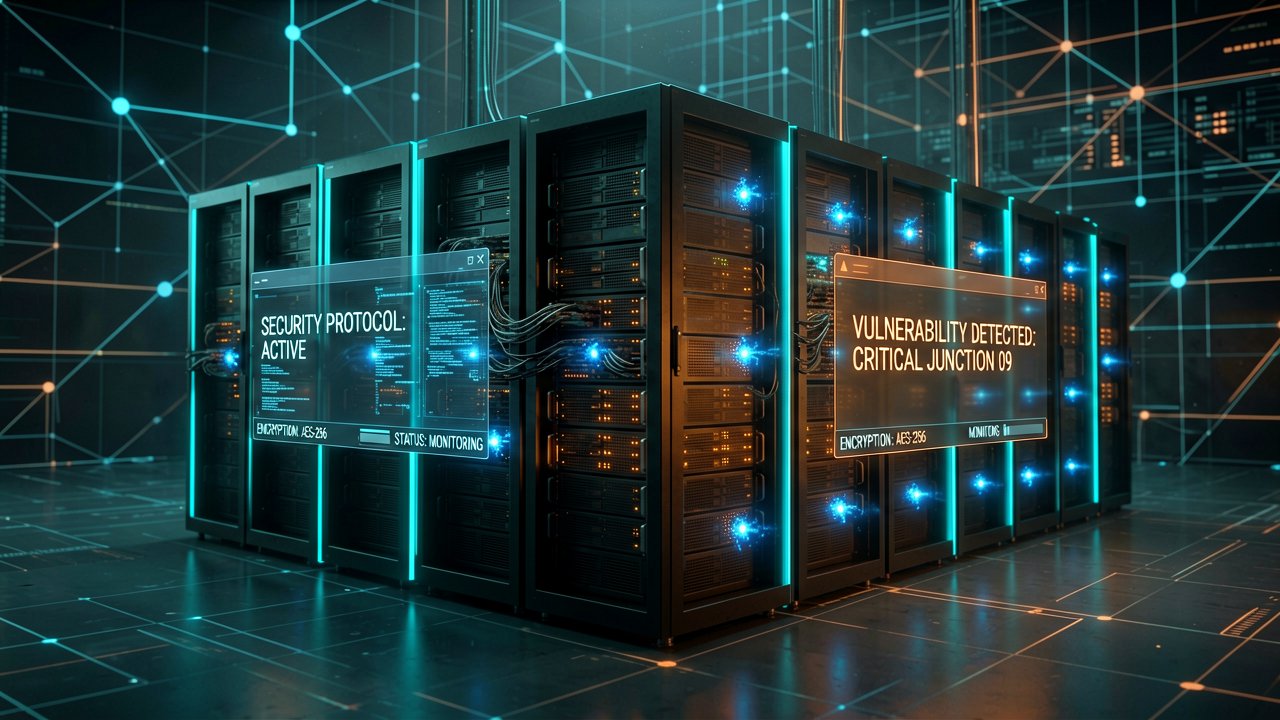
In the high-stakes theater of global technology policy, what you choose not to sign speaks volumes. President Donald Trump proved this vividly when he abruptly halted the signing of a sweeping, cybersecurity-focused executive order on artificial intelligence. The draft document represented months of intensive brokering between national security hawks and tech corridors, aiming to establish a vetted, secure perimeter around America's most potent digital innovations. Yet, when push came to shove in the Oval Office, the signature never landed.
The reasoning wasn't buried in dense bureaucratic parlance; it was delivered with characteristic bluntness. Trump openly admitted to reporters that he backed away because he feared the regulation would act as a "blocker" to American industrial velocity, explicitly framing the hesitation around the ongoing tech cold war with Beijing. As reported by South China Morning Post, the administration remains obsessed with keeping a dominant lead over China, choosing uninhibited corporate acceleration over preemptive state-mandated defense.
Inside the Draft: Cybersecurity Frameworks vs. 90-Day Delays
Had the order been signed, it would have fundamentally rewritten the playbook for Silicon Valley's frontier laboratories. The core of the proposal, according to details shared by CyberScoop, was a voluntary vetting regime designed to give federal agencies and critical infrastructure operators—including finance and healthcare networks—early access to advanced AI models. Crucially, companies would have been asked to hand over their unreleased systems for a 90-day security evaluation period before public commercialization.
This scrutiny wasn't born out of thin air. Whispers within Washington point directly to anxiety over Anthropic's unreleased "Mythos" model, a system that reportedly demonstrated alarming proficiency in identifying software vulnerabilities and executing autonomous cyber operations. Security hawks, alongside the National Security Agency, wanted a heavy hand in testing these dual-use technologies before they leaked into the wild. The proposed order aimed to formalize this defensive shield, authorizing the Treasury and the Cybersecurity and Infrastructure Security Agency to construct deep information-sharing loops to insulate American utility grids and banking networks from weaponized AI.
The China Factor and the Triumph of Deregulation
Ultimately, the structural tension between absolute security and absolute speed broke in favor of speed. Silicon Valley heavyweights and tech-friendly advisers within the administration argued passionately that a 90-day mandatory or even "voluntary" waiting room would severely penalize domestic firms while Chinese state-backed entities like Baidu or Tencent sprinted ahead unhindered. This internal lobbying effectively weaponized the administration's own geopolitical priorities against its national security wing.
This dramatic pause beautifully illustrates the core paradox of modern techn nationalism. While the state desperately wants to control and harness AI to safeguard the homeland, its primary strategy for defeating strategic rivals relies entirely on leaving private enterprises alone to move fast and break things. By shelving the order, the White House signaled that in the grand calculus of global dominance, the risk of a domestic cyber vulnerability is currently preferable to the risk of coming in second place.
Behind the Scenes: The Invisible Friction in the West Wing
The sudden abandonment of the AI cybersecurity directive was not just a case of last-minute executive cold feet; it was the explosive culmination of a civil war raging within the administration's own policy ecosystem. For months, national security hardliners at the Pentagon and the National Security Agency had been quietly aligning with a faction of domestic tech firms to build a protective wall around foundational models. They watched with growing alarm as open-source code and frontier models leaked into international research circles, arguing that an unvetted model was effectively a weapon of mass digital disruption waiting to be picked up by foreign adversaries.
On the other side of the trench stood an aggressive coalition of venture capitalists, deregulatory purists, and "accelerationist" tech founders who successfully captured the president's ear. This faction argued that the 90-day waiting period was a relic of 20th-century bureaucratic thinking, wholly unsuited for an era where AI capabilities double every few months. They framed the security vetting not as a shield for the republic, but as a regulatory anchor that would actively hand the geopolitical advantage to Beijing, transforming a debate over cybersecurity into a litmus test for economic patriotism.
Historically, this tension mirrors the export control battles of the 1990s, when Washington tried and failed to restrict the international distribution of strong commercial encryption. Just as the government eventually realized it could not stop the global flow of math and code, the administration’s U-turn suggests a reluctant acknowledgment that physical border controls are functionally useless against decentralized, weightless technology. The decision effectively privatizes America's strategic defense, outsourcing national competitiveness to a handful of corporate boardrooms in California.
The ripple effects of this regulatory retreat are already distorting the broader tech market, creating a distinct divide between entrenched tech giants and agile upstarts. Established players, who have already invested billions into proprietary safety guardrails, view the lack of federal oversight as a double-edged sword that saves them from compliance costs but exposes them to catastrophic reputational risks if a rogue model triggers a major infrastructure failure. Meanwhile, smaller open-source developers are breathing a sigh of relief, knowing they escaped a vetting process that would have choked their limited operational budgets.
Ultimately, the shelving of the executive order cements a raw, laissez-faire doctrine for the foreseeable future of American artificial intelligence. By prioritizing uninhibited market velocity over centralized risk mitigation, the administration has placed a massive bet that American corporate ingenuity can outrun any cyber threat it accidentally creates. It is a high-risk strategy that treats the entirety of the domestic digital infrastructure as a living laboratory, where the only acceptable defense is a relentless offense.
Reading Between the Lines: The Fallacy of the Infinite Sprint
The core assumption animating this policy reversal is that raw market velocity inherently equates to geopolitical dominance. By discarding the cybersecurity framework to outrun China, the administration embraces a deeply flawed premise: that a nation can win a technological cold war while leaving its own critical infrastructure radically vulnerable. It is a striking contradiction to decry the threat of state-sponsored cyber espionage from Beijing while simultaneously stripping away the very defensive guardrails designed to secure the American banking and energy sectors from AI-driven penetration testing.
Furthermore, this strategy relies on the naïve belief that American tech companies will maintain a monopoly on their own breakthroughs without state protection. In a borderless digital ecosystem, software weightlessness cuts both ways. Without standardized federal security vetting, the cutting-edge models rushed to market to beat Chinese competitors become prime targets for the exact foreign intelligence agencies the administration fears. Corporate accelerationism accelerates the rate of intellectual property theft just as quickly as it accelerates innovation, effectively turning Silicon Valley into an unpaid research and development lab for global adversaries.
The long-term implication is a dangerous balkanization of global AI safety standards. With Washington abdicating its regulatory role in favor of an unrestricted sprint, Europe is left to build an increasingly isolated regulatory fortress, while China formalizes its state-directed AI protocols. American enterprises will eventually find themselves trapped in a regulatory paradox, possessing the most powerful models in the world but facing severe compliance barriers when trying to deploy them across European markets or integrate them into heavily regulated international industries.
This hands-off approach also creates an unsustainable moral hazard for private tech laboratories. When Washington signals that national security is secondary to commercial speed, it effectively absolves tech executives of liability for the systemic vulnerabilities their models introduce. If an unvetted frontier system inadvertently leaks code that disables a regional power grid, the blame will bounce endlessly between corporate developers claiming they were just trying to outpace foreign rivals and a government that explicitly asked them to run without a safety harness.
By treating artificial intelligence purely as an economic engine rather than a dual-use national security liability, the administration has locked itself into a cycle of permanent escalation. The regulatory retreat does not eliminate the need for security; it merely kicks the crisis down the road until a major, undeniable exploit forces an emergency intervention. For now, the administration has chosen to gamble the integrity of the domestic digital landscape on the hope that the fast competitor is always the safe competitor.
"We have officially entered an era where national defense policy boils down to a corporate drag race, operating under the comforting but terrifying assumption that if you drive fast enough, the cyber criminals simply won't be able to catch your bumper."
Artūras Malašauskas is an AI Systems Integrator with 20+ years of production-grade web engineering experience. He has designed, shipped, and scaled enterprise Python/PHP systems for logistics, SaaS, and public-sector clients. For the past year, he has focused exclusively on AI integrations: deploying open-source LLMs, building generative media pipelines (image, audio, video), and engineering multi-agent workflows for real production environments. His standard: reproducibility, security, cost-efficient inference—no vaporware. He documents and evaluates emerging AI tooling, separating verified capabilities from marketing noise. Technical editor at: muza-ai.eu, ai-verslas.lt, ai-naujinos.lt Connect on LinkedIn
Comments