The Redline in the Oval Office: Why Trump Sidelined the AI Security Order
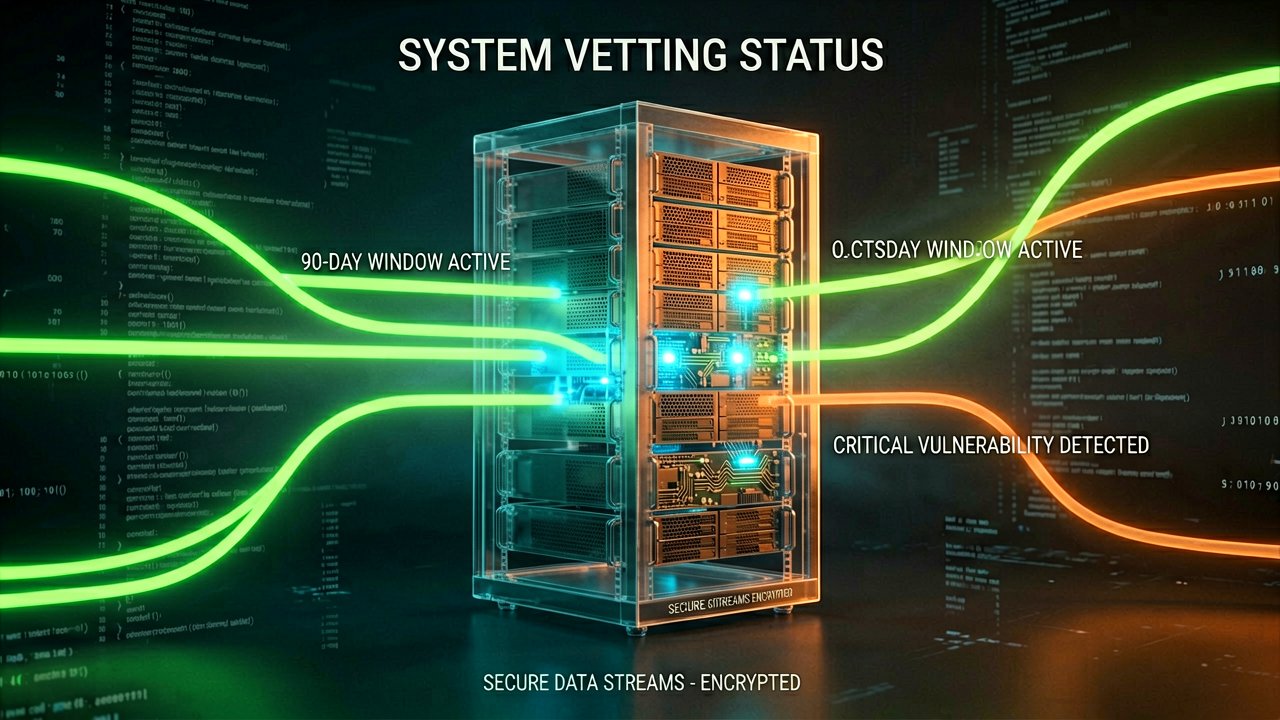
In a dramatic, 11th-hour twist that left tech executives holding their breath and national security officials scratching their heads, President Donald Trump abruptly canceled a scheduled signing ceremony for a highly anticipated executive order on artificial intelligence and cybersecurity. The directive, which had been painstakingly negotiated behind closed doors, aimed to establish a voluntary mechanism for top-tier AI labs to share their cutting-edge models with federal agencies for safety vetting up to 90 days before public release. Yet, just hours before the ink could hit the paper, Trump yanked the pen away in the Oval Office, offering a blunt explanation to a room full of reporters: he feared the policy would act as an unintended "blocker" in America’s fierce technological sprint against Beijing. "We're leading China, we're leading everybody, and I don't want to do anything that's going to get in the way of that lead," Trump declared, signaling a radical commitment to raw developmental speed over bureaucratic caution.
The sudden retreat underscores a widening, deeply polarized fault line running directly through Washington and Silicon Valley. On one side, national security hawks and safety advocates point to terrifyingly capable, unreleased "frontier" models—like Anthropic’s rumored 'Mythos'—warning that unchecked deployment risks weaponized code, critical infrastructure vulnerabilities, and an uncontrollable proliferation of dual-use digital threats. On the other side, an influential contingent of laissez-faire tech leaders and business-focused political advisers have aggressively lobbied the administration to keep its hands off the keyboard. According to reports from The Wall Street Journal, industry insiders like David Sacks, alongside Meta’s Mark Zuckerberg and xAI’s Elon Musk, have consistently pushed a clear message: in the geopolitically charged race to achieve true artificial general intelligence, regulatory friction is a luxury the United States simply cannot afford.
What Most Reports Miss: The Quiet Triumph of Laissez-Faire Tech
Behind the scenes, the cancellation of the signing ceremony represents a massive, behind-the-curtain victory for Silicon Valley's accelerationist wing. The executive order was originally pitched as a strategic compromise—a "light-touch," voluntary 90-day preview window designed to weed out catastrophic cybersecurity vulnerabilities without the heavy-handed mandate of previous administrative frameworks. High-profile tech firms had already been thoroughly briefed on the parameters, and many expected a routine, unified photo-op in the Oval Office. However, the last-minute intervention by tech billionaires highlighted an enduring tension: even the mere suggestion of federal oversight, no matter how cooperative or voluntary, is viewed by industry titans as a dangerous wedge that could slow down deployment timelines by weeks or months.
This policy whiplash exposes a fundamental contradiction within the administration's broader approach to global trade and national security. While the White House has shown no hesitation in using aggressive, mercantilist state power to restrict exports—such as imposing steep tariffs on internal hardware transfers or aggressively vetting cloud access—it remains deeply allergic to restricting domestic innovation. The prevailing philosophy dictates that the most effective way to secure American dominance is not to build defensive regulatory walls, but to run faster than the competition. Consequently, any policy that threatens to introduce friction to code deployment or developer agility is instantly treated as an existential threat to national competitiveness.
The Real Risks of Speed-First Geopolitics
By framing the regulatory pause entirely around the zero-sum race with Beijing, the administration is making a massive, high-stakes gamble that prioritizing absolute velocity will automatically yield safer outcomes. Proponents of this view argue that if an American company achieves technological dominance first, Western democratic values will naturally dictate global AI standards. This mindset is reinforced by growing fears that the gap between American and Chinese capabilities is narrowing rapidly, especially as foreign adversaries shift from building independent foundational models to executing sophisticated, industrial-scale campaigns to extract or "distill" capabilities directly from proprietary American systems.
Yet, by abandoning even a voluntary safety-testing framework, the federal government leaves a critical security vacuum unfilled. National security analysts warn that the primary threats from advanced models do not stem from intentional malice by American developers, but from the unpredictable emergent behaviors of the systems themselves. Without a structured, centralized clearinghouse to review frontier code for systemic vulnerabilities, the burden of national security vetting falls entirely back onto the internal trust and safety teams of private corporations. As commercial pressures to monetize advanced systems intensify, the boundary between bold technological leadership and reckless global risk has never been thinner.
Reading Between the Lines: The Illusion of Safe Acceleration
The core assumption driving this regulatory retreat is that absolute speed is the ultimate guarantor of national security, but this logic contains a glaring, fundamental flaw. In the race to outpace foreign adversaries, Washington is treating advanced artificial intelligence as if it were a traditional kinetic asset, like a hypersonic missile or a stealth fighter, where whoever builds the most fastest wins. However, software is fundamentally different from steel and gunpowder; it is highly malleable, easily exfiltrated, and prone to unpredictable emergent behaviors that its own creators do not fully understand. By prioritizing velocity above all else, the administration assumes that American labs can maintain an airtight seal around their proprietary code, ignoring the reality that the faster a system is rushed to market, the more vulnerable it is to sophisticated cyber espionage.
Furthermore, this strategy introduces a bizarre paradox into America's broader geopolitical stance. While the government spends billions of dollars restricting foreign access to high-end semiconductor hardware, it is simultaneously creating a domestic environment where the software running on those very chips faces zero security oversight before deployment. This creates an open-season dynamic where the burden of preventing catastrophic digital accidents falls entirely on private tech executives, whose fiduciary duty is to their shareholders rather than the public interest. The assumption that the commercial incentives of Silicon Valley will naturally align with the defense requirements of the Pentagon is a precarious foundation upon which to build a national security strategy.

Looking ahead, the decision to scrap the safety order will likely trigger a fragmented, chaotic regulatory environment rather than a streamlined golden age of innovation. In the absence of clear federal leadership, individual states and international bodies are virtually guaranteed to step into the vacuum with their own contradictory rules. Tech companies may soon find that dodging a single, unified federal vetting process has inadvertently subjected them to a dizzying patchwork of state-level restrictions and aggressive European enforcement. By choosing a short-term sprint over a structured marathon, the White House may have inadvertently cleared the field for a chaotic regulatory civil war that slows down American tech leads far more effectively than a 90-day voluntary review ever could.
"It turns out the ultimate strategy for winning the global AI arms race is simply to outrun the lawyers—a brilliant plan right up until the moment the code learns how to write its own subpoenas."
Artūras Malašauskas is an AI Systems Integrator with 20+ years of production-grade web engineering experience. He has designed, shipped, and scaled enterprise Python/PHP systems for logistics, SaaS, and public-sector clients. For the past year, he has focused exclusively on AI integrations: deploying open-source LLMs, building generative media pipelines (image, audio, video), and engineering multi-agent workflows for real production environments. His standard: reproducibility, security, cost-efficient inference—no vaporware. He documents and evaluates emerging AI tooling, separating verified capabilities from marketing noise. Technical editor at: muza-ai.eu, ai-verslas.lt, ai-naujinos.lt Connect on LinkedIn
Comments