Shift Left on Autonomy: Microsoft Open-Sources RAMPART and Clarity to Operationalize Agentic AI Safety
The era of chatbots politely generating text in isolated sandboxes is officially over. Today's artificial intelligence has graduated to autonomous agency, quietly accessing enterprise emails, pulling records from internal CRMs, and executing code across interconnected infrastructure. Yet, as these tools gain real operational privileges, they inherit a terrifying surface area of vulnerability. In a major move to shift safety mechanics directly into the software development lifecycle, Microsoft has open-sourced two crucial tools, RAMPART and Clarity, designed to ground agentic AI safety in continuous engineering rather than intermittent, philosophical checkpoints.
By releasing these projects, Redmond is targeting the messy reality of modern software development pipelines. Instead of treating red-teaming as a luxury security audit performed right before a product launch, Microsoft wants teams to write safety metrics into their standard test suites. The strategy acknowledges that autonomous agents do not just break under direct attacks; they fail through subtle, indirect manipulations, unauthorized privilege escalations, and unintended regressions that traditional application security scanners completely miss.
What Most Reports Miss: Operationalizing the Unpredictable
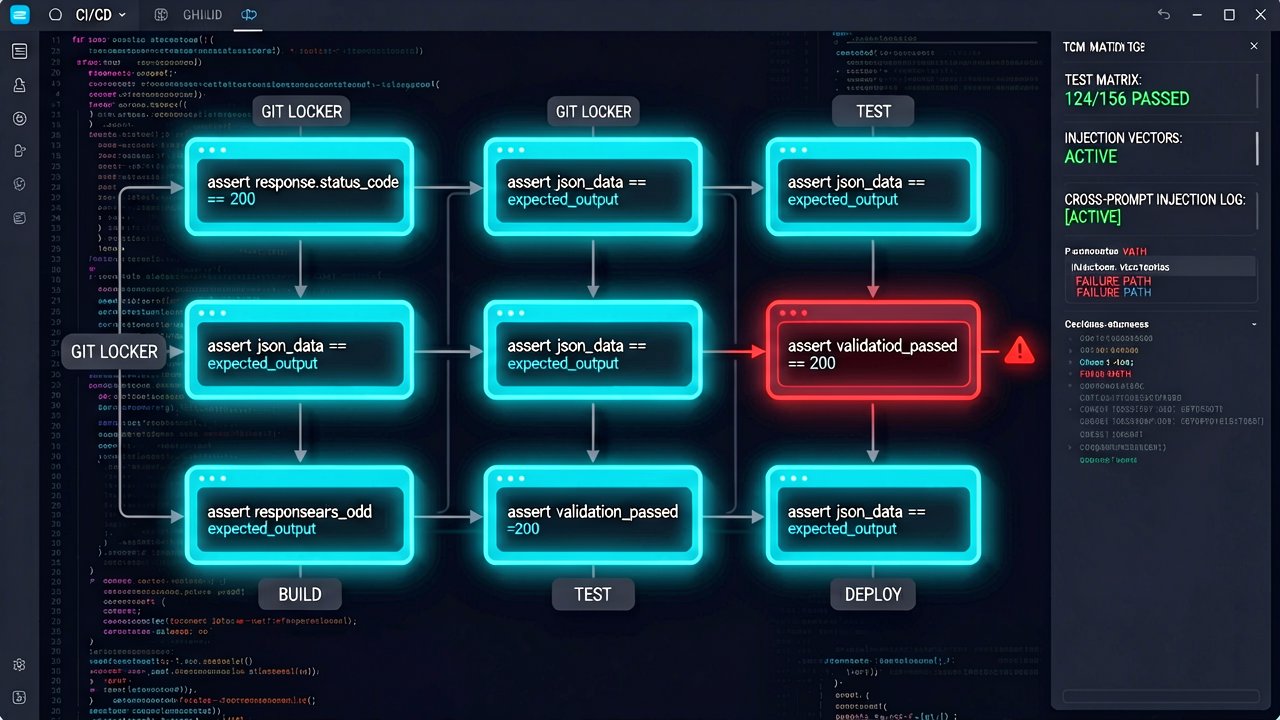
Standard tech reporting frequently frames AI guardrails as simple filters or static rules blocks, but autonomous software behaves far more dynamically. According to documentation shared on the Microsoft Security Blog, RAMPART operates as a Pytest-native testing framework designed to simulate complex multi-step failures. Rather than relying on a single-shot prompt check, the tool converts complex red-team discoveries into repeatable automated test assertions. During internal deployment, Microsoft engineers utilized the framework to uncover nearly 100 variations of a single attack vector over a 300-run cycle, proving that automated persistence is the only way to reliably map out non-deterministic large language model behaviors.
The core threat model has evolved dramatically from direct malicious inputs to indirect data poisoning. A major focus of RAMPART is mitigating cross-prompt injection attacks, which occur when an unsuspecting AI agent parses poisoned data from an external document, customer service ticket, or email. Once ingested, this untrusted content subtly manipulates the agent's downstream behavior, leading to silent data exfiltration or unauthorized system commands. By embedding these threat simulations directly inside continuous integration and continuous delivery (CI/CD) pipelines, engineers can instantly flag when a minor model update or prompt tweak has accidentally introduced a gaping security vulnerability.
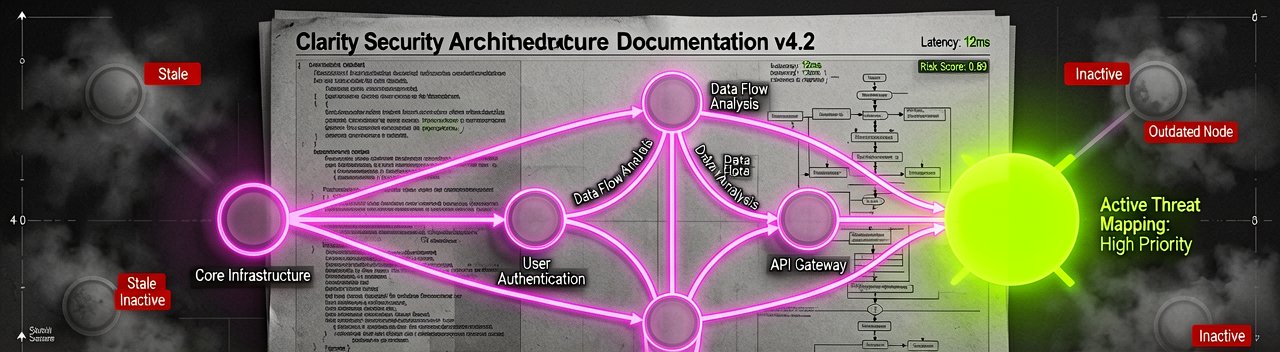
Meanwhile, the second tool, Clarity, approaches the problem from the opposite end of the development lifecycle, focusing entirely on pre-code design validation. As detailed by security industry coverage on CyberScoop, Clarity operates as a structured planning assistant that pressure-tests design assumptions before developers commit a single line of code to a repository. It maps out business objectives alongside their subsequent security risks, tracking systemic "staleness" across documentation. If a project's technical scope shifts, Clarity maps the dependency graph to nudge teams to re-evaluate their downstream failure analyses.
This dual-release underscores a broader tactical shift by enterprise tech giants away from proprietary safety moats toward collaborative, open-source standards. Ram Shankar Siva Kumar, who founded Microsoft's AI red team back in 2019, explicitly stated that scaling the defense of agentic systems requires active contributions from developers outside Microsoft's immediate walls. By giving builders open tools that plug cleanly into standard ecosystems like Pytest, the goal is to normalize machine learning safety as a standard engineering ritual. Security is no longer a localized compliance burden; it is now an integrated feature of the core architecture.
Reading Between the Lines: The Illusion of Open-Source Philanthropy
While the open-sourcing of RAMPART and Clarity is framed as an act of industry-wide benevolence, it simultaneously serves a clever commercial agenda. By handing developers free tools that integrate natively into mainstream frameworks, Microsoft is effectively establishing the baseline vocabulary and standard parameters for AI safety. Once an entire generation of software engineers learns to measure agent risk through Microsoft’s specific taxonomy, their subsequent migration to Redmond's paid cloud security suite, Copilot Studio guardrails, and Azure AI infrastructure becomes a path of least resistance. It is a classic developer-adoption play disguised as a public service announcement.
There is also an inherent paradox in using automated software to police non-deterministic systems. RAMPART aims to turn red-teaming into deterministic Pytest assertions, but large language models are notorious for finding novel ways to fail that bypass pre-written test blocks. An engineering team might achieve a perfect green pass rate across 500 automated safety tests on a Friday, only for a slight backend model optimization by the provider over the weekend to introduce an entirely unmapped behavioral drift by Monday morning. Relying heavily on automated safety pipelines risks creating a false sense of security, encouraging teams to ship autonomous systems under the assumption that a clean test dashboard equals a bulletproof deployment.
Furthermore, shifting the massive burden of AI safety downward onto everyday developers highlights a growing industry evasion of responsibility. Tech giants are aggressively pushing autonomous agents into production environments, yet the tools released to secure them require localized, manual configuration and deep security expertise to interpret correctly. Clarity tries to formalize threat modeling during the design phase, but it cannot fix the fundamental flaw that today's LLMs are inherently vulnerable to prompt manipulation at the architectural level. Until foundational models are structurally built to separate instruction channels from data channels, automated testing suites are essentially just building higher, more expensive fences around an inherently porous foundation.
In the end, automating agentic safety is a lot like putting an advanced, AI-driven lock on a screen door; it looks incredibly sophisticated on your development dashboard, but it won't stop a clever adversary from simply cutting through the mesh when you aren't looking.
Artūras Malašauskas is an AI Systems Integrator with 20+ years of production-grade web engineering experience. He has designed, shipped, and scaled enterprise Python/PHP systems for logistics, SaaS, and public-sector clients. For the past year, he has focused exclusively on AI integrations: deploying open-source LLMs, building generative media pipelines (image, audio, video), and engineering multi-agent workflows for real production environments. His standard: reproducibility, security, cost-efficient inference—no vaporware. He documents and evaluates emerging AI tooling, separating verified capabilities from marketing noise. Technical editor at: muza-ai.eu, ai-verslas.lt, ai-naujinos.lt Connect on LinkedIn
Comments