The Cyber Arms Race Has a New Core, and It's Powered by Code

For years, the tech industry treated artificial intelligence like a shiny new Swiss Army knife, capable of fixing everything from clunky customer service bots to lagging software pipelines. But as we settle into 2026, that knife has sharpened into something far more dangerous: a double-edged sword slicing through the very foundation of digital trust. The exact same neural networks optimizing enterprise efficiency are now actively re-engineering the cyber threat landscape, giving bad actors unprecedented speed, precision, and scale. We've officially moved past the era of the clumsy, easily spotted hacker, entering a hyper-automated reality where algorithms battle algorithms in the shadows of our networks.
The numbers aren't just sobering; they're an alarm bell for anyone holding the keys to corporate infrastructure. According to the World Economic Forum, a staggering 87% of technology leaders have flagged AI-related vulnerabilities as the fastest-growing cyber risk. This isn't just theoretical paranoia. Adversaries aren't merely breaking into digital fortresses anymore; they're using generative models to intelligently blend into daily workflows. Security teams are finding themselves severely outpaced as the typical window between initial compromise and lateral network movement shrinks from days down to a matter of minutes.
The Death of the Red Flag
We all remember the classic hallmarks of a phishing attempt: broken English, bizarre formatting, and suspicious links that practically screamed danger. Generative AI has permanently erased those red flags. Today's threat actors utilize large language models to scrape public profiles, analyze unique communication styles, and draft hyper-personalized messages completely indistinguishable from a legitimate email from your CFO. Worse yet, this isn't just happening via text. High-fidelity audio and video cloning tools have democratized deepfakes, turning corporate impersonation into a highly scalable, commercialized dark-web industry.
Defending an AI-Driven Perimeter
Fighting this new breed of threat requires fighting fire with fire. Manual security triage is entirely obsolete when facing offensive autonomous engines that probe APIs and clouds at machine speed. Organizations are forced to deploy defensive AI agents to constantly monitor network anomalies, automate log analysis, and instantly lock down compromised credentials before a human analyst could even read the alert notification. The battle lines are drawn firmly in the code, and survival relies on building an intelligence-driven defense capable of adapting as fast as the threats mutating against it.
Behind the Scenes: The Invisible Arms Race Inside the SOC
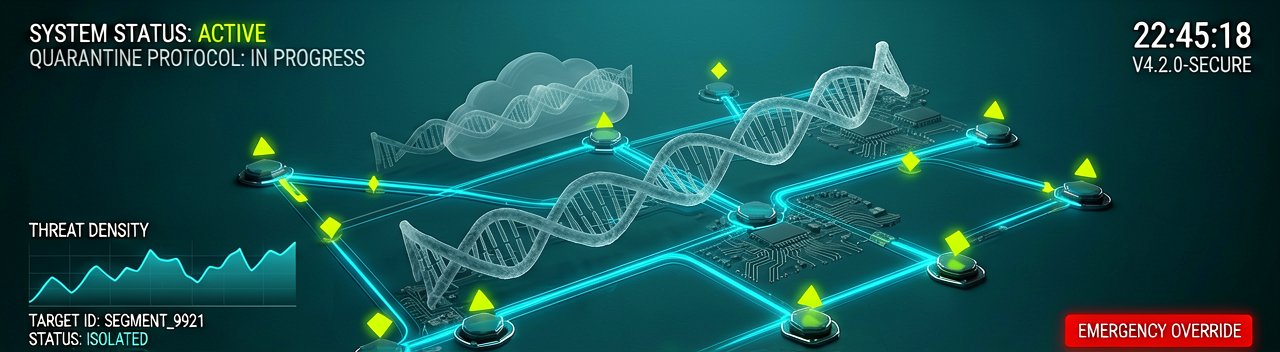
The public conversation around AI safety usually circles around regulatory frameworks and copyright lawsuits, but the view from inside a Security Operations Center tells a radically different story. For the engineers tasked with keeping the digital lights on, the integration of autonomous tools has triggered a profound shift in daily survival strategies. Defensive teams are no longer just triaging static alerts; they are actively playing chess against automated software packages that modify their own code on the fly to evade detection signature rules. This shift from reactive patching to predictive warfare has fundamentally broken the traditional, human-centric security pipeline.
Historically, an enterprise could rely on a robust perimeter and a highly trained incident response team to contain breaches over a long weekend. That playbook is officially dead. Security architects point out that offensive AI algorithms can run millions of permutations a second to find a single misconfigured cloud container, effectively weaponizing the sheer complexity of modern corporate networks. When an exploit can be generated, tested, and executed in the span of a single heartbeat, relying on a human analyst to manually click "approve" on a firewall rule becomes a liability.
This reality has forced a reluctant, industry-wide pivot toward total defensive autonomy. Chief Information Security Officers are pouring capital into machine learning engines that can dynamically quarantine entire segments of a network based on minor behavioral shifts rather than known malware signatures. If an account suddenly accesses an database thirty seconds faster than a human could physically type, the defensive system cuts access immediately. It is a zero-trust model pushed to its logical extreme, where any deviation from baseline mathematical normalcy is treated as a hostile takeover.
Yet, this aggressive automation introduces a dangerous paradox that keeps security leaders awake at night. As defensive tools become more autonomous, they inherently become more unpredictable, turning the security architecture itself into a potential vector of failure. A hyper-aggressive AI defense can easily misinterpret a legitimate, high-stress software deployment as a ransomware attack, accidentally shutting down critical production lines and costing millions in self-inflicted downtime. The core engineering challenge of the next decade isn't just making security tools smarter, but ensuring they remain controllable when the digital battlefield catches fire.
Reading Between the Lines: The Fallacy of the Perfect Patch
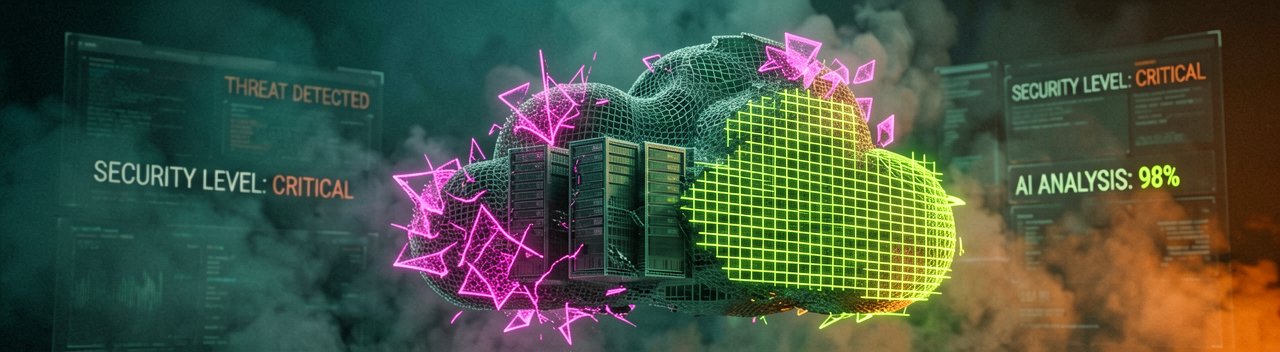
The tech sector remains hopelessly addicted to the narrative of technological silver bullets. Every major security vendor currently pitches their proprietary machine learning model as the ultimate shield, creating a comforting illusion that enough capital expenditure can buy absolute immunity. This rhetoric deliberately ignores a fundamental structural truth: defensive AI is intrinsically reactionary. A defensive model must be trained on data, which means it requires prior examples of malicious behavior to understand what it is looking for. The attacker always enjoys the structural advantage of the first move, leaving defenders to permanently train their models on the ghost of the last attack.
This dynamic exposes a gaping contradiction in how enterprise organizations approach modern risk. Companies are spending millions to acquire sophisticated algorithmic defenses while simultaneously expanding their digital attack surface through aggressive cloud migrations and third-party integrations. We are building hyper-intelligent security systems to watch over increasingly fragile, chaotic infrastructure. No amount of automated log analysis can compensate for a corporate culture that prioritizes rapid software feature deployment over basic network hygiene and robust code auditing.
Furthermore, the industry's rush to automate security operations risks creating a dangerous monoculture. When hundreds of global enterprises rely on the exact same handful of commercial AI security platforms, they inadvertently create a centralized point of failure. Sophisticated nation-state actors do not just attack the target network anymore; they reverse-engineer the defensive AI models themselves. By discovering the specific blind spots or mathematical biases inherent in a dominant security algorithm, an attacker can theoretically forge a skeleton key capable of bypassing the defenses of thousands of organizations simultaneously.
The ultimate irony of this cyber arms race is that it elevates humanity's weakest link rather than eliminating it. While engineers obsess over algorithmic optimizations and sub-millisecond response times, the easiest entry point into any network remains the tired employee who reuses a password or clicks a deceptive notification on their phone. AI has vastly accelerated the velocity of digital warfare, but it has not altered the messy, unpredictable human reality at the center of the network. The coming years will likely prove that our greatest vulnerability is not a lack of computational power, but our stubborn refusal to fix the foundational flaws in our organizational behavior.
In our rush to build a fully automated digital fortress, we may finally achieve the ultimate goal of corporate IT: a system so secure that not even the employees can use it, defending data that nobody can access, running at a cost that nobody can afford.
Artūras Malašauskas is an AI Systems Integrator with 20+ years of production-grade web engineering experience. He has designed, shipped, and scaled enterprise Python/PHP systems for logistics, SaaS, and public-sector clients. For the past year, he has focused exclusively on AI integrations: deploying open-source LLMs, building generative media pipelines (image, audio, video), and engineering multi-agent workflows for real production environments. His standard: reproducibility, security, cost-efficient inference—no vaporware. He documents and evaluates emerging AI tooling, separating verified capabilities from marketing noise. Technical editor at: muza-ai.eu, ai-verslas.lt, ai-naujinos.lt Connect on LinkedIn
Comments