The Machine Defenders: The Top 15 AI Cybersecurity Scale-Ups You Need to Know in 2026
The cybersecurity landscape has completely shifted from a game of digital chess to an outright algorithmic arms race. In 2026, legacy, signature-based defense mechanisms feel like trying to stop a bullet with a paper shield. Threat actors are deploying weaponized LLMs and autonomous malware swarms at unprecedented scale, forcing corporate security teams to fight fire with fire. The industry has entered an era of "platformization," where piecemeal tools are being abandoned in favor of unified, AI-native platforms capable of split-second autonomous decisions.
Amid this consolidation storm, a select group of high-growth scale-ups has managed to break through the noise. These firms are not just riding the artificial intelligence hype; they are fundamentally rewriting how enterprises protect data, cloud environments, and AI models themselves. Security leaders are realizing that robust digital defense is no longer just an insurance policy or a cost center. Instead, as noted by industry analysts at Fast Company, exceptional cybersecurity serves as a genuine business accelerator that builds the deep institutional trust required to unlock trillion-dollar enterprise AI strategies.
1. Cyera
Data security is messy, especially when distributed across multi-cloud environments. Cyera has rapidly emerged as a heavy hitter, utilizing advanced AI to automatically discover, classify, and secure sensitive corporate data silos. Their platform handles the massive data posture issues that traditional point solutions routinely miss.
2. Torq
Security operations centers (SOCs) are drowning in alert fatigue. Torq provides a hyper-automated AI security orchestration layer that allows teams to build complex, automated workflows without writing a single line of code. They are actively liberating human analysts from repetitive triage tasks.
3. Irregular
As a highly specialized AI safety and evaluation lab, Irregular is blazing a completely new trail. The scale-up designs tools that allow tech giants to stress-test advanced models against poisoning and complex exploits. According to reports by Metodo Viral, their unique focus on foundational model safety has already secured them crucial validation partnerships with industry titans like Anthropic, Google, and OpenAI.
4. Sublime Security
Email remains the primary entry point for major corporate breaches. Sublime Security approaches this threat differently by offering an open, flexible email security platform powered by behavioral AI. According to data tracked by Notable Capital, the company has capitalized on the AI security boom to land major enterprise clients, earning a spot on the prestigious Rising in Cyber list.
5. Noma Security
Securing the modern AI supply chain is incredibly complex. Noma Security focuses explicitly on protecting data pipelines, lifecycle models, and internal algorithmic deployments from exploitation. They successfully captured market attention by raising a massive $100 million funding round to aggressively scale their specialized engineering workforce.
6. Upwind
Cloud infrastructure moves fast, but Upwind moves faster. By utilizing eBPF technology alongside lightning-fast AI analytics, they provide real-time runtime security insights. Their platform cuts through the usual mountain of false positives to protect active cloud-native application footprints.

7. 7AI
Bursting onto the scene with substantial institutional backing, 7AI delivers next-generation predictive defense models. The firm specializes in continuous automated red-teaming, intentionally hunting for subtle vulnerabilities across complex infrastructure before malicious actors can find them.
8. Adaptive Security
Adaptive Security addresses the dynamic nature of hybrid workforces. Their AI architecture continuously re-evaluates risk parameters based on user behavior, device health, and environmental signals. They have successfully scaled their headcount to handle a surging global enterprise customer pipeline.
9. Mindgard
Automated security testing for machine learning models is no longer optional. Mindgard specializes in running continuous cyber-attack simulations against enterprise LLMs to expose hidden security flaws. They help organizations spot prompt injections and data leaks before models go live.
10. Tenex.ai
Managed detection and response (MDR) services frequently struggle to balance automation with authentic human judgment. Tenex.ai has masterfully bridged this gap by combining continuous machine learning engines with elite human threat analysts. According to the latest market metrics from the Infosecurity Magazine Cyber 150 cohort, this approach propelled the startup to an explosive 318% growth rate over the past year.
11. Zero Networks
Microsegmentation used to be an implementation nightmare for corporate IT departments. Zero Networks solves this pain point by utilizing automated AI to dynamically segment enterprise networks down to the individual asset level. They stop lateral hacker movement without requiring manual rules.
12. Exaforce
Exaforce has built a reputation for handling massive security data lakes efficiently. Their AI threat detection layer sifts through petabytes of raw telemetry data to find highly sophisticated, multi-stage attack patterns. They recently secured a major Series B funding injection to expand their analytical capabilities.
13. Prompt Security
Employees are pasting sensitive corporate data into generative AI tools every single day. Prompt Security acts as a protective guardrail, checking corporate prompts and model outputs in real time. They prevent accidental data loss while allowing teams to safely utilize consumer-facing AI.
14. Dropzone AI
Dropzone AI deploys specialized autonomous AI analysts that integrate directly with existing security stacks. These digital agents independently research, investigate, and write comprehensive reports on incoming alerts. They effectively act as tireless force multipliers for human security teams.
15. Simbian
Simbian is bringing fully autonomous, intelligent security operations closer to reality. Their platform uses advanced generative reasoning to configure security controls and respond to active incidents across different corporate networks. They are turning the concept of an fully automated, AI-driven SOC into a practical reality.
What Most Reports Miss: The Tug-of-War Over Autonomy
Behind the glittering press releases of nine-figure funding rounds lies a tense, foundational debate among Chief Information Security Officers (CISOs) regarding the true limits of algorithmic trust. While marketing departments promise fully autonomous, self-healing networks that operate without human intervention, seasoned security practitioners are quietly putting on the brakes. The reluctance stems from a stark reality: an AI agent that makes a wrong call can disrupt business operations just as effectively as a ransomware attack. A rogue security algorithm mistakenly quarantining a critical production database at a Fortune 500 company could cost millions of dollars in downtime per minute, making completely uncurated autonomy a massive operational liability.
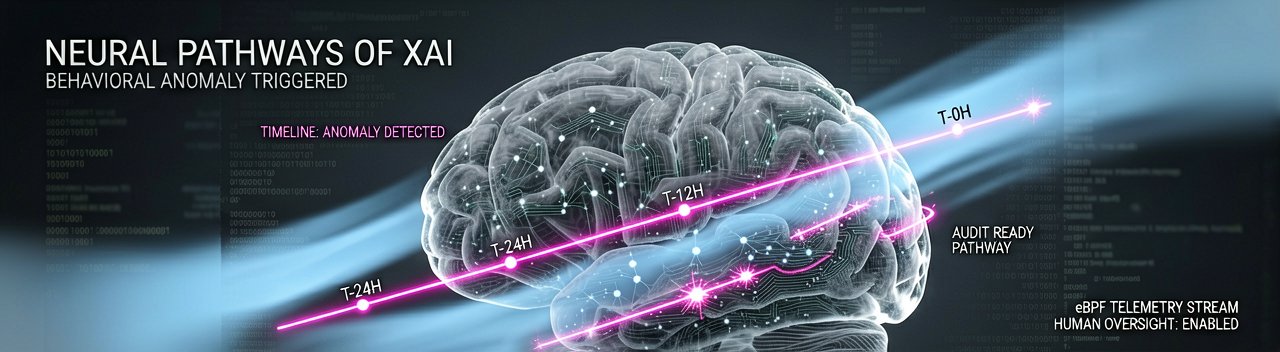
To navigate this friction, the most successful scale-ups are pivoting away from the "black box" philosophy and embracing a framework known as explainable AI (XAI). Security teams no longer accept a simple notification stating that a user account has been locked or an API connection severed by an algorithm. They demand clear, audit-ready pathways that illustrate exactly which behavioral anomalies triggered the response. This shift has forced vendors to build sophisticated visual timelines and natural language justifications into their dashboards, transforming AI from an unpredictable digital dictator into a transparent junior analyst that presents verifiable evidence to human supervisors.
This trust deficit is further compounded by a historical irony that veteran reporters have watched play out across previous tech cycles: the defenders and attackers are drinking from the exact same well. The open-source foundational models fueling corporate security platforms are simultaneously being mined by malicious actors to automate highly targeted spear-phishing campaigns and mutate malware signatures in real time. This symmetry means that any technological leap achieved by a defensive scale-up is often countered by adversaries within weeks, turning modern cybersecurity into a continuous, high-stakes game of algorithmic leapfrog where sitting still for even a fiscal quarter means falling dangerously behind.
Looking ahead, the long-term survival of these fifteen scale-ups will not be determined solely by their current detection accuracy, but by their ability to withstand the aggressive platformization strategies of legacy tech conglomerates. Giants like Microsoft, Palo Alto Networks, and CrowdStrike are moving rapidly to acquire niche AI technologies and bundle them into existing enterprise licensing agreements. For specialized startups, the challenge is proving that their deep, domain-specific intelligence offers enough unique value to justify a separate line item in a tightening corporate budget, rather than simply being absorbed as a feature in a tech titan's sweeping security suite.
Reading Between the Lines: The Illusion of Absolute Security
The prevailing narrative surrounding AI-driven cybersecurity suggests that adding more machine learning layers will inevitably create an impenetrable digital fortress. This assumption overlooks a fundamental rule of engineering: increased complexity inherently expands the attack surface. By integrating complex LLMs and autonomous agents directly into the core of enterprise defense architectures, organizations are introducing a highly unpredictable class of vulnerabilities. Security teams are discovering that the very models deployed to sniff out malicious behavior can themselves be manipulated through data poisoning, model inversion, and indirect prompt injection attacks, creating a bizarre reality where the security tool becomes the primary entry point for attackers.
There is a glaring contradiction in how the industry measures the efficacy of these new platforms. Scale-ups routinely boast about their ability to ingest petabytes of telemetry data and filter out noise, yet corporate security stacks remain heavily fragmented. Adding an AI wrapper to an already bloated infrastructure often just creates a louder, more expensive echo chamber. Organizations frequently purchase these advanced tools without the underlying data hygiene required to feed them properly. An enterprise AI defense system is only as good as the logs it analyzes; junk data in inevitably results in confidently automated junk decisions out, leaving companies with a false sense of security while their actual baseline defense remains dangerously weak.
This reliance on automated defense also risks accelerating a profound talent drain within the broader cybersecurity workforce. As scale-ups successfully automate tier-one and tier-two triage tasks, the entry-level analyst positions that traditionally served as the training grounds for the next generation of security professionals are rapidly evaporating. Without these foundational roles, the pipeline for cultivating elite, high-level threat hunters will dry up entirely. The industry risks creating a top-heavy ecosystem completely dependent on algorithms that no one left in the room fully understands how to reverse-engineer or override when a black-swan event inevitably occurs.
Ultimately, the frenetic race to adopt AI security platforms feels less like a strategic evolution and more like an act of collective panic. Venture capital flows toward anything with a predictive engine, while basic security practices like prompt patch management, strict access controls, and routine employee training are neglected in favor of shiny algorithmic solutions. True digital resilience has never been achieved by buying a silver bullet, and delegating the responsibility of critical thinking to a machine learning model is a dangerous compromise. The scale-ups that survive the inevitable market correction will be those that view AI as a useful telescope for human operators, rather than an outright replacement for the captain of the ship.
"We have spent billions of dollars building sophisticated artificial intelligence networks capable of intercepting weaponized state-sponsored exploits in a fraction of a millisecond, only to realize the entire corporate infrastructure can still be brought to its knees because Bob from accounting clicked on an urgent email promising a free corporate coffee mug."
Artūras Malašauskas is an AI Systems Integrator with 20+ years of production-grade web engineering experience. He has designed, shipped, and scaled enterprise Python/PHP systems for logistics, SaaS, and public-sector clients. For the past year, he has focused exclusively on AI integrations: deploying open-source LLMs, building generative media pipelines (image, audio, video), and engineering multi-agent workflows for real production environments. His standard: reproducibility, security, cost-efficient inference—no vaporware. He documents and evaluates emerging AI tooling, separating verified capabilities from marketing noise. Technical editor at: muza-ai.eu, ai-verslas.lt, ai-naujinos.lt Connect on LinkedIn
Comments