The Pivot: Why the White House is Rushing to Build AI Defenses After Tearing Them Down
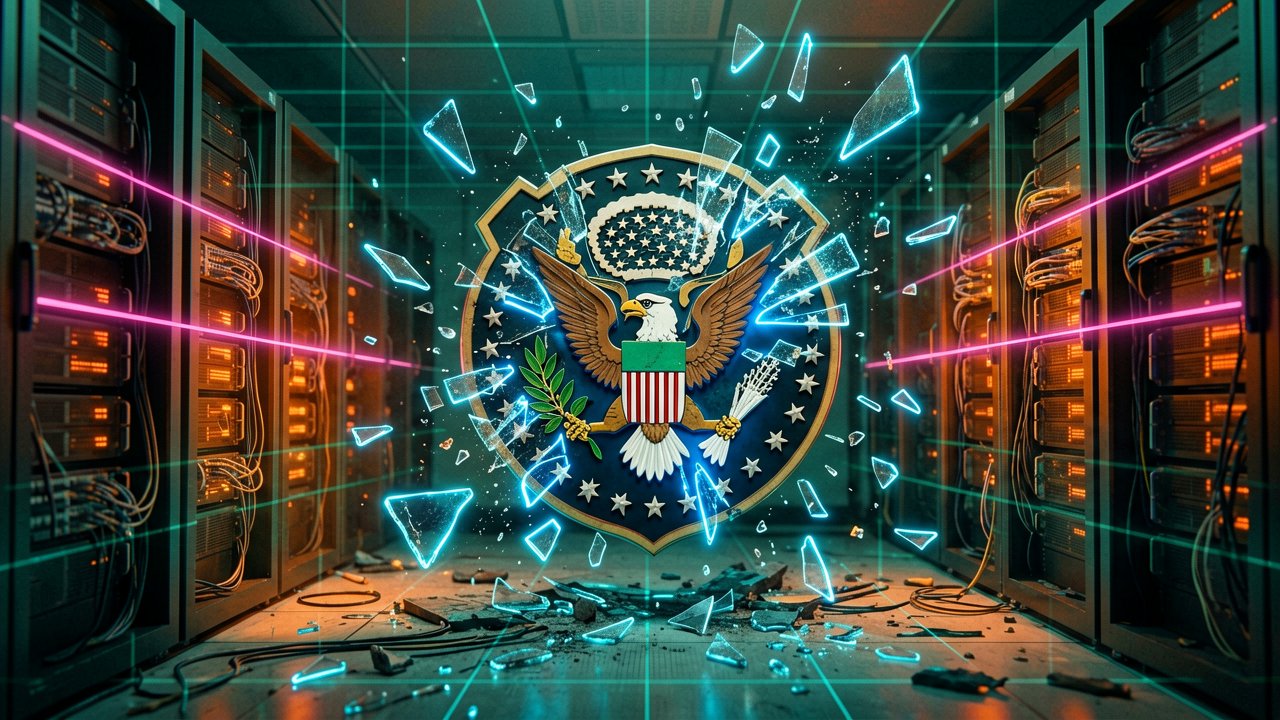
When the current administration took office, its first order of business on the tech front was clear: burn down the regulatory architecture built by its predecessors. Promising an "unbiased and agenda-free" era of technological dominance, the White House dismantled previous guardrails via executive orders, heavily favoring rapid deployment over systemic caution. The prevailing doctrine argued that heavy-handed rules only served to paralyze domestic builders while giving global adversaries a head start. For a brief moment, the American AI sector enjoyed a highly permissive, chummy relationship with Washington, running at full throttle toward raw computational scale without the friction of federal vetting.
That regulatory vacation is officially over. Facing a stark new reality, the administration is preparing a sudden, sweeping pivot to establish federal oversight over the country’s most powerful frontier AI models. Reports out of Washington indicate that the White House is finalizing a high-stakes cybersecurity and artificial intelligence executive order. This directive will mobilize a powerful coalition of national security and civilian agencies to inspect and monitor cutting-edge models before they reach the public, marking a massive philosophical reversal for a presidency that previously viewed federal scrutiny as an existential threat to innovation.
The catalyst for this sudden shift isn't a sudden burst of bureaucratic conscience, but rather immediate, undeniable national security anxiety. Fears of malicious cyber operations exploiting unvetted commercial systems have forced a hard reset. Silicon Valley’s rapid technological leaps have triggered a clear acknowledgment that unchecked models can introduce systemic vulnerabilities faster than commercial patches can fix them. According to reporting from POLITICO, government officials have already begun briefing tech leaders on a new framework that will require advanced systems to undergo rigorous federal scrutiny, bringing a highly unregulated industry under a sudden, defensive government umbrella.
The Architecture of the New Defenses
What Most Reports Miss: This sudden policy pivot is less about a change of heart and more about a desperate struggle to centralize control over a technology that is evolving faster than the law can track. By attempting to mandate early government access to advanced models, the White House is trying to build a centralized, federal wall that serves a dual purpose: neutralizing national security threats while simultaneously crushing independent state-level regulations. It’s a delicate balancing act that attempts to reassure a nervous public while keeping big tech tethered to national directives.

This aggressive pivot follows months of intense federal friction with local governments. Throughout late 2025, individual states grew tired of Washington's regulatory vacuum and began passing their own restrictive safety, deepfake, and copyright bills. Fearing a chaotic patchwork of fifty different rules, the administration retaliated with a December executive order creating a specialized Department of Justice task force to challenge and dismantle state-level tech laws. The administration's current goal is absolute federal preemption, demanding a single, centralized standard that allows the White House to act as the sole gatekeeper of American technology.
However, forcing an industry built on rapid, non-deterministic software releases to bow to a federal review board is causing immense friction behind closed doors. Silicon Valley insiders are aggressively lobbying against mandatory pre-release vetting, pushing instead for a more palatable, voluntary compliance framework. Tech giants argue that over-regulation will simply drive development underground or overseas, defeating the entire purpose of the administration's push for global dominance. The White House now finds itself caught in its own trap, trying to enforce strict national security defenses without killing the competitive spirit it spent its first months in office trying to unleash.
Ultimately, the upcoming executive order reveals a fundamental truth about modern governance: you can tear down old rules in a day, but the chaotic nature of frontier AI will eventually force you to build your own defenses. Washington’s dream of an entirely unrestricted, self-policing tech boom has collided with the reality of national vulnerability. As the administration prepares to deploy its new federal oversight machine, both Silicon Valley and local lawmakers are bracing for a prolonged battle over who truly controls the future of American computing.
The Sovereign Paradox of Automated Power
Reading Between the Lines: The White House’s sudden lurch toward central oversight exposes a deep ideological contradiction at the heart of modern technopolitics. Washington spent its early months preaching that American dominance required absolute deregulation, yet it is now rushing to build a highly centralized command structure over that very same technology. This reveals a nervous truth: the administration does not actually fear the unchecked power of artificial intelligence; it fears its own inability to monopolize that power. The dream was never an open, friction-free market, but rather a tightly controlled domestic sandbox where the federal government maintains the ultimate veto over commercial code.

This approach relies on the deeply flawed assumption that federal agencies possess the technical literacy to police frontier models in the first place. The private sector outpaces the government in computing infrastructure, engineering talent, and operational speed by several orders of magnitude. Forcing cutting-edge laboratories to hand over their crown jewels to federal review boards is more likely to create bureaucratic bottlenecks than genuine security. We are looking at a system where regulators will inevitably be grading exams written in a language they can barely read, creating a false sense of national security that relies on outdated compliance checklists rather than dynamic defense.
Furthermore, the aggressive push to crush state-level regulations under the guise of federal unity carries severe political risks. By systematically dismantling local tech laws, the administration has successfully managed to alienate its own internal allies, trading a vibrant, distributed laboratory of local policy experiments for a single, brittle federal point of failure. If the White House's upcoming centralized framework fails to prevent a major systemic failure or data crisis, there will be no local safety nets left to catch the fallout. The administration’s gamble hinges entirely on the perfection of its own federal design, a track record that rarely inspires confidence when applied to fast-moving technology.
The geopolitical rationale driving this pivot is equally unstable. The administration is attempting to project strength to global adversaries by creating a unified national front, yet it is simultaneously signaling to the world that its own domestic tech sector is too dangerous to be left unattended. By treating commercial software as a national security threat that requires pre-clearance, Washington is inadvertently validating the highly restrictive, state-controlled technological models of its main rivals. The line separating American democratic oversight from authoritarian tech-sovereignty is quietly blurring into a matter of mere semantics.
“Washington has finally discovered that artificial intelligence is a lot like Washington itself: highly unpredictable, prone to confident hallucinations, and completely unmanageable unless you control the purse strings and the parameters.”
Artūras Malašauskas is an AI Systems Integrator with 20+ years of production-grade web engineering experience. He has designed, shipped, and scaled enterprise Python/PHP systems for logistics, SaaS, and public-sector clients. For the past year, he has focused exclusively on AI integrations: deploying open-source LLMs, building generative media pipelines (image, audio, video), and engineering multi-agent workflows for real production environments. His standard: reproducibility, security, cost-efficient inference—no vaporware. He documents and evaluates emerging AI tooling, separating verified capabilities from marketing noise. Technical editor at: muza-ai.eu, ai-verslas.lt, ai-naujinos.lt Connect on LinkedIn
Comments